Attractions and Places To See around San Cibrao Das Viñas - Top 20
Best attractions and places to see around San Cibrao Das Viñas include a blend of historical, cultural, and natural sites within the province of Ourense, Galicia. The municipality features Romanesque architecture, archaeological heritage with petroglyphs, and traditional Galician civil architecture. Visitors can explore various religious buildings, manor houses, and natural areas suitable for outdoor activities like hiking. San Cibrao Das Viñas also serves as a stopping point on the historic Camino de la Plata pilgrimage route.
Best attractions and places to see around San Cibrao Das Viñas
- The most popular attractions is Ponte Vella (Roman Bridge of Ourense), a bridge that was built in the 1st century AD over the Miño river. Only a few padded ashlars from the original Roman bridge remain, with subsequent reconstructions shaping its current form.
- Another must-see spot is Main Square of Ourense, a settlement known for its sloping floor, a rare feature among main squares in Spain. The square is surrounded by historic buildings, including the Town Hall.
- Visitors also love Cathedral of San Martín de Ourense, a religious building constructed between the 12th and 13th centuries. This temple is the main religious monument of the city, showcasing Romanesque architecture with later additions.
- San Cibrao Das Viñas is known for its religious architecture, archaeological sites, and natural features. The region offers a variety of historical sites, cultural landmarks, and outdoor trails to explore.
- The attractions around San Cibrao Das Viñas are appreciated by the komoot community, with more than 100 upvotes and 50 photos.
Last updated: July 20, 2026
Ponte Vella (Roman Bridge of Ourense)
Highlight • Bridge
According to tradition, it dates from the time of Trajan, however its construction characteristics bring it closer to the time of Augustus. Of that first bridge, only a few padded ashlars from the bases remain, as mute witnesses of the past.
Translated by Google •
Tip by

Main Square of Ourense
Highlight • Settlement
Translated by Google •
Tip by
Sign up now to discover places like this
Get recommendations on the best single tracks, peaks, & plenty of other exciting outdoor places.
Sign up for free
Cathedral of San Martín de Ourense
Highlight • Religious Site
Translated by Google •
Tip by
Outariz Hot Springs
Highlight • Natural Monument
The price is affordable and if you have time, it is worth stopping to enjoy its hot waters.
Translated by Google •
Tip by

As Burgas Hot Springs
Highlight • Natural Monument
Translated by Google •
Tip by
Sign up for free to discover even more attractions around San Cibrao Das Viñas.
Sign up for free
Already have an account?
Start today with a free account
Your next adventure awaits.
Login or Signup

Tips from the Community

Ourense's Plaza Mayor is one of the most emblematic spaces in the historic center: It's a porticoed square with a slight incline, making it unique in Galicia. The slope is used to create a very photogenic perspective. Since the Middle Ages, it has been the city's administrative and social center. Markets, public events, and neighborhood meetings were held here. Notable buildings: City Hall: a 19th-century neoclassical building with an elegant façade and balconies. Palaces and noble houses: several properties with heraldic shields and typical Galician galleries.
2
0
They are located in the historic center of Ourense, on Rúa das Burgas / Praza das Burgas, next to the Barbaña River. They are perfectly integrated into the urban environment, near the Cathedral and the Roman Bridge. Explored since Roman times, these waters were the origin of the city (Aquis Auriensis), and the remains include a 1st-century AD pool-sanctuary and votive stones dedicated to an indigenous deity. The water flows at approximately 64–68°C, with a flow rate of about 300 liters per minute. Rich in minerals such as metasilicates, fluoride, lithium, bicarbonate, and sodium, they are recommended for pruritic skin conditions and rheumatism. Recent studies support their beneficial effect on acne after washing with thermal water.
2
0
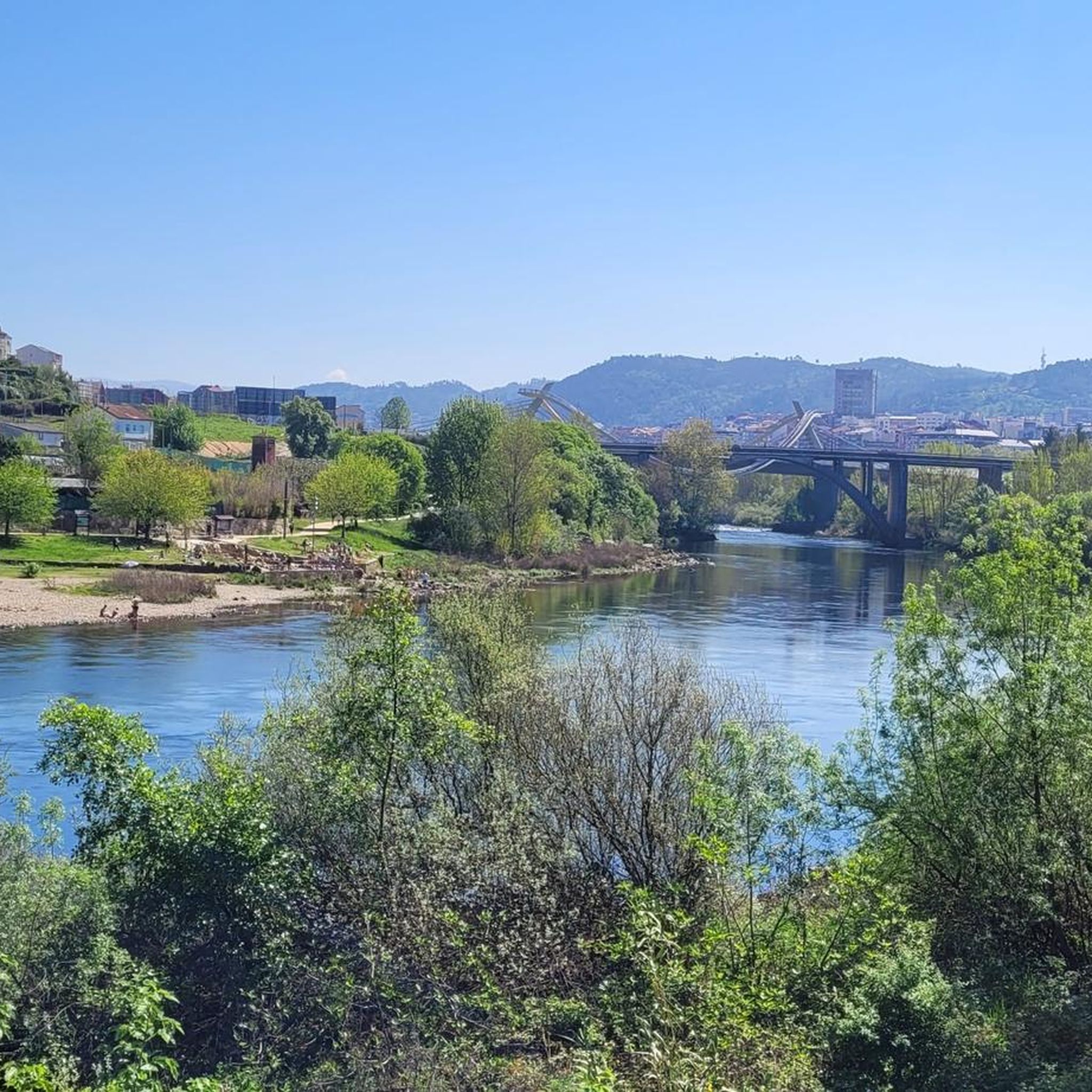
Located on the banks of the Miño River, in the Outariz area, west of Ourense, right on the city's "Thermal Promenade." Parking: The Outariz/Reza parking lot (on the opposite bank) is available, as the Muiño da Veiga parking lot is closed for renovations. Public transport: City bus line 5; the unique Thermal Train, which stops at the facility.
1
0
It spans the Miño River, linking the historic center of Ourense with the A Ponte neighborhood. It was built in the 1st century AD as a branch of the Via Nova (Via XVIII), connecting Bracara Augusta (Braga) with Asturica Augusta (Astorga). Only traces of the original Roman phase remain, such as rusticated stonework at the ends near the banks. It suffered damage during the Middle Ages; in 1228, under Bishop Lorenzo and with the support of Ferdinand III, it was rebuilt with pointed arches and renovated approaches. Until the 17th century, the bridge repeatedly collapsed. The final work was directed by Melchor de Velasco Agüero around 1660, establishing its current appearance.
1
0

Romanesque cathedral 🤙
0
1
Beautiful old cathedral 🤙
1
0
Frequently Asked Questions
What historical and cultural sites can I explore in San Cibrao Das Viñas?
San Cibrao Das Viñas offers a rich blend of historical and cultural sites. You can discover ancient religious architecture, such as the Cathedral of San Martín de Ourense, which showcases Romanesque architecture. The area is also known for its archaeological heritage, particularly petroglyphs found in locations like San Ildefonso and San Andrés de Rante. Additionally, you can observe traditional Galician civil architecture, including manor houses like A Casa Soleira and the Pazo de Noalla, and numerous cruceiros (stone crosses) throughout the municipality.
Are there any significant religious buildings to visit in the area?
Yes, San Cibrao Das Viñas is home to several notable religious buildings. Highlights include the Igrexa Parroquial de San Ildefonso with its Romanesque and Renaissance elements, and the 12th-century Igrexa de San André de Rante, known for its pointed arch entrance and unique Agnus Dei symbol inside. The Igrexa de San Miguel de Soutopenedo features an elegant Baroque tower, and you can also find rural Romanesque chapels like Capela do Santo Cristo and Capilla de San Roque.
Where can I find archaeological sites, particularly petroglyphs, around San Cibrao Das Viñas?
The region is rich in archaeological sites, especially petroglyphs. You can find these ancient rock carvings in various locations, including San Ildefonso, San Andrés de Rante, Santa Comba de Gargantós, and Lameira de Santa Cruz da Rábeda. Specific notable sites include the Petróglifo da Lameira de Santa Cruz and Petroglifos Os Troleiros, offering a glimpse into prehistoric art.
What natural attractions and outdoor activities are available near San Cibrao Das Viñas?
San Cibrao Das Viñas is ideal for outdoor enthusiasts. The area features natural spaces with oak, chestnut, ash, and cork trees, perfect for hiking. A notable hiking route is the Ruta de Senderismo A Boutureira, which explores the natural area named after the Barbadás River and includes traditional mills. You can also find recreational spots like Piscinas Ponte Noalla. For more structured outdoor adventures, explore the various MTB Trails, Road Cycling Routes, and Cycling routes available.
Are there hiking trails suitable for different skill levels?
Yes, the region offers hiking routes of varying lengths and difficulties. The Ruta de Senderismo A Boutureira, for example, has trails that cater to different preferences. Generally, you can find routes ranging from 6 to 11 km that explore both natural areas and architectural sites. For specific routes and their difficulty grades, you can check out the MTB Trails around San Cibrao Das Viñas guide, which also includes hiking-friendly paths.
Can I find family-friendly activities or attractions in San Cibrao Das Viñas?
Many attractions in and around San Cibrao Das Viñas are suitable for families. The Ponte Vella (Roman Bridge of Ourense) and the Main Square of Ourense are both listed as family-friendly. The natural areas and hiking trails, particularly those of moderate difficulty, can also be enjoyed by families. Additionally, the Outariz Hot Springs offer a relaxing and enjoyable experience for all ages.
What are some unique architectural features or traditional buildings to see?
Beyond religious sites, San Cibrao Das Viñas preserves traditional Galician rural heritage. You can explore various manor houses (pazos) and noble homes, such as A Casa Soleira (18th century) and the Pazo de Noalla (1843). The urban center itself is considered an open-air museum, featuring houses adorned with emblematic coats of arms. Don't miss the numerous cruceiros (stone crosses) found at crossroads, which are significant cultural landmarks.
Is San Cibrao Das Viñas a good place for cycling?
Absolutely! San Cibrao Das Viñas and its surroundings offer excellent opportunities for cycling. There are dedicated guides for various cycling sports, including MTB Trails, Road Cycling Routes, and general Cycling routes. You can find routes like the 'San Rosendo and Castro de Trelle Loop' for MTB or the 'Ascent to Castro de Beiro – Las Burgas Hot Springs loop' for road cycling, catering to different preferences and skill levels.
What is the best time of year to visit San Cibrao Das Viñas for outdoor activities?
While specific data on the best time to visit isn't provided, generally, spring (April-June) and autumn (September-October) offer pleasant temperatures for outdoor activities like hiking and cycling in Galicia. These seasons typically avoid the peak heat of summer and the colder, wetter conditions of winter, making them ideal for exploring the natural and historical sites comfortably.
Are there any thermal springs or wellness spots nearby?
Yes, the region is famous for its thermal waters. You can visit the Outariz Hot Springs, which are designed with a Japanese style and offer massages, baths, and a bar. These springs provide a relaxing experience with outdoor pools overlooking the Miño River. Another significant thermal site is the As Burgas Roman Baths, where water flows at high temperatures and is known for its therapeutic properties.
What do visitors particularly enjoy about the attractions in this region?
Visitors appreciate the blend of historical depth and natural beauty. The Ponte Vella (Roman Bridge of Ourense) is valued for its ancient history and architectural significance. The Main Square of Ourense is loved for its unique sloping floor and surrounding historic buildings, offering a great spot for dining. The Cathedral of San Martín de Ourense is admired for its Romanesque architecture and rich history. The thermal baths, like Outariz Hot Springs, are a popular draw for relaxation.
Are there any traditional mills or water features to see on trails?
Yes, the natural areas around San Cibrao Das Viñas often feature traditional mills. Along the Ruta de Senderismo A Boutureira, for instance, you can discover traditional mills that highlight the region's historical connection to its natural resources. These mills, such as those of A Boutureira and Molino de Castroverde, are charming points of interest integrated into the hiking experience.
Is San Cibrao Das Viñas part of any pilgrimage routes?
Yes, San Cibrao Das Viñas is a significant stopping point on the Camino de la Plata, a historic pilgrimage route. It's common to see pilgrims passing through the area, and the local council has even established resting areas specifically for them, underscoring its role in this ancient journey.
Are there any accessible attractions for visitors with mobility considerations?
The Main Square of Ourense is listed as wheelchair accessible, making it a good option for visitors with mobility considerations. While specific details on other accessible trails or attractions are not extensively provided, the generally flat areas around the Miño River and some urban paths may also offer easier access. It's always recommended to check specific site conditions for the most up-to-date accessibility information.
Most popular routes around San Cibrao Das Viñas
Most popular attractions around San Cibrao Das Viñas

Get inspired with the komoot mobile app


Explore more
Still not found the Highlight you’re looking for? See guides of the top attractions in other regions:
