Attractions and Places To See around Barbastro - Top 20
Best attractions and places to see around Barbastro include a rich array of historical landmarks, cultural sites, and natural beauty. This town in Aragon, Spain, is situated on the banks of the Vero River and serves as a gateway to the Sierra y Cañones de Guara Natural Park. Visitors can explore ancient structures, significant religious sites, and the renowned Somontano wine region. The area offers diverse opportunities for historical exploration and appreciating natural landscapes.
Best attractions and places to see around Barbastro
- The most popular attractions is Albarda Medieval Bridge, a bridge that served as an access point to the Sierra de Guara. This 13th-century bridge features a single arch and is notable for its state of preservation.
- Another must-see spot is Barbastro, a settlement located on the banks of the Vero River. Visitors can explore the city's historical center, including the Cathedral of Santa María de la Asunción.
- Visitors also love El Pueyo Monastery of Barbastro, a religious building with Romanesque and Gothic elements. This 12th-century monastery sits atop a hill, offering panoramic views of the Somontano region.
- Barbastro is known for its historical sites, religious buildings, and natural features. The area offers a variety of attractions to see and explore, from ancient bridges to significant monasteries and the city itself.
- The attractions around Barbastro are appreciated by the komoot community, with 11 upvotes and 12 photos shared by visitors.
Last updated: July 7, 2026
El Pueyo Monastery of Barbastro
Highlight • Religious Site
From these actions originate the church and the Romanesque cloister, which are later enlarged in the Gothic style.
Translated by Google •
Tip by

Albarda Medieval Bridge
Highlight • Bridge
Translated by Google •
Tip by

Sign up now to discover places like this
Get recommendations on the best single tracks, peaks, & plenty of other exciting outdoor places.
Sign up for free
Barbastro
Highlight • Settlement
Translated by Google •
Tip by

El Grado Dam
Highlight • Monument
Translated by Google •
Tip by

Sanctuary of La Carrodilla
Highlight • Religious Site
Translated by Google •
Tip by
Sign up for free to discover even more attractions around Barbastro.
Sign up for free
Already have an account?
Start today with a free account
Your next adventure awaits.
Login or Signup


Other adventures around Barbastro

Tips from the Community

The hermitage or sanctuary of Carrodilla is one of the landmarks in the Sierra del Buñero.
0
0

Beautiful route and hermitage
0
0

Founded in the 13th century on the site of an old Visigothic hermitage. Rebuilt several times, the current building combines Renaissance and Baroque elements. For centuries, it was an important center of Marian pilgrimage in Aragon. The monastery was abandoned in the mid-20th century, but in the 1990s, it was restored by the Incarnate Word community, which still lives there. Today, it is a place for retreat, Masses, and spiritual activities.
0
0

Sanctuary of the Virgin of the Carrodilla. The sanctuary has various rooms (house, patios, corrals, porches...) of which the church constitutes the main building. The current temple, built between the 14th and 15th centuries, is made up of a nave to which several chapels added later open. The interior stands out for the harmony of proportions, for the excellent stonework and for its sober elegance. Today a popular pilgrimage to the temple is still celebrated.
1
0

The Sanctuary of Nuestra Señora del Pueyo is a 12th century building. Its origin is based on the legend of the appearance of the virgin to the shepherd Balandrán. Its privileged location on a hill served as an outpost for Pedro I of Aragon during the reconquest of Huesca and later Jaime I the Conqueror established a chaplaincy here. From these actions originate the church and the Romanesque cloister, which are later enlarged in the Gothic style.
2
0
The Sanctuary of La Carrodilla is a group of religious buildings of different dates in honor of the Virgin of La Carrodilla. The main building is made of stone and dates from the 14th or 15th century. Legend has it that the Virgin appeared to some charcoal burners in the Sierra de la Carrodilla, hence the tradition of venerating this evocation.
1
0

Barely six kilometers from the city of Barbastro, on top of a hill stands the majestic monastery of El Pueyo. The building was built in the 12th century, initially as a Romanesque church, and was later renovated in the Gothic style in the 12th century. In front of the monastery there is a viewpoint with beautiful panoramic views of the Somontano lands.
0
0
Barbastro is a city in the Aragonese province of Huesca located on the banks of the Vero River. Its most notable construction is the impressive cathedral of Santa María de la Asunción, in the Gothic style. The cathedral's bell tower, possibly built on the base of an ancient minaret, can be seen from anywhere in the city. But do not miss the opportunity to visit it inside, where a beautiful baroque doorway, a star ribbed vault and a grandiose alabaster altarpiece await you.
0
0
Frequently Asked Questions
What historical landmarks can I explore in Barbastro?
Barbastro is rich in history. You can visit the impressive Cathedral of Santa María de la Asunción, a blend of Gothic and Renaissance architecture, which also houses the Diocesan Museum. Don't miss the 13th-century Albarda Medieval Bridge, a well-preserved access point to the Sierra de Guara. Other notable sites include the Episcopal Palace and the Palacio de los Argensola.
Are there any significant religious sites near Barbastro?
Yes, several important religious sites are located in and around Barbastro. The El Pueyo Monastery of Barbastro, a 12th-century building with Romanesque and Gothic elements, offers panoramic views from its hilltop location. Another is the Sanctuary of La Carrodilla, a complex of religious buildings with parts dating back to the 14th or 15th century. The modern Sanctuary of Torreciudad is also nearby.
What natural features can I discover around Barbastro?
The Vero River flows through Barbastro, offering scenic paths. A picturesque spot is the Pozán de Vero Waterfall, an artificial waterfall with a large pool suitable for bathing. Barbastro is also considered the gateway to the Sierra y Cañones de Guara Natural Park, renowned for its dramatic canyons, turquoise waters, and caves.
What cultural experiences does Barbastro offer?
Barbastro is at the heart of the Somontano wine region. You can explore the local wine industry at the Wine Museum (El Espacio del Vino del Somontano). The Diocesan Museum, located within the Episcopal Palace, showcases a compelling collection of religious art. Additionally, the Gorges of Vero, part of the Vero River Cultural Park, are notable for their UNESCO World Heritage cave paintings.
Are there family-friendly attractions in Barbastro?
Yes, Barbastro offers several family-friendly options. The town itself, Barbastro, with its historical center and cathedral, is suitable for exploration. The Pozán de Vero Waterfall provides a pleasant spot for relaxation and bathing. The nearby Sierra y Cañones de Guara Natural Park offers opportunities for gentle walks and enjoying nature, though some activities like canyoning are more adventurous.
What outdoor activities can I do near these attractions?
The region around Barbastro is excellent for outdoor activities. You can find numerous routes for cycling, gravel biking, and road cycling. For example, there are moderate cycling routes like the "Barbastro, Vero River, and El Pueyo Monastery Loop" or more challenging ones like the "Sierra de Guara – circular from Barbastro to Alquézar via the Vero river." You can explore more options on the Cycling around Barbastro, Gravel biking around Barbastro, and Road Cycling Routes around Barbastro guide pages.
What is the best time of year to visit Barbastro?
Barbastro can be enjoyed year-round, but spring (April-May) and autumn (September-October) generally offer the most pleasant weather for exploring historical sites and engaging in outdoor activities like hiking and cycling. Summers can be hot, which is ideal for water activities in the Vero River or at the Pozán de Vero Waterfall, while winters are milder.
Are there any charming towns or villages to visit nearby?
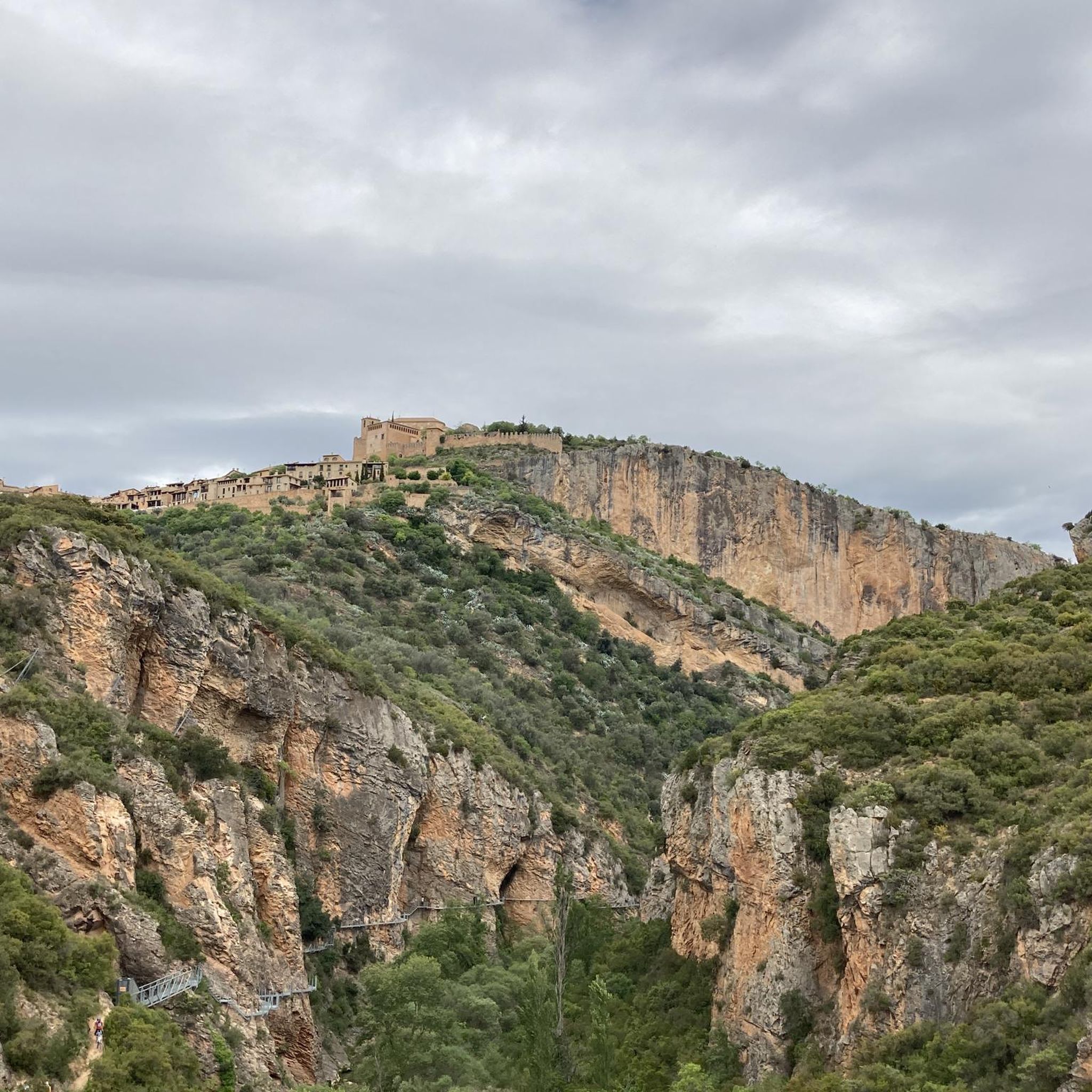
Absolutely. The medieval village of Alquézar is a popular excursion from Barbastro. It allows visitors to immerse themselves in the region's history and enjoy Somontano wine tastings. Its picturesque setting and historical architecture make it a worthwhile day trip.
What is the significance of the Somontano wine region?
The Somontano wine region is a significant attraction for wine enthusiasts, renowned for its world-famous Designation of Origin (DO) wines. The area's unique climate and soil contribute to the production of high-quality red, white, and rosé wines. Many wineries offer tours and tastings, providing insight into the winemaking process.
What do visitors enjoy most about Barbastro?
Visitors particularly appreciate the blend of historical and natural beauty. The well-preserved Albarda Medieval Bridge is often highlighted for its historical charm. The panoramic views from the El Pueyo Monastery of Barbastro are also a favorite. Many enjoy exploring the historical center of Barbastro itself, especially its impressive cathedral.
Can I find viewpoints with scenic vistas around Barbastro?
Yes, the region offers several excellent viewpoints. The El Pueyo Monastery of Barbastro, situated atop a hill, provides unparalleled panoramic views of the Somontano region. Additionally, the dramatic landscapes of the Sierra y Cañones de Guara Natural Park offer numerous scenic vistas, particularly along its canyon edges.
Where can I learn about the history of Barbastro?
To delve into Barbastro's history, visit the Cathedral of Santa María de la Asunción, which includes an Archaeological Garden with artifacts from the 12th to 18th centuries. The Diocesan Museum, located within the Episcopal Palace, also offers insights into the region's religious and artistic past. The Antigua iglesia de San Julián, now housing the Somontano Visitor Centre, is another historical site.

Get inspired with the komoot mobile app


Explore more
Still not found the Highlight you’re looking for? See guides of the top attractions in other regions:
