Attractions and Places To See around Pontedeume - Top 20
Best attractions and places to see around Pontedeume, a medieval town in Galicia, is situated at the mouth of the Eume River. Founded in 1270, the town is known for its well-preserved historic center and its role on the English Way of the Camino de Santiago. The region offers a mix of historical sites, religious buildings, and natural features, including the unique Fragas do Eume Natural Park. Its picturesque setting along the Eume River and estuary provides diverse landscapes for exploration.
Best attractions and places to see around Pontedeume
- The most popular attractions is Monastery of Saint John of Caaveiro, a religious building located in the heart of the Fragas do Eume natural park. This 12th-century monastery complex, founded in 934, was declared an Asset of Cultural Interest in 1975 due to its architectural importance.
- Another must-see spot is Pontedeume Bridge, a bridge that connects the two banks of the Eume River. While the current structure was rebuilt between 1863 and 1888, it maintains the essence of the original Gothic bridge from 1380, which once had 68 arches.
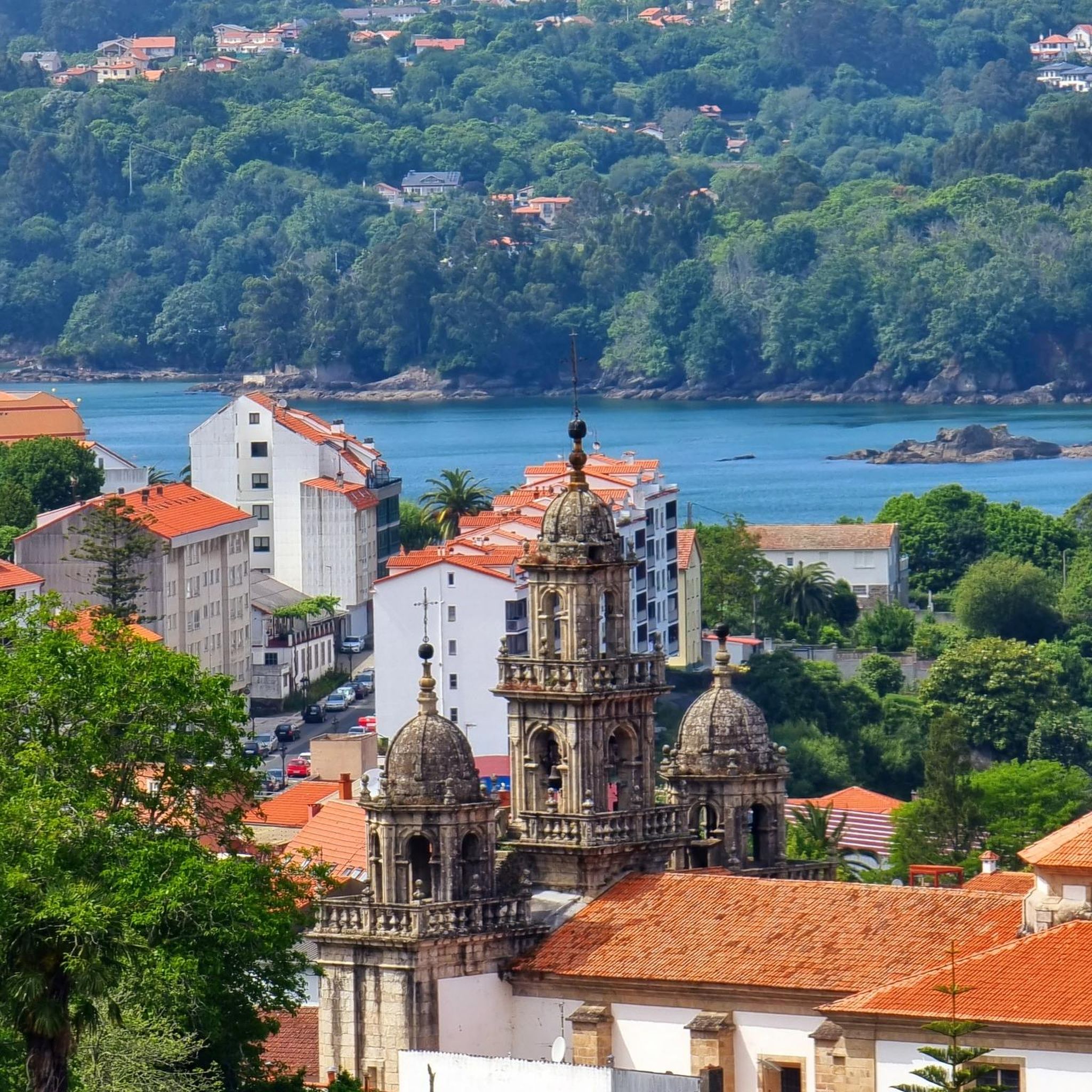
- Visitors also love Parish Church of St James in Pontedeume, a religious building with two distinct parts. The main chapel was built in 1538, while the rest of the church is an 18th-century work by Archbishop Rajoy, featuring intricate vault ribs and a Renaissance altarpiece.
- Pontedeume is known for its historical sites, religious buildings, and natural monuments. The area offers a variety of attractions to see and explore, from ancient bridges to unique natural parks.
- The attractions around Pontedeume are appreciated by the komoot community. With more than 70 upvotes and 50 photos, these spots are popular among explorers.
Last updated: July 6, 2026
Monastery of Saint John of Caaveiro
Highlight • Religious Site
Translated by Google •
Tip by

Parish Church of St James in Pontedeume
Highlight • Religious Site
Showing Translation
Tip by

Sign up now to discover places like this
Get recommendations on the best single tracks, peaks, & plenty of other exciting outdoor places.
Sign up for free
Monastery of San Martiño de Xuvia
Highlight • Religious Site
Translated by Google •
Tip by

Magnolia of Xuvia
Highlight • Natural Monument
And speaking of the location, it is worth highlighting the owners of the land on which the magnolia is located, for the facilities they have always given to the Narón City Council to be able to maintain this tree in optimal conditions.
It is not easy to find such unique species in the area. Proof of this is the fact that the Xuvia magnolia is part of the Catalogue of Unique Trees of the Xunta de Galicia.
The Provincial Council of A Coruña itself presented the book "A Magnolia de Santa Rita e a Cultura verde de Narón" in Narón, published by the aforementioned administration. The authors of this publication: Carlos Rodríguez Dacal, María Rodríguez García Garabal and Tomás Casal Pita have carried out intense research work, with the collaboration of institutions and private individuals, to publicize this tree, if possible, the most representative of our municipality and which shines in all its splendor on the Paseo Matítimo de Xuvia, near the bridge that borders the neighboring municipality of Neda.
Translated by Google •
Tip by

Parque Natural das Fragas do Eume
Highlight (Segment) • Forest
My ideal route is to climb to the monastery along the left bank and return on the right. If you have mobility issues or want an easier and faster route, go all the way to the right.
Regarding the park, I must say it's simply breathtaking. The river and streams that feed us in dozens of places (you'll see them as you walk through) fill you with energy as well as peace and tranquility, the environment completely insulates you from the noise that always surrounds us. I definitely recommend a visit.
Translated by Google •
Tip by

Sign up for free to discover even more attractions around Pontedeume.
Sign up for free
Already have an account?
Start today with a free account
Your next adventure awaits.
Login or Signup

Tips from the Community

In this church Iglesia parroquial de Santiago, besides the pilgrim stamp, there is also a very personal pilgrim blessing for the onward journey
1
0

A beautiful place, in a magical enclave, a must-see for anyone in the area.
0
1

A great spot, with shade. There are also downpipes for dipping your feet in the river.
0
0

A fully restored former monastery, a visit is highly recommended. To visit, you must cross the Fragas do Eume Natural Park. There are minibuses that can take you there, but I recommend walking to fully enjoy the scenery. The monastery offers information services, tours, and even a small bar where you can grab a bite to eat and recharge your batteries. Don't forget to visit the old mill, located about 300 meters down a side slope, with a spectacular stone bridge.
0
1
An ancient but very well-preserved and visitable monastery, very pretty and small, so you can see it in just a few minutes.
1
0
A very well-preserved ancient monastery that can be visited (I don't know the opening hours) is located on the English Way to Santiago. A quick visit is recommended (it's small but beautiful), and then continue up the path on the left.
0
0
A spectacular natural park, you can explore it directly along the road next to the river (going upstream on the right side), although there is a variant on the left side, accessed by crossing a suspension bridge (the one I show in the photographs). This is more winding and complicated for people with mobility issues, but I consider it more entertaining and beautiful. My ideal route is to climb to the monastery along the left bank and return on the right. If you have mobility issues or want an easier and faster route, go all the way to the right. Regarding the park, I must say it's simply breathtaking. The river and streams that feed us in dozens of places (you'll see them as you walk through) fill you with energy as well as peace and tranquility, the environment completely insulates you from the noise that always surrounds us. I definitely recommend a visit.
1
0
A very well-preserved and restored former monastery, its location in the Fragas do Eume gives it a unique atmosphere, surrounded by forest and the river itself. The walk alone is a delight. Restored a few years ago, it is in perfect condition, admission is free, and there is an information service and a guide. There is also a small bar where you can recharge your batteries before returning (note that there is a minibus service that takes you to the monastery a couple of times an hour, although I highly recommend enjoying the walk parallel to the river—it's simply spectacular). Regarding the monastery, the different rooms are very well restored, with information, images, and photographs that take us back to its time as a monastery. A trip down to the old mill is also highly recommended; it's only 300 meters away and has a huge bridge next to it.
0
1
Frequently Asked Questions
What historical sites can I explore in Pontedeume?
Pontedeume is rich in history. You can visit the impressive Torreón de los Andrade, the last remaining structure of the Andrade family's palace, which now houses a Tourist Office and Interpretation Center. The iconic Pontedeume Bridge, though rebuilt, retains the essence of its 14th-century Gothic predecessor. Don't miss the Parish Church of St James in Pontedeume, a significant stop on the English Way of the Camino de Santiago, or the ancient Monastery of Saint John of Caaveiro, nestled in Fragas do Eume.
Are there any natural attractions or viewpoints around Pontedeume?
Absolutely. The region is home to the stunning Fragas do Eume Natural Park, one of Europe's best-preserved Atlantic rainforests, perfect for nature lovers. You can also enjoy the beautiful riverside setting along the Eume River and estuary. For panoramic views, head to the Mirador de Cabría, which offers excellent vistas of Pontedeume. The Magnolia of Xuvia is also a unique natural monument worth seeing.
What outdoor activities can I do near Pontedeume's attractions?
The area around Pontedeume is ideal for various outdoor activities. You can find numerous hiking trails, including moderate and difficult options, that explore the natural beauty of the region. For cycling enthusiasts, there are both gravel biking and road cycling routes available. Explore options like the 'Senda dos Encomendeiros' hike or various cycling loops around the Eume River. You can find detailed routes and guides for these activities on the Hiking around Pontedeume, Gravel biking around Pontedeume, and Road Cycling Routes around Pontedeume guide pages.
Are there family-friendly attractions in Pontedeume?
Yes, Pontedeume offers several family-friendly spots. The Pontedeume Bridge and its riverside path are pleasant for walks. The Magnolia of Xuvia is a unique natural monument that can be enjoyed by all ages. Additionally, the town's charming Old Town with its pedestrianized streets and traditional architecture provides a safe and interesting environment for families to explore.
What is the best time to visit Pontedeume for sightseeing and outdoor activities?
Pontedeume is beautiful year-round, but for the best weather for sightseeing and outdoor activities like hiking, the spring (April-June) and early autumn (September-October) months are ideal. During these periods, the temperatures are pleasant, and the natural landscapes, especially in Fragas do Eume Natural Park, are vibrant. Summer (July-August) is also popular, offering opportunities to enjoy the local beaches and coves.
Where can I find food and refreshments near the attractions?
If you're exploring the Fragas do Eume Natural Park and visiting the Monastery of Saint John of Caaveiro, the Caaveiro Tavern is a popular spot to recharge with delicious sandwiches and refreshments. Within Pontedeume town, you'll find various local cafes and restaurants, particularly along Rúa Real and around the main squares, offering local gastronomy like 'Polbo á feira' and fresh seafood.
What makes the Old Town of Pontedeume special?
The Old Town (Casco Histórico) of Pontedeume is a charming area that transports visitors back to medieval times. It features narrow, often pedestrianized streets, traditional elements like arcades, houses with wooden balconies, and glass galleries. Exploring this historic quarter allows you to experience the town's rich heritage and discover hidden gems like the Plaza de San Roque, known for its picturesque houses.
Can I see any remnants of Pontedeume's ancient defenses?
Yes, you can still find traces of the Antigua Muralla de Pontedeume (Old Wall of Pontedeume). This ancient wall once protected the town and included nine towers and five gates. Remnants of it can still be seen bordering the pazo and running along current streets, offering a glimpse into the town's medieval past.
What is the significance of the Eume River to Pontedeume?
The Eume River is central to Pontedeume's identity and name. The town is situated at its mouth, offering a beautiful riverside setting and a promenade along the estuary. The river, along with the surrounding landscape, contributes to the area being declared a Historic Site and Picturesque Place. The iconic Pontedeume Bridge spans this river, connecting the two banks and serving as a gateway to the town.
Are there any religious buildings of note in Pontedeume?
Pontedeume has several significant religious buildings. The Parish Church of St James in Pontedeume is a prominent example, with parts dating back to 1538 and an 18th-century expansion. Further afield, within the Fragas do Eume Natural Park, lies the ancient Monastery of Saint John of Caaveiro, a 10th-century complex declared an Asset of Cultural Interest. The 12th-century Romanesque Ermita de San Miguel de Breamo also offers historical and architectural interest.
What are some unique cultural aspects of Pontedeume?
Pontedeume is known for its vibrant local culture, including its gastronomy and traditional events. The town hosts a medieval fair every summer, bringing its history to life with reenactments, music, and markets. You can also enjoy local culinary delights such as 'Polbo á feira' (Galician-style octopus), empanadas, and fresh seafood. The town's squares, like Plaza de San Roque and Plaza del Conde y Mercado de Abastos, are hubs of local life and culture.
Most popular attractions around Pontedeume

Get inspired with the komoot mobile app


Explore more
Still not found the Highlight you’re looking for? See guides of the top attractions in other regions:
