Attractions and Places To See around Villaviciosa De Córdoba - Top 20
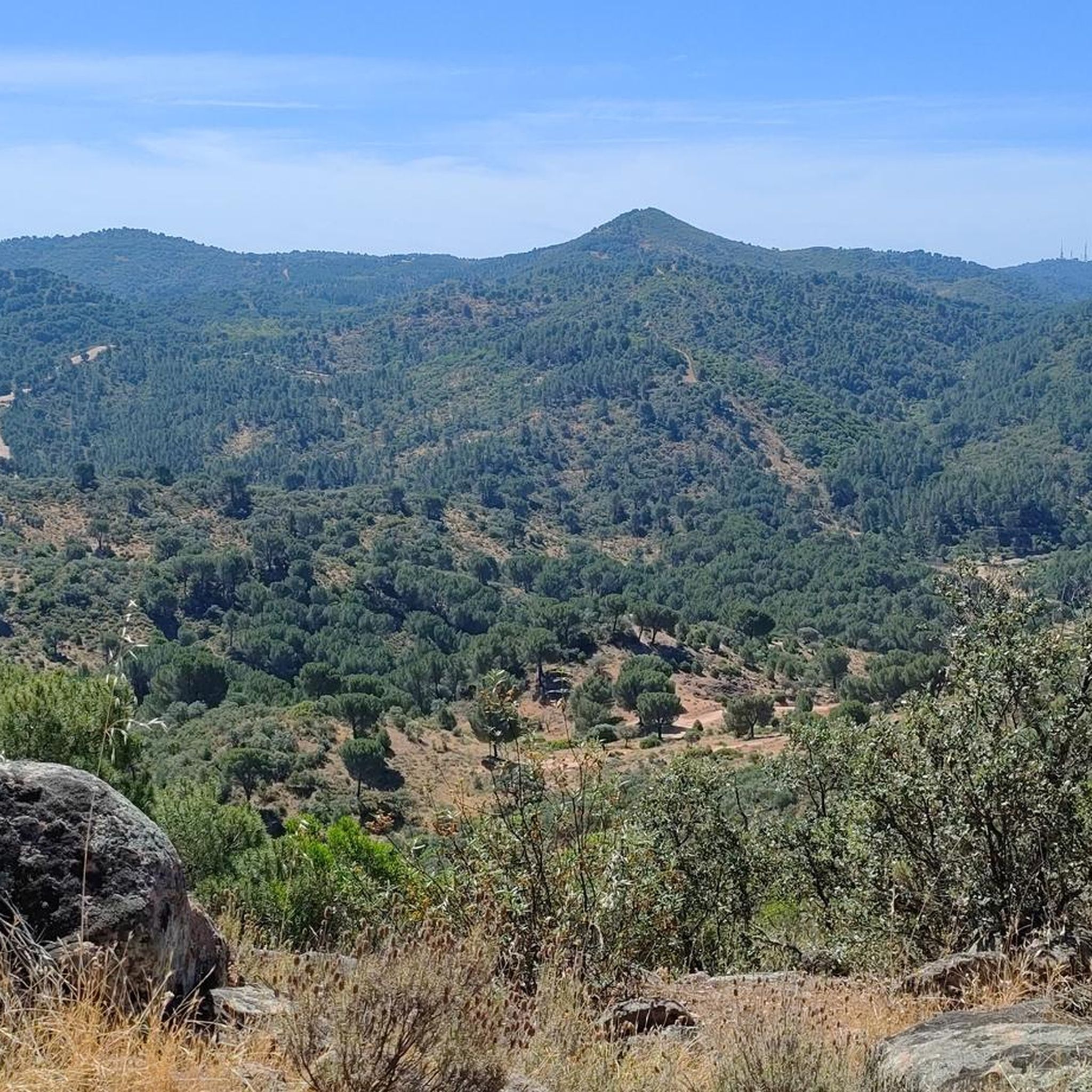
Attractions and places to see around Villaviciosa De Córdoba are situated within the Sierra Morena mountains, offering a blend of historical landmarks and natural beauty. The region is characterized by pine forests, vineyards, and a rich fauna, providing an ideal setting for outdoor exploration. Visitors can discover ancient structures, religious architecture, and significant natural features like waterfalls and reservoirs. This area connects with traditional Andalusian life and offers insights into its past and natural environment.
Best attractions and places to…
Last updated: August 29, 2026
Baños de Popea Waterfalls
Highlight • Waterfall
Translated by Google •
Tip by

Elephant Fountain
Highlight • Monument
Translated by Google •
Tip by

Sign up now to discover places like this
Get recommendations on the best single tracks, peaks, & plenty of other exciting outdoor places.
Sign up for free
Molino del Molinillo
Highlight • Historical Site
Translated by Google •
Tip by

Medina Azahara Archaeological Site
Highlight • Historical Site
Translated by Google •
Tip by
Tower of the Seven Corners
Highlight • Historical Site
Translated by Google •
Tip by

Sign up for free to discover even more attractions around Villaviciosa De Córdoba.
Sign up for free
Already have an account?
Start today with a free account
Your next adventure awaits.
Login or Signup

Tips from the Community

"Madinat al-Zahra, the Shining City" The museum/visitor center and the archaeological site are free for EU citizens. A shuttle bus runs approximately every 20 minutes from the visitor parking lot to the archaeological site. A one-way ticket for adults costs €3. There is a café serving refreshments in the visitor center. More information is available here: https://www.museosdeandalucia.es/web/conjuntoarqueologicomadinatalzahra/servicios-e-instalaciones
5
0

Medina Azzahra, a palace city located a few kilometers from Córdoba, began construction under the Caliphate of Abd al-Rahman III. Construction continued under Al-Haqin II. A third of the revenues of Muslim Spain were needed to build this fortress and official residence. Twelve thousand workers worked tirelessly, with workers from Byzantium and Baghdad arriving. The descriptions of Arab chroniclers portray Medina Azzahra as truly dazzling, a fact that has been further confirmed by excavations. The city was surrounded by a robust wall, with several spacious courtyards inside. Numerous rooms have come to light, but much remains to be excavated.
0
1

One of the vestiges of the Caliphate period can be found in the mountains of Córdoba, less than 15 minutes by car from the capital. It is an ancient watchtower, a lookout from where you can enjoy one of the most impressive views of Córdoba and the Guadalquivir valley. Despite its name, it is actually an octagonal tower, meaning it has eight corners. However, inside it has a square floor plan, with each side measuring approximately 3.40 meters. Built of masonry, a construction method in which irregular stones are joined with mortar, a conglomeration of lime, sand and water without any order of courses. Originally, this tower was part of a network of watchtowers that surrounded the Caliphate of Córdoba and was visually connected to other towers. The Tower of the Seven Corners, despite its poor condition, is a popular destination for cyclists and hikers. A visit to this place can be combined with a visit to the Hermitages of Cordoba, the Baths of Poppaea and the Fountain of the Elephant. (Source: https://www.cordoba24.info/html/torre_siete_esquinas.html)
1
0
Located in the district of Santa Maria de Trassierra, next to the Arroyo del Molino, a tributary of the river Guadiato. It is a mill of Arab origin, probably from the 10th or 11th centuries, whose purpose was to grind flour. These medieval mills made it possible to produce flour in large quantities for 10th-century Caliphal Córdoba. (Source: https://www.conocetusfuentes.com/datos_elemento_884.html)
1
0
Located on the Caño Escaravita estate, just beyond the outlying neighborhood of Santa María de Trassierra. We found it in the western Sierra peri-urban district, next to the crossroads leading to the Ermitas and the Mirador de las Niñas, about fifteen kilometers from Córdoba. This is a zoomorphic water fountain on a pedestal from the Caliphate period, dating back to the 10th century. The sculpture represents a small elephant. Made of gray limestone from the Sierra Morena, it served as a support for the spout. The fountain is made up of three components: a water collection basin, a masonry pillar attached to it on its north side (which leads to a masonry irrigation ditch), and a rectangular pool located to the west of the canal. https://amedinacordoba.com/fuente-del-elefante/
1
0
The Baths of Poppaea are a natural stretch of small waterfalls alternating with small pools that follow the course of the Molino stream, near the mouth of the Guadiato River. This area was visited by Christopher Columbus. Its name comes from the place where the Cordoba poets of the Cántico Group used to visit, as during the Franco regime it was a safe place, away from the scrutiny of this intellectual group, as well as the homosexuality of some of them. One day, three members of the group, Pablo García Baena, Juan Bernier, and Ricardo Molina, were walking when they saw some girls bathing in the stream. The latter exclaimed, "Look, like Poppaea in the bath," referring to the Roman Empress Poppaea Sabina, a prominent figure at the time due to the film The Sign of the Cross (1932), in which actress Claudette Colbert appeared bathing in donkey's milk, just as the Empress did. The girls told the residents of Trassierra about this incident, and from then on, the story spread and became known as the Baths of Poppea. https://es.wikipedia.org/wiki/Ba%C3%B1os_de_Popea
2
0

An incredible place, a structure and construction that transports you to the Roman era. It is worth taking the route and spending some time enjoying the site.
2
0

Please note that this highlight is also listed in the description as a parking spot. However, we found that it is not allowed to drive up to the indicated parking spot/start of the route with a car. Just park near the jardin de popea and start the hike from there, it will add 2.5 km to the distance but is not too bad.
1
0
Frequently Asked Questions
What natural features can I explore around Villaviciosa de Córdoba?
The region is rich in natural beauty, nestled within the Sierra Morena mountains, featuring pine forests and vineyards. You can visit the unique Baños de Popea Waterfalls, a series of small cascades and pools. The Embalse de Puente Nuevo reservoir is excellent for birdwatching and water activities. For stargazing, Las Chorreras del Orejón is a notable spot.
Are there historical sites to visit in the area?
Yes, Villaviciosa de Córdoba boasts several historical sites. The Medina Azahara Archaeological Site, a UNESCO World Heritage Site, offers a glimpse into the lavish city built by Abd-al Rahman III. You can also explore the ancient Molino del Molinillo, an ancient mill with Roman-era structures, and the Tower of the Seven Corners, an Islamic watchtower with panoramic views.
What outdoor activities are available near Villaviciosa de Córdoba?
The Sierra Morena provides an ideal setting for various outdoor activities. You can enjoy hiking, cycling, and horseback riding through pine forests and vineyards. For specific routes, explore the running trails, road cycling routes, and touring bicycle routes available in the area.
Are there any family-friendly attractions or activities?
Families can enjoy exploring the natural landscapes and historical sites. The Elephant Fountain, part of a Roman aqueduct, is a unique man-made monument that can be an interesting stop. Gentle walks around the Embalse de Puente Nuevo or exploring the smaller cascades at Baños de Popea can also be enjoyable for families.
What is the best time of year to visit Villaviciosa de Córdoba for outdoor activities?
Villaviciosa de Córdoba is ideal for outdoor activities during spring and autumn when the weather is mild and pleasant. These seasons offer comfortable temperatures for hiking, cycling, and exploring the natural and historical sites without the intense heat of summer.
Where can I find unique viewpoints in the region?
For stunning vistas, the Tower of the Seven Corners offers impressive views of Córdoba and the Guadalquivir valley. Additionally, the road linking Villaviciosa with Posadas provides picturesque views of spots like La Chorrera del Orejón and Barranco de la Mula.
What kind of wildlife can be observed in the Sierra Morena?
The Sierra Morena is known for its rich fauna. You might spot deer and wild boar, and it's a refuge for endangered species such as the black stork, red kite, black vulture, imperial eagle, wolf, and the Iberian lynx. Birdwatching at Embalse de Puente Nuevo is also highly recommended.
Can I find places for wild swimming or water activities?
Yes, the Baños de Popea Waterfalls feature small pools where you can take a dip. The Embalse de Puente Nuevo reservoir also offers opportunities for water activities like kayaking and is rich in flora and fauna.
What are some lesser-known historical gems around Villaviciosa de Córdoba?
Beyond the major sites, you can discover the ruins of Castle Cabeza de la Vaca and Castle de Nevado. The Caliph Bridge over the Guadiato River (Puente Tejera), a significant Muslim-era structure, is also worth exploring. The 18th-century buildings La Tercia and La Escribana, and the old House of Customs, offer insights into the region's past.
What are the local handicrafts and gastronomy like in Villaviciosa de Córdoba?
Villaviciosa de Córdoba is known for unique handicrafts, particularly items made from deer antlers, bulrush, leather, and wrought iron. The local cuisine is rooted in traditional Sierra Morena products, featuring dishes like venison stew, rabbit stew, migas, and traditional sweets such as *perrunas* and *hojuelas*.
Are there any religious landmarks worth visiting?
Yes, the town has several significant religious sites. The Chapel of Nuestra Señora de Villaviciosa, an 18th-century chapel, is central to the town's history. The Parish Church of San José, built in Neoclassical style, houses a valuable collection of Cordovan silverware and a 17th-century sculpture of San Judas Tadeo. The Chapel of San Isidro is another site of interest.
Is there a place for stargazing near Villaviciosa de Córdoba?
Yes, Las Chorreras del Orejón is a key natural attraction particularly noted for its Starlight Observatory, making it an excellent spot for stargazing.
Most popular routes around Villaviciosa De Córdoba
Most popular attractions around Villaviciosa De Córdoba

Get inspired with the komoot mobile app


Explore more
Still not found the Highlight you’re looking for? See guides of the top attractions in other regions:
