Attractions and Places To See around Adradas - Top 12
Best attractions and places to see around Adradas include historical religious sites and natural rock formations in the Soria province of Spain. This region offers a glimpse into traditional Spanish village life, characterized by its cultural heritage and surrounding natural landscapes. Visitors can explore ancient churches, unique geological features, and scenic viewpoints. The area provides opportunities for discovering local history and enjoying the natural environment.
Best attractions and places to see around Adradas
- The most popular attraction is Village Fountain…
Last updated: May 17, 2026
Village Fountain
Highlight • Structure
Tip by

Carravieja Rock Formations
Highlight • Natural Monument
Translated by Google •
Tip by

Sign up now to discover places like this
Get recommendations on the best single tracks, peaks, & plenty of other exciting outdoor places.
Sign up for free
La Bullana Geodetic Vertex
Highlight • Monument
Translated by Google •
Tip by
Romanillos de Medinaceli
Highlight • Settlement
Translated by Google •
Tip by

Fuente de Aguaviva and Recreation Area
Highlight (Segment) • Rest Area
Translated by Google •
Tip by

Sign up for free to discover even more attractions around Adradas.
Sign up for free
Already have an account?
Start today with a free account
Your next adventure awaits.
Login or Signup
Popular around Adradas

Tips from the Community

The Aguaviva Fountain is the main character of the cast, but there are also tables with benches (and shade) where you can have a good time. There is also another Fountain-Water Trough a little further towards the village. The Hermitage of San Roque is nearby.
1
0
Beautiful views from La Bullana.
1
0
These are several separate formations. It is convenient to see them from above and below, (although there is no path).
1
0

Romanillos de Medinaceli is a small and charming town in the Altos de Barahona region. Located next to an old Roman road. La Cañada Oriental Soriana crosses the town, as well as one of the GR86 routes, which makes it a central point for hiking trails.
1
0

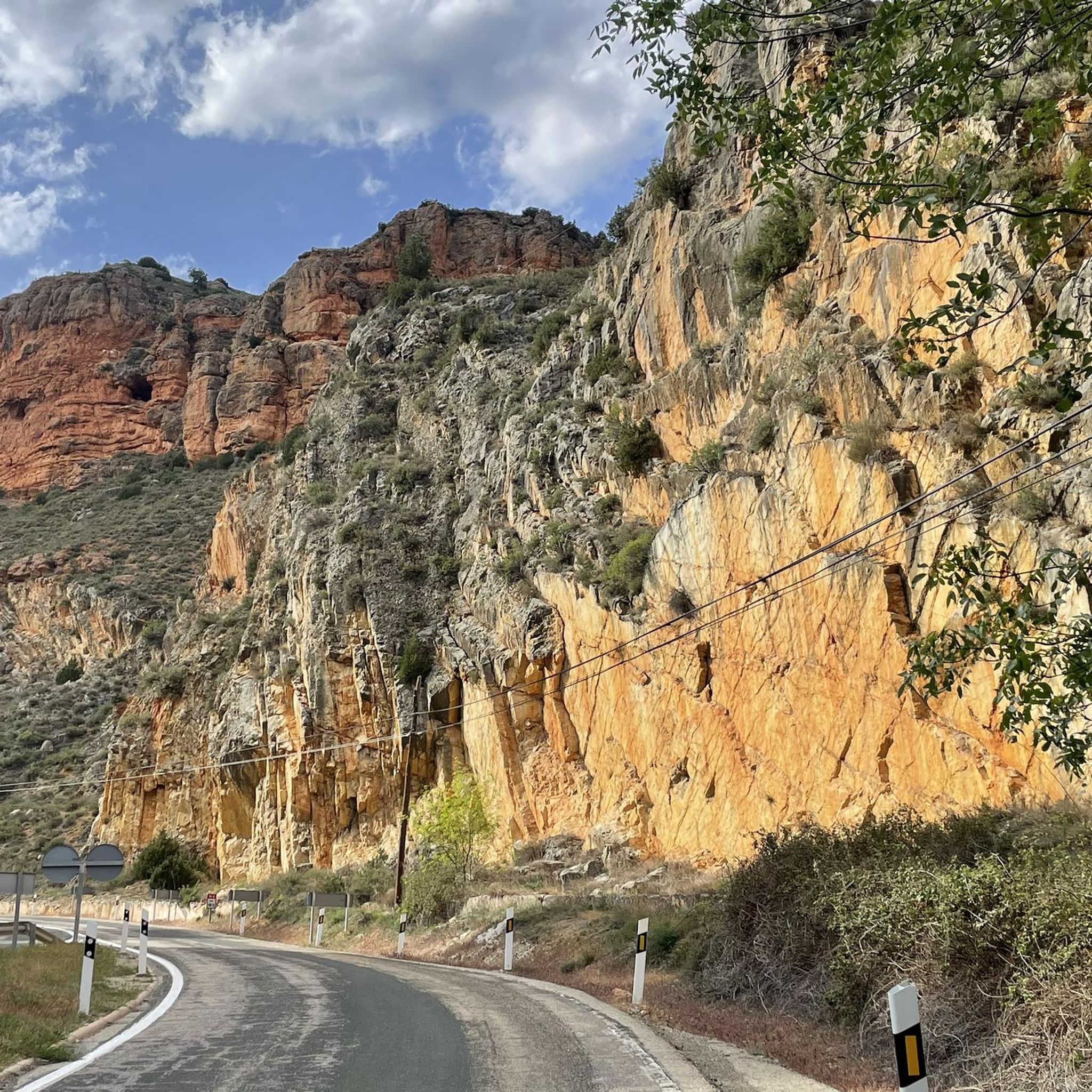
We are among beautiful rock formations that form amazing figures sculpted by atmospheric phenomena. Located near the town of Aguaviva de la Vega.
2
0
Crossing the ridge of the top, we reach the La Bullana Geodesic Vertex from where we will contemplate some excellent views.
2
0

Fountain next to the Church
1
0
Curiosa iglesia amurallada, Iglesia parroquial de San Miguel, de estilo románico del siglo XII, iglesia parroquial de San Miguel es un edificio situado en la zona norte del pueblo, en lo alto de un promontorio. En el suelo de su fachada sur se aprecian tumbas antropomorfas medievales. Tiene influjos del incipiente gótico presentes en los arcos fajones de la bóveda algo apuntados. El ábside semicircular típico de las iglesias románicas se suprimió en el XVIII por un crucero coronado por cúpula al que se adosó una sacristía. La portada sur es románica con arquivoltas, capiteles con motivos estilizados y uno de los escasos ejemplos de crismón en la provincia. Ermita humilladero de la Virgen de la Soledad y via crucis pétreo de Romanillos. Ermita de la Virgen de la Soledad, construida durante el siglo XVI, que se encuentra, como es habitual en las denominadas genéricamente ermitas de humilladero, a la entrada del pueblo, en la carretera de Medinaceli a Baraona. Es un edificio de planta cuadrada, con tejado a cuatro vertientes, construido en sillería de piedra arenisca. La portada es renacentista y destaca del resto de la construcción: sobre dos puertas con arco de medio punto, como es típico en estas ermitas, se abre una hornacina, hoy vacía, rematada por un frontón triangular con una cruz. El interior es de gran sencillez. La cubierta cuenta con un artesonado de influencia mudéjar. En una elevación inmediatamente cercana a la ermita termina el via crucis de piedra que discurre por el pueblo, erigido a finales del siglo XVI.6 Viacrucis Pétreo, se extiende a lo largo de las calles del pueblo para terminar en una pequeña elevación al lado de la Ermita de la Virgen de la Soledad, llamada Las Hiruelas. Su datación cronológica es dudosa, aunque del año 1577 se conserva un cargo en que se paga al maestro que ha «construido» las cruces del Calvario. Esta fecha puede estar de acuerdo con el estilo prevaleciente en las cruces, ya que se trata de unas obras de traza renacentista aunque algunos elementos son ya de características barrocas.
1
0
Frequently Asked Questions
What historical and cultural sites can I explore in Adradas?
Adradas, Soria, offers a rich history, primarily centered around its religious architecture. You can visit the Parish Church of San Miguel, a Romanesque building from the 12th century known for its solid architecture and medieval anthropomorphic tombs. The village also features a charming plaza and the Casa de la Villa (Town Hall). Additionally, the Parish Church of Santa Eulalia de Mérida and the hermitages of San Isidro Labrador and Virgen de la Soledad are part of the local cultural heritage. The nearby town of Romanillos de Medinaceli is also a notable historical site, located next to an old Roman road.
Are there any unique natural features or viewpoints to see around Adradas?
Yes, the area around Adradas boasts some distinctive natural features and excellent viewpoints. The Carravieja Rock Formations are a must-see, featuring beautiful figures sculpted by atmospheric phenomena near Aguaviva de la Vega. For panoramic vistas, head to La Bullana Geodetic Vertex, which offers excellent views from the top of the ridge. The village itself is surrounded by centuries-old oak trees near the local cemetery, and includes a park, picnic area, and a pond.
What outdoor activities, like hiking, are available near Adradas?
Adradas is a great base for outdoor activities, especially hiking. You can find several routes, including moderate hikes like 'La Capadocia Soriana – circular desde Aguaviva de la Vega' (6.8 km), 'Fuentegelmes - Torete River Loop' (10.8 km), and 'Romanillos de Medinaceli — circular por La Maltida' (11.5 km). For more hiking options, explore the hiking guide around Adradas.
Are there any family-friendly attractions or activities in Adradas?
Yes, Adradas offers several family-friendly spots. The Village Fountain, located next to the historic Parish Church of San Miguel, is a pleasant spot. The Fuente de Aguaviva and Recreation Area provides tables with benches and shade, perfect for a family picnic. The village also has a park and a pond, offering simple outdoor enjoyment for families.
What do visitors enjoy most about the attractions in Adradas?
Visitors particularly appreciate the blend of historical charm and natural beauty. The Village Fountain is noted for its proximity to the ancient Romanesque church. The Carravieja Rock Formations are admired for their unique, atmospheric sculptures, while La Bullana Geodetic Vertex is praised for its excellent panoramic views. The overall appeal lies in experiencing traditional Spanish village life amidst scenic landscapes.
Can I find road cycling routes near Adradas?
Absolutely! The region around Adradas is suitable for road cycling. There are several routes available, ranging from easy to moderate difficulty. Examples include the 'La Pared – Yelo loop from Romanillos de Medinaceli' (38.4 km, easy) or longer, moderate loops like 'Alentisque loop from Coscurita' (74.8 km). You can find more options and details in the road cycling guide around Adradas.
Are there any specific tips for visiting the Carravieja Rock Formations?
When visiting the Carravieja Rock Formations, it's recommended to view them from both above and below to fully appreciate their unique shapes. While there isn't a defined path to explore them from all angles, their beauty lies in the figures sculpted by atmospheric phenomena. They are located near the town of Aguaviva de la Vega.
What is the significance of the Parish Church of San Miguel?
The Parish Church of San Miguel is a significant Romanesque building dating back to the 12th century. It is notable for its solid architecture and features medieval anthropomorphic tombs on the ground of its south facade. The church also shows influences of early Gothic style in its pointed arch vaults and retains a Romanesque south portal with archivolts and stylized capitals.
Is there a place to relax outdoors near Adradas?
Yes, the Fuente de Aguaviva and Recreation Area is an ideal spot for outdoor relaxation. It features the main Aguaviva Fountain, along with tables and benches under shade, perfect for unwinding or having a picnic. The Hermitage of San Roque is also nearby, adding to the tranquil atmosphere.
What kind of views can I expect from La Bullana Geodetic Vertex?
From La Bullana Geodetic Vertex, you can expect excellent panoramic views. This point is located on the ridge of a hilltop, offering expansive vistas of the surrounding landscape. It's a great spot for photographers and anyone looking to take in the natural beauty of the Adradas region.
What is Romanillos de Medinaceli known for?
Romanillos de Medinaceli is a small, charming town situated in the Altos de Barahona region. It is historically significant due to its location next to an old Roman road. The town is also crossed by La Cañada Oriental Soriana and one of the GR86 routes, making it a central point for various hiking trails and a notable historical site with religious buildings.
Most popular routes around Adradas
Most popular attractions around Adradas

Get inspired with the komoot mobile app


Explore more
Still not found the Highlight you’re looking for? See guides of the top attractions in other regions:
