Attractions and Places To See around Muniesa - Top 15
Best attractions and places to see around Muniesa include natural features and historical sites. The region, located in the province of Teruel, Spain, is characterized by its karstic landscapes and ancient settlements. Notable points of interest include the Sima de San Pedro, a significant karstic sinkhole, and the Poblado Ibero de San Pedro, an Iberian archaeological site with well-preserved fortifications. These sites offer insights into the area's geological formations and historical past.
Best attractions and places to see around Muniesa
…Last updated: July 7, 2026
Cueva Foradada Reservoir
Highlight • Lake
Translated by Google •
Tip by

Moyuela watering trough
Highlight • Monument
Translated by Google •
Tip by

Sign up now to discover places like this
Get recommendations on the best single tracks, peaks, & plenty of other exciting outdoor places.
Sign up for free
Hoz de la Vieja
Highlight • Settlement
Translated by Google •
Tip by

Hermitage of Santa Ana
Highlight • Religious Site
Translated by Google •
Tip by
Huesa del Común
Highlight • Settlement
Translated by Google •
Tip by

Sign up for free to discover even more attractions around Muniesa.
Sign up for free
Already have an account?
Start today with a free account
Your next adventure awaits.
Login or Signup


Tips from the Community

Huesa del Común is a small town in the Cuencas Mineras region, located in a spectacular setting next to the Aguasvivas River, which forms a limestone canyon ideal for climbing and via ferrata. The remains of the Peñaflor Castle, of Muslim origin, rise on a rocky outcrop, and a late medieval bridge stands out in the town center. The town is also known for its pottery-making tradition, vestiges of which can still be seen in the Las Ollerías neighborhood.
1
0

On the bed of the Martín River and a few meters from the town of Oliete is the Cueva Foradada reservoir, a beautiful and quiet place ideal for hot days and spending time by the water.
2
1

The Cova Foradada swamp is a reservoir that collects the waters of the Río Martín and where it begins a few kilometers further up, in the town of Alcaine. This body of water meanders through the Sierra de los Moros.
0
0

The name of this locality has a very interesting etymological peculiarity. It really originates from the reddish material of the area, known as Rubiello, which in Aragonese resembles the word viello, old. For this reason and because of the sickle that crosses the town, it was renamed from Foz Rubiella to Foz la Viela, which was later castellanized as Hoz de la Vieja.
0
0

Set consisting of a public fountain, water trough and laundry, following the Renaissance model. The fountain is a singular construction of seated and carved stone, with a vault arch, under which there are three pipes, which pour water to connect with the adjoining trough The trough presents a solid construction of sandstone ashlars, formed by a front wall and a long channel through which the water flows. In its upper central part you can see an old inscription on the stone that dates it to the second half of the 18th century.
1
0
Quadrangular building with a gabled roof. The cover is disfigured by opening a rectangular opening. It has an atrium with a semicircular arch. Good place to shelter from bad weather. It has a large porch. Although the town of La Hoz de la Vieja is very close.
0
0

The Cueva Foradada reservoir collects the waters of the Martín River.
5
0
Frequently Asked Questions
What natural features can I explore around Muniesa?
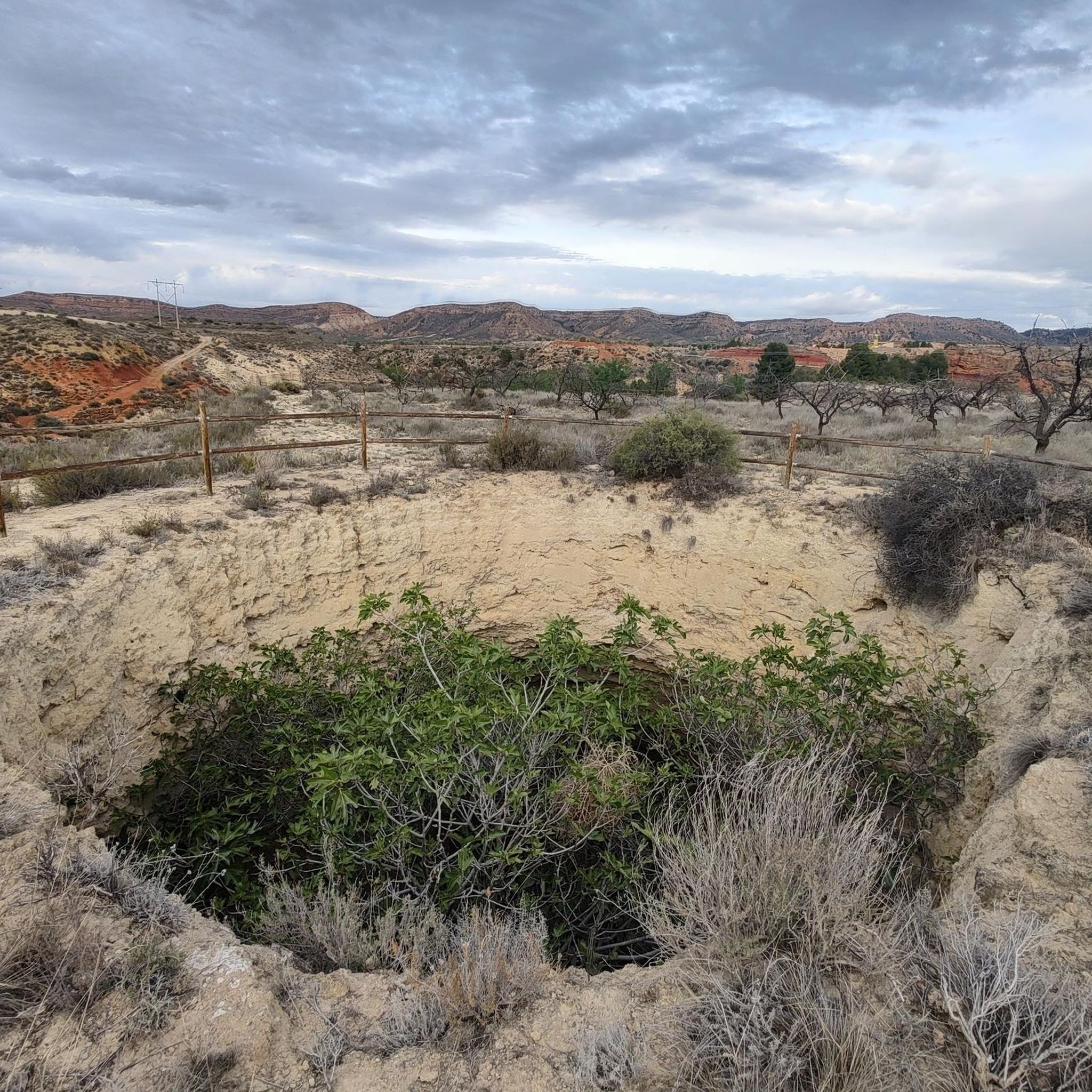
The region around Muniesa is known for its unique natural landscapes. A must-see is the Sima de San Pedro, a remarkable karstic sinkhole located near Oliete. It's considered one of Europe's most important ecosystems due to its size and geological value, featuring a 120-meter depth and an internal lake. You can observe its impressive interior from a footbridge. Another beautiful spot is the Cueva Foradada Reservoir, a quiet lake that collects the waters of the Martín River, ideal for spending time by the water.
Are there any significant historical or archaeological sites near Muniesa?
Yes, the area boasts rich history. The most prominent is the Poblado Ibero de San Pedro (Iberian Settlement of San Pedro), an archaeological site dating from the 3rd to mid-1st century BCE. It features impressive, well-preserved fortifications, including a double line of walls and a tower over 13 meters high. This site is a testament to Iberian culture and has been declared a Cultural Interest Site. You can also visit the Moyuela watering trough, a Renaissance-model public fountain, water trough, and laundry dating back to the 18th century.
What kind of outdoor activities can I do near Muniesa's attractions?
The area around Muniesa offers various outdoor activities, especially cycling. You can find numerous routes for different cycling types. For general cycling, explore options like the 'Cuencas Mineras – circular from Alcaine through Hoz de la Vieja and Obón' or the 'Muniesa – Stone Gateposts on Dirt Road loop'. Road cyclists can enjoy routes such as the 'Moneva, Oliete, and Muniesa Loop'. Mountain bikers have trails like 'Vuelta al Barranco Ancho' or the 'Martín River Route'. You can find more details and routes in the Cycling around Muniesa, Road Cycling Routes around Muniesa, and MTB Trails around Muniesa guides.
Are there family-friendly attractions in the Muniesa area?
Yes, several attractions are suitable for families. The Cueva Foradada Reservoir is a beautiful and quiet place for families to enjoy time by the water. The Moyuela watering trough, with its historical significance and unique architecture, can also be an interesting stop for all ages. Additionally, the Hermitage of Santa Ana, a religious building with a large porch, offers a peaceful visit.
What is the significance of Hoz de la Vieja?
Hoz de la Vieja is a settlement with an interesting etymological origin. Its name evolved from 'Foz Rubiella', reflecting the reddish material of the area, known as Rubiello. This name was later castellanized to Hoz de la Vieja, connecting its local characteristics to its identity. It's a place that tells a story through its name and landscape.
Can I visit ancient castles or settlements in the region?
Beyond the Poblado Ibero de San Pedro, you can explore Huesa del Común. This small town is set next to the Aguasvivas River and features the remains of the Peñaflor Castle, which is of Muslim origin and rises on a rocky outcrop. The town also has a late medieval bridge and a history of pottery-making, making it a fascinating historical stop.
What is the best time to visit the Sima de San Pedro?
The Sima de San Pedro maintains a constant temperature of 18°C year-round in its interior, making it a comfortable visit regardless of the season. However, to best enjoy the surrounding arid landscape and the approach to the sinkhole, spring and autumn generally offer the most pleasant weather conditions for outdoor exploration in the region.
Are there any religious buildings to visit near Muniesa?
Yes, you can visit the Hermitage of Santa Ana. This quadrangular building features a gabled roof and an atrium with a semicircular arch. It's known for its large porch, which can provide shelter from the elements, and is located very close to the town of La Hoz de la Vieja.
What makes the Sima de San Pedro an important ecological site?
The Sima de San Pedro is a vital ecological refuge due to its unique microclimate and constant internal temperature. It supports a diverse range of animal species, including 25 types of vertebrates such as amphibians, birds like rock pigeons and red-billed choughs, and a significant colony of bats. Its deep lake also contributes to its unique ecosystem, making it an oasis in an otherwise arid landscape.
Where can I find more information about the historical sites like Poblado Ibero de San Pedro?
For more detailed historical and archaeological information about the Poblado Ibero de San Pedro, you can refer to resources like its Wikipedia page: Poblado ibérico del Cabezo de San Pedro. Similarly, for the Sima de San Pedro, you can find additional geological and ecological context on its Wikipedia page: Sima de San Pedro.
What do visitors enjoy most about the Cueva Foradada Reservoir?
Visitors appreciate the Cueva Foradada Reservoir for its tranquil atmosphere and its suitability for hot days. It's described as a beautiful and quiet place to spend time by the water, collecting the waters of the Martín River. It's a perfect spot for relaxation and enjoying the natural surroundings.

Get inspired with the komoot mobile app


Explore more
Still not found the Highlight you’re looking for? See guides of the top attractions in other regions:
