The best walks and hikes around Natural Park Esterweger Dose
4.4
(783)
2,679
hikers
313
hikes
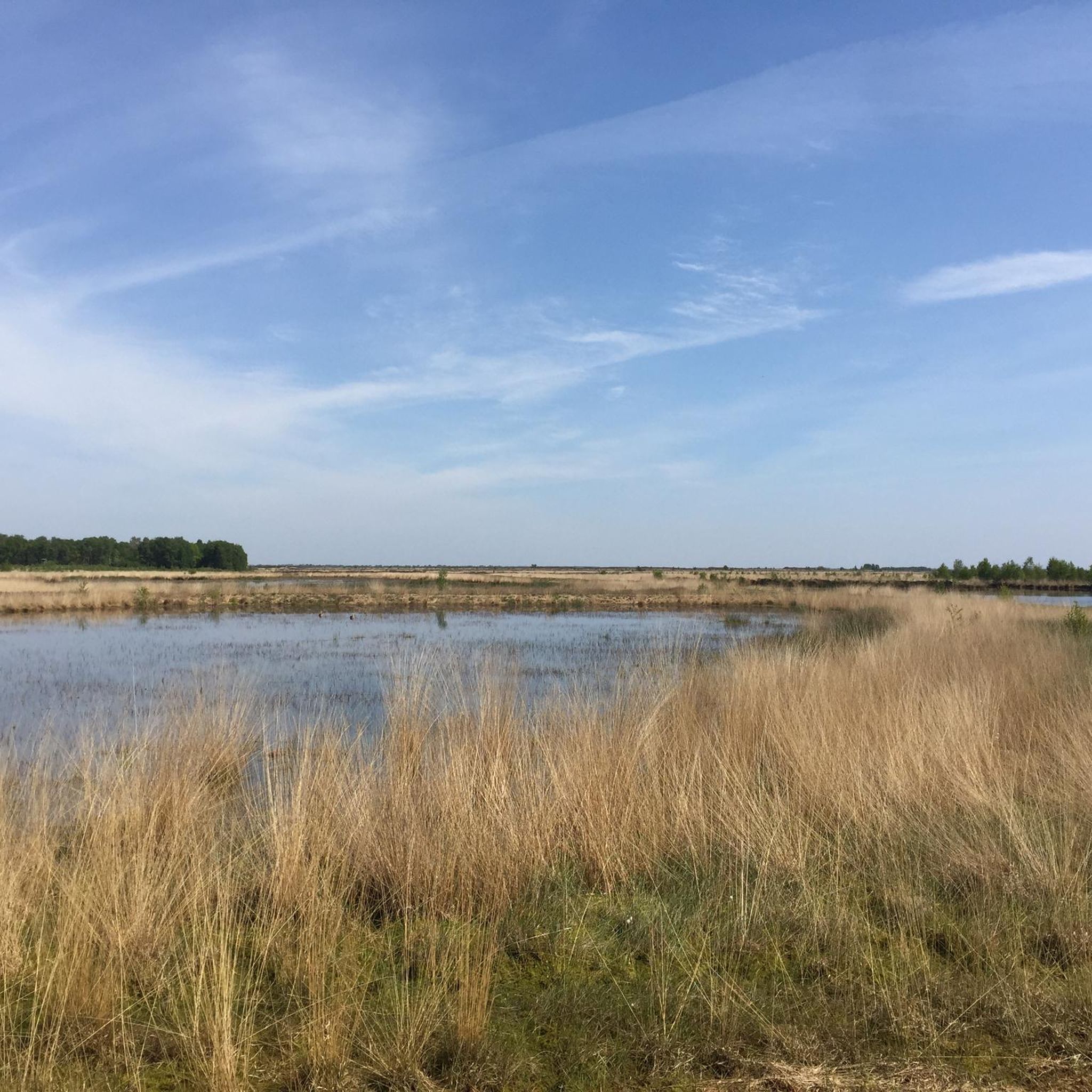
Hiking trails around Natural Park Esterweger Dose traverse a unique high moor landscape, a significant natural reserve spanning approximately 4,747 hectares in Lower Saxony, Germany. The park is characterized by its vast, low-lying moorland, which includes moor forests, borstgrass and purple moor grass meadows, and various bog types. This terrain offers easily accessible paths with minimal elevation changes, making it suitable for diverse hiking abilities. The area is drained by ditches flowing into the Sagter Ems and other local waterways,…
Last updated: July 1, 2026
4.7
(15)
13
hikers
Easy hike. Great for any fitness level. Easily-accessible paths. Suitable for all skill levels.
4.8
(4)
15
hikers
4.23km
01:04
0m
0m
Easy hike. Great for any fitness level. Easily-accessible paths. Suitable for all skill levels.

Sign up for free
5.0
(1)
6
hikers
3.46km
00:53
10m
10m
Easy hike. Great for any fitness level. Easily-accessible paths. Suitable for all skill levels.
1.0
(1)
1
hikers
8.56km
02:09
10m
10m
Moderate hike. Good fitness required. Easily-accessible paths. Suitable for all skill levels.
1.0
(1)
1
hikers
Easy hike. Great for any fitness level. Easily-accessible paths. Suitable for all skill levels.
Get access to more routes and recommendations from other explorers.
Sign up for free
Already have an account?
Our route recommendations are based on thousands of hikes, rides, and runs completed by other people on komoot.
Start today with a free account
Your next adventure awaits.
Login or Signup
Tips from the Community

Unfortunately, it was freezing cold and sleet. It was too slippery. But we'll be back!
1
0

The 35.8 km gravel loop runs along the towers. This agricultural road is NOT to be used and is closed off!!! The Jammertalstrasse should be approached from Langholt.
0
0

Funnily enough, the HL is now located at the Strenge company. It produces a wide range of soils and substrates. In the postwar period, black peat was highly valued as a fuel. In 1949, around 400,000 tons of fuel peat were extracted from the East Frisian moorlands, and the majority was produced using powerful machines. These machines operated in the moorlands, particularly around Ostrhauderfehn, from early spring to late summer. The compressed peat was transported from the moor in the fall by narrow-gauge railway and then loaded onto ships. A special peat loading station was set up over the canal of the 1st Südwieke, where the peat could be efficiently loaded onto ships. A narrow bridge made it possible to push the loaded peat piles onto the bridge, and up to 25 tons of peat could be loaded within a very short time. Not only peat ships were loaded, but also simple barges with a low carrying capacity. These barges were often unmotorized and had to be towed for miles. One or more people pulled the vessel with a rope, while the boatman steered the boat with a long pole at the stern.
3
0
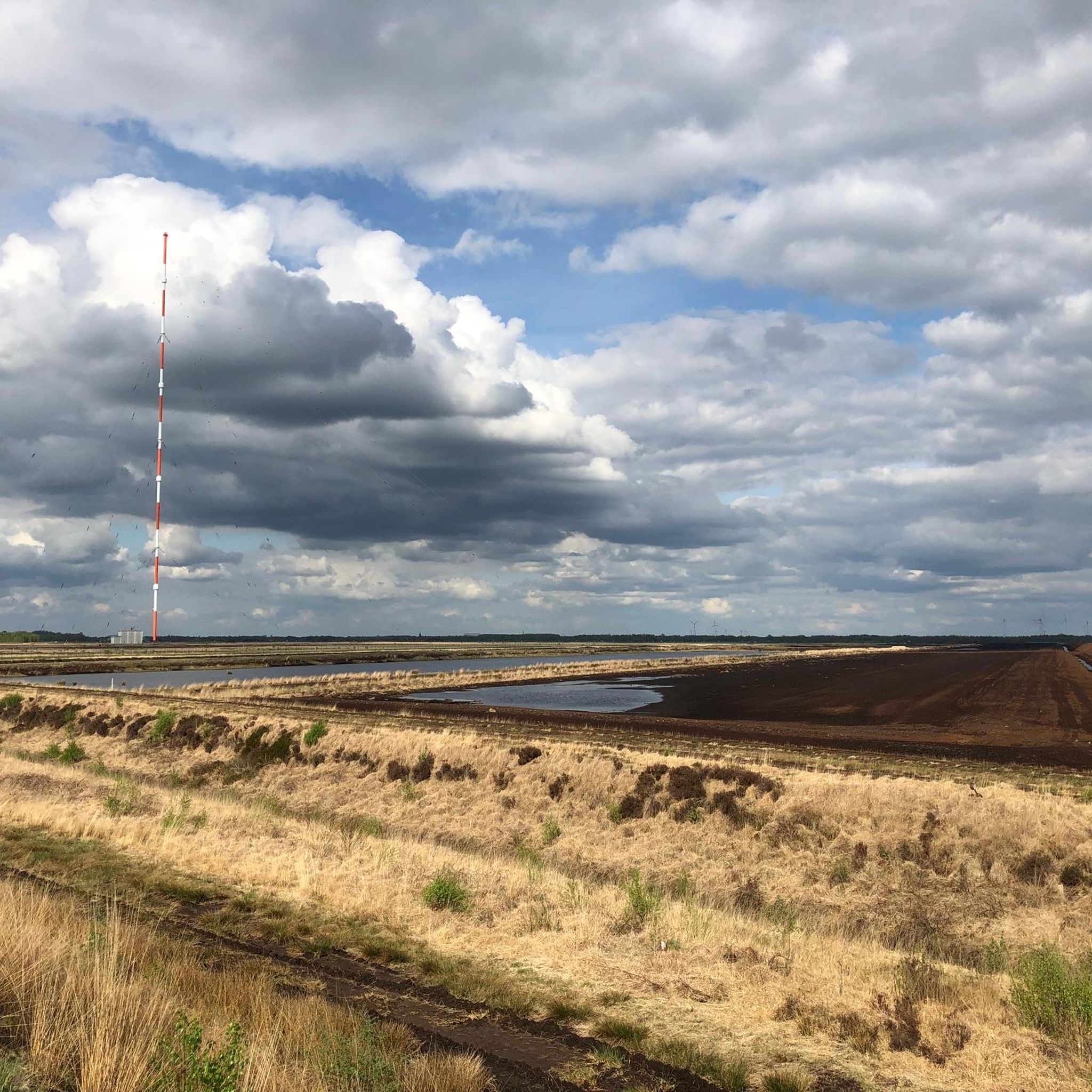
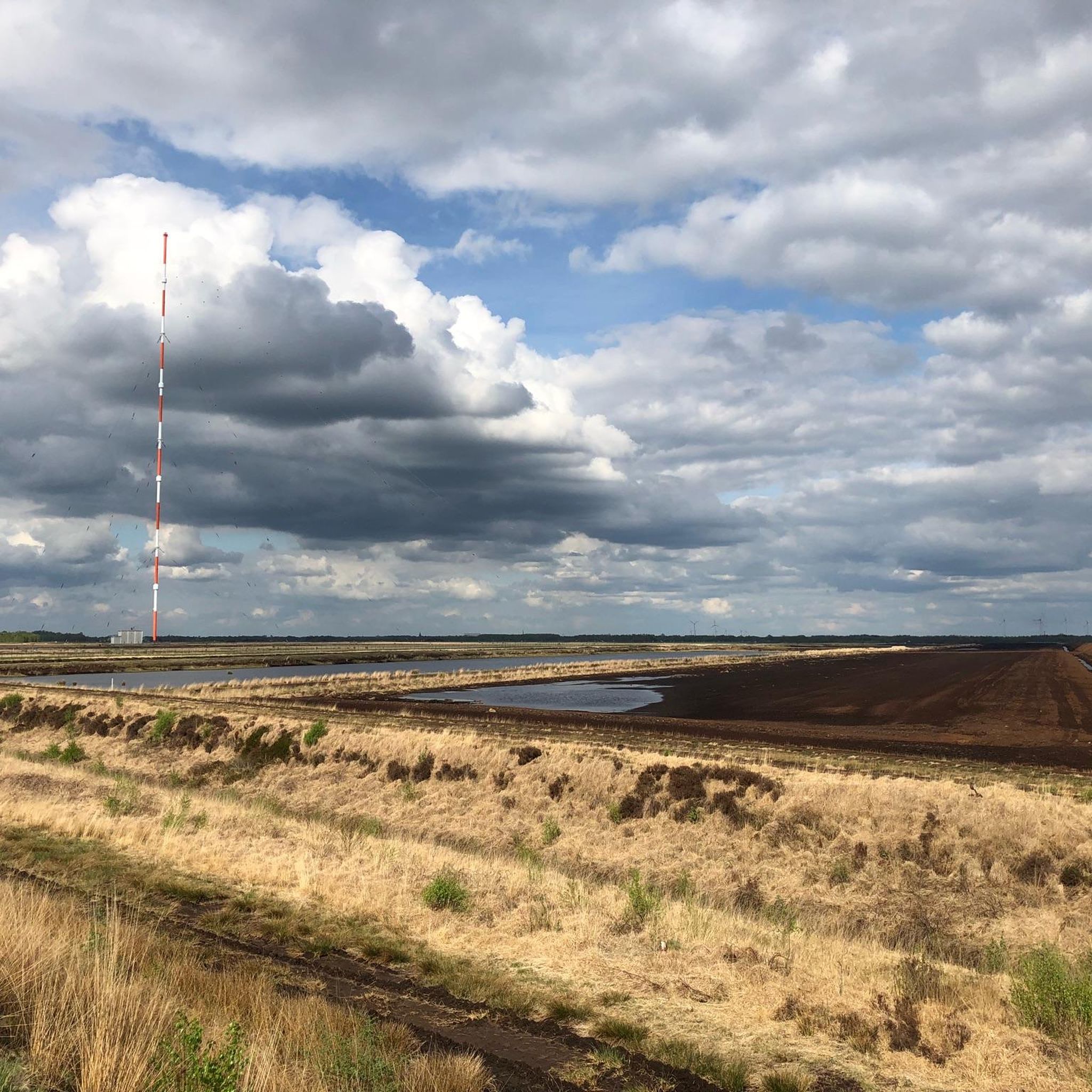
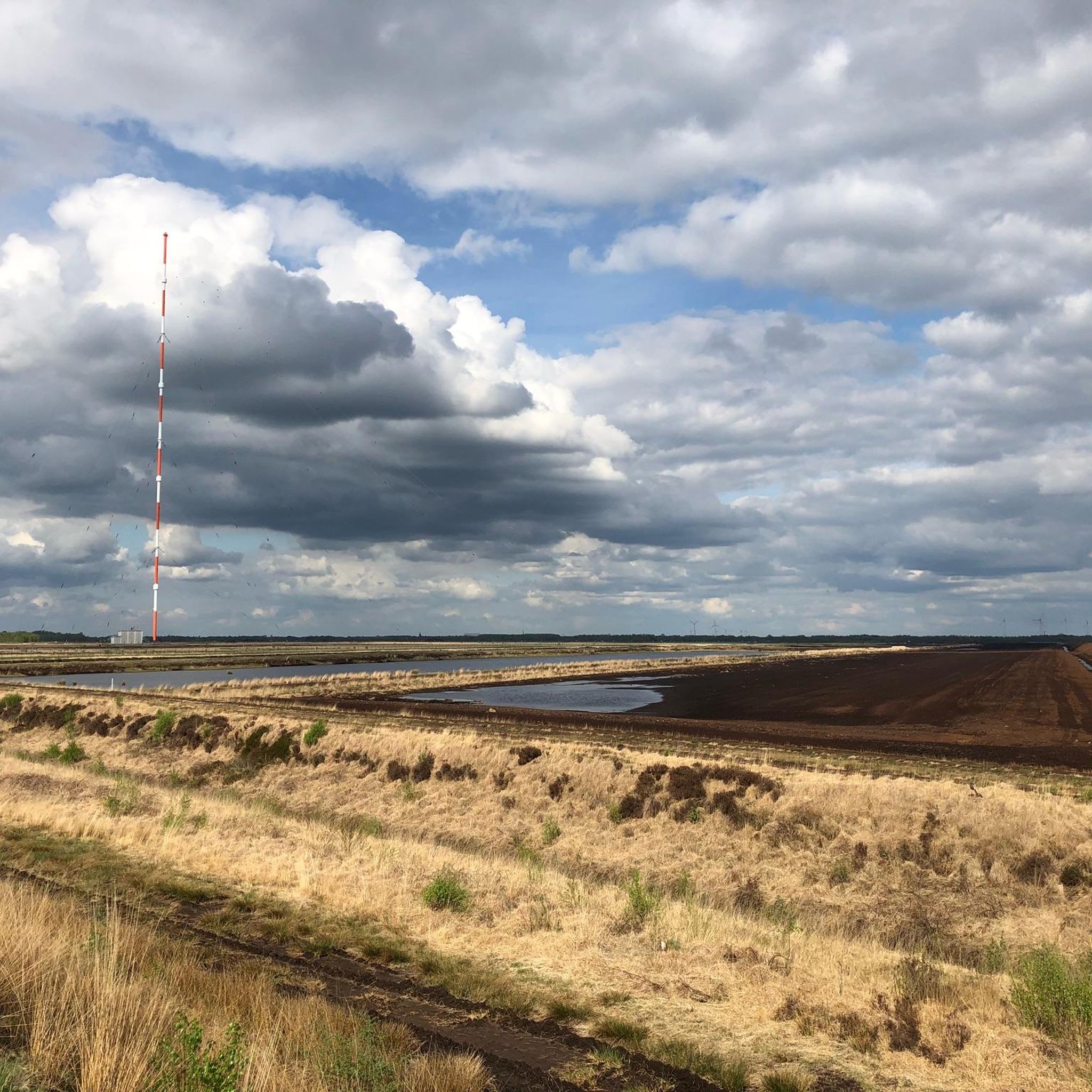
Each mast is mounted on an approximately 3-meter-high ceramic insulator that can withstand a load of 4,000 tons and insulates voltages of up to 250 kV. The masts are each secured by nine guy wires at three levels, each offset by 120 degrees. Four masts form a common antenna that requires no overhead connection. The antenna is fed via coaxial cables to the tuning stations, where the power is adjusted and fed into the mast. It is worth noting that the antenna structure does not have a pronounced directional pattern, as it is smaller than the wavelength of 12.82 km at the current frequency of the DHO38. For inspection and maintenance work, there is a worm-gear-driven elevator and a ladder inside the masts. The elevator can transport up to three people and ensures safety through mandatory safety harnesses.
1
0
Superlatives The naval radio station is one of the tallest military structures in Western Europe and, at 352.8 meters, the second tallest structure in Germany, visible from over 30 kilometers away. The transmitter is located near Saterland-Ramsloh in the Cloppenburg district (Lower Saxony). The borders of the two districts of Cloppenburg and Leer run through the naval radio station site. Five antennas are located in East Frisia, and three are located in Cloppenburg. The site is surrounded by a 12-km-long, continuously monitored fence. A naval radio station with eight identical umbrella antennas mounted on 352.8-meter-high tubular steel masts. These masts have a diameter of 2.20 meters and wall thicknesses of 8 to 13 mm, depending on local loads.
1
0
1933-1945 The Emsland Camps - The National Socialists and their henchmen set up a total of 15 concentration, penal and prisoner of war camps in the Emsland region. Twelve of them are located in the area of today's Emsland district, three in the Grafschaft Bentheim district. Thousands of people were held in the camps, including numerous "political prisoners" who stood in the way of the National Socialists enforcing their rule. The construction of the Emsland camps took place in three phases that overlapped in time: 1933-1936 Establishment and guarding of concentration camps by the SS (Börgermoor, Neusustrum, Esterwegen) 1934-1945 Penal camps under the supervision of the justice administration (Aschendorfermoor, Börgermoor, Rhede-Brual, Walchum, Neusustrum, Oberlangen, Esterwegen, Versen, Fullen) 1939-1945 Prisoner of war camps of the Wehrmacht High Command (Oberlangen, Wesuwe, Versen, Fullen, Groß Hesepe, Dalum, Wietmarschen, Bathorn, Alexisdorf) Hardly anything of the former Emsland camps can be seen on site. At the locations of the former camps, information boards now provide information about the history of each camp. The Emsland camps I Börgermoor II Aschendorfermoor III Brual-Rhede IV Walchum V Neusustrum VI Oberlangen VII Esterwegen VIII Wesuwe IX Versen X Fullen XI Groß Hesepe XII Dalum XIII Wietmarschen XIV Bathorn XV Alexisdorf https://www.gedenkstaette-esterwegen.de/geschichte/die-emslandlager/ The memorial is easy to reach by bike or car. Bringing bikes or dogs is prohibited on the entire site.
2
1

In the direct vicinity of the Esterwegen Memorial
1
0
Here a narrow bridge leads over the coastal canal
2
0
Frequently Asked Questions
How many hiking trails are available in Natural Park Esterweger Dose?
Natural Park Esterweger Dose offers a wide selection of hiking routes, with over 300 trails recorded on komoot. These include 231 easy routes, 77 moderate routes, and 8 more challenging options, ensuring there's something for every hiker.
What kind of terrain will I encounter while hiking in Natural Park Esterweger Dose?
The park is primarily characterized by its unique high moor landscapes, featuring vast, low-lying moorland with minimal elevation changes. You'll find easily accessible paths, including wooden boardwalks, traversing moor forests, borstgrass and purple moor grass meadows, and various bog types. The terrain is generally flat and well-suited for relaxed exploration.
Are there any family-friendly hiking trails in Natural Park Esterweger Dose?
Yes, Natural Park Esterweger Dose is very family-friendly. The park features numerous easy hikes and walks with readily accessible paths and minimal elevation changes, making them suitable for all skill levels, including children. A good option for a short, easy walk is the Coastal Canal – Esterwegen Memorial loop from Ehem. KZ Esterwegen, which is just 3.5 km long.
Can I bring my dog on the hiking trails in Natural Park Esterweger Dose?
While the region is generally welcoming to dogs, specific rules regarding leashing may apply within the nature reserve to protect the sensitive high moor ecosystem and its wildlife. It's always best to keep your dog on a leash to ensure the safety of both your pet and the local fauna. Many trails are suitable for walks with dogs, given their accessible nature.
What are the best viewpoints or natural features to see in Natural Park Esterweger Dose?
A significant attraction is the Feldherrenhügel lookout point, which offers panoramic views of the expansive moorland. A wooden boardwalk leads to this elevated perspective. You can also explore the unique high moor ecosystems, bog pools, and the diverse flora and fauna. The Esterweger Dose viewpoint is a popular spot to take in the scenery.
What wildlife can I expect to see in Natural Park Esterweger Dose?
As an EU bird protection area and FFH area, the park is a vital habitat for rare species. Birdwatchers might spot the golden plover, redshank, curlew, black-tailed godwit, and crane. The undisturbed nature also supports species like the large white-faced darter and unique plants such as sundew. Autumn brings vibrant yellow hues from the purple moor grass.
Are there any circular hiking routes available?
Yes, many of the trails in Natural Park Esterweger Dose are designed as circular routes, allowing you to start and end at the same point. For example, the Hiking loop from Heinrich Strenge GmbH & Co. KG - Erden- und Kompostwerk is an easy 6.9 km circular trail that showcases the area's natural beauty.
Where can I park when visiting Natural Park Esterweger Dose for a hike?
While specific parking areas are not detailed for every trailhead, the region is generally well-equipped for visitors. Look for designated parking spaces near popular access points or trailheads. It's advisable to check local signage upon arrival for the most current parking information.
What do other hikers enjoy most about Natural Park Esterweger Dose?
The area is highly rated by the komoot community, with an average score of 4.4 stars from over 600 reviews. Reviewers often praise the tranquil atmosphere, the unique high moor landscapes, and the accessibility of the paths, making it a peaceful and enjoyable experience for all skill levels.
Are there any guided nature tours available in the area?
Yes, in the broader Emsland region, which includes parts of Esterweger Dose, certified nature and landscape guides offer public tours. These guided excursions provide valuable insights into the local flora and fauna, including birdlife and medicinal plants, enriching your hiking experience with educational context.
What is the best time of year to visit Natural Park Esterweger Dose for hiking?
The park offers unique experiences throughout the year. Spring and summer are ideal for observing diverse flora and fauna, while autumn is particularly striking when parts of the reserve are colored by the vibrant yellow of purple moor grass. The accessible paths make it enjoyable in most seasons, though conditions can vary.
Are there any waterways or canals to see along the trails?
Yes, the area is drained by ditches flowing into the Sagter Ems and other local waterways, contributing to its diverse wetland habitats. The Coastal Canal is a notable feature, and you can find trails that follow its banks, offering tranquil waterside views.
Most popular routes around Natural Park Esterweger Dose
Most popular attractions around Natural Park Esterweger Dose

Get inspired with the komoot mobile app


Explore more
Browse the best Hikes in other regions.
