The best road cycling routes around ZPE Évora
4.3
(3)
276
riders
17
rides
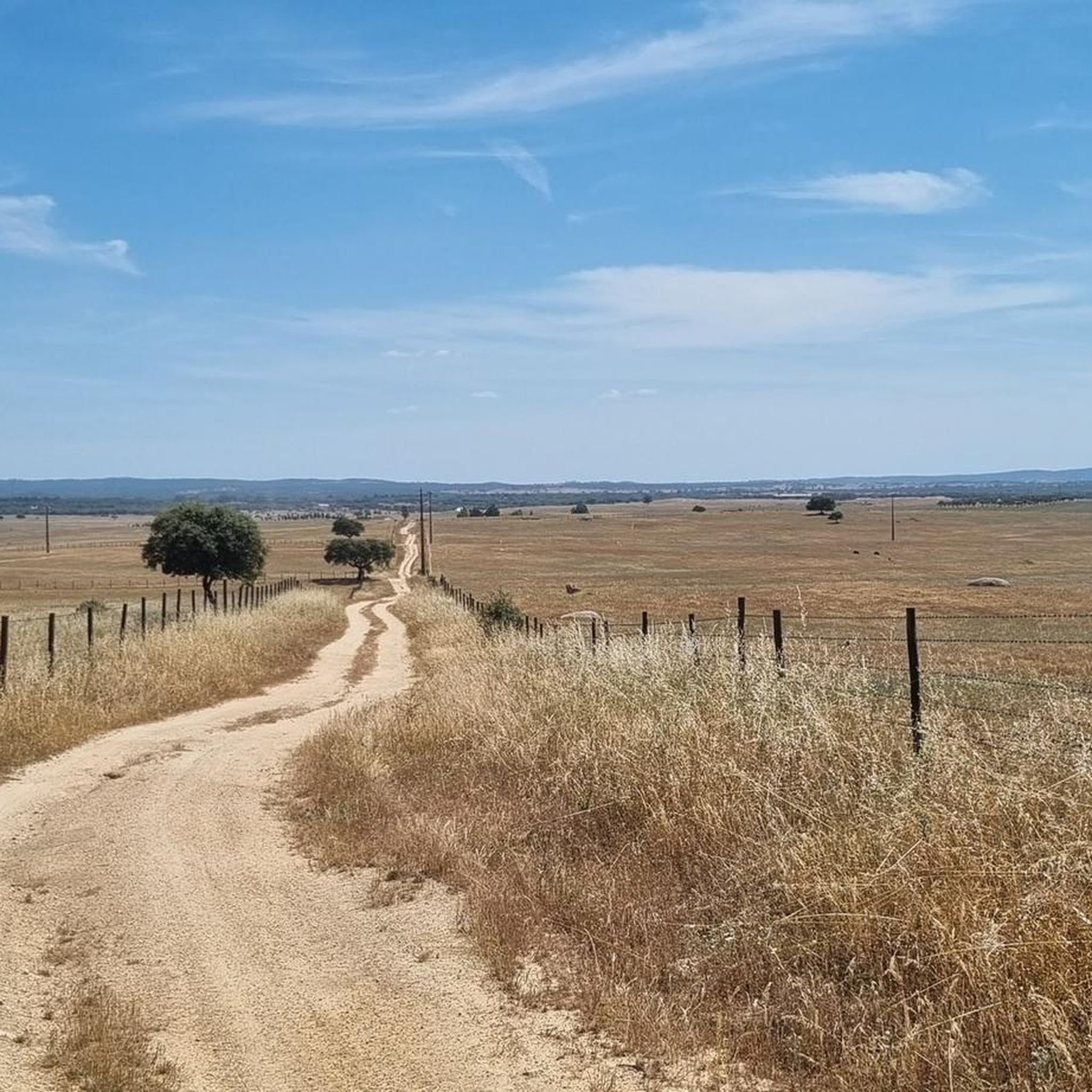
Road cycling routes around ZPE Évora traverse a landscape characterized by expansive, rolling plains and gentle to moderately hilly terrain. The region features the unique Montado landscape, with extensive olive groves and cork oak forests, providing varied scenery for cyclists. Routes often incorporate significant prehistoric sites like megalithic monuments and the impressive 16th-century Água de Prata Aqueduct. This area, part of the Natura 2000 network, offers a blend of natural features and historical attractions.
Best road cycling routes around ZPE Évora
- The most popular road cycling route is Valverde – Évora City Walls loop from Évora, a 32.4 miles (52.2 km) trail that takes 2 hours 26 minutes to complete. This route offers views of Évora's historic city walls and surrounding countryside.
- Another top favourite among local road cyclists is Aqueduct Hotel – Checkpoint 3, Évora loop from Évora, a moderate 25.7 miles (41.4 km) path. This route passes by the historic Água de Prata Aqueduct, an impressive engineering landmark.
- Local road cyclists also love the Évora Public Garden – Church of the Holy Spirit loop from Évora, a 53.6 miles (86.3 km) trail leading through rolling landscapes and Montado, often completed in about 3 hours 48 minutes.
- Road cycling around ZPE Évora is defined by rolling hills, the unique Montado landscape with cork oak forests, and historical landmarks such as megalithic monuments and aqueducts. The network offers options for different ability levels, from moderate loops to more challenging distances.
- The routes in ZPE Évora are highly rated by the komoot community with an average score of 4.4 stars from more than 5 reviews. More than 300 road cyclists have used komoot to explore ZPE Évora's varied terrain.
Last updated: July 24, 2026
4.3
(3)
48
riders
51.7km
02:26
510m
510m
Moderate road ride. Good fitness required. Mostly well-paved surfaces and easy to ride.
14
riders
111km
05:10
970m
970m
Hard road ride. Very good fitness required. Some segments of this route may be unpaved and difficult to ride.

Sign up for free
14
riders
90.7km
04:11
710m
710m
Moderate road ride. Good fitness required. Mostly well-paved surfaces and easy to ride.
11
riders
63.7km
03:00
450m
450m
Moderate road ride. Good fitness required. Mostly well-paved surfaces and easy to ride.
11
riders
84.3km
03:52
620m
620m
Moderate road ride. Good fitness required. Some segments of this route may be unpaved and difficult to ride.
Get access to more routes and recommendations from other explorers.
Sign up for free
Already have an account?
Our route recommendations are based on thousands of hikes, rides, and runs completed by other people on komoot.
Start today with a free account
Your next adventure awaits.
Login or Signup



Tips from the Community

3. Transition to Adults and Integration into the National Network (2004–Present) Name Change: In 2004, the institution extended its assistance to the adult population and changed its official designation to Hospital S. João de Deus. Continuing Care: In 2009, it formally integrated into the National Network of Integrated Continuing Care (RNCCI), providing specialized convalescence, rehabilitation, and palliative care services. 75 Years of History: The institution celebrated its 75 years of mission, marked by community events organized by the Montemor-o-Novo City Council and the Archdiocese of Évora.
10
0
1. Foundation and Children's Focus (1947–1956) [1] The Construction: Construction began in 1947 and the original building was inaugurated in 1950 as the S. João de Deus Children's Hospital. The adjoining church was completed in 1954. Initial Mission: The hospital was created to provide a national response for children suffering from poliomyelitis (infantile paralysis) and congenital malformations. Impact: By 1956, it had served around a thousand children, most of them from the south of the country. 2. Pioneering Physical Rehabilitation (1956–1969) Gulbenkian Support: Starting in 1956, the Calouste Gulbenkian Foundation began to subsidize the institution. This financial support allowed for the construction of a new hospital building in 1966. Multidisciplinary Approach: In 1969, the pioneering Hydrotherapy service was inaugurated. By combining a gymnasium, electrotherapy, and orthopedic workshops for prosthesis manufacturing, it became one of the first units in Portugal focused on integrated physical rehabilitation.
10
0
This is how all cycle paths should be, a dedicated lane for cyclists 🚴♀️, but an integral part of the road.
13
0
The São João de Deus Hospital, in Montemor-o-Novo, was inaugurated on October 3, 1950, as a children's hospital to treat children and victims of polio. It pays homage to João Cidade (Saint John of God), born in this Alentejo town in 1495.
13
0

Vimieiro was a municipal seat between 1257 and 1855. Two charters are known, the first granted by D. Francisco Bruno Neves, Bishop of Évora, in 1257, and the second by D. Manuel I, King of Portugal, in 1512. In 1801, it consisted of the parishes of the town and Santa Justa. It then had 1,819 inhabitants and an area of 266 km². In 1849, it consisted only of the parish of the town. It was suppressed by the administrative reform of 1855, consequently losing its status as a town, a fact that the coat of arms with a mural crown of four visible towers still marks today.
2
0


A must-see for anyone visiting Évora. Its morbid charm is fascinating, and the thousands upon thousands of bones serve as a reminder of one's own mortality. On the ceiling, you can discover various paintings and sayings about death and dying, and I would never have imagined how decoratively the bones were arranged in the chapel.
5
0
Visiting hours: - Daily from 9:00 AM to 6:30 PM - There is a fee per visit.
7
0
Frequently Asked Questions
How many road cycling routes are available in ZPE Évora?
There are over 20 road cycling routes in ZPE Évora, offering a variety of experiences. These include 3 easy routes, 13 moderate routes, and 5 more challenging options, catering to different skill levels.
What kind of landscapes can I expect to see while road cycling in ZPE Évora?
Road cycling in ZPE Évora takes you through diverse landscapes, from expansive, rolling plains and gentle to moderately hilly terrain to the unique Montado landscape, characterized by extensive olive groves and cork oak forests. You'll also encounter historical landmarks and natural features like the 16th-century Água de Prata Aqueduct.
Are there any easy or family-friendly road cycling routes in the region?
Yes, ZPE Évora offers several routes suitable for easier rides, including those that utilize 'ecopistas' – dedicated cycling paths on former railway lines. These provide traffic-free and often downhill experiences, making them accessible for various skill levels, including families. For example, the old Évora-Mora rail track has been converted into an ecotrail.
What historical sites or landmarks can I explore along the road cycling routes?
The region is rich in history. Many routes incorporate significant prehistoric sites like the Almendres Cromlech and Menhir, and the impressive Dolmen of Zambujeiro. You can also cycle past the 16th-century Água de Prata Aqueduct. Within Évora itself, routes often showcase the city's medieval walls and historic center, a UNESCO World Heritage Site. Consider the Valverde – Évora City Walls loop from Évora to experience the city's historic defenses.
Are there any challenging road cycling routes for experienced cyclists?
Yes, for more experienced cyclists seeking a challenge, there are several difficult routes available. One such route is the Checkpoint 3, Évora – View of Alqueva Reservoir loop from Évora, which covers over 120 km and features significant elevation changes, offering a demanding ride with rewarding views.
What are the best routes to see the Água de Prata Aqueduct?
The historic Água de Prata Aqueduct is a prominent feature in the region. A great way to experience this impressive engineering landmark is by taking the Aqueduct Hotel – Checkpoint 3, Évora loop from Évora, which passes directly by it.
What do other road cyclists say about the routes in ZPE Évora?
The road cycling routes in ZPE Évora are highly regarded by the komoot community, with an average rating of 4.4 out of 5 stars. Cyclists often praise the varied terrain, the blend of natural beauty with historical sites, and the well-maintained roads that make for an enjoyable experience.
Can I find routes that offer panoramic views?
Absolutely. The region features several viewpoints that offer expansive vistas. The Alto de São Bento, the highest hill near Évora, provides panoramic views over the city and the surrounding countryside. The hilltop castle of Evoramonte also offers wide visibility across the interior, and some routes, like the Checkpoint 3, Évora – View of Alqueva Reservoir loop from Évora, offer views towards the Alqueva Reservoir.
Are there any circular road cycling routes around ZPE Évora?
Yes, many of the road cycling routes in ZPE Évora are designed as loops, allowing you to start and end in the same location. Examples include the Évora Public Garden – Church of the Holy Spirit loop from Évora, which takes you through rolling landscapes and the Montado.
What is the best time of year for road cycling in ZPE Évora?
While not explicitly stated, the region's description of 'golden wheat fields' and 'extensive olive groves' suggests that spring and early summer offer pleasant temperatures and vibrant scenery. Autumn would also be a good choice, with cooler weather and potentially beautiful foliage, avoiding the peak heat of summer.
Where can I find more information about the natural features of the ZPE Évora region?
ZPE Évora is part of the Natura 2000 network, designated for bird conservation, and is a refuge for over 150 species of birds. The unique Montado landscape with cork oak forests is also a significant natural feature. For more details on the region's nature trails and biodiversity, you can visit the Évora Nature Trails website.
Are there any routes that pass through the historic city of Évora itself?
Yes, several routes incorporate the historic city of Évora. You can enjoy a leisurely ride through its charming streets, showcasing architectural highlights like the Évora Cathedral, Roman Temple, Giraldo Square, and the Chapel of Bones. The Évora City Walls – Valverde loop from Évora is one option that allows you to experience the city's historic surroundings.
Most popular routes around ZPE Évora

Get inspired with the komoot mobile app


Explore more
Browse the best Road cycling routes in other regions.
