Attractions and Places To See around Tafalla - Top 20
Best attractions and places to see around Tafalla is a town located in the heart of Navarra, Spain, known for its blend of medieval charm and modern amenities. It offers a rich history reflected in its architecture and cultural sites, set amidst natural surroundings of valleys and hills. The town provides opportunities to explore local culture and gastronomy, with the Río Cidacos flowing through its landscape.
Best attractions and places to see around Tafalla
- The most popular attractions is Royal Palace of Olite, a castle that served as a seat for the Court of the Kingdom of Navarre. This castle-palace is considered one of the most imposing and luxurious in Spain, built on Roman architectural remains.
- Another must-see spot is Artajona, a medieval settlement. This town is noted as one of the most beautiful and best-preserved medieval towns in Navarra, featuring highlights like the church of San Saturnino and the Dolmens of Artajona.
- Visitors also love Church of Santa María la Real, a Gothic religious building. This church, attached to the Royal Palace of Olite, was used by Navarrese monarchs for major festivals and ceremonial events.
- Tafalla is known for its historical sites, cultural centers, and natural features. Visitors can explore medieval architecture, archaeological sites, and panoramic viewpoints.
- The attractions around Tafalla are appreciated by the komoot community, with 41 upvotes and 57 photos shared by visitors.
Last updated: June 29, 2026
Royal Palace of Olite
Highlight • Castle
Tip by

Church of Santa María la Real
Highlight • Religious Site
Showing Translation
Tip by

Sign up now to discover places like this
Get recommendations on the best single tracks, peaks, & plenty of other exciting outdoor places.
Sign up for free
Artajona
Highlight • Settlement
Translated by Google •
Tip by

Ancient Olive Tree of Olite
Highlight • Natural Monument
Olite November 4, 2006 VI Chapter”
Translated by Google •
Tip by

Ujué
Highlight • Settlement
Translated by Google •
Tip by
Sign up for free to discover even more attractions around Tafalla.
Sign up for free
Already have an account?
Start today with a free account
Your next adventure awaits.
Login or Signup

Tips from the Community

Unfortunately, the Romanesque church cannot be visited.
2
0

The west façade of the Church of Santa María de Olite was restored between 2015 and 2017. The project, funded by the Government of Navarre and the Gondra Barandiarán Foundation, was ambitious and complex. It focused on its spectacular painted portal, built alongside the façade during the first third of the 14th century. The successive layers of polychromy had been preserved thanks to a large portico, removed at the end of the 19th century. It was necessary to clean all the elements, determine the causes of alteration, stabilize the existing damage, and protect the result to ensure its proper preservation. The work garnered the dedication and interest of specialists in architecture, restoration, archaeology, history, art, and viticulture. Thus, this necessarily multidisciplinary book was born. The portal of Santa María de Olite, in its most striking uniqueness, unites Christian iconography, art, and viticulture on a single plane, in a journey "from vine to stone," which is still understandable and coherent today. Information taken from https://www.culturanavarra.es/es/la-portada-de-santa-maria-de-olite-de-la-vid-a-la-piedra
0
0

Carved out of a mountain, Ujué has only 300 inhabitants and is a remarkable example of a medieval village. Above the village towers an 11th century church
0
0
Originally a Roman fortress in a strategic location, the fortress is both a castle and a palace, although it was originally built as a court building to fulfil a military function. Since the 13th century, the Castle of Olite has been called the Palace of the King of Navarre.
2
0

Hidden behind the church is the old olive tree of Olite, I almost didn't see it.
0
0
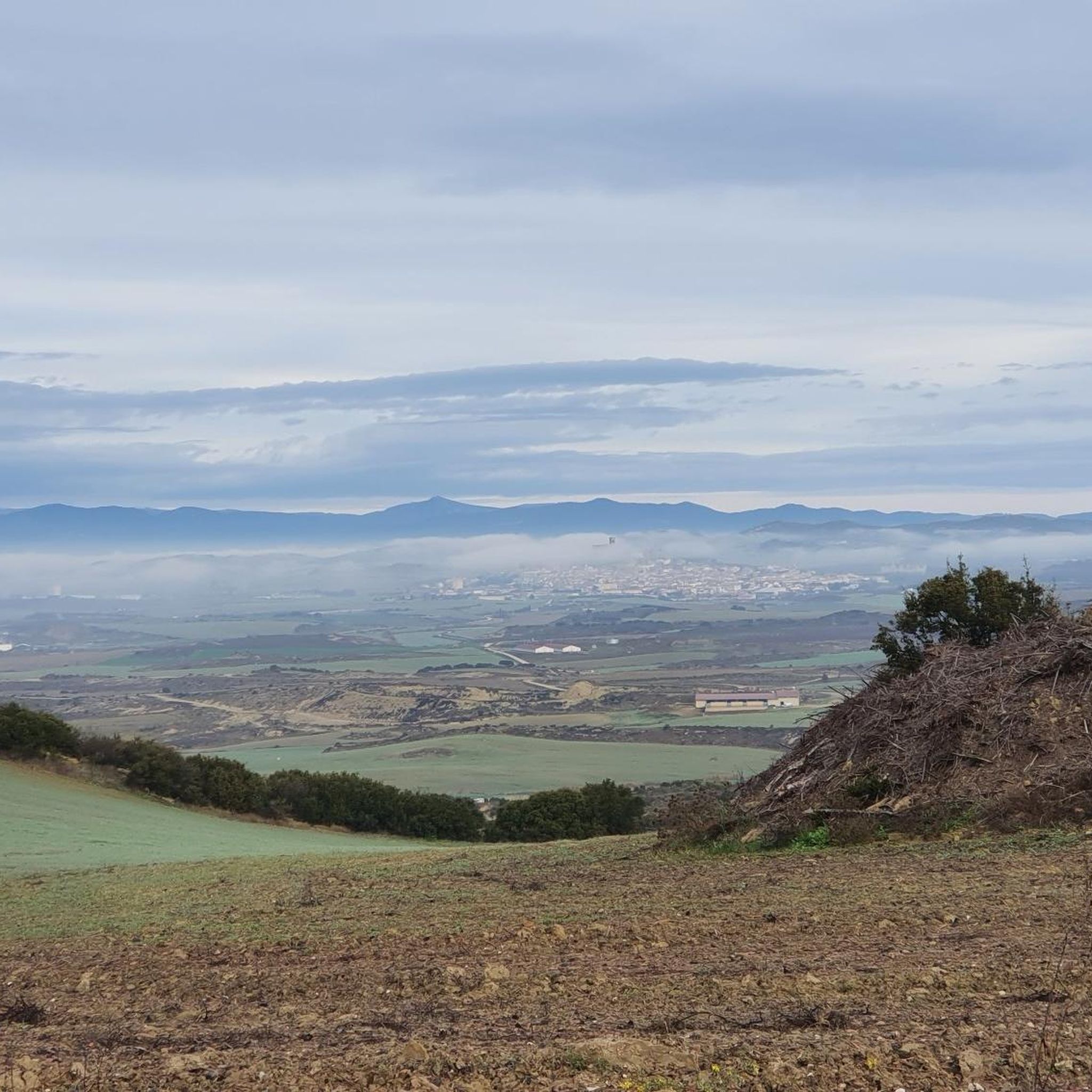
From Ujué there is a beautiful view towards the south down to the Ribera de Navarra, the wide valley of the river Ebro. In between there are mountains on whose slopes wine is grown. The small town is a stop on the Ruta del Vino, which leads through the wine-growing regions of Navarre.
1
0
The church is attached to the Royal Palace and was used by the Navarrese monarchs for major festivals and ceremonial events. The palace had its own chapel dedicated to Saint George and a private, gated gallery dedicated to Saint Mary. Kingdom courts, baptisms, weddings and royal funerals took place here.
1
0
The castle palace of Olite served as the residence of the kings of Navarre until the union of Navarre with Castile in the 16th century. The complex has been a listed monument since 1925.
1
0
Frequently Asked Questions
What historical sites can I explore in and around Tafalla?
Tafalla and its surroundings are rich in history. You can visit the impressive Royal Palace of Olite, a magnificent castle that was once a seat of the Kingdom of Navarre. Within Tafalla itself, explore the Barrio de la Peña, the oldest part of town, and discover remnants of the 14th-century city walls. The medieval settlement of Artajona, with its famous 'siege of Artajona' and the church of San Saturnino, is also a must-see historical gem nearby.
Are there any notable religious buildings to visit near Tafalla?
Yes, several significant religious buildings are worth exploring. The Church of Santa María la Real, a Gothic church attached to the Royal Palace of Olite, is known for its spectacular painted portal. In Tafalla, you can visit the Church of Santa María, originally 13th-century Romanesque, and the Church of San Pedro, which houses a notable Mannerist altarpiece. Further afield, the town of Ujué features the Church of Santa María, a national monument and a prime example of Navarrese medieval architecture.
What natural features or viewpoints can I find in the Tafalla area?
For panoramic views, ascend to Cerro de Santa Lucía in Tafalla, which offers excellent vistas of the city and its surroundings. A pleasant pine forest near Cerro de Santa Lucía also provides great views. The Río Cidacos flows through Tafalla, adding to the town's natural landscape. Additionally, the town of Ujué, perched on a hill, provides incredible views towards the south down to the Ribera de Navarra and the Ebro river valley.
What outdoor activities can I do near Tafalla's attractions?
The region around Tafalla offers various outdoor activities. You can explore several cycling routes, including gravel biking and road cycling. For example, consider the 'Royal Palace of Olite – Church of Santa María la Real loop' for gravel biking or the 'Tafalla – Artajona loop' for road cycling. There are also hiking opportunities, such as the 'Senda del Ángel' or the 'Arga River Trail and Alto Hundido Loop'. You can find more details on these and other routes on the Gravel biking around Tafalla, Hiking around Tafalla, and Road Cycling Routes around Tafalla guide pages.
Are there family-friendly attractions around Tafalla?
Yes, several attractions are suitable for families. The Royal Palace of Olite is a fantastic historical site that often captivates children with its castle-like appearance. The medieval settlement of Artajona also offers an engaging historical experience for all ages. Many of the religious buildings, such as the Church of Santa María la Real, are also categorized as family-friendly.
What is the best time of year to visit Tafalla and its attractions?
Tafalla is enjoyable throughout the year, but the spring and autumn months generally offer the most pleasant weather for exploring historical sites and engaging in outdoor activities. Summers can be warm, but the town's lively atmosphere, especially with 'Juevintxo' events on Thursday evenings, makes it a vibrant time to visit. Winters are milder, offering a quieter experience.
What cultural experiences can I find in Tafalla?
Tafalla offers a blend of traditional and modern cultural experiences. The town's central square, Plaza de Francisco de Navarra, is a hub for local events. The Placeta de las Pulgas is known for its lively terraces, especially on summer evenings. For contemporary culture, the Centro Cultural Tafalla Kulturgunea hosts performances, cinema, and exhibitions. The town also maintains its medieval character in the old town, providing a glimpse into its rich past.
Are there any archaeological sites near Tafalla?
Yes, the La Gariposa Archaeological Site, discovered in 2012 near Tafalla, is believed to be a stable Roman castellum or fortified camp. While not always open for public exploration, it represents an important historical discovery in the region.
What are some unique local experiences in Tafalla?
Beyond the main attractions, Tafalla offers unique local experiences. You can enjoy the 'Juevintxo' events on summer Thursday evenings, where many bars offer wine or beer with a pintxo at a reduced price. The Palacio de los Mencos, a 17th-century palace, offers guided tours that can include local wine tasting for groups, providing insight into Tafalla's aristocratic history and local produce.
What do visitors enjoy most about the attractions around Tafalla?
Visitors frequently praise the historical richness and architectural beauty of the region. The Royal Palace of Olite is often highlighted as one of the most beautiful and imposing castles in Spain. The medieval town of Artajona is appreciated for being one of Navarra's best-preserved. Many also enjoy the incredible views from places like Ujué and the overall charm of Tafalla's medieval old town.
Can I find easy hiking trails near Tafalla?
Yes, there are several easy hiking options available. For instance, the 'Ermita Virgen del Castillo to Alto Cabezon – circular from Miranda de Arga' is an easy route. You can explore more easy and moderate trails on the Hiking around Tafalla guide page, which provides details on distance and difficulty.
Are there any towns near Tafalla worth visiting for their beauty or history?
Absolutely. The nearby town of Artajona is renowned as one of the most beautiful and best-preserved medieval towns in Navarra. Another highly recommended visit is the town of Ujué, known for its stunning views, interesting history, and the impressive Church of Santa María. Both offer a glimpse into the region's rich heritage.
Most popular routes around Tafalla
Most popular attractions around Tafalla

Get inspired with the komoot mobile app


Explore more
Still not found the Highlight you’re looking for? See guides of the top attractions in other regions:
