Attractions and Places To See around Osornillo - Top 20
Best attractions and places to see around Osornillo include historical sites and man-made monuments situated within the Tierra de Campos region. The area is notable for its connection to the Camino de Santiago, featuring several points of interest for pilgrims and visitors. Hydraulic engineering works like the Canal de Castilla also characterize the landscape. This region offers a blend of cultural heritage and historical landmarks for exploration.
Best attractions and places to see around Osornillo
- The most popular attractions is…
Last updated: July 6, 2026
San Nicolás Hermitage at Puente Fitero
Highlight • Religious Site
Translated by Google •
Tip by

Province of Palencia Border Marker on the Camino de Santiago
Highlight • Monument
Translated by Google •
Tip by

Sign up now to discover places like this
Get recommendations on the best single tracks, peaks, & plenty of other exciting outdoor places.
Sign up for free
Jurisdictional Pillory of Boadilla del Camino
Highlight • Monument
Translated by Google •
Tip by
Puente del Rey Aqueduct (Canal de Castilla)
Highlight • Bridge
It allows the crossing over the Valdavia river over five semicircular arches.
Translated by Google •
Tip by

Hospital San Nicolas
Highlight • Historical Site
Translated by Google •
Tip by

Sign up for free to discover even more attractions around Osornillo.
Sign up for free
Already have an account?
Start today with a free account
Your next adventure awaits.
Login or Signup

Tips from the Community

The Hospital of San Nicolás de Puente Fitero, located between Itero de la Vega (Palencia) and Itero del Castillo (Burgos), is a former Romanesque hermitage from the 12th and 13th centuries that served as a hospital for pilgrims on the Camino de Santiago. Today, it has been restored and operates as a hostel exclusively for pilgrims with credentials, managed by the Confraternita di San Jacopo di Compostella, an Italian association based in Perugia.
1
0
The Fitero Bridge, also known as the Itero Bridge, is a historic 11th-century Romanesque construction that crosses the Pisuerga River and connects the towns of Itero de la Vega (Palencia) and Itero del Castillo (Burgos). This bridge marks the provincial border between Palencia and Burgos, and was also formerly the border between the kingdoms of Castile and León.
1
0

boundary stone.
1
1

On the approximately 800-kilometer route through northern Spain – perhaps even earlier in France – the pilgrim has repeatedly crossed borders that may have held significant significance in the past, and some still do today from a regional political perspective. However, for us, who are striving toward the tomb of the Apostle James, the "Credencial" was the only important identification document, and pilgrimage routes – like the heavens – have always been borderless.
5
0

Boundary stone marking the border between the provinces of Palencia and Burgos
8
0
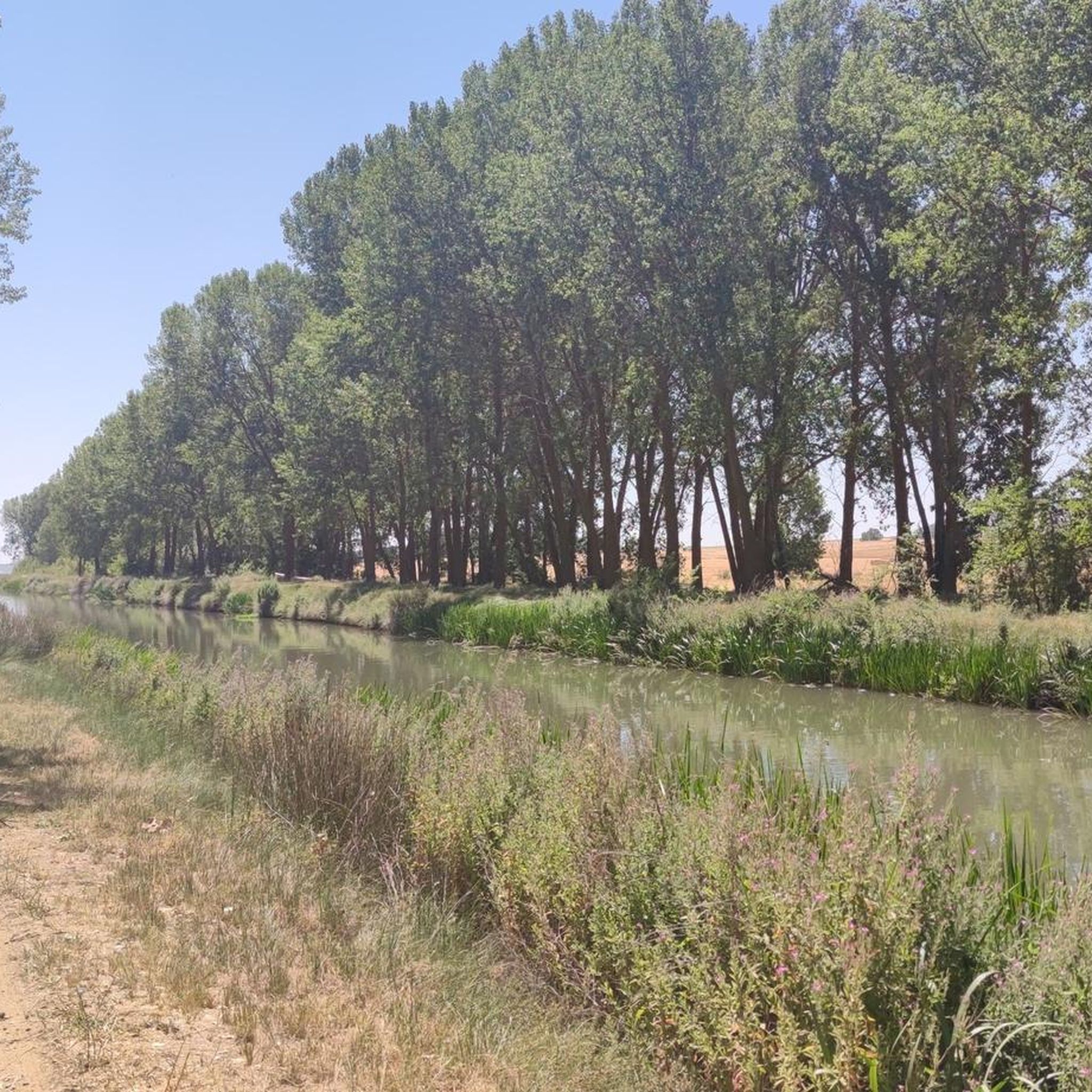
The Puente del Rey is one of the most outstanding structures of the Canal de Castilla, one of the most important hydraulic engineering works in Spain. The Canal de Castilla was built between the 18th and 19th centuries with the aim of facilitating the transport of goods, especially cereals, from the interior of Castile to the ports of northern Spain.
7
0

An inn run by Italian hospitallers from Perugia.
3
0

A special hostel on the Camino Frances. It can also be visited during a short break.
4
0
Frequently Asked Questions
What kind of attractions can I expect to find around Osornillo?
The area around Osornillo is rich in historical sites, religious buildings, and man-made monuments. Many attractions are connected to the Camino de Santiago and the impressive Canal de Castilla, offering a blend of cultural heritage and historical landmarks.
Are there family-friendly attractions in Osornillo?
Yes, several attractions are suitable for families. The Province of Palencia Border Marker on the Camino de Santiago and the Jurisdictional Pillory of Boadilla del Camino are both marked as family-friendly. Additionally, the Puente del Rey Aqueduct (Canal de Castilla) is also considered family-friendly and offers an interesting historical sight.
What historical sites are a must-see around Osornillo?
Beyond the popular San Nicolás Hermitage at Puente Fitero, you should visit the Jurisdictional Pillory of Boadilla del Camino, a Gothic pillory from the 15th century. The Puente del Rey Aqueduct (Canal de Castilla) is another significant historical site, showcasing impressive 18th-century hydraulic engineering.
Are there any accessible attractions for visitors with wheelchairs?
Yes, the Province of Palencia Border Marker on the Camino de Santiago is noted as wheelchair accessible, allowing more visitors to experience this significant landmark along the pilgrimage route.
What outdoor activities can I do near these attractions?
The region around Osornillo is excellent for cycling and mountain biking, often following the historic Canal de Castilla. You can find various routes, including those for touring bicycles, road cycling, and MTB. For detailed routes, explore the Cycling around Osornillo guide, Road Cycling Routes around Osornillo, or MTB Trails around Osornillo.
Are there any specific trails or routes along the Canal de Castilla?
Absolutely. The Canal de Castilla is a prominent feature for outdoor activities. You can find numerous cycling and MTB routes that follow its path, such as the 'Canal de Castilla - Osorno Loop Trail' for MTB or various circular routes for touring bicycles like 'Alar del Rey by the Canal de Castilla'. These routes offer a unique way to explore the historical waterway. Check the dedicated cycling and MTB guides for more options.
What is the significance of the Camino de Santiago in this region?
The Camino de Santiago plays a central role in the attractions around Osornillo. You'll find several points of interest directly related to the pilgrimage, such as the San Nicolás Hermitage at Puente Fitero, which serves as a hostel for pilgrims and maintains the ancient ritual of foot washing. The Province of Palencia Border Marker also signifies a key point along the Camino.
What do visitors enjoy most about the attractions around Osornillo?
Visitors particularly appreciate the historical depth and the unique connection to the Camino de Santiago. The rehabilitation of sites like the San Nicolás Hermitage into a welcoming hostel is often highlighted. The architectural marvels of the Canal de Castilla, such as the Puente del Rey Aqueduct, also receive high praise for their historical significance and visual appeal.
Are there any places to stay or rest near the attractions?
Yes, the San Nicolás Hermitage at Puente Fitero and Hospital San Nicolas both function as hostels, primarily for pilgrims with credentials. These offer a unique opportunity to experience the historical hospitality of the Camino de Santiago.
What is the best time of year to visit Osornillo and its attractions?
The region experiences warm summers and cool winters. Spring (April to June) and autumn (September to October) are generally considered the best times to visit. The weather is milder, making it ideal for exploring historical sites and enjoying outdoor activities along the Camino de Santiago and Canal de Castilla without the intense heat of summer or the chill of winter.
Can I find cafes or refreshments near the main attractions?
While specific cafes are not highlighted for every attraction, villages like Boadilla del Camino, where the Jurisdictional Pillory is located, often have local establishments. Pilgrimage routes like the Camino de Santiago typically have facilities for refreshments and rest stops in the towns they pass through.
Are there any hidden gems or lesser-known spots to discover?
While the main attractions are well-known, the smaller villages along the Camino de Santiago and the Canal de Castilla often hold their own charm. Exploring the less-traveled sections of the Canal or discovering local churches and monuments in towns not explicitly listed as major highlights can reveal unique insights into the region's history and culture.

Get inspired with the komoot mobile app


Explore more
Still not found the Highlight you’re looking for? See guides of the top attractions in other regions:
