The best walks and hikes around Rubí De Bracamonte
5.0
(29)
72
hikers
17
hikes
Hiking around Rubí De Bracamonte offers a serene experience through the vast agricultural plains of Valladolid province. The landscape is characterized by expansive fields dedicated to cereal and beet cultivation, providing a sense of openness. A notable natural feature is the wetland of the Arroyo de los Boyones, described as a long, grassy carpet with clearings. The Fuente Buena, where water from the Aquifer of Los Arenales surfaces, represents a traditional method of water collection in the region.
Best hiking…
Last updated: October 28, 2026
2
hikers
4.06km
01:04
30m
30m
Easy hike. Easily walkable paths.
1
hikers
Moderate hike. Good fitness required. Easily walkable paths.

4.8
(17)
17
hikers
Moderate hike. Good fitness required. Easily walkable paths.
5.0
(4)
18
hikers
9.68km
02:28
30m
30m
Moderate hike. Good fitness required. Easily walkable paths.
4
hikers
Easy hike. Easily walkable paths.
Get access to more routes and recommendations from other explorers.
Already have an account?
Our route recommendations are based on thousands of hikes, rides, and runs completed by other people on komoot.
Start today with a free account
Your next adventure awaits.


Tips from the Community

The "Gerardo Moraleja" Municipal Library in Medina del Campo offers a full range of services and amenities for all audiences.
4
0
An interpretation center dedicated to Queen Isabella I (“the Catholic”), highlighting the will and codicil signed there, and her death in 1504. A 14th-century palace (possibly in the Mudéjar style), remodeled by the Catholic Monarchs, later reused as a prison or town hall, and restored in 2004 as an educational museum.
8
0
Also known as the Main Parish Church of San Antolín. The original parish dates back to 1177, founded by settlers from the north (Palencia) and dedicated to Saint Antolín. In 1480, the Catholic Monarchs obtained a papal bull from Pope Sixtus IV elevating its status to a collegiate church with a free abbey. Construction of the current church began in 1502 and continued into the 18th century, with prominent architects such as Juan Gil de Hontañón, Rodrigo Gil, and the Gutiérrez brothers. It lost its collegiate church status in 1851, becoming simply the main parish church.
9
0
It originally opened as a former cinema-theater, and even a nightclub in the 80s and 90s, taking over from the Church of San Facundo. The transition to the current management has revitalized the space with a film club and a more diverse program.
9
0

This is a brick building dedicated to the care of elderly people with limited financial resources. It is run by the Catholic Church and its full name is "Hogar San José" (Saint Joseph's Home) of the Little Sisters of the Poor.
11
0
This iconic building, now home to the municipal library, features a spacious, remodeled interior courtyard. While striving to maintain the closest possible resemblance to its original construction, this isn't always entirely successful. The building's facade is well worth a look.
10
0
This palace, built in the 13th century, is where Queen Isabella I of Castile died in November 1504, and where she signed her will days before her death. Although she died here, her body was later moved to Granada Cathedral at her express wish, where she rests alongside her husband, Ferdinand of Aragon (Ferdinand the Catholic), and her daughter, Joanna the Mad.
11
0
This Gothic-style building began construction in 1503, although, as is often the case with such complex structures, it wasn't completed until almost two centuries later. It is a relatively large church, notable for the balcony of the Virgin of the People and the clock tower. The main entrance dates from the 18th century, while the side entrance is from the 16th.
11
0
Frequently Asked Questions
How many hiking trails are available around Rubí De Bracamonte?
There are over 10 hiking routes available around Rubí De Bracamonte, offering a range of experiences from easy strolls to more moderate excursions through the Castilian landscapes.
What kind of landscapes can I expect to see while hiking in Rubí De Bracamonte?
The region is characterized by vast agricultural plains, with expansive fields of cereal and beet. You can also explore the unique wetland of the Arroyo de los Boyones, described as a long, grassy carpet with clearings, and discover the traditional Fuente Buena spring where water from the Aquifer of Los Arenales surfaces.
Are there any family-friendly hiking options in Rubí De Bracamonte?
Yes, there are several easy routes suitable for families. For instance, the City tour through Medina del Campo is an easy 4.1 km trail that takes just over an hour, exploring both urban and natural elements.
What is the best time of year to go hiking in Rubí De Bracamonte?
While the guide doesn't specify a single 'best' time, the region's agricultural plains and wetlands suggest pleasant conditions in spring and autumn when temperatures are milder and the landscape is vibrant or changing. Birdwatching for cranes is particularly good during appropriate seasons near the Zapardiel river and Laguna de la Zarza.
Are there any circular hiking routes available?
Yes, several routes offer circular options. A notable moderate circular path is the Balneario Palacio de las Salinas — circular por las lagunas de Medina del Campo, which is 17.1 km long and takes you through the regional landscape, including lagoons.
What historical landmarks or points of interest can I see near the hiking trails?
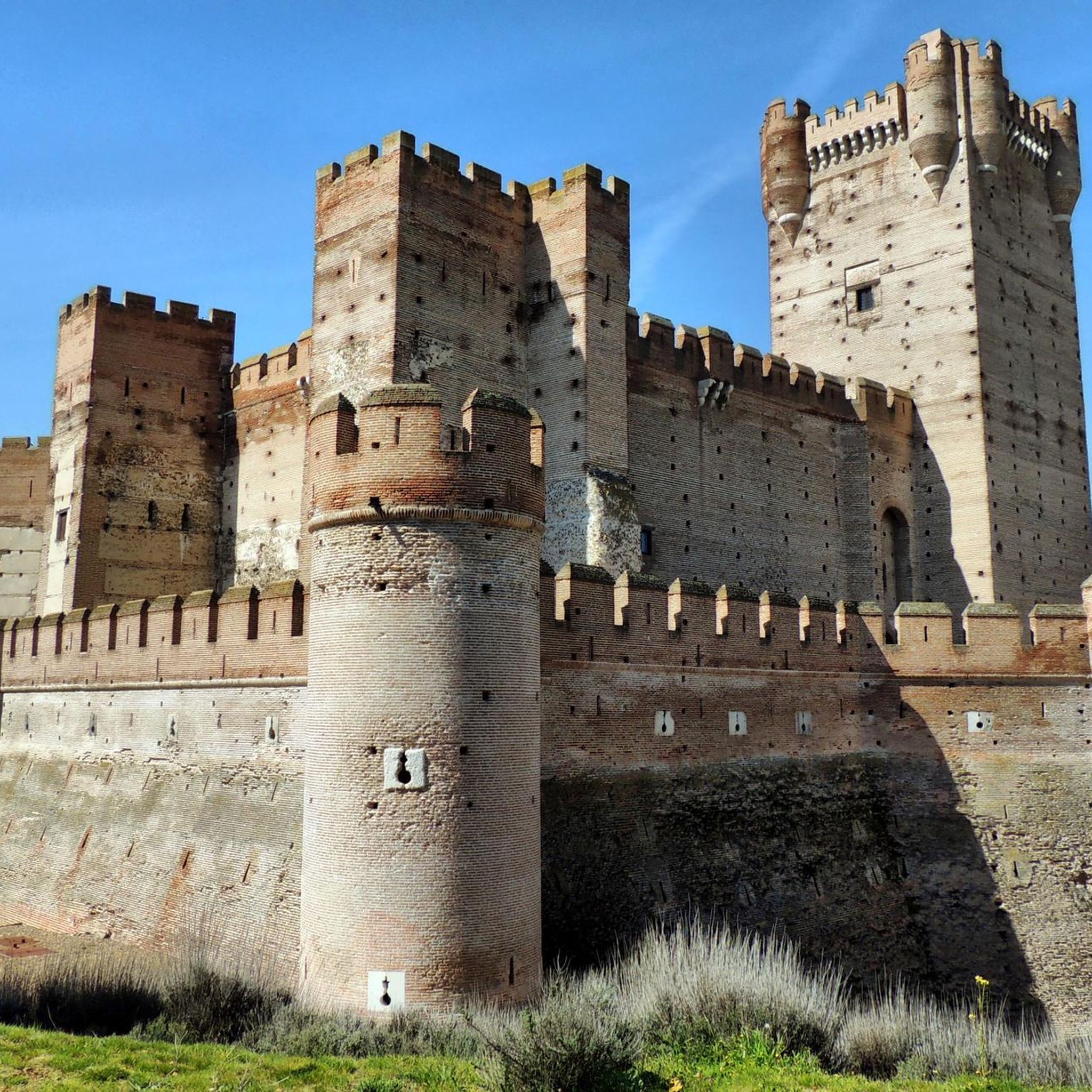
The area around Rubí De Bracamonte offers several historical points of interest. You can visit the impressive Collegiate Church of San Antolín, the historic Castle of La Mota, or the Palacio de Dueñas Courtyard. These sites add a cultural dimension to your outdoor experience.
Is Rubí De Bracamonte a good destination for birdwatching?
Yes, the presence of cranes in areas like the Zapardiel river (upstream from San Vicente del Palacio) and the Laguna de la Zarza makes Rubí De Bracamonte an appealing destination for birdwatching, especially during migration seasons. The 'Sendero de Las Grullas' (Cranes' Path) specifically highlights this aspect.
What do other hikers say about the trails in Rubí De Bracamonte?
The hiking routes in Rubí De Bracamonte are highly rated by the komoot community, with an average score of 4.9 stars from over 18 reviews. Hikers often praise the tranquil rural environment, the sense of openness provided by the agricultural plains, and the unique natural features like the Arroyo de los Boyones wetland.
Are there any moderate difficulty trails for more experienced hikers?
Absolutely. For those seeking a longer excursion, the Royal Testamentary Palace – Collegiate Church of San Antolín loop from Medina del Campo is a moderate 11.3 km trail that leads through historical and natural surroundings, typically completed in about 2 hours 53 minutes.
Can I access hiking trails near Rubí De Bracamonte using public transport?
While Rubí De Bracamonte itself is a small town, many routes are accessible from nearby larger towns like Medina del Campo, which may have better public transport connections. For example, the Collegiate Church of San Antolín – Palacio de Dueñas Courtyard loop starts from Estación de Medina del Campo, suggesting public transport access to the starting point.
Are there specific trails that offer views of nearby towns or rural charm?
Many hikes in the region offer picturesque views of the rural landscape and nearby towns such as Cervillego de la Cruz and Fuente el Sol. The impressive church of Rubí De Bracamonte often serves as a guiding landmark, adding to the rural charm of the experience as you return to the village.
Most popular attractions around Rubí De Bracamonte

Get inspired with the komoot mobile app


Explore more
Browse the best Hikes in other regions.
