The best cycling routes around Santaella
4.5
(43)
565
riders
110
rides
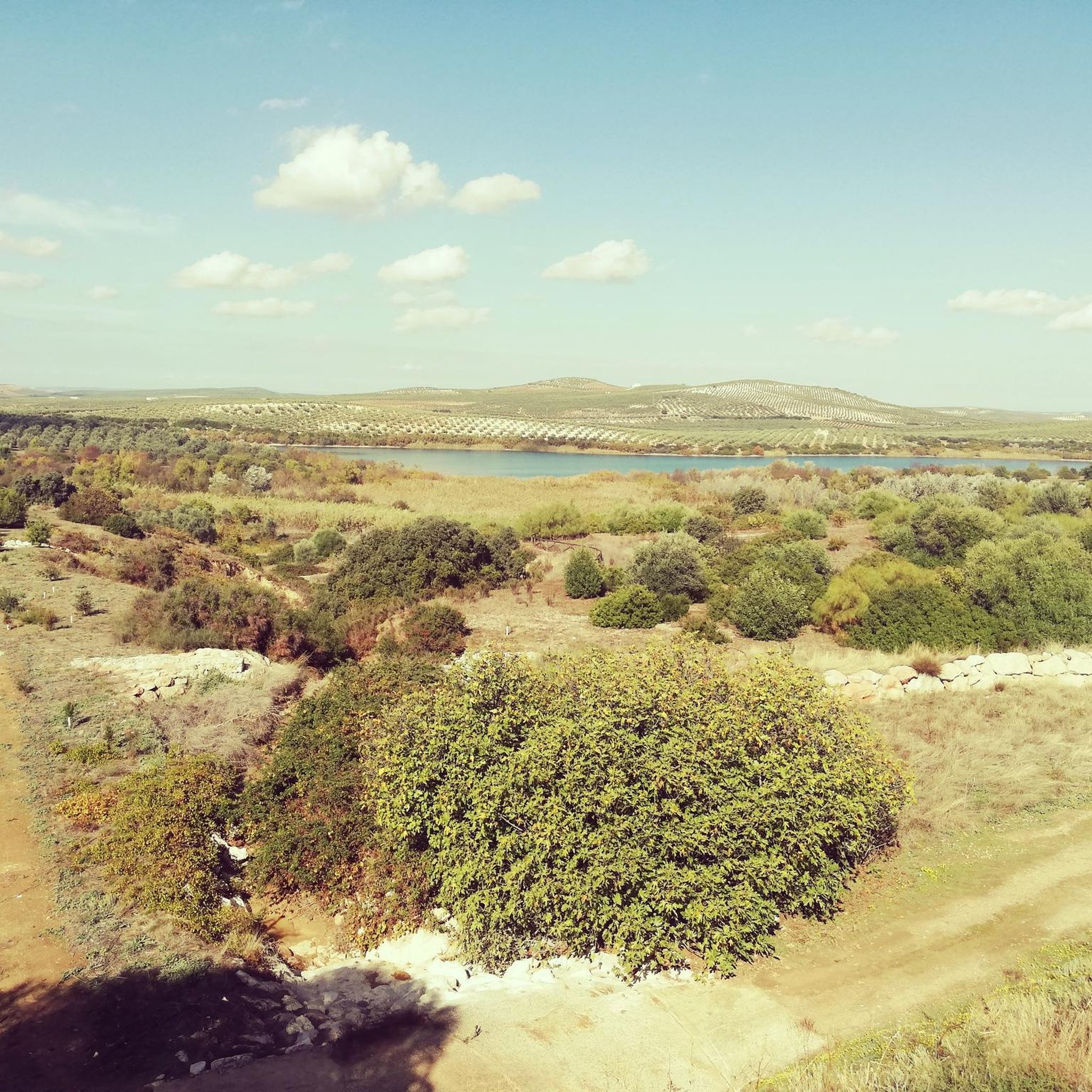
Touring cycling around Santaella is characterized by the Campiña de Córdoba region, featuring an undulating landscape of vast agricultural lands. The area includes extensive fields of sunflowers, cereal crops, and olive groves, with gently rolling terrain. The Vía Verde de la Campiña, a mostly flat and traffic-free route, offers a mix of asphalt and compacted earth surfaces, traversing the valley of the Guadalquivir River and its tributaries.
Best touring cycling routes around Santaella
- The most popular touring cycling route is…
Last updated: August 21, 2026
4.2
(6)
41
riders
54.5km
04:28
300m
300m
Moderate bike ride. Good fitness required. Mostly paved surfaces. Suitable for all skill levels.
5.0
(1)
19
riders
33.3km
02:07
360m
360m
Moderate bike ride. Good fitness required. Mostly paved surfaces. Suitable for all skill levels.

Sign up for free
4.3
(3)
12
riders
60.5km
03:55
820m
820m
Hard bike ride. Very good fitness required. Mostly paved surfaces. Suitable for all skill levels.
19
riders
58.4km
04:54
310m
310m
Moderate bike ride. Good fitness required. Mostly paved surfaces. Suitable for all skill levels.
4
riders
53.8km
04:28
530m
530m
Hard bike ride. Very good fitness required. Mostly paved surfaces. Suitable for all skill levels.
Get access to more routes and recommendations from other explorers.
Sign up for free
Already have an account?
Our route recommendations are based on thousands of hikes, rides, and runs completed by other people on komoot.
Start today with a free account
Your next adventure awaits.
Login or Signup

Other adventures around Santaella

Tips from the Community

03/26: now an area guarded by dogs.
0
0

The municipality was founded under the leadership of the enlightened Pablo de Olavide and, by 1767, had a Central European population. Funded by the state at the request of King Charles III, the colonization was intended to promote agriculture and industry in an uninhabited area threatened by bandits, as well as to increase the security of the royal road connecting Madrid with Cadiz. Initially, the municipality belonged administratively to La Carlota, which, along with other municipalities, was also founded on this occasion.
1
0
a wonderful picnic area with historical background of the first German settlement founded by Johann Kaspar von Thürriegel
1
0
The administrative district is located in the southwest of the province. The landscape consists mainly of grain fields. The village was founded in 1767 when Carlos III implemented his colonization policy. For this reason, the urban structure corresponds to the linear planning of the Enlightenment. Perhaps the most interesting building is the Palacio de la Intendencia (Palace). History It was founded by Carlos III in 1767 (it also received its name from him). Don Pablo de Olavide was commissioned to carry out the project, and Don Fernando de Quintanilla managed the population, which was mainly German colonists. In 1769, the village had a population of 1,088, of whom 84 were Spanish. At the time of its founding, the colonists were allocated land holdings of 28 fanegas each (fanega: Castilian unit of area: 64,596 ares).
0
0

Dehesa area in the heart of the countryside
0
0

This is a great and really beautiful church. Unfortunately, I couldn't take any more photos because there was an event there.
0
0

The old parish church of Santa María belonged to the Gothic-Mudejar type of church. It seems that it was built by D. Pedro Fernández Gragera, a knight in the service of San Fernando in the reconquest of Écija. According to sources, it was completed in 1262. The structure was designed with three naves and a polygonal head, later two side naves were added, so its plan was irregular, with a tower, a patio with orange trees and a cemetery. The building was extensively renovated in the 16th and 17th centuries, with the church being demolished and rebuilt in 1758.
4
0

The tower's origins date back to the 15th century, when it was built on an ancient Arab tower. Due to lightning damage in 1892, it was partially demolished, and the first part of the old Mudejar tower remains today as a bell tower.
3
0
Frequently Asked Questions
How many touring cycling routes are available around Santaella?
There are over 90 touring cycling routes around Santaella, offering a wide range of options for different skill levels and preferences. You'll find everything from easy rides to more challenging excursions through the region's diverse landscapes.
What kind of landscapes will I encounter while touring cycling in Santaella?
The region around Santaella, known as the Campiña de Córdoba, is characterized by vast agricultural lands. You'll cycle through extensive fields of sunflowers, cereal crops, and especially olive groves, which are particularly vibrant in spring. The terrain is generally gently rolling or undulating, offering picturesque views of the Andalusian countryside.
Is the Vía Verde de la Campiña accessible from Santaella, and what is it like?
While Santaella is not directly on the Vía Verde de la Campiña, it is situated within the region it traverses. Cyclists can connect to the Vía Verde via local roads that wind through the farmland. The Vía Verde itself is a 91-kilometer, mostly flat and traffic-free path, ideal for relaxed touring. It features a mix of asphalt and compacted earth, with interesting elements like the Las Tablas tunnel and several bridges.
Are there any easy or family-friendly touring cycling routes in the area?
Yes, Santaella offers several routes suitable for beginners and families. There are 7 easy routes available, providing a gentle introduction to touring cycling in the Campiña de Córdoba. These routes typically feature less elevation gain and shorter distances, allowing for a more relaxed experience.
Are there challenging routes for experienced touring cyclists?
Absolutely. For experienced touring cyclists seeking a challenge, Santaella has 43 difficult routes. These often cover longer distances and include more significant elevation changes. An example is the Roundabout – Olive and almond fields loop from La Carlota, which is 60.5 km long and showcases extensive agricultural landscapes.
What historical sites or attractions can I visit near the cycling routes?
The region is rich in history and culture. Along your cycling routes, you might consider visiting the Ducal Palace of Fernán Núñez or the Municipal Archaeological Museum of Puente Genil. Santaella itself boasts historical architecture, including the La Asunción church, known as the 'Cathedral of the Countryside,' and a medieval castle with 12th-century Islamic walls.
Are there any circular touring cycling routes around Santaella?
Yes, many of the touring cycling routes around Santaella are designed as loops, allowing you to start and finish at the same point. For instance, the Écija – The Écija countryside loop from La Carlota is a popular 60.4 km circular trail through the gently rolling terrain.
What is the best time of year for touring cycling in Santaella?
Spring is an excellent time for touring cycling in Santaella, as the agricultural fields burst with color, particularly the sunflowers and cereal crops. The weather is generally pleasant, making for comfortable rides. Autumn also offers mild temperatures and beautiful scenery. Summers can be very hot, so early mornings or late afternoons are recommended if cycling during this season.
What do other touring cyclists enjoy most about cycling in Santaella?
The touring cycling routes around Santaella are highly rated by the komoot community, with an average score of 4.3 stars from over 30 reviews. Cyclists often praise the tranquil, traffic-free sections, the picturesque agricultural vistas, and the opportunity to explore the authentic Andalusian countryside at a relaxed pace.
Are there places to rest or find amenities along the touring cycling routes?
Yes, along the Vía Verde de la Campiña, you'll find designated rest areas like La Pineda rest area, which offers picnic tables and shade. Some old railway stations along the Vías Verdes have also been repurposed into restaurants or information centers, providing opportunities for refreshments and breaks.
What natural features or wildlife can I observe while cycling?
The Campiña region offers diverse natural beauty. You'll encounter riverine scenery as routes cross the Guadalquivir River valley and its tributaries. The open landscapes support rich biodiversity, including various bird species such as the crested lark, stone curlews, and bustards, some of which are endangered and unique to Europe.
Are there touring cycling routes that offer scenic viewpoints?
While specific named viewpoints are not highlighted, the entire Campiña de Córdoba region provides continuous scenic vistas. The undulating terrain and vast agricultural fields, especially the olive and sunflower groves, offer expansive and picturesque views throughout many routes, such as the Information board – Virgin of the Tower loop from La Carlota.
Most popular routes around Santaella
Most popular attractions around Santaella

Get inspired with the komoot mobile app


Explore more
Browse the best Cycling routes in other regions.
