The best road cycling routes around Tuéjar
411
riders
36
rides
Road cycling routes around Tuéjar are set within the Alto Turia Biosphere Reserve, offering diverse landscapes and significant elevation gains. The region features a mix of mountainous terrain, extensive pine forests, and river courses, including the Turia River and the source of the Tuéjar River. Cyclists can expect well-paved surfaces on many routes, with challenging gradients that test fitness levels.
Best road cycling routes around Tuéjar
- The most popular road cycling route is Climb to the port of El Remedio…
Last updated: May 16, 2026
31
riders
53.5km
02:49
1,030m
1,030m
Hard road ride. Very good fitness required. Mostly well-paved surfaces and easy to ride.
38
riders
78.6km
04:23
1,680m
1,680m
Hard road ride. Very good fitness required. Mostly well-paved surfaces and easy to ride.

Sign up for free
30
riders
Hard road ride. Very good fitness required. Mostly well-paved surfaces and easy to ride.
22
riders
64.6km
04:04
1,710m
1,710m
Hard road ride. Very good fitness required. Mostly well-paved surfaces and easy to ride.
15
riders
Moderate road ride. Good fitness required. Mostly well-paved surfaces and easy to ride.
Get access to more routes and recommendations from other explorers.
Sign up for free
Already have an account?
Our route recommendations are based on thousands of hikes, rides, and runs completed by other people on komoot.
Start today with a free account
Your next adventure awaits.
Login or Signup
Tips from the Community

Arcos de las Salinas is a small village in the Javalambre Mountains, ideal for hiking and nature lovers. Surrounded by mountains and crossed by the Arcos and Torrijano rivers, it is part of a protected area designated as a Site of Community Interest. Its scattered villages and farmhouses give it a very authentic rural feel, perfect for unwinding. Thanks to its altitude, the climate is cool, and snow is not uncommon in winter, making it a good starting point for excursions at any time of year.
1
0
The Los Arcos aqueduct, located in Alpuente, is a 16th and 17th-century hydraulic structure that supplied water to the town and its orchards. With its thirteen pointed arches and a length of 265 meters, the arcade bridged the uneven level of the Reguero River, although the main arch was lost in a flood in 1880. Today, it is preserved as a Site of Cultural Interest and can be easily visited from the road to La Yesa. It is an interesting spot for combining history and hiking; good footwear is recommended to explore the surroundings.
2
0

Starting point for a visit to the beautiful village of Chelva and the superb Water Route (Ruta del Agua), well signposted from the square. Despite the signs at the beginning of the circuit indicating that the route is closed, it is possible to pass through with caution. To immerse yourself in the village's narrow streets and the Ruta del Agua, click here: https://youtu.be/YgxESnd14Ww
0
0

Great atmosphere in the historic city!
1
0

The church was built between the 17th and 18th centuries in the Mannerist and Baroque styles. Its design is inspired by the Church of the Gesù in Rome, designed by Jacopo Vignola. The building has a Latin cross plan, with side chapels and a transept inscribed in a rectangle. Its baroque bell tower and the largest dome in the region that is today the Valencian Community stand out. The interior ornamentation, the work of architect Juan Pérez Castiel, is magnificent and characteristic of its style. This church, declared a Site of Cultural Interest, is a treasure that deserves to be visited. If you ever find yourself in Chelva, do not hesitate to admire the majesty of the Archpriest Church of Our Lady of the Angels. 🌟🏰🌿
2
0
Until the 17th century, three different religions coexisted in Chelva: Jews, Muslims and Christians. This diversity has left a palpable cultural mark in every corner of the town. Las Ollerías are a testimony of that historical wealth. If you ever visit Chelva, do not hesitate to explore this neighborhood and enjoy its authenticity and beauty. 🏰🌿
2
0
Nice, lively square, there is a cafe.
2
0

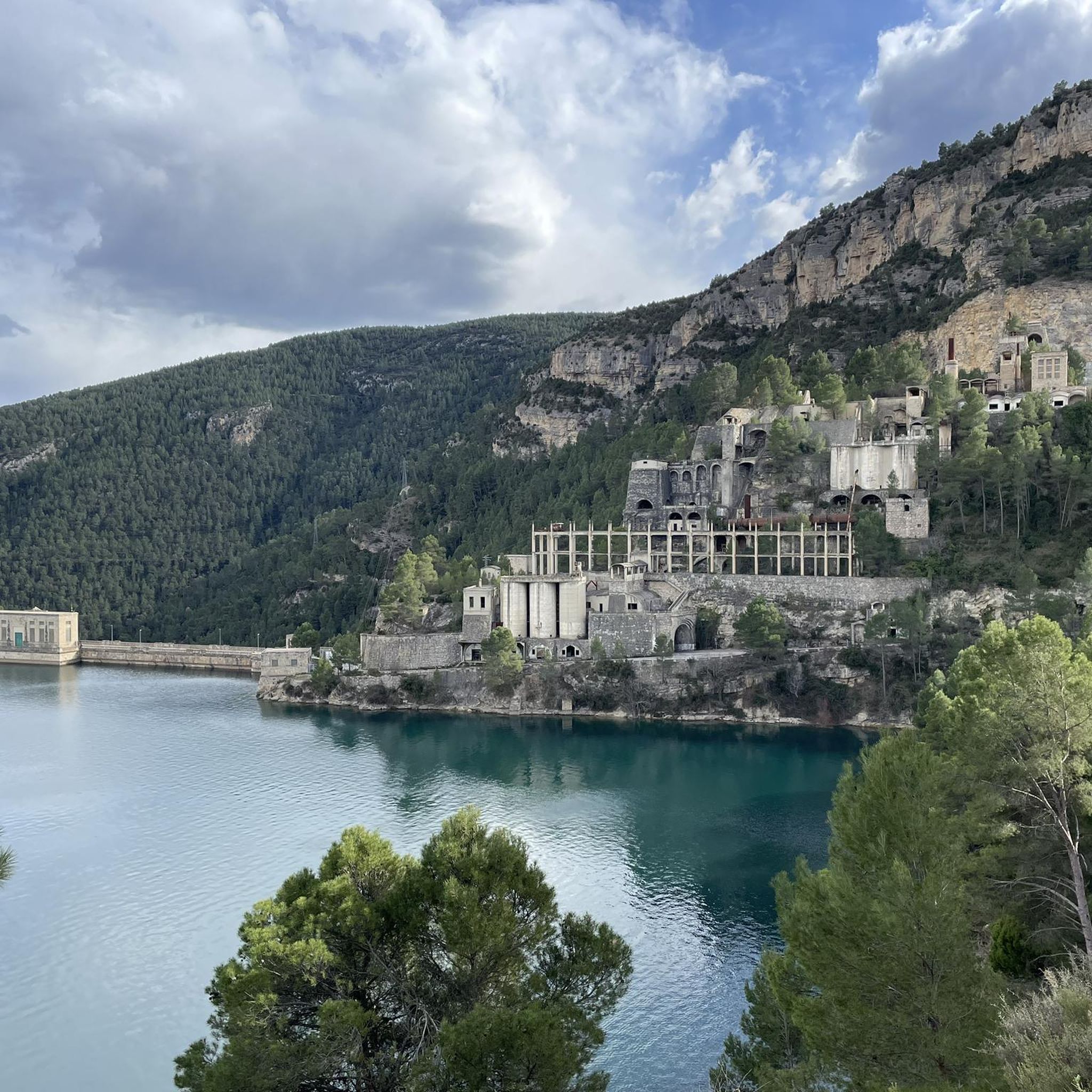
From here you have beautiful views of the Benagéber reservoir and its dam, which retains the waters of the Turia. It has become an environment frequented in summer by those who seek to cool off in its waters surrounded by nature.
1
0
Frequently Asked Questions
How many road cycling routes are available around Tuéjar?
There are over 35 road cycling routes around Tuéjar, catering to various skill levels. You'll find a mix of moderate and difficult options, with 13 moderate and 23 difficult routes listed.
What kind of terrain and difficulty can I expect on road cycling routes around Tuéjar?
Road cycling around Tuéjar is characterized by hilly terrain and challenging gradients, often requiring good to very good fitness. Routes feature significant elevation gains, with some exceeding 1,000 meters. While many surfaces are well-paved, some segments might be unpaved and more demanding. The landscape includes mountainous regions, extensive pine forests, and river courses within the Alto Turia Biosphere Reserve.
What historical landmarks or natural attractions can I see along road cycling routes in Tuéjar?
Many routes offer views of captivating attractions. You might encounter the ancient Roman Peña Cortada Aqueduct, a remarkable feat of engineering. Natural highlights include La Playeta de Chelva, a beautiful recreational area by the Chelva river, and Azud de Tuéjar, a natural pool at the source of the Tuéjar river.
Are there any routes that pass by waterfalls or natural pools suitable for a break?
Yes, the region offers refreshing natural spots. You can find routes that lead to La Playeta de Chelva, known for its waterfalls and backwaters, perfect for a break. Another excellent spot is Azud de Tuéjar, which features a natural pool called 'El Pozo de las Escaleras' with constant 18°C water, ideal for cooling off during warmer months.
Are there many circular road cycling routes available in Tuéjar?
Yes, Tuéjar offers several excellent circular road cycling routes. For example, you could try the challenging Climb to the port of El Remedio — Circular from Chelva, or the scenic View of Benagéber Reservoir – Views of the Benagéber Reservoir loop from Tuéjar. These routes allow you to start and finish in the same location, making logistics easier.
What is the best time of year for road cycling in Tuéjar?
The region's scenery transforms with the seasons, offering different visual experiences throughout the year. Generally, spring and autumn provide the most pleasant temperatures for road cycling, avoiding the peak heat of summer. However, the constant 18°C water at Azud de Tuéjar makes it appealing for summer rides if you plan to cool off.
Is Tuéjar suitable for family-friendly road cycling?
While Tuéjar's road cycling routes are generally characterized by hilly terrain and significant elevation gains, making many of them moderate to difficult, there might be shorter, less challenging segments or local roads suitable for families with older, experienced children. For easier, flatter options, it's advisable to check specific route profiles carefully.
Where can I find parking for road cycling routes in Tuéjar?
Tuéjar and surrounding towns like Chelva and Titaguas, which serve as starting points for many routes, typically offer public parking options. It's recommended to check local parking availability in the specific village you plan to start your ride from.
Are there any cafes or places to eat near the cycling routes in Tuéjar?
Yes, Tuéjar and the nearby villages within the Alto Turia Biosphere Reserve offer local cafes and establishments where cyclists can refuel. These spots provide opportunities for a coffee break or a meal, often in charming rural settings.
What makes the Alto Turia Biosphere Reserve special for road cyclists?
The Alto Turia Biosphere Reserve, recognized by UNESCO, offers a unique blend of ecological value and diverse landscapes. Cyclists can enjoy clean air, serene rural environments, and varied scenery including river courses, canyons, and extensive pine forests. This protected status ensures a high-quality natural setting for your rides.
Can I combine road cycling with exploring historical areas?
Absolutely. Several routes in the region allow you to combine challenging rides with cultural exploration. For instance, the Christian Quarter of Ollerías – Andalusí Quarter of Benacacira loop from Chelva leads through historical areas and natural landscapes, offering a rich experience beyond just cycling.
What is the longest and most challenging road cycling route in the area?
One of the most challenging routes is the Arcos de las Salinas – Source of the Arcos River loop from Titaguas. This difficult 48.8-mile (78.6 km) path features substantial climbing with over 5,516 feet (1,681 meters) of elevation gain, offering a significant test for experienced riders.
Most popular attractions around Tuéjar

Get inspired with the komoot mobile app


Explore more
Browse the best Road cycling routes in other regions.
