The best cycling routes around Linares De Mora
5.0
(5)
151
riders
23
rides
Touring cycling routes around Linares De Mora are set within the Sierra de Gúdar in Teruel, Aragon, a region characterized by mountainous terrain, extensive pine forests, and river valleys. The area features varied surfaces, from paved roads to unpaved paths, with significant elevation changes. The Linares River, a notable fluvial point of interest, flows through the landscape, contributing to the diverse natural environment. This setting provides a range of cycling experiences with notable ascents and descents.
Best touring cycling routes…
Last updated: July 11, 2026
1
riders
37.8km
03:35
1,050m
1,050m
Hard bike ride. Very good fitness required. Mostly paved surfaces. Suitable for all skill levels.
18
riders
61.9km
05:44
1,410m
1,420m
Hard bike ride. Very good fitness required. Mostly paved surfaces. Suitable for all skill levels.

Sign up for free
17
riders
Hard bike ride. Very good fitness required. Mostly paved surfaces. Suitable for all skill levels.
15
riders
44.9km
03:09
830m
830m
Hard bike ride. Very good fitness required. Mostly paved surfaces. Suitable for all skill levels.
6
riders
48.3km
03:36
840m
840m
Hard bike ride. Very good fitness required. Mostly paved surfaces. Suitable for all skill levels.
Get access to more routes and recommendations from other explorers.
Sign up for free
Already have an account?
Our route recommendations are based on thousands of hikes, rides, and runs completed by other people on komoot.
Start today with a free account
Your next adventure awaits.
Login or Signup
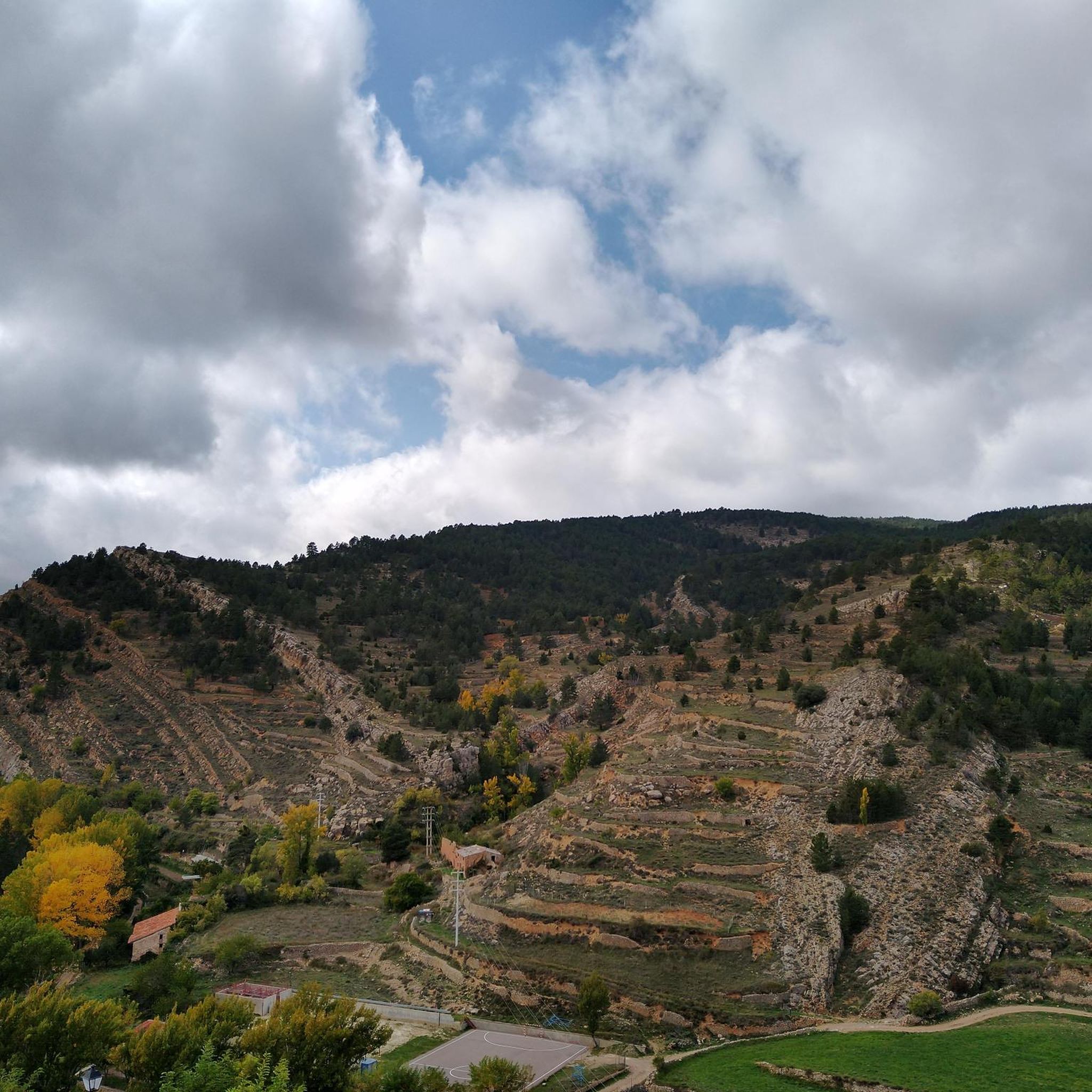
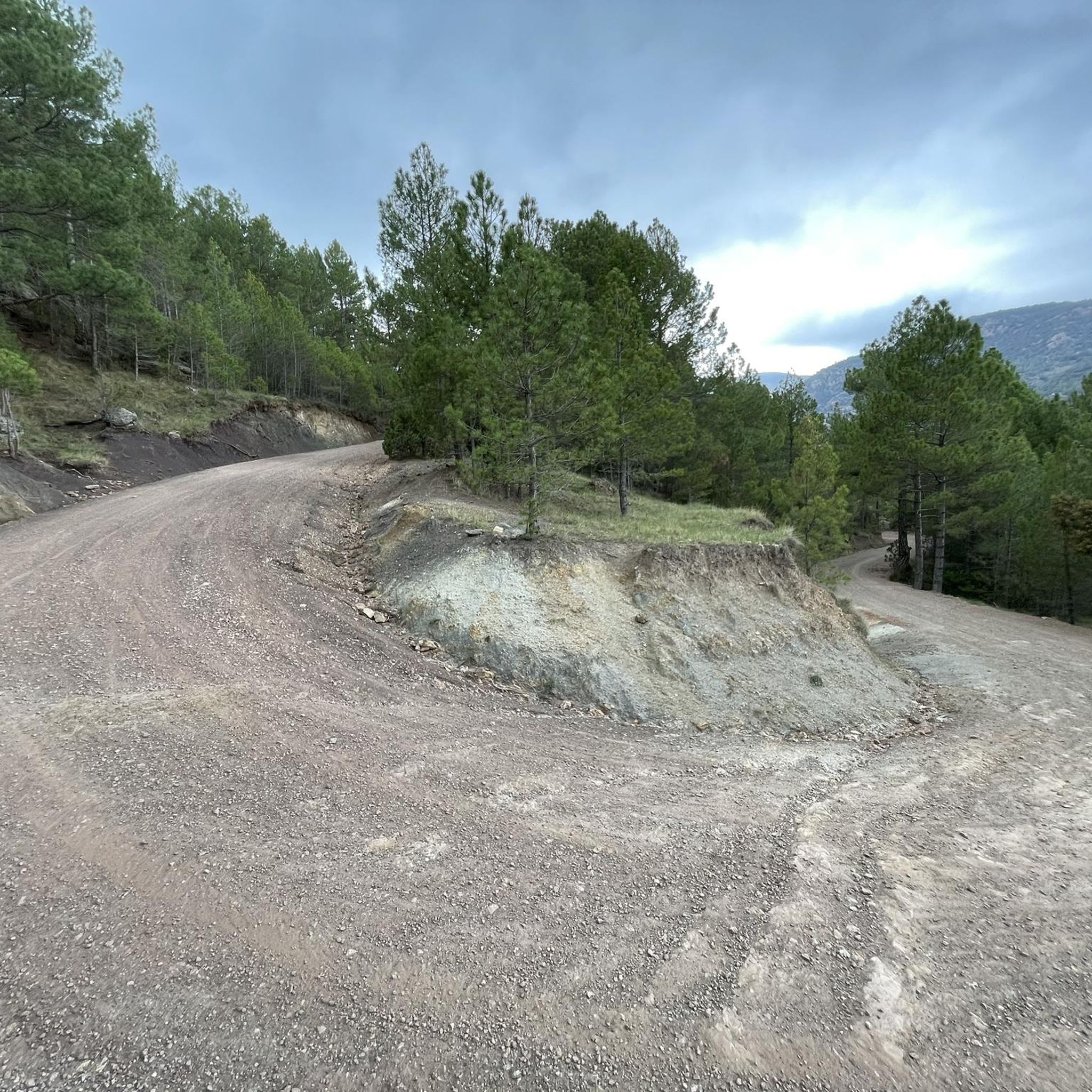
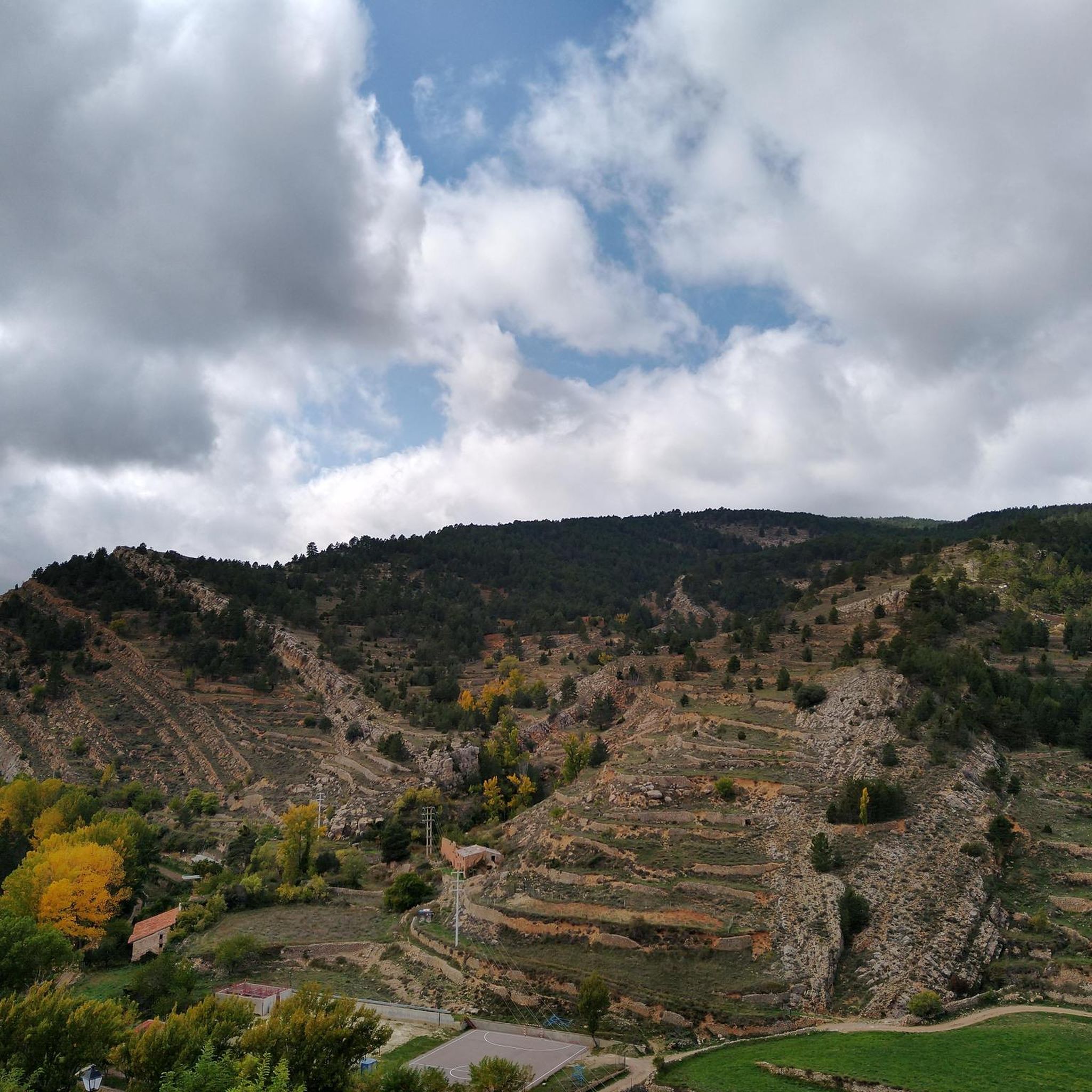
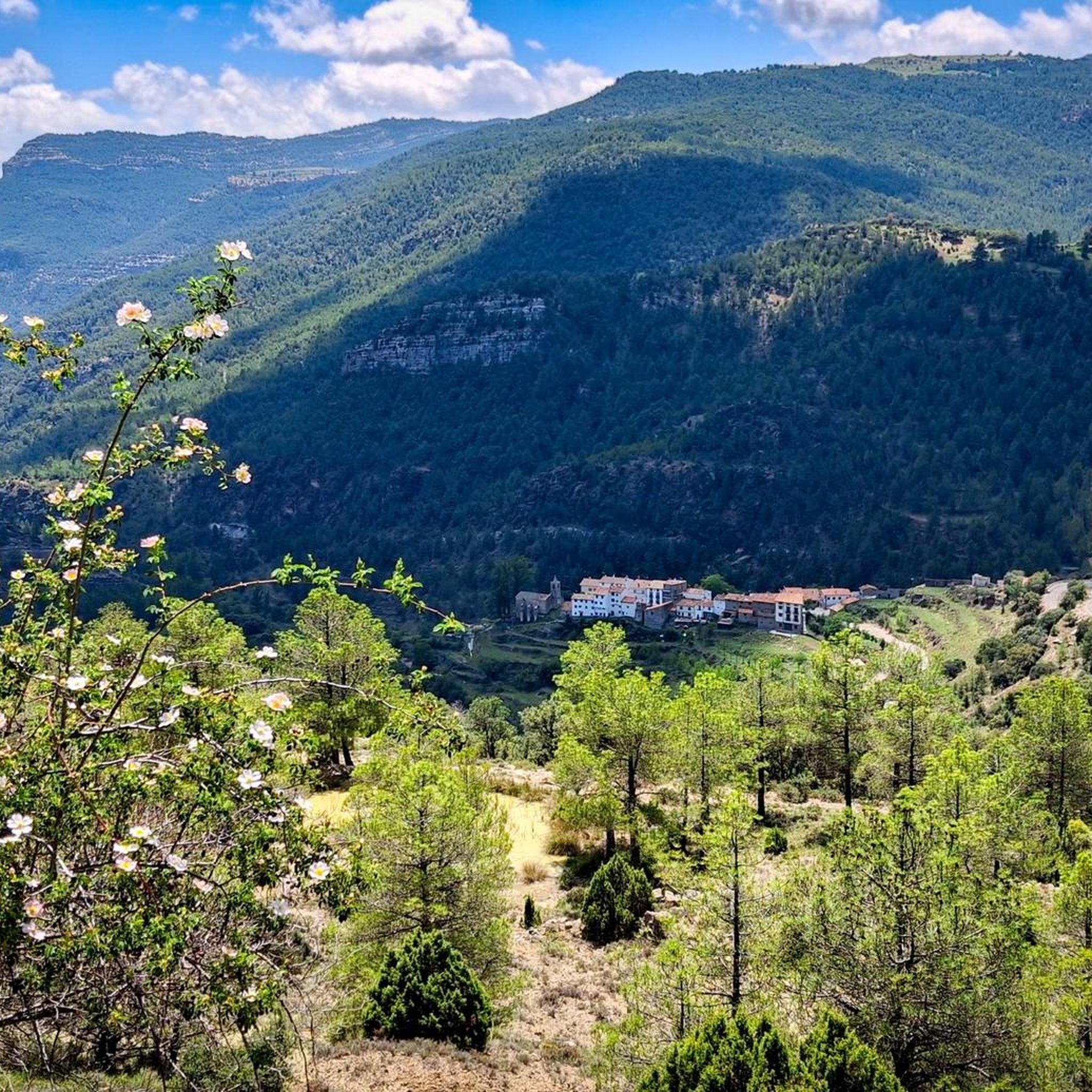

Tips from the Community

Panorama and isolation.... Magnificent routes for adventurous cyclists
0
0

Beautiful little town in the middle of the mountains
0
0

Good water in abundance at this spring.
1
0

Aragonese ski and snowboard resort located in the Iberian System, specifically in the unique and extremely beautiful enclave of the Sierra de Gúdar, located in the province of Teruel. It is located at a distance of 70 km from the Provincial Capital. This winter center, despite being small in size, is at 2,000 m. of altitude, so its snow is highly appreciated, especially by Aragonese skiers and the Valencian community who, due to its proximity, are the ones who frequent and know it the most. Being one of the most recent ski and snowboard resorts in Spain, its facilities are modern, and all its slopes are equipped with the most modern artificial snowmaking systems. You can also practice cross-country skiing on a circular route. It offers gentle slopes and descents between forests.
0
0
It is located in the southern area of Aragon, specifically, in the Gudar/Javalambre region, at an altitude of 1,400 m. and its dry climate is temperate-cold with an average annual temperature of 8ºC. It snows and rains frequently, keeping the forests green. The natural sources and streams in the area prove it.
1
0
The geodesic vertex called Peñarroya points 2028.228 m with respect to the base of the observation pillar, but it sits on two bodies of stone masonry. Altitude of the bodies of the order of 10 or 11 meters in total. LIDAR data confirm a ground level elevation of 2017 m. Peñarroya is a chromotoponym that refers to the color of the rocks that make up the mountain. The spelling in the Spanish language is Peñarroya and in the Aragonese language Penyarroya or Peñarroya depending on the spelling chosen for the palatal nasal. The origin of the toponym is quite clear. It combines the common noun peña, from the Latin PĭNNAM, 'battlement', with the adjective RŭBEŭS, -A, -UM 'blond'. The toponym reflects the reddish hue of the terrain. The spelling Penya (in addition to others such as Penna or Peña) is included in many medieval texts in Aragon. For example, in 1448 to designate the summit of the mountain range (of Peña) that rises above Sos del Rey Católico on the border, then, with the kingdom of Navarra.
1
0
The Peñarroya peak is a mountain in the Iberian System located in Alcalá de la Selva, in the province of Teruel (Aragon, Spain). With its 2028,228 m altitude, it constitutes the highest elevation of the Iberian System of Teruel (and the highest elevation of the province of Teruel). It is formed as a residual hill of Cretaceous limestone and sandstone, barely standing out on the erosion surface of the Gúdar mountain range. The most characteristic thing about its summit is its enormous geodesic vertex – about 10 m high – through which you can ascend. From the top you can see the Maestrazgo and the Javalambre mountain range. Altitude 2,028 m Prominence 1,023 m
0
0
Frequently Asked Questions
How many touring cycling routes are available around Linares de Mora?
There are over 20 touring cycling routes around Linares de Mora, offering a variety of experiences through the mountainous Sierra de Gúdar region.
What kind of challenge can I expect on touring cycling routes in Linares de Mora?
The touring cycling routes in Linares de Mora are predominantly challenging, featuring significant elevation gains and mountainous terrain. For example, the Linares de Mora – Virgen de la Vega loop from Bandera covers 61.9 km with over 1400 meters of ascent, making it suitable for experienced cyclists.
Are there circular touring cycling routes in Linares de Mora?
Yes, several routes are designed as loops. A popular option is the Empty Mountains – circular by Valdelinares from Virgen de la Vega via Linares de la Mora, which is 37.8 km long and includes over 1000 meters of elevation gain.
What are the best times of year for touring cycling in Linares de Mora?
Linares de Mora is situated in a mountainous region, so spring and autumn generally offer the most pleasant temperatures for cycling. Summers can be warm, while winters may bring colder conditions and snow, especially at higher elevations like the Valdelinares Ski Resort area. Always check local weather forecasts before heading out.
Are there any family-friendly cycling options or easier paths in the area?
While the majority of listed touring cycling routes are classified as difficult, the region does offer varied terrain. For a more relaxed experience, the area around the Linares River features well-preserved environments and paths, such as the easy walk to the centenarian "Pino del Escobón," which could inspire shorter, less strenuous rides or walks for families, though dedicated easy cycling routes are limited in the guide data.
What natural features or landscapes will I see along the routes?
You'll cycle through the stunning Sierra de Gúdar, characterized by extensive pine forests and the pristine Linares River valley. The region is known for its Mediterranean mountain vegetation, monumental trees like the Pino del Escobón, and diverse wildlife. Many routes offer breathtaking panoramas from various viewpoints.
What historical or cultural attractions can I explore near the cycling routes?
Linares de Mora itself is a picturesque medieval village with cobbled streets, the remains of a 13th-century castle, and the Baroque Church of the Immaculate Conception. You can also find several small hermitages. Nearby, you might encounter mountain passes like Puertomingalvo Pass or Puerto de Linares, and other charming medieval villages like Mora de Rubielos and Rubielos de Mora.
Are there any notable viewpoints along the touring cycling trails?
Yes, the mountainous terrain of Linares de Mora offers numerous viewpoints with spectacular vistas. Cyclists can enjoy panoramic views of the Sierra and the historic town from various points, including those near the remains of the 13th-century castle and along scenic roads like the A-1701.
What do other touring cyclists enjoy most about cycling in Linares de Mora?
The area is highly rated by the komoot community, with an average score of 5.0 stars. Reviewers often praise the challenging mountainous ascents, the beauty of the pine forests, and the serene river valleys that define the cycling experience in Linares de Mora.
Can I find routes that lead to higher elevations or mountain passes?
Absolutely. Many routes in Linares de Mora involve significant climbing and lead to high points. For instance, the Virgen de la Vega – Puerto de Valdelinares loop from Urbanización Solano de la Vega takes you through the Sierra de Gúdar, often reaching the Puerto de Valdelinares, a prominent mountain pass in the region.
Are there any specific natural monuments or unique geological features to see?
Yes, the region boasts several natural monuments. While not directly on the cycling routes, nearby attractions include the stunning Carbo Waterfall, the intriguing Cueva de la Tosca, and the unique Peña Ojerada Rock Formation, which are worth exploring if you extend your trip.
Most popular routes around Linares De Mora
Most popular attractions around Linares De Mora

Get inspired with the komoot mobile app


Explore more
Browse the best Cycling routes in other regions.
