Attractions and Places To See around Salas - Top 20
Best attractions and places to see around Salas, a historic town in Asturias, Spain, offers a blend of medieval landmarks, cultural sites, and serene natural features. The town is recognized for its significant historical heritage, including structures like the 16th-century Valdés Salas Palace. Visitors can explore a rich natural environment, with features like the Nonaya Waterfall and the Narcea River, providing diverse outdoor experiences. The area is also an integral part of the Primitive Way of St. James.
Best attractions and places to see around Salas
- The most popular attractions is La Regalina Chapel, a religious building and viewpoint that offers beautiful views of the sea. This small chapel was built high on a rock, directly overlooking the sea.
- Another must-see spot is Collegiate Church of St. Mary Major in Salas, an impressive Gothic-Renaissance parish church. It houses a significant alabaster mausoleum of Archbishop Fernando de Valdés Salas, considered a key example of Renaissance sculpture in Asturias.
- Visitors also love Hermitage of San Roque of Tineo, a religious building believed to have been founded at the end of the 12th century. It preserves remains of its Romanesque construction, with half-barrel vaults and robust buttresses.
- Salas is known for its medieval landmarks, cultural sites, and natural features. Visitors can explore a variety of historical buildings, religious sites, and scenic natural spots.
- The attractions around Salas are appreciated by the komoot community, with 79 upvotes and 45 photos shared by visitors.
Last updated: July 6, 2026
Collegiate Church of St. Mary Major in Salas
Highlight • Religious Site
Translated by Google •
Tip by

Hermitage of San Roque of Tineo
Highlight • Religious Site
Translated by Google •
Tip by

Sign up now to discover places like this
Get recommendations on the best single tracks, peaks, & plenty of other exciting outdoor places.
Sign up for free
Church of Saint James the Apostle, Nuviana
Highlight • Religious Site
Tip by

La Regalina Chapel
Highlight • Religious Site
Translated by Google •
Tip by
Concha de Artedo Viaduct
Highlight • Bridge
Translated by Google •
Tip by

Sign up for free to discover even more attractions around Salas.
Sign up for free
Already have an account?
Start today with a free account
Your next adventure awaits.
Login or Signup



Tips from the Community

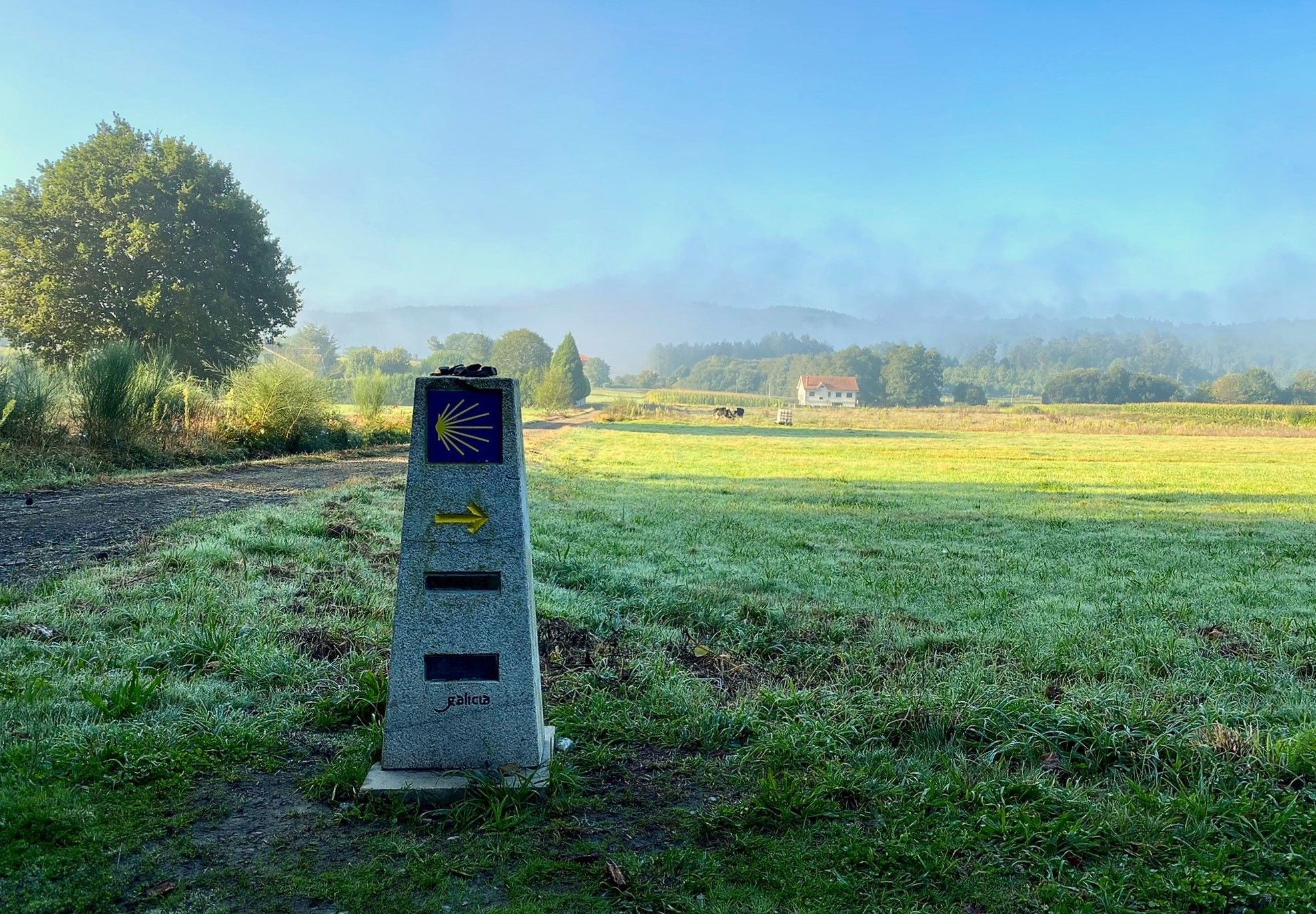
The fact that a place on the Iberian Peninsula is included in the list of the three most famous pilgrimage destinations in the Christian world – along with Jerusalem and Rome – is thanks to one of Jesus' apostles, who is said to have preached here. After his martyrdom, which is briefly recounted in the Acts of the Apostles, his body miraculously found its final resting place here: Saint James the Greater. A small local sanctuary was initially built over his grave; later, a city developed that even bears his name (Santiago de Compostela), and the church in his honor became a cathedral, i.e., a bishop's church. According to local legend, Saint James also played a key role in the reconquest of the Iberian Peninsula from the Moors and is the patron saint of Spain.
0
1

Right next to the field there is a fountain and also a bar to get a good supply
0
0
Next to the chapel there is a fountain with very good water and also a bar where you can stock up on supplies.
0
0
The Chapel of San Roque is located near Tineo, in the well-known Campo de San Roque, one kilometer from the town of Tineo, at 720 meters above sea level. According to tradition, this chapel, dedicated to the saint after whom it is named, was founded by the saint himself, although it is more likely that it was built by French pilgrims on their way to Compostela. Its founding date is believed to be the late 12th century. Renovated and rebuilt on several occasions, it nevertheless retains traces of its Romanesque construction, with barrel vaults and four buttresses that give it a very robust appearance. The doorway, with ashlars forming a perfect semicircular arch, is in a sober, rustic style, consistent with all the rural chapels in the municipality. It has a barrel vault and four exterior buttresses, which give it great strength. The doorway is made of ashlars that form a perfect semicircular arch. The curved tile roof, Arabic style, is finished
0
0

The Iglesia colegiata de Santa María la Mayor is a magnificent collegiate church located in the heart of a historic town. Its grandeur and architectural beauty reflect its significance as a religious and cultural landmark.
3
0

The temple was not born with the mission of being parish, but with the purpose of being a family pantheon. It was in 1894, with the Dukes of Alba being the owners, that the temple was transferred, preserving only the name of Collegiate Church by tradition. It was ordered to be built by the archbishop Don Fernando de Valdés. In the middle of the 16th century the works came to an end, and the two side chapels and the tower were later added. The work carried out at this first moment is Gothic, with Renaissance elements. Among the works of art that the Collegiate Church treasures, the following stand out: the mausoleum of Archbishop Valdés, the main altarpiece and that of the Malleza chapel.
8
0

The Iglesia de Santiago Apóstol, Nuviana is a place of worship dedicated to James the Greater, one of the most important apostles and national saints of Spain. It is one of the many sights you can visit in the Cudillero region, in Asturias. The church has a simple but elegant architecture, with a rectangular floor plan, a gable roof and a bell tower. The interior is decorated with paintings, statues and other religious objects. The church is part of the Camino de Santiago, a pilgrimage route that leads to the saint's grave in Santiago de Compostela.
1
0

Between Las Dueñas and Muros de Nalón we come across this beautiful 1,184 meter long viaduct that crosses the valleys formed by the Uncín and Especuero rivers. Shell-shaped, this viaduct favors cyclists thanks to the reduction in traffic on this road.
3
0
Frequently Asked Questions
What historical landmarks can I explore in Salas?
Salas is rich in history. You can visit the 16th-century Valdés Salas Palace and the connected 14th-century Torre de la Villa, which houses a pre-Romanesque museum. The impressive Collegiate Church of St. Mary Major in Salas is another key site, known for its Renaissance sculpture. Further afield, the nearly thousand-year-old Monastery of San Salvador de Cornellana is a significant stop on the Primitive Way of St. James.
Are there any notable religious sites in the Salas area?
Yes, several. The Collegiate Church of St. Mary Major in Salas is a prominent Gothic-Renaissance parish church. You can also visit the Hermitage of San Roque of Tineo, which preserves Romanesque elements, and the charming Church of Saint James the Apostle, Nuviana, located along the Camino de Santiago. For stunning views, consider the Sanctuary of the Virgen de la Asunción del Viso, and the coastal La Regalina Chapel.
What natural features can I discover around Salas?
The region offers beautiful natural spots. The Nonaya Waterfall, located about 2 km from Salas along the Primitive Way, is set in an idyllic forest. You can also see the magnificent Salas Yew Tree (Texu de Salas), one of Asturias' tallest yew trees, next to the San Martín parish church. The Narcea River, a significant river in Asturias, is known for its rich natural environment.
What outdoor activities can I do near these attractions?
Salas is an excellent base for outdoor activities. You can find numerous routes for hiking, cycling, and mountain biking. For hiking, explore trails like the 'Camino Primitivo Trail: Bodenaya to Salas' or the 'Salas Historic Town Center – Nonaya Waterfall loop'. Cyclists can enjoy routes such as the 'Cudillero coastal section – Luarca Fishing Village loop'. Mountain bikers have options like 'Salas, Cascada de Nonaya, La Espina – ruta circular'. You can find more details on these and other routes in the Hiking around Salas, Cycling around Salas, and MTB Trails around Salas guides.
Are there family-friendly attractions in Salas?
Many attractions in Salas are suitable for families. Historical sites like the Valdés Salas Palace and Torre de la Villa offer an educational experience. Natural spots like the Nonaya Waterfall and the Salas Yew Tree provide pleasant outings. The Collegiate Church of St. Mary Major in Salas and La Regalina Chapel are also listed as family-friendly.
What is the best time to visit Salas for sightseeing and outdoor activities?
The best time to visit Salas for both sightseeing and outdoor activities is generally during the spring (April to June) and autumn (September to October). During these seasons, the weather is typically mild and pleasant, ideal for exploring historical sites and enjoying hiking or cycling without the intense heat of summer or the colder, wetter conditions of winter.
What is the Primitive Way of St. James, and how does it relate to Salas?
The Primitive Way of St. James is one of the oldest pilgrimage routes to Santiago de Compostela. Salas is an integral part of this historic route, with landmarks like the Monastery of San Salvador de Cornellana serving as significant points for pilgrims. Many of the hiking trails around Salas follow sections of this ancient path.
What unique local traditions or products can I find in Salas?
Salas is famous for its traditional sweets called 'Carajitos del Profesor,' which originated in a local café-restaurant in 1918 and are a culinary hallmark of the town. The area also has a connection to the Vaqueiros de Alzada tradition, involving the seasonal migration of cattle and distinctive 'Brañas' (highland pastures).
Are there any viewpoints offering panoramic scenery near Salas?
Yes, the Sanctuary of the Virgen de la Asunción del Viso, situated on a nearby height, offers spectacular panoramic views of Salas and the surrounding area. Additionally, the La Regalina Chapel is known for its beautiful sea views from its clifftop location.
What do visitors enjoy most about the attractions around Salas?
Visitors frequently appreciate the blend of historical significance and natural beauty. The Collegiate Church of St. Mary Major in Salas is noted for its impressive architecture and the mausoleum of Archbishop Valdés. The La Regalina Chapel is loved for its stunning sea views and as a destination for pleasant hikes. The robustness and historical preservation of sites like the Hermitage of San Roque of Tineo also receive positive comments.
Can I find examples of traditional Asturian architecture in Salas?
Absolutely. Beyond the grand Valdés Salas Palace, you can admire other historic residences such as the 17th-century Casa María Veigas (Casa Miranda) and the Palace of the Countess of Casares. The 15th-century Doriga Palace showcases a rural medieval style. Salas also features numerous 'Indiano' houses, reflecting the unique architectural influence of Asturians who returned from the Americas.
Most popular attractions around Salas

Get inspired with the komoot mobile app


Explore more
Still not found the Highlight you’re looking for? See guides of the top attractions in other regions:
