Attractions and Places To See around Font-Rubí - Top 20
Best attractions and places to see around Font-Rubí, a municipality in the Alt Penedès region of Catalonia, Spain, include a blend of natural beauty and historical landmarks. The area is characterized by its vineyards, mountains, forests, and natural springs, reflecting a rich agricultural heritage. It offers diverse landscapes for those interested in nature and history, with many natural landmarks Font-Rubí.
Best attractions and places to see around Font-Rubí
- The most popular attractions is Gran Pèlag of Vilobí del Penedès,…
Last updated: July 6, 2026
Monastery of San Sebastián de los Gorgs
Highlight • Religious Site
Showing Translation
Tip by

Gran Pèlag of Vilobí del Penedès
Highlight • Lake
Translated by Google •
Tip by

Sign up now to discover places like this
Get recommendations on the best single tracks, peaks, & plenty of other exciting outdoor places.
Sign up for free
L'Avellà
Highlight • Settlement
Translated by Google •
Tip by
Olèrdola Castle and Archaeological Site
Highlight • Castle
Translated by Google •
Tip by
El Castellot
Highlight • Historical Site
Translated by Google •
Tip by
Sign up for free to discover even more attractions around Font-Rubí.
Sign up for free
Already have an account?
Start today with a free account
Your next adventure awaits.
Login or Signup

Other adventures around Font-Rubí

Tips from the Community


From the Canyellas road it is a two kilometer climb to the castle.
0
0

It is a beautiful town in a very pleasant and quiet place, with very beautiful landscapes and views. You have to enjoy these places to practice cycling.
0
0

This small nucleus, belonging to the municipality of Avinyonet del Penedès, is primarily known for housing an old Benedictine monastery. It is a complex formed by a single-nave church, with a chapel, bell tower, and a cloister of great sculptural value. Another notable construction is Cal Bou, a 1893 building with a quadrangular floor plan and striking glazed ceramic decorations and cornices that separate the floors.
1
0

Beautiful tower not only for its views but also for the views it offers of the Penedès plain. The demanding climb is worth it!
0
0
Castle at the top of Olèrdola Park. This is one of the 12 natural spaces that try to be protected and at the same time that people can pass through giving life to the area. The old castle is an example, and passing by and seeing its walls is always beautiful!
0
0

The history of the place tells of the settlement of several tribes during the Bronze Age (2000-1800 BC), the construction of a primitive wall during the Iron Age (8th-7th centuries BC) and the arrival of the Cossetans (5th-4th centuries BC), an Iberian tribe that built an entire town there, later replaced by a Roman military camp that controlled the Via Augusta. At the time of the Christian conquest (929), Count Sunyer I built the first castle on the ruins of a Roman watchtower, as well as the church of Sant Miquel. The Muslim incursions of the 10th century seriously damaged the place, which had to be rebuilt during the following two centuries, after it belonged to Mir Geribert, self-proclaimed prince of Olèrdola. The visit to the complex is worth taking it easy and dedicating at least an hour to it. Before you go, you should consult their website: http://www.macolerdola.cat/Visita-ns/Informacio-per-a-la-visita
1
0
It consists of a whole series of vestiges and constructions that allow you to follow the history of Penedes from the Bronze Age to the High Middle Ages. The spectacular Sant Miquel church and the Pla dels Albats necropolis (both from the Middle Ages) stand out. Within the protected natural environment of the Regional Park of Olèrdola, and with a privileged view over the surroundings of Vilafranca and Garraf, there is a whole series of vestiges and constructions that allow you to follow the history of Penedes since the Bronze Age (about 4,000 years ago) until the High Middle Ages. It is located in an installation of the Museum of Archeology of Catalonia (MAC), which includes an interpretation center, and the visit to the complex is organized in an itinerary that starts at the interpretation center and links the various points of interest The vestiges of the Roman era are some of the most interesting, such as the wall (2nd-1st centuries BC), which defended the only point on the mountain that is not surrounded by cliffs and consists of a single central gate and four towers, and the cistern (also from the 2nd-1st centuries BC), dug into the rock and used to store rainwater, unique in the country for its capacity of 350,000 litres. From the Middle Ages, the spectacular church of Sant Miquel stands out, perched on top of the hill of the same name and destroyed and rebuilt several times since the beginning of the 10th century. It consists of two parts, one pre-Romanesque (built in 929) , which still preserves the apse and stands out for its horseshoe arch, and another from later (10th-12th centuries), which was in use until 1885. It is also necessary to mention the necropolis of Pla dels Albats (10th- XI), with a hundred anthropomorphic tombs excavated in the rock next to the ruins of the chapel of Santa Maria, the various structures of Iberian and medieval streets, houses and silos, the castle, also medieval, and the Roman watchtower.
1
0
Frequently Asked Questions
What natural attractions can I explore in Font-Rubí?
Font-Rubí and its surroundings offer a rich natural landscape. You can visit the Gran Pèlag of Vilobí del Penedès, a unique natural space with four lagoons formed from old gypsum quarries, known for its ecological value and diverse ecosystem. Additionally, the region features numerous natural springs like Fonts de Les Dous, extensive forests, and mountains, all set amidst vast vineyards. Elevated points, such as near the Church of Sant Pere and Sant Feliu, provide breathtaking panoramic views of the Penedès plain.
Are there historical sites to visit in Font-Rubí?
Yes, Font-Rubí is rich in history. The Monastery of Saint Sebastian of the Gorgs, a Romanesque religious building founded in 1030, features a notable bell tower and a cloister with significant sculptural value. You can also explore the historic Castle of Font-Rubí, dating back to 983, and the Romanesque Church of Sant Pere and Sant Feliu, which offers serene views from its high altitude.
What are the best places to experience the wine culture in Font-Rubí?
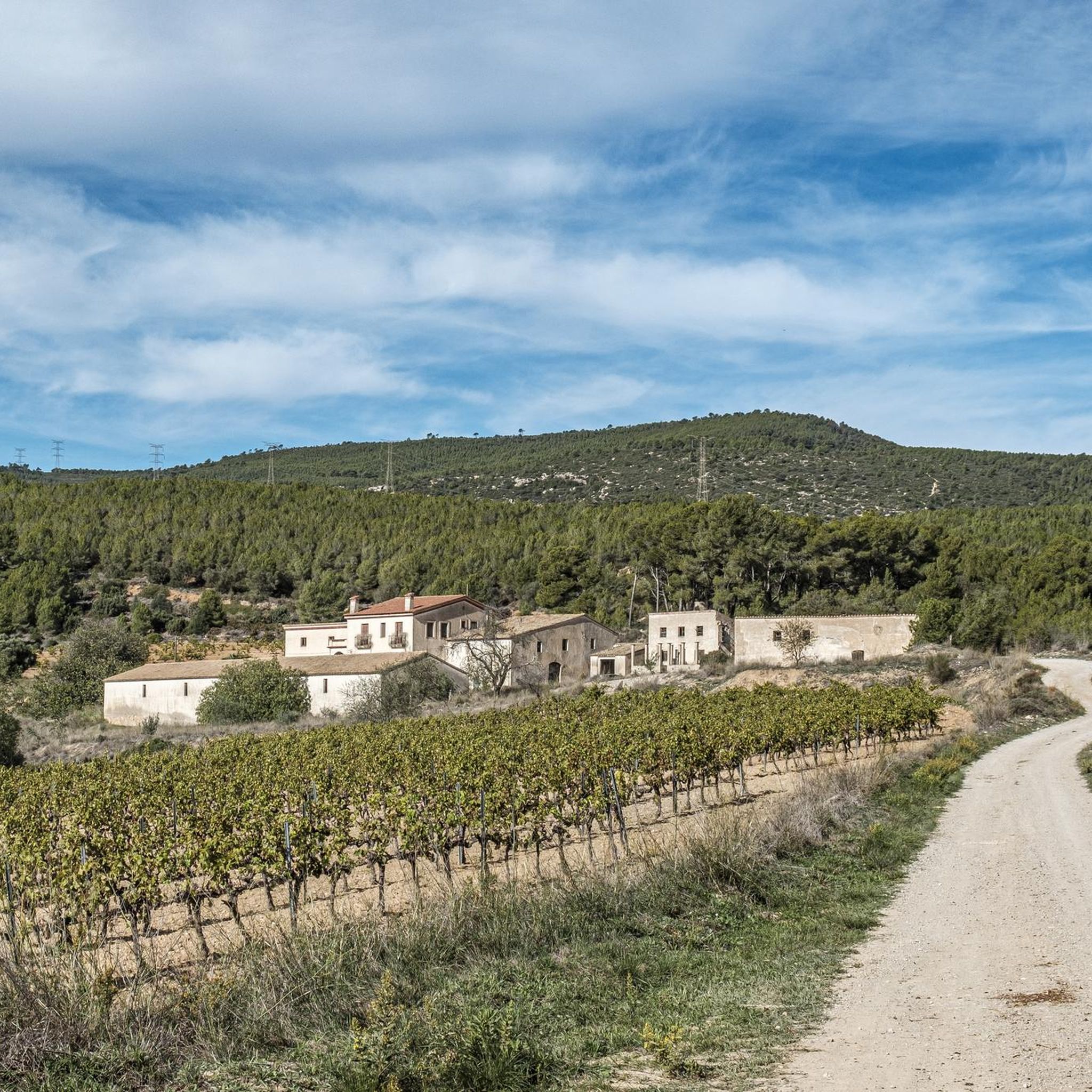
Font-Rubí is renowned for its wine and cava production. You can visit various wineries and cava producers for tastings and to learn about organic wine production. The picturesque settlement of L'Avellà, surrounded by vineyards, is home to historical buildings like Villa Josefa Formosa, which now functions as a wine tasting venue for Heretat Mont-Rubí.
Are there family-friendly attractions in the Font-Rubí area?
Yes, several attractions are suitable for families. The Gran Pèlag of Vilobí del Penedès is a family-friendly natural space where you can observe unique flora and fauna. The settlement of L'Avellà, with its charming vineyards and country houses, also offers a pleasant environment for families to explore.
What kind of outdoor activities can I do near Font-Rubí?
The region around Font-Rubí is ideal for various outdoor activities. You can find numerous routes for hiking and cycling through vineyards, mountains, and forests. For specific routes, explore the Road Cycling Routes around Font-Rubí, Running Trails around Font-Rubí, and Gravel biking around Font-Rubí guides for detailed options.
Where can I find the best panoramic views of the Penedès plain?
For exceptional panoramic views of the Penedès plain, head to elevated points such as the area around the Church of Sant Pere and Sant Feliu, often referred to as the 'balcony of the Penedès'. The El Castellot watchtower also offers stunning vistas over the plain, rewarding those who make the demanding climb.
Are there any ancient castles or archaeological sites nearby for a day trip?
Yes, for a deeper dive into history, consider a day trip to the Olèrdola Castle and Archaeological Site. This monumental complex includes a castle, Roman walls, silos, and the 10th-century Church of San Miguel de Olèrdola, along with a branch of the Museum of Archeology of Catalonia. Another option is the Monumental Complex of Sant Martí Sarroca, featuring a 10th-century castle and a 12th-century Romanesque church.
What makes the Gran Pèlag of Vilobí del Penedès unique?
The Gran Pèlag of Vilobí del Penedès is unique because it's a natural space comprising four lagoons that formed from old gypsum quarries, with extraction dating back to Roman times. This wetland boasts significant scenic beauty and ecological value, creating a distinct microecosystem with peculiar fauna and flora that contrasts sharply with the surrounding wine-growing landscape of Alt Penedès.
What is the significance of L'Avellà in Font-Rubí?
L'Avellà is a small, picturesque settlement within Font-Rubí, nestled amidst vineyards and country houses. It's a popular stop for cyclists ascending to Alto de Font-rubí. The area is notable for its historical buildings, such as Villa Josefa Formosa, which now serves as a wine tasting room for Heretat Mont-Rubí, and Can Gol, an early 20th-century farmhouse known for its Novecentista architectural style.
Can I find hiking trails suitable for different difficulty levels in Font-Rubí?
Yes, Font-Rubí offers a variety of hiking trails catering to different difficulty levels, winding through its diverse landscape of vineyards, mountains, and forests. You can explore paths that connect farmhouses, natural springs, and offer scenic views over Penedès, such as those in the Sierra del Montmell and Coll de la Barraca. For specific running routes, including easy to difficult options, refer to the Running Trails around Font-Rubí guide.
What do visitors enjoy most about the attractions around Font-Rubí?
Visitors particularly appreciate the blend of natural beauty and historical richness. The unique ecosystem of the Gran Pèlag of Vilobí del Penedès, the historical significance and architectural beauty of the Monastery of Saint Sebastian of the Gorgs, and the charming, vineyard-surrounded settlement of L'Avellà are frequently highlighted. Many also enjoy the stunning views of the Penedès plain and the opportunity to engage with the region's vibrant wine culture.
Most popular routes around Font-Rubí
Most popular attractions around Font-Rubí

Get inspired with the komoot mobile app


Explore more
Still not found the Highlight you’re looking for? See guides of the top attractions in other regions:
