Attractions and Places To See around Villameriel - Top 9
Best attractions and places to see around Villameriel include a blend of cultural heritage and natural beauty. Situated in the valley of the Río Boedo, the area features deep valleys, rolling hillsides, oak forests, and streams. This region in Palencia, Spain, offers notable landmarks and historical sites, often linked to the significant Canal de Castilla. These features provide diverse opportunities for exploration and understanding the local history and landscape.
Best attractions and places to see around Villameriel
- The most popular…
Last updated: July 12, 2026
San Andrés Sluice, Canal de Castilla
Highlight • Monument
Translated by Google •
Tip by

Canal Museum, cafe and nice gardens.
Highlight • Monument
Translated by Google •
Tip by

Sign up now to discover places like this
Get recommendations on the best single tracks, peaks, & plenty of other exciting outdoor places.
Sign up for free
San Andrés Suspension Bridge
Highlight (Segment) • Bridge
Translated by Google •
Tip by

El Batán del Rey Ruins
Highlight • Historical Site
Translated by Google •
Tip by

Plaza Mayor of Herrera de Pisuerga
Highlight • Settlement
Translated by Google •
Tip by

Sign up for free to discover even more attractions around Villameriel.
Sign up for free
Already have an account?
Start today with a free account
Your next adventure awaits.
Login or Signup


Tips from the Community

In 2023, El Batán del Rey was included within the Industrial Heritage of the Contemporary Age (19th Century), despite its deplorable state of conservation, although it retains its beauty intact. Its beautiful red brick stands out against the surrounding undergrowth.
0
0
The King's Fulling Mill, located next to the seventh lock of the North Branch in Herrera de Pisuerga (Palencia), is a quadrangular building of striking red brick, but roofless and clearly in ruins. Its interior is accessible, and you can observe all the fallen beams and the water flowing through it under stone arches. This fulling mill dates from 1791 and is a property linked to the Castile Canal. Initially, it was dedicated to the production of cloth, later being transformed, at the suggestion of Juan de Homar, into a fulling mill for suede and tanning. The factory took advantage of the infrastructure and hydraulic power of the Castile Canal to operate, and by 1800 it had all kinds of machinery for "stripping, descaling, and tanning." Due to its losses, the Royal Factory was converted in 1820 into the La Séptima or El Batán flour mill, later expanded to increase its milling capacity. In 1866, it was partially destroyed by a lightning storm and was recovered in 1869 by a new tenant. The factory fell into disuse at the end of the 19th century, with the last tenant recorded in 1894. Information taken from: https://cadenaser.com/castillayleon/2023/05/30/la-fabrica-de-harinas-el-batan-de-herrera-en-la-lista-roja-del-patrimonio-radio-palencia/
0
0

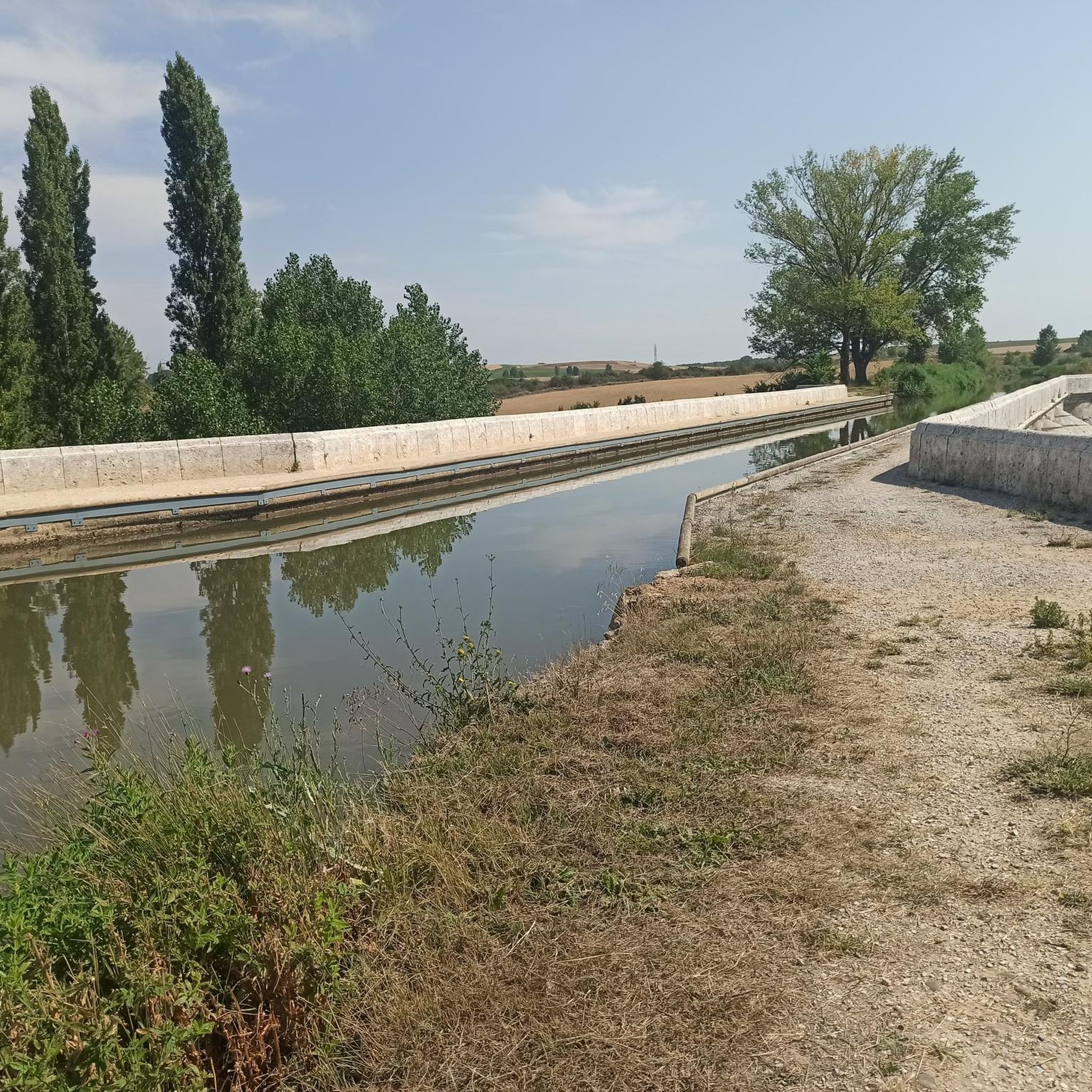
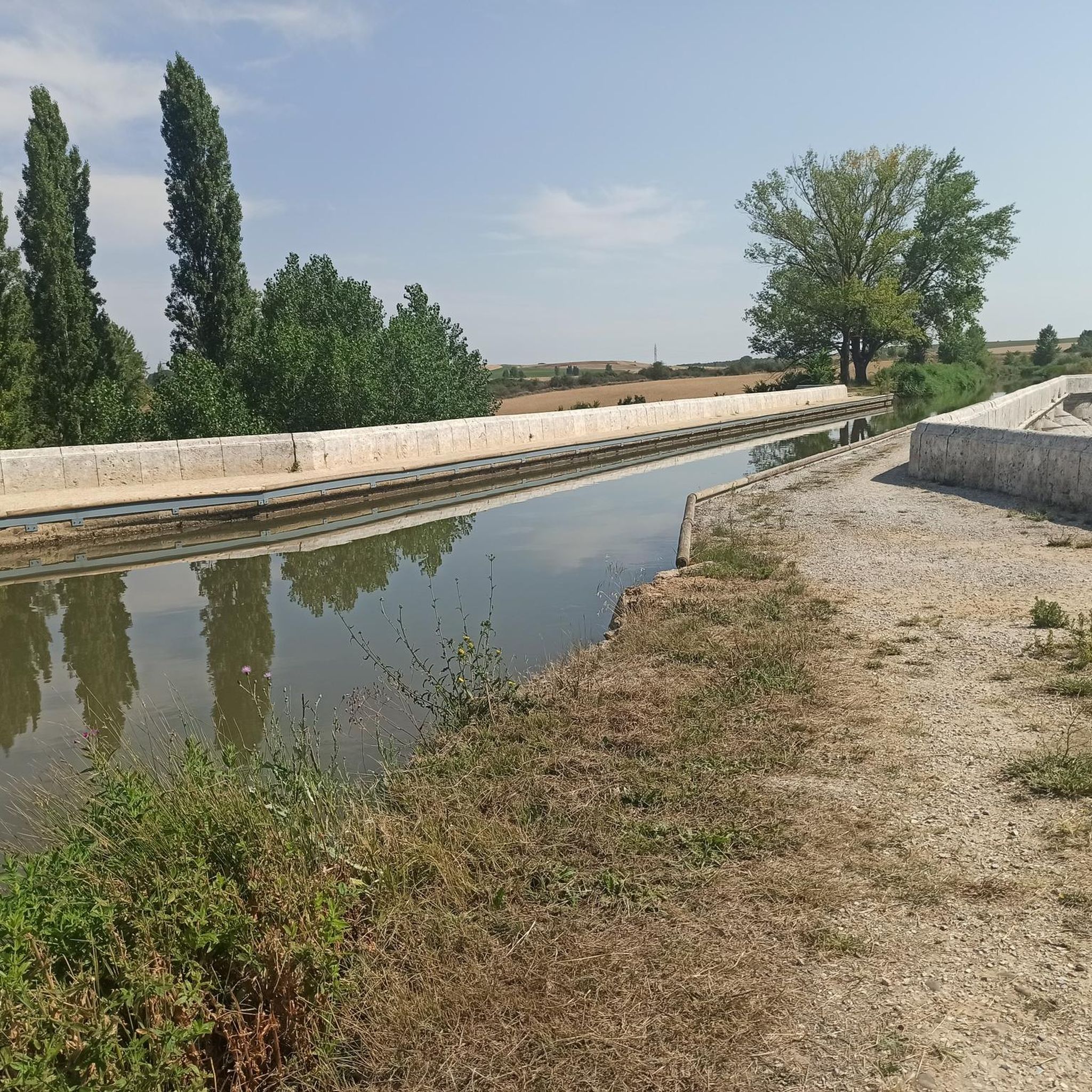
The San Andrés Lock, located in Herrera de Pisuerga (Palencia), is part of the historic Canal de Castilla, one of the most important hydraulic engineering works in Spain in the 18th and 19th centuries.
1
0

San Andrés Hanging Bridge, between the banks of the Pisuerga, allows us to follow the Canal route. When you cross it it moves, it can be fun (or scary). We can see little boats passing through the river.
2
0

Herrera de Pisuerga is a city with an outstanding history. From the Roman settlement of Pisoraca to the Visigothic occupation, its past is present in the necropolis and the archaeological remains. In the Middle Ages, it became a walled town with gates and a parish church dedicated to Santa Ana. The old town has a Plaza Mayor with arcades and emblazoned buildings.
1
0

Cultural point that celebrates the patrimonial past of the Canal de Castilla, the Retention of San Andrés is an incredible natural park. If you are looking for a place to rest it is the perfect place.
1
0

Infrastructure in the Canal de Castilla with the objective of being able to control the flow and to be able to avoid floods and untimely floods of the Pisuerga river.
2
0
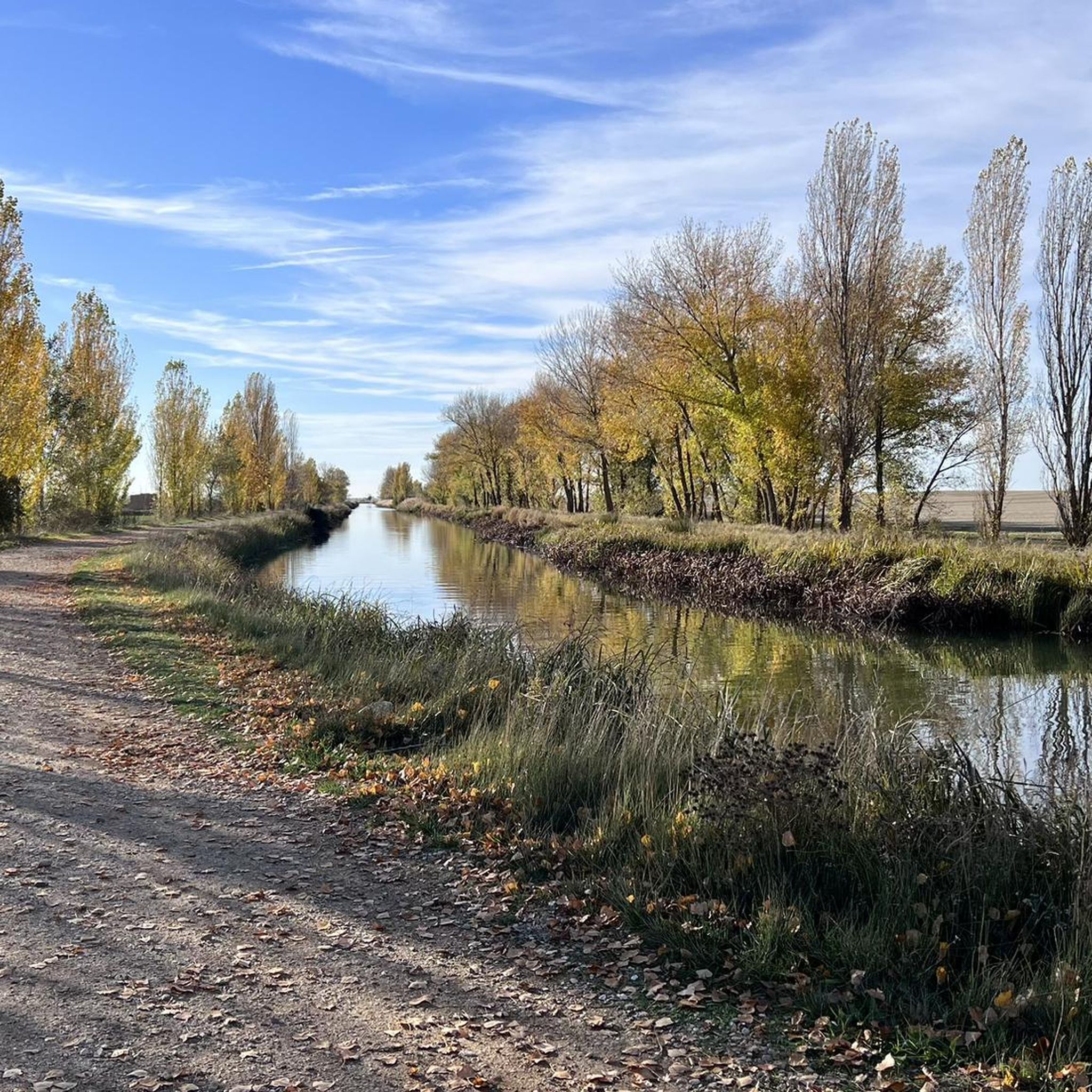
The magnum opus of hydraulic engineering during the Enlightenment, the Canal de Castilla, in the town of Herrera de Pisuerga, is located just over 1 km to the south, the point of confluence between the Canal and the Pisuerga River. At this point is the Canal Interpretation Center, the San Andrés Dam and the pier for the “Marqués de la Ensenada” ship.
5
0
Frequently Asked Questions
What natural features can I explore around Villameriel?
The region is characterized by the picturesque Río Boedo Valley, featuring deep valleys, rolling hillsides, oak forests, and streams, perfect for walks. A significant natural and engineering marvel is the Canal de Castilla. You can visit the San Andrés Sluice, Canal de Castilla, which helps control water flow and serves as a cultural park, or the Canal Museum, cafe and nice gardens., located where the Canal converges with the Pisuerga River.
Are there historical sites to visit near Villameriel?
Yes, the area is rich in history. You can explore the Iglesia de Nuestra Señora de la Asunción in Villameriel itself, a masonry church with altarpieces from the 16th to 19th centuries. Nearby, in Herrera de Pisuerga, is the historic Plaza Mayor of Herrera de Pisuerga, known for its arcades and emblazoned buildings reflecting Roman and medieval history. The El Batán del Rey Ruins, an old fulling mill from 1791, also offer a glimpse into the region's industrial past.
What family-friendly attractions are available in the area?
Families can enjoy the Canal Museum, cafe and nice gardens., which includes the Canal Interpretation Center and a pier for the “Marqués de la Ensenada” ship, offering an engaging way to learn about the Canal de Castilla. The San Andrés Sluice, Canal de Castilla is also a pleasant spot for relaxation in a cultural and natural park setting. The Plaza Mayor of Herrera de Pisuerga provides an open, historical space for families to explore.
What is the best time of year to visit Villameriel's attractions?
Given the region's natural beauty and outdoor activities, spring and autumn are generally ideal. The weather is pleasant for exploring the Río Boedo Valley, walking along the Canal de Castilla, and visiting historical sites without the intense heat of summer or the chill of winter. However, the Alto Campoo Ski and Mountain Resort offers winter sports opportunities for those visiting in colder months.
Are there hiking opportunities near Villameriel?
Yes, there are several hiking routes around Villameriel. You can find easy trails like the 7.6 km Canal de Castilla Circular from Herrera de Pisuerga or the 6.8 km Circular route through the fields of Báscones de Ojeda. For more options, explore the Hiking around Villameriel guide.
What cycling routes are available around Villameriel?
The area offers moderate cycling routes, such as the 53 km Boedo-Ojeda and Canal de Castilla Loop or the 30 km Alar del Rey – Alar del Rey loop from Herrera de Pisuerga. These routes allow you to experience the scenic landscapes and the Canal de Castilla. More details can be found in the Cycling around Villameriel guide.
Are there mountain biking trails in the Villameriel region?
Yes, mountain biking enthusiasts can find trails ranging from easy to difficult. An easy option is the 23.9 km Lock on the Pisuerga River loop from Herrera de Pisuerga. For more challenging rides, consider the 79 km Canal de Castilla - Osorno Loop Trail. Discover more trails in the MTB Trails around Villameriel guide.
Where can I learn about the Canal de Castilla's history?
The best place to learn about the Canal de Castilla, a masterpiece of hydraulic engineering, is at the Canal Museum, cafe and nice gardens. in Herrera de Pisuerga. It houses the Canal Interpretation Center and is located at the confluence of the Canal and the Pisuerga River, offering insights into its history and function.
What is the significance of the Plaza Mayor of Herrera de Pisuerga?
The Plaza Mayor of Herrera de Pisuerga is a historic square characterized by arcades and emblazoned buildings. It reflects Herrera de Pisuerga's rich past, which spans from a Roman settlement (Pisoraca) to Visigothic occupation and its development as a medieval walled town. It's a central point to appreciate the town's heritage.
Are there any ancient ruins to discover?
Yes, you can visit the El Batán del Rey Ruins near Herrera de Pisuerga. This quadrangular building, constructed of striking red brick in 1791, was originally a cloth production facility before being converted into a fulling mill. Though in ruins, its accessible interior allows you to observe its historical structure and connection to the Canal de Castilla.
What kind of landscape defines the Villameriel area?
The Villameriel area is defined by a bucolic landscape within the Río Boedo Valley. It features deep valleys, rolling hillsides, extensive oak forests, and numerous streams. This combination creates a picturesque setting that is ideal for outdoor activities and offers a blend of cultural heritage and natural beauty.
What do visitors particularly enjoy about the attractions here?
Visitors appreciate the blend of historical significance and natural beauty. The Canal de Castilla attractions, like the San Andrés Sluice, are noted for being incredible natural parks and cultural points. The Canal Museum is praised for its gardens and insights into hydraulic engineering. The historic Plaza Mayor of Herrera de Pisuerga is enjoyed for its architectural charm and historical depth.

Get inspired with the komoot mobile app


Explore more
Still not found the Highlight you’re looking for? See guides of the top attractions in other regions:
