Attractions and Places To See around Fígols I Alinyà - Top 20
Best attractions and places to see around Fígols I Alinyà include a variety of natural and cultural sites within the Alt Urgell comarca of Catalonia, Spain. This tranquil municipality, situated on the left bank of the Segre river, is characterized by its mountainous terrain and historical architecture. Visitors can explore Romanesque churches, medieval bridges, and numerous natural viewpoints. The area offers diverse landscapes, from river valleys to high mountain passes, making it suitable for those interested in history, geology, and…
Last updated: July 7, 2026
Coll de Port
Highlight • Mountain Pass
Showing Translation
Tip by

Sanctuary of Lord
Highlight • Religious Site
Translated by Google •
Tip by

Sign up now to discover places like this
Get recommendations on the best single tracks, peaks, & plenty of other exciting outdoor places.
Sign up for free
Sant Llorenç de Morunys
Highlight • Settlement
Translated by Google •
Tip by
Coll de Creus
Highlight • Mountain Pass
Translated by Google •
Tip by

Arfa Medieval Bridge
Highlight • Bridge
He gives us a very nice picture …
Translated by Google •
Tip by
Sign up for free to discover even more attractions around Fígols I Alinyà.
Sign up for free
Already have an account?
Start today with a free account
Your next adventure awaits.
Login or Signup

Tips from the Community

Sant Llorenç de Morunys is a town in the Solsonès region located at 925 metres above sea level, surrounded by the Port del Comte, Busa and Verd mountain ranges. It has a well-preserved medieval centre, with walls, cobbled streets and the 11th-century Romanesque church of Sant Llorenç, as the centre of the complex. It is a key point of passage and stop for mountain routes, cycle tours and crossings through the Pre-Pyrenees. The entrance and exit of the town can be done via roads with demanding slopes or forest tracks depending on the itinerary, but it is always worth stopping there to recover energy, fill up water bottles or take a quality break. A good place to charge batteries, both physical and e-bike.
1
0


This is a beautiful high mountain pass located in the pre-Pyrenees. It is a manageable and steady pass from both sides, with the Sant Llorenç de Morunys side being slightly tougher. There is a sense of tranquility and traffic is practically non-existent. The road is narrow and the asphalt is very rough and worn, which adds to the difficulty of the pass. I recommend the alternative of reaching the La Vansa cross-country ski resort, about 5 km above the Coll de Port. If you climb from Sant Llorenç de Morunys, with just under 4 km to the summit, a road branches off that takes you directly to the Port del Compte ski resort... after some tough ramps. If you want details of the altitude profile, I recommend the one drawn by Ramacabici: http://www.ramacabici.com/altimetrias/lavansa01.htm
1
0

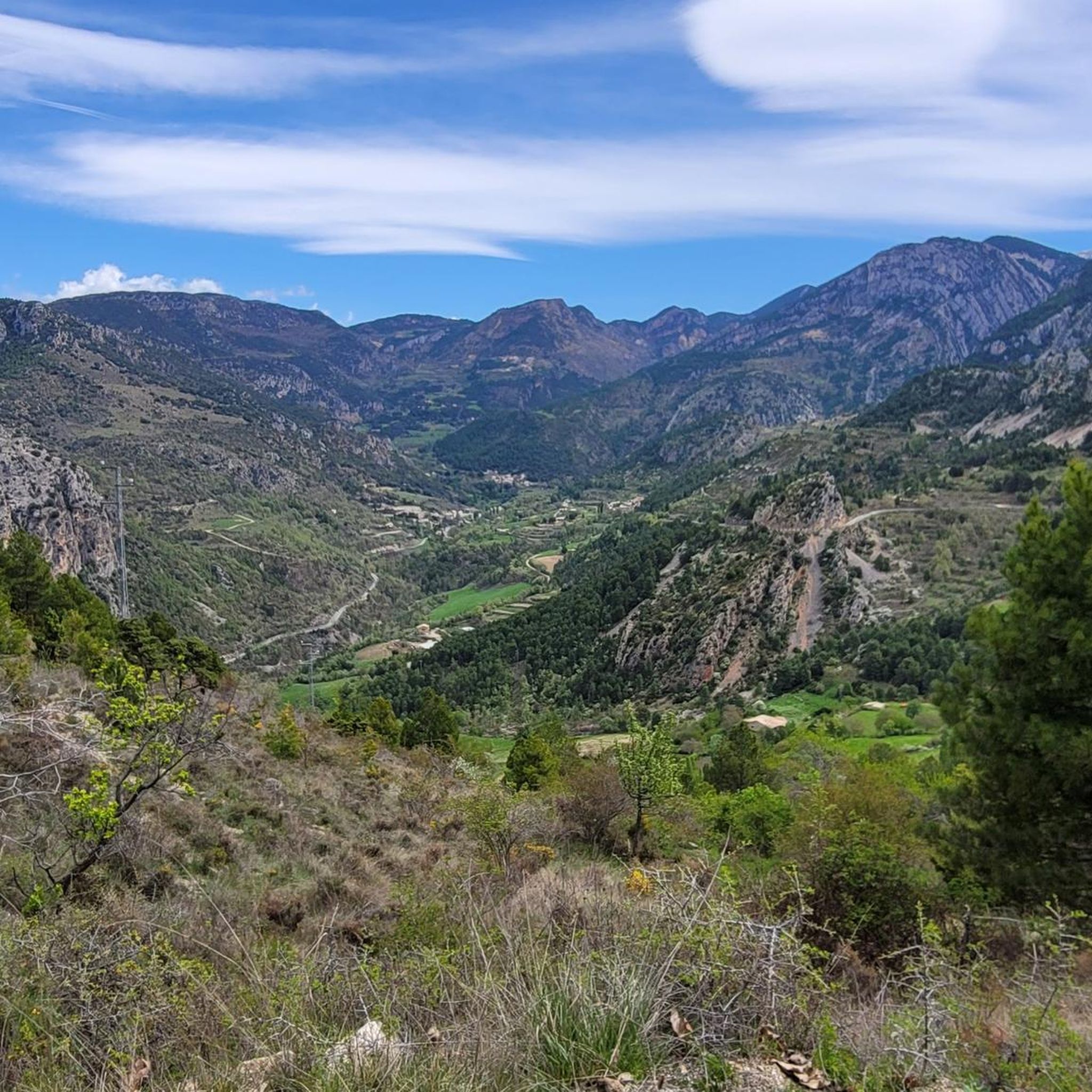
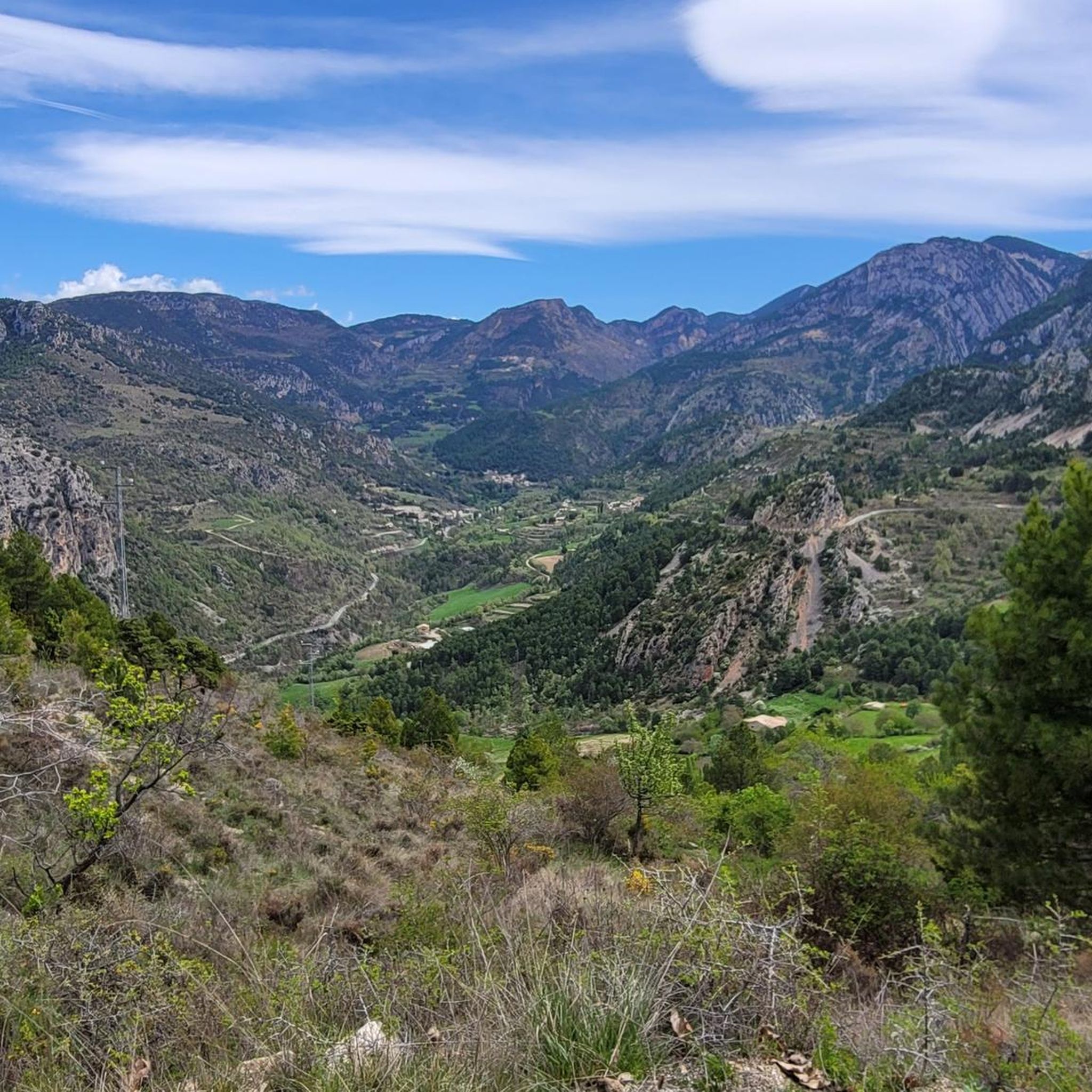
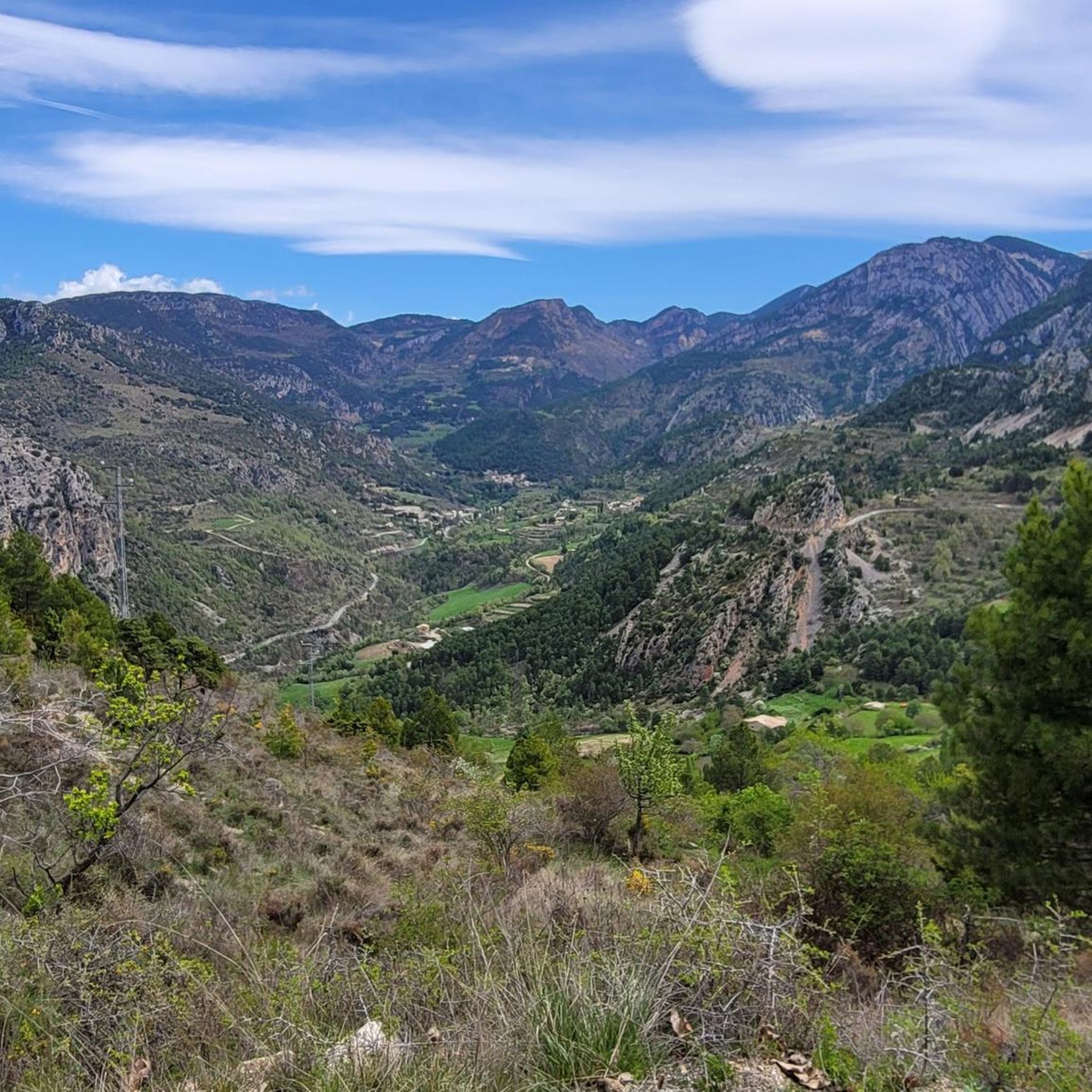
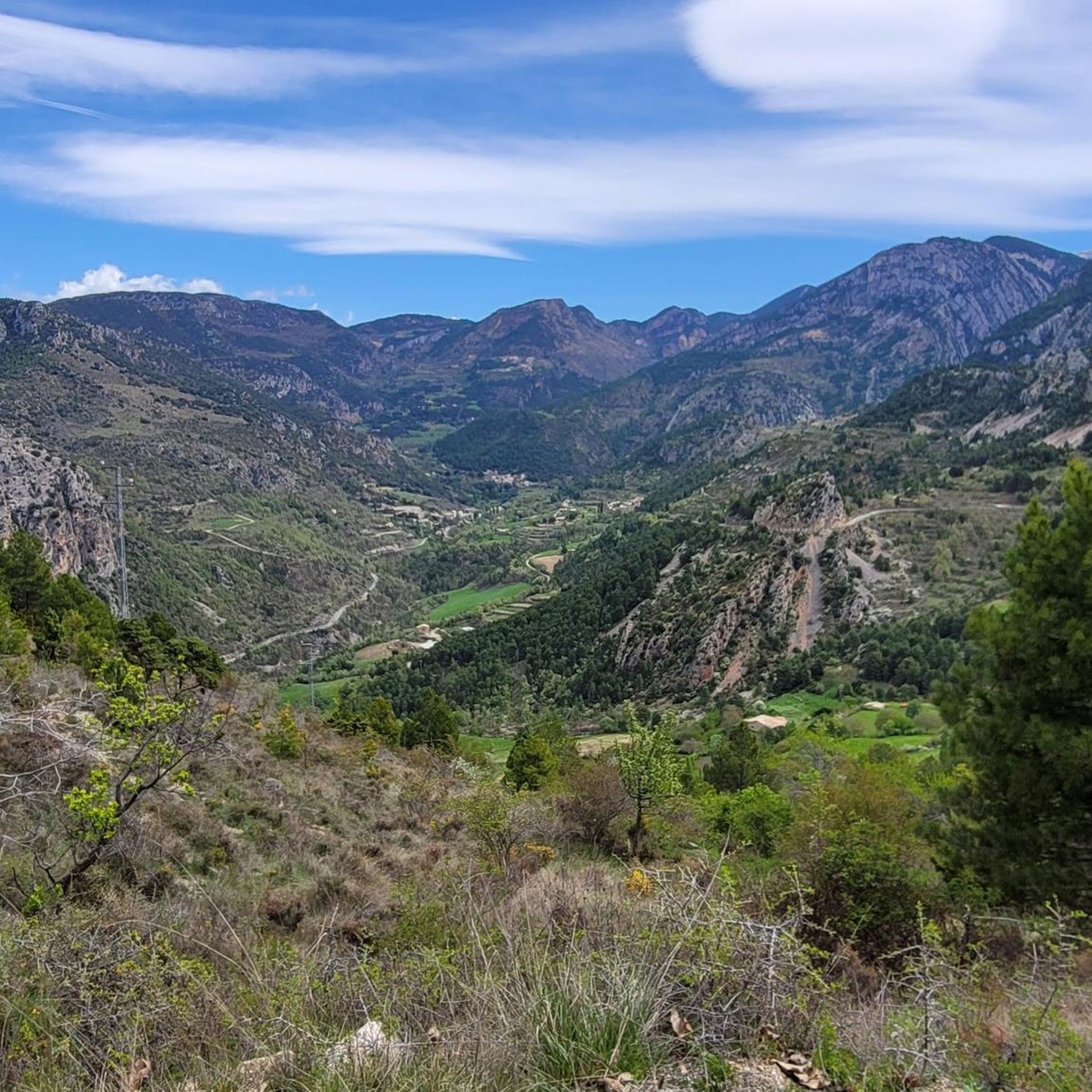
The magnificent views from the viewpoint over the Berguedà valleys and the Pyrenees alone make the climb up here worthwhile.
1
0
Sant Llorenç de Morunys is a curious mountain town in the Solsonés region. If you are on the road here, do not hesitate to make a stop and recharge your batteries at any of its establishments.
1
0

The Coll de Creus is a difficult milestone if you have gotten here by bike. Of course, the effort is fully rewarded with the impressive views of the reddish environment, very interesting from the geological point of view as well as aesthetic Here, in addition, the GR 7 crosses at the PR-C 122.
0
0

The Coll de Creus, located at 1437 meters above sea level, is part of the Coll de Creus Geological Itinerary. This point is a crossroads that joins two official routes: the GR 7 and the PR-C 122. It is very interesting to see the characteristic landscape of this place, which stands out for the reddish rocks and their layered arrangement.
1
0

Documented since the end of the 10th century as an ancient hermitage center, in the 11th century it became dependent on the monastery of Sant Llorenç de Morunys. A church was built there in the fifteenth century, and between 1582 and 1634 a community of Dominican friars was established there. The increase in his patrimonial assets led to the construction of a new temple between 1774 and 1785, which came to serve, in 1812, as a depot for French prisoners and was devastated in 1836 during the Carline War; a cannon from that time is preserved there, located at the entrance to the sanctuary. The current building was built on the initiative of the industrialist Esteve Monegal between 1867 and 1870, and was inaugurated on August 19 of this year. In 1896 a great fire, perhaps caused by lightning, completely destroyed the high altar and the paintings representing the legend. The image of the Virgin Mary was rescued and the temple was repaired. In 1901, a new high altar was inaugurated, this time financed by José Monegal. In 1929, the two Masriera canvases were installed there, replacing the previous two, burned in the 1896 fire. After the family that lived in the Sanctuary left at the end of the sixties of the 20th century, in 1971 Father Jordana, coming from the Monastery of Poblet, who had been Prior-President of Poblet and of the Spanish Cistercian Order, arrived in La Mola to reside there and lead a retired life. In 1975, a new reconstruction of the Sanctuary began and in the following years, electric light and running water were added. In 2008, the Hostatgeria del Santuari was inaugurated there, a "eucharistic, biblical place, a place to transmit the peace of God
1
0
Frequently Asked Questions
What are some notable natural features or viewpoints in Fígols i Alinyà?
The region offers several impressive natural viewpoints. You can visit Coll de Port, a mountain pass known for its magnificent views and spectacular road. Another significant spot is Coll de Creus, located at 1437 meters, which is part of a geological itinerary and offers impressive views of reddish, layered rocks. The Cyclist sculpture at Coll de Serra Seca also provides spectacular panoramic views after a rewarding climb. Additionally, the Mirador del Cel (Sky Viewpoint) and the Serres d'Odèn-Port del Comte area, with peaks like Urdiet, offer further opportunities for scenic appreciation.
Are there historical or cultural sites to visit in the area?
Yes, Fígols i Alinyà is rich in history and culture. You can explore various Romanesque churches such as Sant Esteve d'Alinyà and Sant Víctor de Fígols. A Romanesque itinerary connects several of these churches, including Santa Pelaia, Sant Romà de Perles, and Sant Marc de Canelles. The well-preserved medieval center of Sant Llorenç de Morunys, with its cobbled streets and 11th-century Romanesque church, is also a key cultural highlight. Don't miss the Sanctuary of Lord, which offers magnificent views overlooking the Panta de la Llosa del Cavall.
What kind of outdoor activities can I do near these attractions?
The area around Fígols i Alinyà is ideal for various outdoor activities. You can find numerous routes for hiking, running, and road cycling. For detailed information and specific routes, explore the dedicated guides: Hiking around Fígols I Alinyà, Running Trails around Fígols I Alinyà, and Road Cycling Routes around Fígols I Alinyà.
Are there hiking trails suitable for different skill levels?
Yes, the region offers a range of hiking trails. For example, the 'Organyà to Fontanet Ponds Trail' is an easy option, while routes like 'Waterfalls of Organyà – View of the Mountain Peak loop from Organyà' and 'Tossal de Balinyó loop from Organyà' are considered moderate. You can find more details and a wider selection of trails in the Hiking around Fígols I Alinyà guide.
Can I find family-friendly attractions or activities?
Yes, several attractions are suitable for families. The Sanctuary of Lord and the settlement of Sant Llorenç de Morunys are noted as family-friendly. Exploring the well-preserved hydraulic mill in Alinyà or observing wildlife along the Segre River can also be engaging activities for families.
What is the best time of year to visit Fígols i Alinyà for outdoor activities?
The region is generally pleasant for outdoor activities during spring, summer, and autumn. Summer offers opportunities to see artisan basket weavers in hamlets like Cal Gillet and Cal Graell. However, for activities like cycling, it's recommended to avoid the hottest days, especially for challenging climbs like the one to Coll de Serra Seca. Spring and autumn provide milder temperatures ideal for hiking and exploring.
Are there opportunities for wildlife spotting?
Yes, Fígols i Alinyà is considered a paradise for nature lovers and offers opportunities for wildlife spotting. While exploring the natural areas, it's possible to encounter chamois and witness the majestic flight of vultures, particularly along the Segre River.
What are some unique or 'hidden gem' attractions in the area?
Beyond the main highlights, you can discover unique spots like the 11th-century medieval bridges known as Els Pontarrons, which were part of an old road. The well-preserved hydraulic mill in Alinyà offers a glimpse into historical local industry. The area is also abundant with natural springs and fountains, such as Fonts Grans and Font de la Aiguaneix near Llobera, which are integrated beautifully into the landscape.
What do visitors particularly enjoy about the Fígols i Alinyà area?
Visitors frequently highlight the spectacular views from mountain passes like Coll de Port and Coll de Serra Seca, noting that the effort to reach them is well rewarded. The well-preserved medieval center of Sant Llorenç de Morunys is also a favorite for its charm and as a good spot to recharge. The geological features and reddish rocks at Coll de Creus are also highly appreciated for their unique aesthetic and scientific interest.
Are there cycling routes available, and what are their characteristics?
Yes, there are numerous cycling routes, especially for road cycling, often featuring challenging climbs and rewarding views. Routes like 'Arfa Bridge – Hermitage of Sant Joan de l'Erm loop from Organyà' and 'Coll de Bóixols – Coll de Faidella (1250 m) loop from Organyà' are examples of difficult, longer rides. Many routes pass through scenic mountain passes. For a comprehensive list and details, refer to the Road Cycling Routes around Fígols I Alinyà guide.
What are the geological points of interest in the region?
The region is notable for its geological features. Coll de Creus is a significant geological point, part of a dedicated itinerary, known for its characteristic reddish rocks and layered arrangements. This area provides a fascinating insight into the geological history of the Pre-Pyrenees.
How can I explore the Segre River area?
The Segre River plays a significant role in the municipality's landscape. You can explore rural paths along its banks, observe vultures, and visit architectural marvels like the Espia bridge. The dramatic Tresponts gorge, located nearby, also offers a spectacular natural experience related to the river.
Most popular routes around Fígols I Alinyà
Most popular attractions around Fígols I Alinyà

Get inspired with the komoot mobile app


Explore more
Still not found the Highlight you’re looking for? See guides of the top attractions in other regions:
