The best road cycling routes around La Puebla De Híjar
201
riders
18
rides
Road cycling routes around La Puebla de Híjar traverse the varied landscapes of the Bajo Martín region in Teruel. The area features agricultural lands, semi-arid steppe-like terrain of the Ebro Depression, and historical routes along old railway lines. Many routes offer paved surfaces, making them suitable for road cyclists of various skill levels. The region's topography includes sections along the Ebro River and its meanders, with some routes featuring moderate elevation gains.
Best road cycling routes around La Puebla de…
Last updated: October 28, 2026
2
riders
53.5km
02:24
490m
490m
Moderate road ride. Good fitness required. Mostly well-paved surfaces and easy to ride.
62
riders
73.1km
03:27
940m
940m
Hard road ride. Very good fitness required. Mostly well-paved surfaces and easy to ride.

7
riders
112km
05:04
1,170m
1,170m
Hard road ride. Very good fitness required. Some segments of this route may be unpaved and difficult to ride.
7
riders
156km
07:33
2,250m
2,250m
Hard road ride. Very good fitness required. Mostly well-paved surfaces and easy to ride.
5
riders
23.1km
01:03
210m
210m
Easy road ride. Mostly well-paved surfaces and easy to ride.
Get access to more routes and recommendations from other explorers.
Already have an account?
Our route recommendations are based on thousands of hikes, rides, and runs completed by other people on komoot.
Start today with a free account
Your next adventure awaits.



Other adventures around La Puebla De Híjar

Tips from the Community

Beautiful Mudejar church and curious sculptures. We have shops and a couple of fountains
0
0

We are in Alloza, a beautiful town in the Andorra-Sierra de Arcos region and in the province of Teruel where we can visit a diversity of heritage, both natural and the nearby Embalse de Escuriza or Calvario de Alloza, as well as cultural heritage; the Hermitage of San Blas or the Parish Church of the Immaculate Conception
1
0
We are in the beautiful mining town of Ariño located at the foot of the Sierra de Arcos and with many points of interest such as the Mining Museum, a spring, the parish church of San Salvador or the hermitage of Santa Bárbara among many others, so if we have time, it is definitely worth a visit.
1
0
Declared a Cataloged Asset of Aragonese Cultural Heritage, the Church of Santa María Magdalena rises above the town of Lécera with a clearly Mudejar style.
0
0

The relief of the municipality is characterized by the so-called Calanda Desert, an arid area with little rainfall, only softened by the presence of the Martín River, which crosses the territory to the west. The Hermitage of Santa Quiteria is towards the train station and to the left, you come to the hermitage, where water miraculously flows in such an arid land.
0
0
Oliete is located above the riverbed of the Río Martín, where it is elevated from the rest of the land since the river has created a plain below the town, where there are currently agricultural fields.
0
0
Andorra is located between the valleys of the Martín and Guadalope rivers, next to the small Regallo river. It is located on the side of a hill 714 m above sea level, where it originated, although now it has been moving towards the plain. The population was known in the middle of the 20th century for the arrival of the railway that gave way to the mining activities of the population of Andorra.
1
0
One of the most important characteristics of this construction is the way it blends in with the landscape in which it is located, where there appears a church, an inn and all buildings on a stone.
0
0
Frequently Asked Questions
What kind of terrain can I expect on road cycling routes around La Puebla de Híjar?
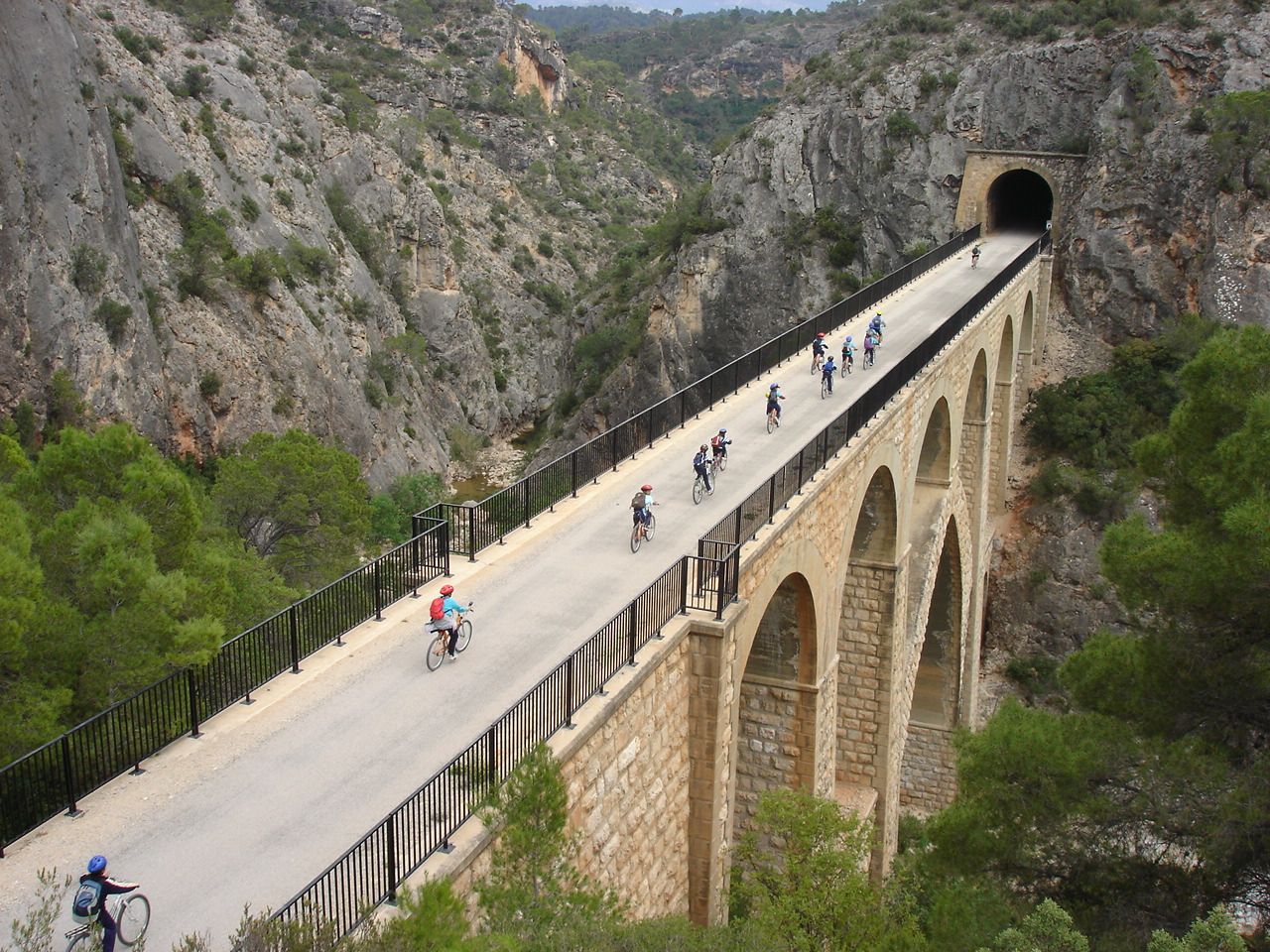
The region offers a diverse landscape for road cycling. You'll find routes traversing fertile agricultural lands, the semi-arid, steppe-like terrain of the Ebro Depression, and sections along the Ebro River and its meanders. Many routes follow old railway lines, such as the Vía Verde del Val de Zafán, providing generally flat or gently sloping paths.
Are there routes suitable for all fitness levels?
Yes, La Puebla de Híjar caters to various fitness levels. The Vía Verde del Val de Zafán is particularly suitable for all skill levels due to its gentle gradients. For those seeking more challenge, routes like the Ariño – Andorra loop from Urrea de Gaén offer significant elevation gains and are considered difficult.
What are some notable historical or natural attractions I can see while cycling?
Along the routes, you can encounter several interesting features. The Vía Verde del Val de Zafán itself is a historical attraction with old railway structures like the La Torica Aqueduct. You can also enjoy views of the Ebro River and its meanders, and some routes pass by the historical Monasterio de Rueda. The town of La Puebla de Híjar also has cultural points of interest like the Church of the Nativity of the Virgin.
Is the Vía Verde del Val de Zafán suitable for road bikes?
The Vía Verde del Val de Zafán is largely paved or has good surfaces, making it suitable for road bikes. It follows an old railway line, offering a path with no significant technical difficulty. A front light is recommended for the tunnels along the route.
What is the best time of year for road cycling in La Puebla de Híjar?
The region's climate makes spring and autumn ideal for road cycling, offering pleasant temperatures. Summers can be hot, especially in the semi-arid areas, so early morning or late afternoon rides are advisable during those months.
Are there any circular road cycling routes available?
Yes, there are several circular routes. For example, the Ruta del Tambor y el Bombo Cycling Loop is a moderate 53.5 km circular trail. Another option is the Ebro River and Monastery of Rueda Loop, which is a 71.6 km moderate path.
What are the surface conditions like on the road cycling routes?
Many of the road cycling routes in the area, including significant portions of the Vía Verde del Val de Zafán, are paved or have well-maintained surfaces. This makes them generally suitable for road bikes. However, some segments of the Vía Verde might be unpaved but are typically still rideable.
Can I find family-friendly road cycling options in the area?
Absolutely. The Vía Verde del Val de Zafán is particularly family-friendly due to its gentle gradients and mostly paved surfaces. Its predominantly downhill direction from La Puebla de Híjar towards Tortosa also offers a more relaxed experience for families.
Are there any specific routes that offer views of the Ebro River?
Yes, routes like the Ebro River and Monastery of Rueda Loop are designed to showcase the picturesque Ebro River and its meanders. You can also find viewpoints such as the View of the Meanders of the Ebro River and Sástago along some routes.
How many road cycling routes are available in La Puebla de Híjar?
There are over 15 road cycling routes available around La Puebla de Híjar, offering a range of distances and difficulties to explore the region's diverse landscapes.
What do other cyclists enjoy most about road cycling in La Puebla de Híjar?
The komoot community highly rates the road cycling experience in La Puebla de Híjar. Cyclists often praise the varied terrain, from agricultural lands to the Ebro Depression, and the unique experience of cycling along historical routes like the Vía Verde del Val de Zafán.
Are there any routes that pass through or near other towns?
Yes, some routes connect La Puebla de Híjar with nearby towns. For instance, the Híjar – Torre del Tambor of Sástago loop from Sástago takes you through different settlements, offering a chance to experience local culture and amenities.
Most popular attractions around La Puebla De Híjar

Get inspired with the komoot mobile app


Explore more
Browse the best Road cycling routes in other regions.
