Attractions and Places To See around Morata De Jiloca - Top 10
Best attractions and places to see around Morata De Jiloca include a blend of historical, cultural, and natural sites within the Jiloca valley in Aragon, Spain. The town is situated on the left bank of the Jiloca River, surrounded by fruit trees and pine forests. Its rich Mudejar heritage is evident in various architectural examples, while unique geological formations like Las Cárcavas offer striking natural landscapes. This region provides a diverse range of points of interest for visitors.
Best attractions…
Last updated: July 15, 2026
Church of Our Lady of the Assumption of Munébrega
Highlight • Religious Site
Translated by Google •
Tip by

Maluenda
Highlight • Castle
Translated by Google •
Tip by

Sign up now to discover places like this
Get recommendations on the best single tracks, peaks, & plenty of other exciting outdoor places.
Sign up for free
Hermitage of Our Lady of the Martyrs
Highlight • Religious Site
Translated by Google •
Tip by

Villafeliche
Highlight • Settlement
Translated by Google •
Tip by
Old Railway Bridge
Highlight • Bridge
Tip by

Sign up for free to discover even more attractions around Morata De Jiloca.
Sign up for free
Already have an account?
Start today with a free account
Your next adventure awaits.
Login or Signup

Tips from the Community

The railway line is easy to do by bike, with a few pushing sections. The tunnels are open and the bridge is passable (2.2025). There is no need to wade through rivers or carry your bike!
0
0

Its location is on the track from Atea to Murero, this track is highly recommended if we want to avoid the road that connects these towns.
0
0

This was a bit difficult. I think you could go over top by the bridge instead. Still, the route was beautiful and scenic. Much better than riding with the big trucks on the highway, if you have a gravel bike and are cycling between Daroca and Calatayud
2
0

Legend has it that the Celtiberian population of Sace or Saz was here and that it had been reduced to ashes by the Muslims. After the reconquest of Alfonso I the Battler, an image of the burned virgin of the village was found and the inhabitants of Atea took it to the town. In the 18th century, this hermitage was built and they called it Nuestra Señora de los Mártires, for those who fell for their faith under the Muslim yoke.
0
0

We are in Munébrega, where the Church of Nuestra Señora de la Asunción stands out, of course, in the Mudéjar style and from the 14th century. We can go to see the hermitage of San Cristóbal or the hermitage of Nuestra Señora del Mar y de la Cuesta or the beautiful pond that is in the surroundings with an age of more than 600 years. And if we want to play at getting lost in Munébrega, we can try to find the five Peirones that are scattered throughout the town.
1
0

This small town located in the Jiloca valley still preserves several vestiges of its Moorish past. Remains of an old mosque still remain, as well as the ruins of a 13th-century castle. It is worth going up to the castle to enjoy the views of the valley. As a reward for the climb to the castle, you can relax afterwards in the village bar.
3
0
Maluenda is a small town in the province of Zaragoza on the banks of the Jiloca River. The ruins of an Arab fortress from the 9th century stand out, as well as the Mudejar tower of the church of Santa María and the Albarrana tower. The town also has a couple of bars where you can taste local products.
2
0

18th century hermitage
2
0
Frequently Asked Questions
What historical and cultural sites can I visit in Morata de Jiloca itself?
In Morata de Jiloca, you can explore the 14th-century Church-fortress of San Martín de Tours, a prime example of Aragonese Mudejar architecture. You can also see the remnants of a 14th-century Muslim-origin castle, offering a glimpse into the town's past as a frontier post. Additionally, the Palacio-Casa Costea showcases Renaissance architecture with Mudejar influences, and wandering through the streets reveals traditional rammed earth and masonry constructions.
Where can I find unique natural landscapes around Morata de Jiloca?
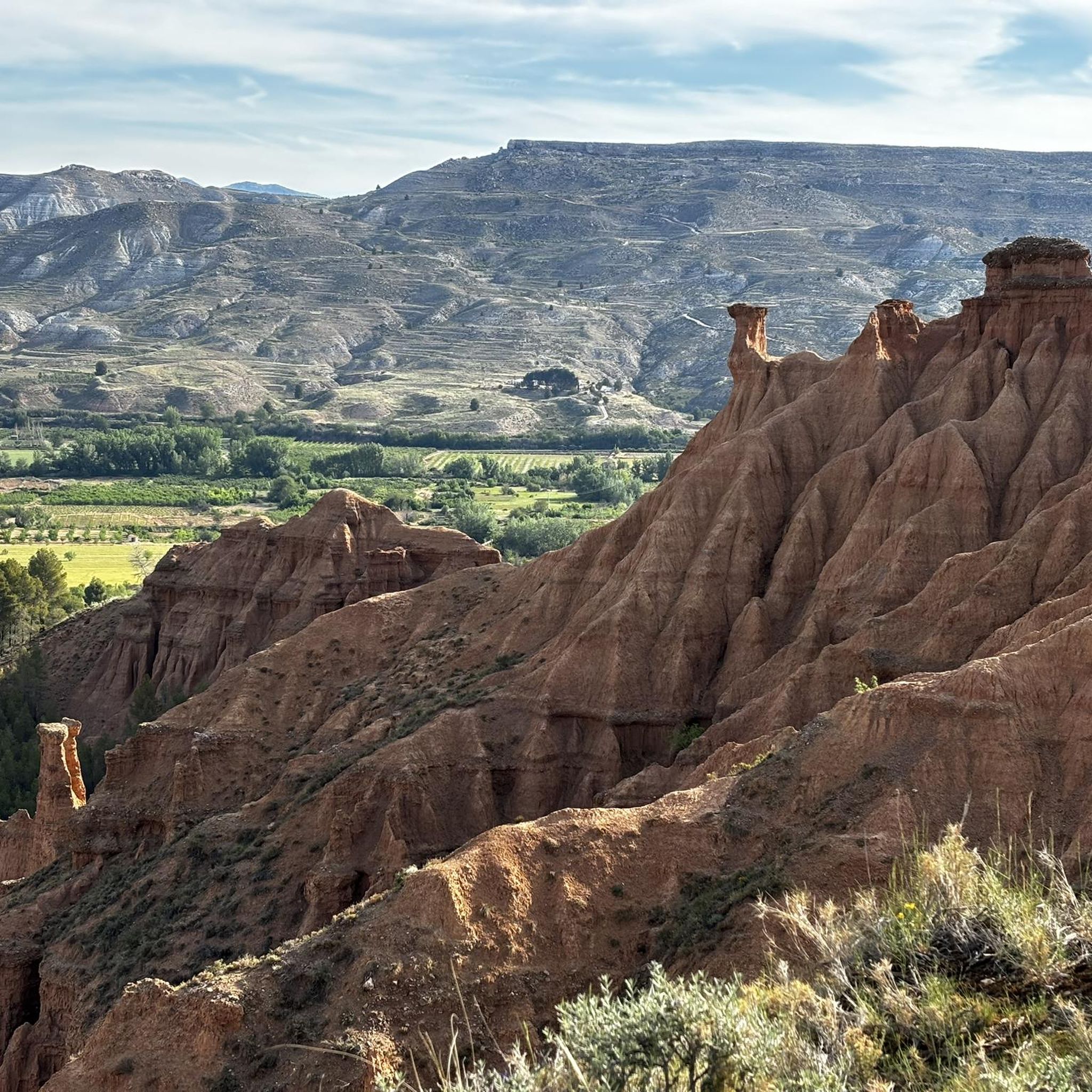
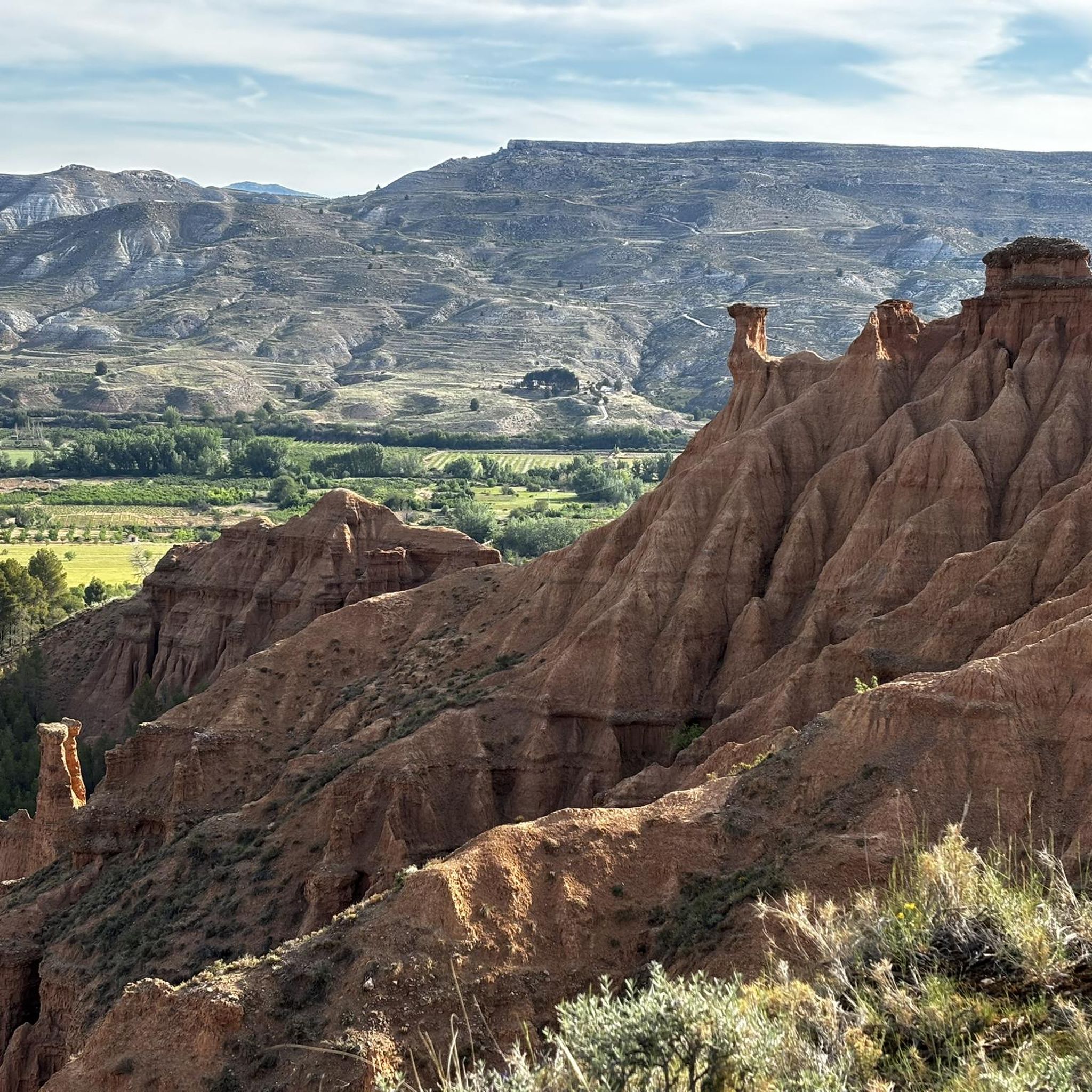
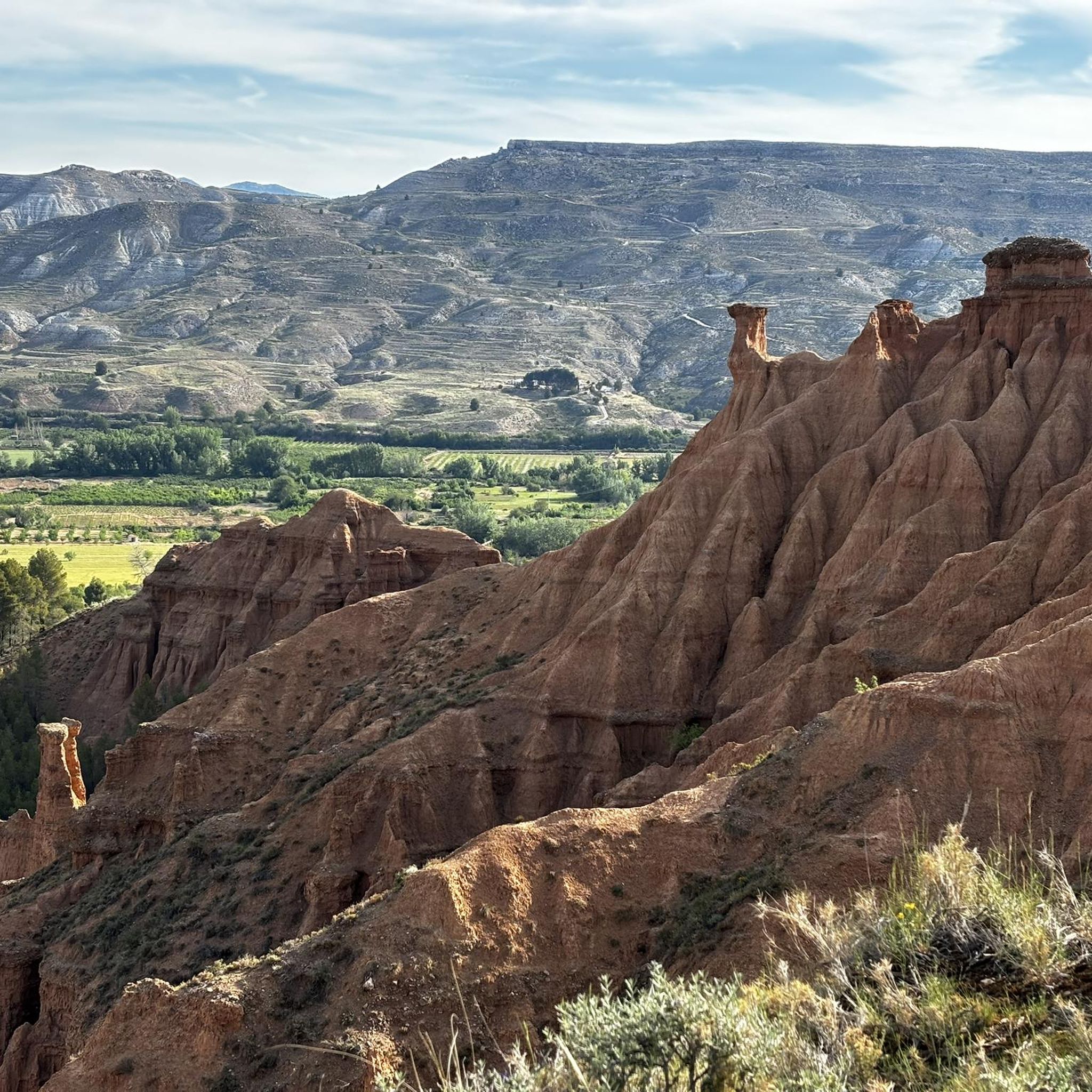
The most striking natural feature near Morata de Jiloca is Las Cárcavas. These are giant clay and gypsum rock formations, sculpted by erosion into shapes resembling towers, castles, and chimneys. A trail, PR-Z 63, leads from Morata to a natural viewpoint offering panoramic views of this unique area. The town is also situated in the picturesque Jiloca River Valley, surrounded by fruit trees and pine forests.
Are there opportunities for cycling or mountain biking near Morata de Jiloca?
Yes, the region offers various cycling opportunities. For mountain biking, you can find routes like 'Despoblado de Pardos y Mirador de Santa Cruz' or 'Drinking Water Fountain loop from Fuentes de Jiloca'. Road cyclists can explore routes such as 'Alto de Codos – ⭐️ Church of San Pedro loop from Miedes de Aragón'. For more detailed information and routes, check the MTB Trails around Morata De Jiloca, Road Cycling Routes around Morata De Jiloca, and Cycling around Morata De Jiloca guides.
What kind of hiking trails are available around Morata de Jiloca?
While specific hiking trails are not detailed in the provided data, the natural landscape around Morata de Jiloca, particularly the area of Las Cárcavas, suggests opportunities for walks and hikes. The PR-Z 63 trail leads to a viewpoint over Las Cárcavas. The general area with its river valley, fruit trees, and pine forests is suitable for pleasant walks.
Are there family-friendly attractions or activities in Morata de Jiloca?
The nearby settlement of Villafeliche is noted as family-friendly. Exploring its historical vestiges, including the ruins of a 13th-century castle, and enjoying the views of the valley from there can be an engaging activity for families. The natural formations of Las Cárcavas also offer an interesting landscape for families to explore.
What other towns are worth visiting near Morata de Jiloca for a day trip?
Several charming towns are within a short drive. Maluenda (5 km away) is known for its Mudejar heritage and Arab fortress ruins. Villafeliche (9 km away) is famous for its pyrotechnics history and Mudejar church. Paracuellos de Jiloca (9 km away) offers a balneary and a church with an elegant bell tower. Calatayud (12-13 km away) is a larger historical city with attractions like Plaza del Justicia and the natural area of Los Castillejos de Armantes. The well-known Monasterio de Piedra is also about 37 minutes away.
What is the best time of year to visit Morata de Jiloca for outdoor activities?
While specific seasonal weather isn't detailed, regions like Aragon in Spain typically experience pleasant weather for outdoor activities during spring (April-May) and autumn (September-October). These periods usually offer milder temperatures, making hiking and cycling more enjoyable than the hotter summer months.
What are some of the lesser-known historical gems in the region?
Beyond the main attractions, the region holds several historical gems. The Hermitage of Our Lady of the Martyrs near Atea, an 18th-century hermitage, has a rich legend associated with it. The Old Railway Bridge is another interesting man-made structure, part of a scenic route that can be explored by bike.
Can I find places to eat or stay in Morata de Jiloca?
The provided information mentions that nearby towns like Munébrega have rural accommodations, a bar, and shops. Maluenda also has a couple of bars where you can taste local products. While specific establishments in Morata de Jiloca are not listed, these nearby options suggest that basic amenities for visitors are available in the surrounding area.
Is there public transport to Morata de Jiloca?
The provided data does not specify public transport options directly to Morata de Jiloca. Visitors typically reach such towns in rural Aragon by car, which offers the most flexibility for exploring the various attractions and natural sites in the region.
What is the significance of the Mudejar heritage in this area?
The Mudejar heritage is a defining characteristic of the region, reflecting a unique blend of Islamic and Christian architectural styles. The Church-fortress of San Martín de Tours in Morata de Jiloca is a prime example, declared a National Monument. Nearby, Maluenda and Munébrega also feature significant Mudejar churches and towers, showcasing this rich historical and artistic legacy.
What can I expect to see in the Jiloca River Valley?
The Jiloca River Valley, where Morata de Jiloca is situated, is characterized by a picturesque natural setting. You can expect to see fruit trees, pine forests, and a rich diversity of flora and fauna, including various bird species. The river's course has also contributed to the formation of unique geological features like Las Cárcavas.

Get inspired with the komoot mobile app


Explore more
Still not found the Highlight you’re looking for? See guides of the top attractions in other regions:
