Attractions and Places To See around Vilanova D'Escornalbou - Top 20
Best attractions and places to see around Vilanova D'Escornalbou include a blend of historical sites, cultural experiences, and natural landscapes. This municipality is situated between the Pradell-l'Argentera and Llaberia mountain ranges, offering Mediterranean forests and agricultural lands. Its character is shaped by a rich olive cultivation tradition and medieval heritage. Visitors can explore ancient buildings, learn about local agriculture, and enjoy the surrounding natural beauty.
Best attractions and places to see around Vilanova D'Escornalbou
- The most popular attractions is Hermitage…
Last updated: July 19, 2026
Cambrils Marina
Highlight • Structure
Translated by Google •
Tip by

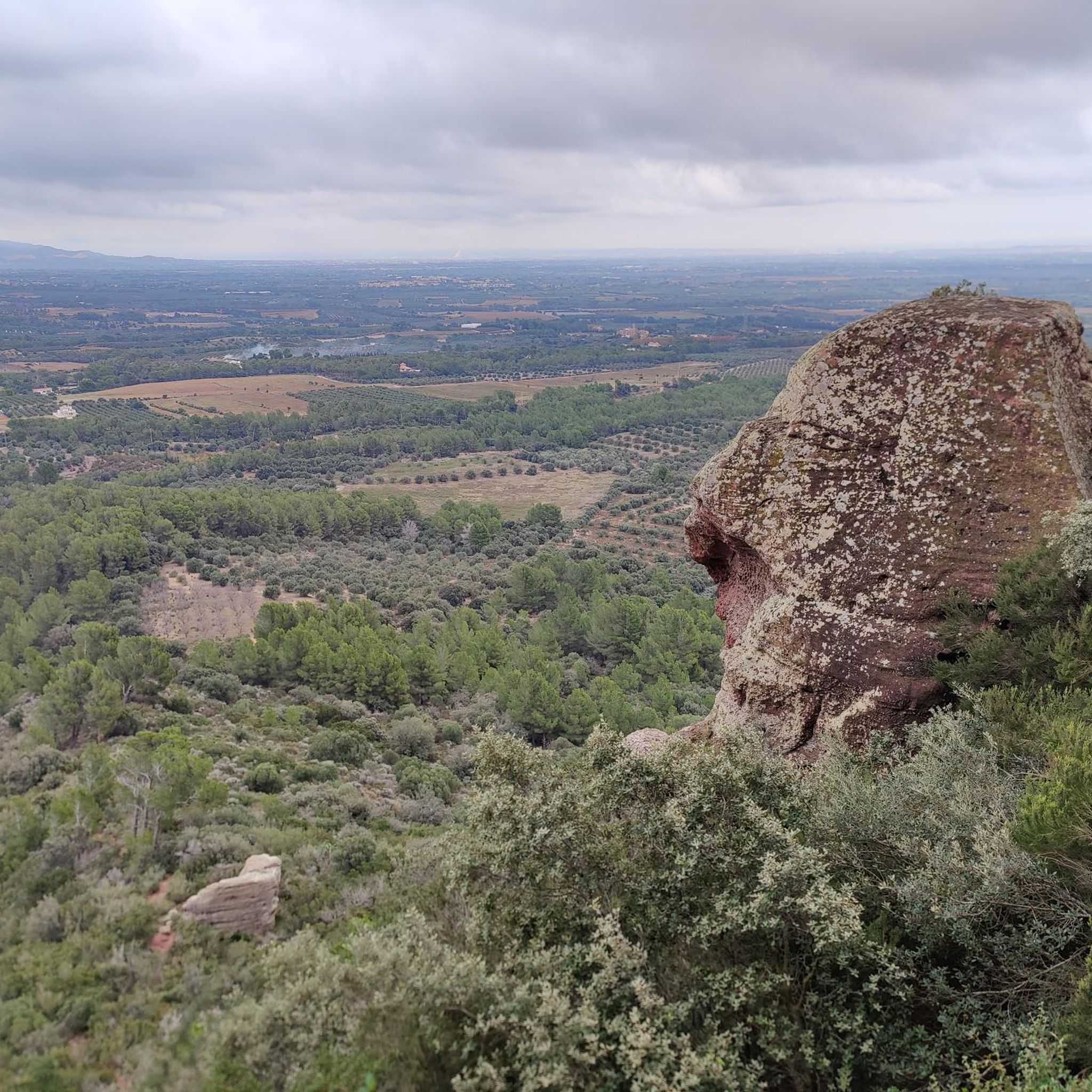
Hermitage of Mare de Déu de la Roca
Highlight • Religious Site
Around …
Translated by Google •
Tip by

Sign up now to discover places like this
Get recommendations on the best single tracks, peaks, & plenty of other exciting outdoor places.
Sign up for free
Montbrió del Camp Town Hall
Highlight • Monument
Translated by Google •
Tip by
La Mola Castle, Colldejou
Highlight • Castle
Translated by Google •
Tip by

Sant Miquel d'Escornalbou Castle and Monastery
Highlight • Castle
Translated by Google •
Tip by

Sign up for free to discover even more attractions around Vilanova D'Escornalbou.
Sign up for free
Already have an account?
Start today with a free account
Your next adventure awaits.
Login or Signup
Popular around Vilanova D'Escornalbou

Tips from the Community

Picturesque town that is well worth a stop to enjoy its traditional architecture with some stately homes.
0
0

The 17th-century coast guard tower is a round tower with a height of 18 m and a sloping base. The Torre del Port is located directly at the port of Cambrils. https://www.burgenwelt.org/spanien/cambrils_port/object.php
0
0

Cambrils retains its fishing character with a charming harbor, charming streets steeped in history, and magical sunsets. A perfect destination for families, with golden sandy beaches and a rich gastronomic tradition.
8
0
The cozy and authentic fishing village is known for the relaxed atmosphere that the life of fishermen brings with it. That quiet atmosphere is interrupted every working day around 17:00 by the fish auction in the harbor. Known in the far area for the high-quality fish that is sold here.
14
1

From up here you have a beautiful view.
0
0

Population whose center is the church of Mare de Déu del Carmen and which is located at the foot of the Serra de Pradell and close to the city of Reus, which is a few kilometers away.
0
0

The Museu d'Història de Cambrils belongs to the network of history museums and monuments of Catalonia, in addition to the network of museums in the Tarragona region and the network of museums on the Catalan coast. In 2018, the so-called Torre del Port or Torre dels Moros, a circular watchtower, was added to the museum. It dates from the mid-17th century, when the Cambrils Council agreed to build a tower in the fishermen's neighborhood in order to increase the safety of the beaches
1
0
Stately mansion from the early 20th century, made up of the remains of two medieval buildings, the Escornalbou monastery, founded in 1153, and the castle, built on the remains of a Roman fortress. For six centuries this architectural complex formed the barony of Escornalbou, but after the confiscation of Mendizabal it was practically in ruins. In 1911 it was acquired by the philanthropist, diplomat and writer Eduard Toda, who restored it following very personal criteria: some structures were demolished and towers were erected in an "exotic" medieval style. Of the old monastery, only the Romanesque church remains, remains of the chapter house and the structure of the cloister, converted into a viewpoint of the Camp de Tarragona region.
3
1
Frequently Asked Questions
What historical and cultural sites can I explore in Vilanova D'Escornalbou?
Vilanova D'Escornalbou is rich in history. You can visit the Church of Sant Joan Baptista, dating back to the late 16th or early 17th century, with visible fortifications from 19th-century wars. Explore Cal Peirí, a late 17th-century building with a defensive tower, or wander through El Castellet, the town's central area with a compact, medieval urban layout. Don't miss the Sant Miquel d'Escornalbou Castle and Monastery, a significant historical site combining medieval castle and monastery remains, offering superb views of the Camp de Tarragona region.
Are there any natural attractions or viewpoints to visit in the area?
Yes, the region offers stunning natural beauty and viewpoints. The Hermitage of Mare de Déu de la Roca is brilliantly integrated into the red mountain of La Roca and provides picturesque views. You can also find panoramic vistas from La Mola Castle, Colldejou, which is located on a summit. The municipality itself is surrounded by Mediterranean forests of pines and holm oaks, and agricultural lands with olive, almond, and hazelnut trees, perfect for enjoying the rural landscape.
What outdoor activities are available around Vilanova D'Escornalbou?
The area is ideal for outdoor enthusiasts, situated between the Serra de Pradell-l'Argentera and the Serra de Llaberia. You can find numerous routes for hiking and cycling. For challenging mountain hikes, explore options like the 'Mountaineering loop from Colldejou' or 'La Miranda (918 m) – Cavall Bernat (840 m) loop'. If you prefer general hiking, consider 'Les Escaletes – Midday Rock loop from Vilanova d'Escornalbou'. Cyclists can enjoy routes such as 'Duesaigües, L'Argentera, Mont-roig del Camp – circular route'. You can find more details on these activities in the Mountain Hikes, Cycling, and Hiking guides for the region.
Are there family-friendly attractions or activities in the area?
Yes, there are several family-friendly spots. The Cambrils Marina offers a relaxed atmosphere with a promenade, great views of the Mediterranean Sea, and opportunities for nautical activities. The Montbrió del Camp Town Hall is located in a charming municipality that is also considered family-friendly. Additionally, the Centre d'Interpretació de l'Oli La Cooperativa provides an educational experience about olive oil production that can be interesting for all ages.
Where can I learn about the local agricultural traditions?
To delve into the region's agricultural heritage, visit the Centre d'Interpretació de l'Oli La Cooperativa. Housed in the old cooperative building, it offers insights into olive oil production, showcasing ancient machinery. You can also purchase local oil, muscatel, and vermouth there.
What are some unique or 'hidden gem' locations in Vilanova D'Escornalbou?
Beyond the main attractions, explore the small hamlet of L'Arbocet, integrated into the municipality, which features two distinct watchtowers: 'la Torratxa' (round) and 'Cal Gravat' (square). The Font de l'Arc, a historical fountain near the Masies path, once provided higher-quality water to villagers and offers a glimpse into the past.
Is there public transport available to reach attractions or trails?
While specific public transport details for every trail are not provided, the Hermitage of Mare de Déu de la Roca can be accessed on foot via various paths like the GR-192, a section of which is also called Camino Viejo de Ia Ermita, leading from Mont-roig del Camp in about 25 minutes. For other locations, it's generally recommended to check local transport options or consider driving, as many highlights offer parking.
Are there any wheelchair-accessible attractions?
The Montbrió del Camp Town Hall is listed as wheelchair accessible, making it a suitable option for visitors with mobility needs. For other attractions, it's advisable to check specific accessibility details beforehand.
What is the best time of year to visit Vilanova D'Escornalbou for outdoor activities?
Given its Mediterranean climate and mountainous surroundings, the spring (April-May) and autumn (September-October) months are generally ideal for outdoor activities like hiking and cycling. The weather is typically milder and more pleasant than the hot summer months, making it comfortable to explore the forests and agricultural landscapes.
Where can I find information about local events or tourist services?
The Centre d'Interpretació de l'Oli La Cooperativa not only offers insights into olive oil production but also serves as a tourist information point for the region, where you can likely inquire about local events and services.
What kind of historical architecture can be seen in the town center?
In the town center, you can observe the Les Escoles Velles, a Noucentista-style building constructed in 1916, which originally housed schools. Additionally, the central part of town, known as El Castellet, retains a compact, medieval urban layout, showcasing historical architectural styles.
Most popular routes around Vilanova D'Escornalbou
Most popular attractions around Vilanova D'Escornalbou

Get inspired with the komoot mobile app


Explore more
Still not found the Highlight you’re looking for? See guides of the top attractions in other regions:
