The best cycling routes around Santiago Del Collado
5.0
(1)
44
riders
20
rides
Touring cycling around Santiago Del Collado, a municipality in Ávila, Spain, offers varied terrain within the Valdecorneja valley. The region is situated at an elevation of 1033 meters, nestled between the Sierra de la Horcajada and the foothills of the Sierra de Gredos. Cyclists can expect a mix of flatter valley routes and ascents into the surrounding hills, with riverine landscapes along the Corneja and Tormes rivers.
Best touring cycling routes around Santiago Del Collado
- The most popular touring cycling…
Last updated: July 11, 2026
Hard bike ride. Very good fitness required. Some segments of this route may be unpaved and difficult to ride.
25
riders
35.7km
02:47
930m
930m
Hard bike ride. Very good fitness required. Mostly paved surfaces. Suitable for all skill levels.

Sign up for free
4
riders
39.6km
03:45
590m
590m
Hard bike ride. Very good fitness required. Mostly paved surfaces. Suitable for all skill levels.
5.0
(1)
3
riders
39.3km
02:56
630m
640m
Hard bike ride. Very good fitness required. Mostly paved surfaces. Suitable for all skill levels.
3
riders
35.2km
02:22
400m
400m
Moderate bike ride. Good fitness required. Mostly paved surfaces. Suitable for all skill levels.
Get access to more routes and recommendations from other explorers.
Sign up for free
Already have an account?
Our route recommendations are based on thousands of hikes, rides, and runs completed by other people on komoot.
Start today with a free account
Your next adventure awaits.
Login or Signup


Tips from the Community

The Church of Our Lady of the Assumption was built in the 14th century on the site of the old fortress and rebuilt in the 16th century. Of considerable size, its polygonal sanctuary and transept stand out, towering above the rest of the church and displaying magnificent ashlar masonry and stepped prismatic buttresses. The apse and the central section of the transept are covered with star-shaped ribbed vaults. They are the work of Lucas Giraldo and Juan Gutiérrez, two of the finest architects of the 16th century. The body of the church, with three naves formed by wide semicircular arches rising from octagonal pillars, resembles a large hall. It is entered through two doorways with pointed and splayed arches on pilasters, sheltered by simple alfices. The very simple, rectangular tower features ashlar masonry in the lower section, granite ashlar in the upper section, and balls in the cornice. Inside, the main altarpiece, dating from the early 18th century, is Churrigueresque in the main section and Rococo in the shell to match the shape of the apse vault, the sacristy altarpiece, and other altarpieces distributed throughout the naves of the church.
1
0

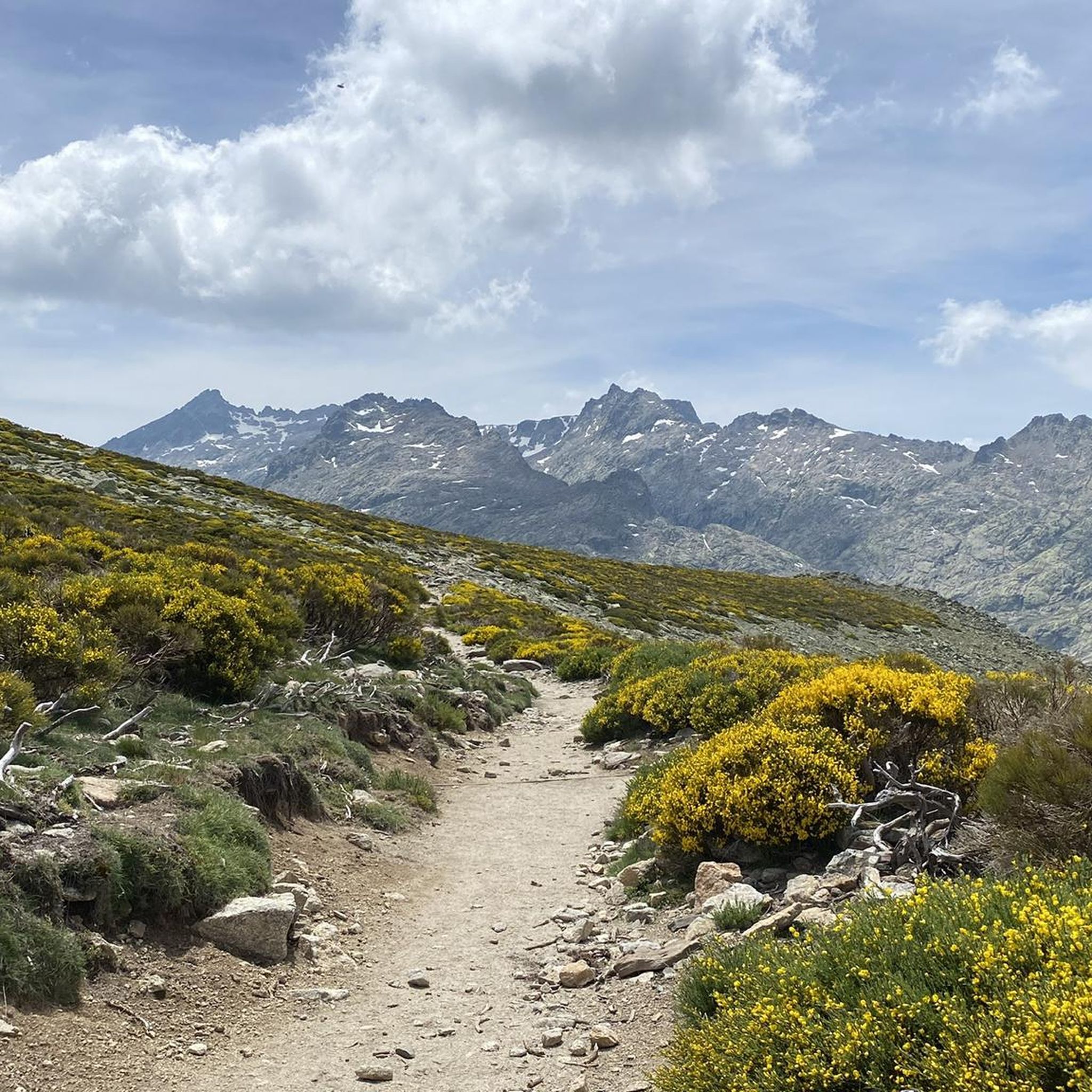
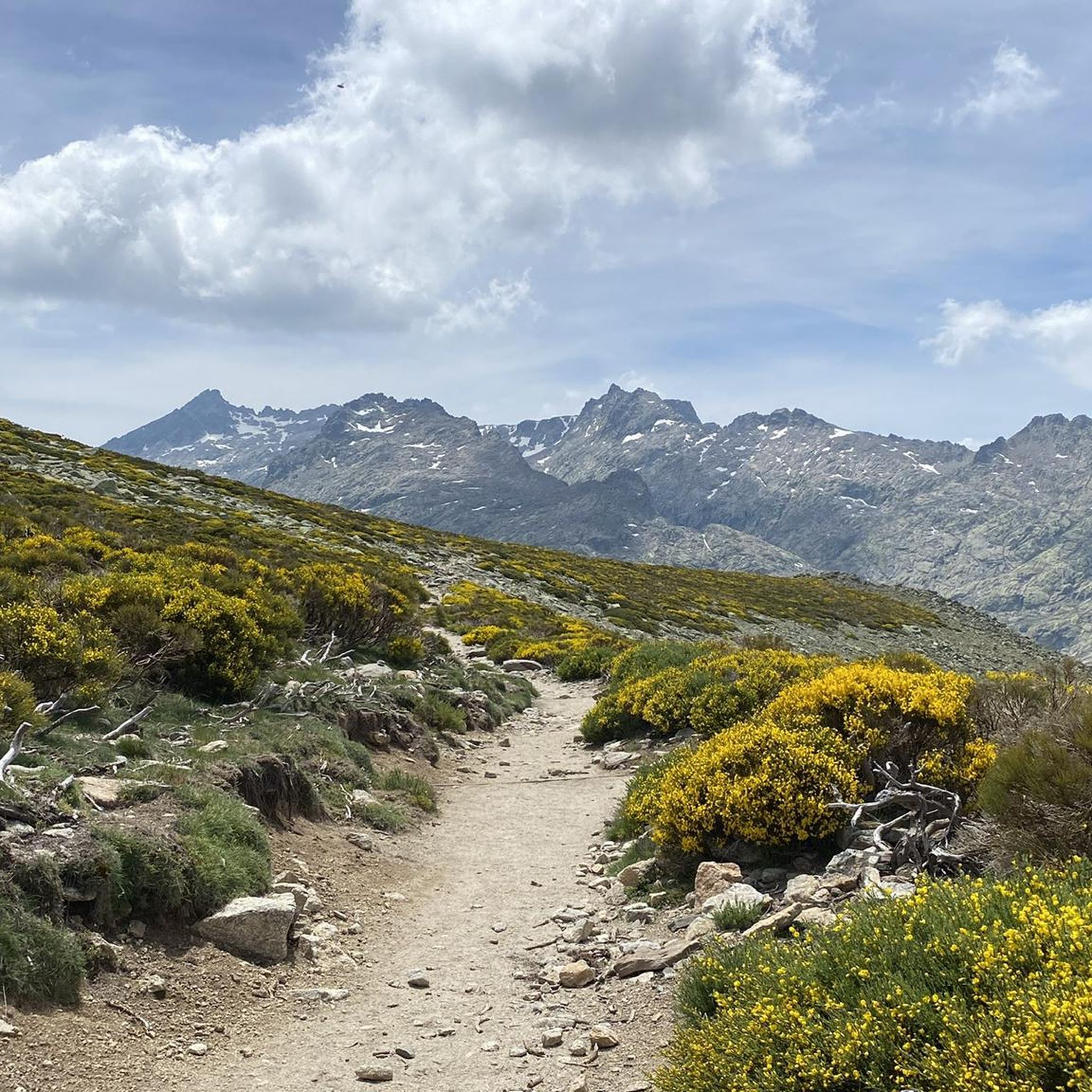
Beautiful views, on a good day you can see people taking off on paragliders.
0
0
The starting town has several places of interest
0
1
La Horcajada is located in the southwest triangle of the province of Ávila. It is practically the space between the foothills of Gredos and the mountain ranges of Malpartida and Collado del Mirón, on the one hand, and the port of Villatoro and the confluence of the Corneja and Tormes rivers, on the other. This surface has been called "Valdecorneja" for centuries. The Cancionero de Baeza, from 1445, for example, records this. The four most important towns in the Valley are, possibly since Vetton times or before, El Mirón, Piedrahíta, La Horcajada and El Barco de Ávila. La Horcajada is located about 75 kilometers southwest of the provincial capital, Ávila, about 82 kilometers from Salamanca and 185 kilometers from Madrid. The town is located at 1033 m above sea level. n. m. between the towns of Piedrahíta and Barco de Ávila on the slopes of the Sierra de la Horcajada.
1
0
A large port, 15 km long if we start from Piedrahita, and with a constant slope of 6% except for a couple of short sections that are less and some sections that reach 9%, but very punctual. The condition of the asphalt is good, it is one of the few ports in the area with a surface in good condition. Upstairs it has very good views and there are usually people doing paragliding (if the weather conditions allow it)
0
0
Old bridge, currently misnamed La Fonseca, its real historical name is La Ponseca. It belongs to the municipality of La Horcajada, which has also recently been rehabilitated because its rock was detaching and its stability was beginning to be endangered. It crosses the river Corneja and as a curiosity, Emperor Carlos V passed over this bridge on his retirement journey to the Yuste monastery.
2
0

Huge park that is located in front of the palace of the Dukes of Alba. A large palace surrounded by walls and which is difficult not to see as it is one of the important points of the town.
0
0
Beautiful water dams in this area of the Río Barbellido, where you have to be alert when crossing the bridge but the views of the river itself are worth it.
0
1
Frequently Asked Questions
How many touring cycling routes are available around Santiago Del Collado?
There are 16 touring cycling routes in the Santiago Del Collado area. These routes offer a variety of experiences, with 7 classified as moderate and 9 as difficult, catering to different skill levels.
What kind of terrain can I expect on touring cycling routes in Santiago Del Collado?
The terrain around Santiago Del Collado is diverse, ranging from flatter valley rides within the Valdecorneja valley to more challenging ascents into the surrounding hills of the Sierra de la Horcajada and the foothills of the Sierra de Gredos. You'll also find scenic riverine landscapes along the Corneja and Tormes rivers.
Are there any family-friendly touring cycling routes in Santiago Del Collado?
While there are no routes specifically marked as 'easy' in our current selection, moderate routes like the El Tocón – La Vena loop from Santiago del Tormes (12 km) might be suitable for families with some cycling experience. The region's varied topography means many routes involve elevation changes, so assess your family's fitness level carefully.
What are some notable landmarks or natural features to see along the touring cycling routes?
Cyclists can encounter several interesting points of interest. Highlights include the Peña Negra Pass, offering panoramic views, and the natural beauty of Pozo de las Paredes. Historical structures like the Ponseca Bridge and Puente de los Seis Ojos also add character to the routes.
Are there any challenging touring cycling routes for experienced riders?
Yes, Santiago Del Collado offers several challenging routes. For instance, the Pozo de las Paredes and Mirador del Circo de Gredos — circular from the parking of the Laguna de Gredos is a difficult 23.5 km trail with significant elevation gain and mountain vistas. Another demanding option is the Palace of the Dukes of Alba – Peña Negra Pass loop from Piedrahíta, a 35.7 km path that includes a challenging pass.
Are there any circular touring cycling routes available?
Yes, many of the touring cycling routes in the area are circular. Examples include the difficult Pozo de las Paredes and Mirador del Circo de Gredos — circular from the parking of the Laguna de Gredos, and the moderate El Tocón – La Vena loop from Santiago del Tormes.
What do other touring cyclists say about the routes in Santiago Del Collado?
The touring cycling routes in Santiago Del Collado are highly regarded by the komoot community, holding an average rating of 5.0 stars. Cyclists often praise the varied terrain, from valley rides to mountain ascents, and the scenic beauty of the region.
What is the best season for touring cycling in Santiago Del Collado?
Given its elevation of 1033 meters and proximity to mountain ranges like the Sierra de Gredos, spring and autumn generally offer the most pleasant conditions for touring cycling in Santiago Del Collado. Summers can be hot, while winters may bring colder temperatures and potential snow at higher elevations.
Are there any routes that pass by historical sites or castles?
Yes, some routes incorporate historical elements. For example, the difficult Castle of Bonilla de la Sierra loop from Piedrahíta takes you past the Castle of Bonilla de la Sierra, offering a blend of cycling and historical exploration.
Can I find routes that follow river valleys?
Yes, the region is characterized by the Corneja and Tormes rivers, and some routes will take you through these riverine landscapes. These sections often feature gentler gradients and charming scenery, providing a different cycling experience compared to the mountain ascents.
Are there any long-distance touring cycling options near Santiago Del Collado?
While Santiago Del Collado itself offers routes up to approximately 40 km, its location within the Valdecorneja valley and proximity to the Sierra de Gredos foothills means it serves as an excellent base for exploring longer distances in the wider Ávila province. Routes like the Ponseca Bridge – Puente del Congosto loop from La Horcajada (39.6 km) provide a good day's ride with significant elevation.
Most popular attractions around Santiago Del Collado

Get inspired with the komoot mobile app


Explore more
Browse the best Cycling routes in other regions.
