Attractions and Places To See around Lambeg North - Top 20
Best attractions and places to see around Lambeg North include a blend of historical landmarks, natural features, and cultural sites. Situated along the River Lagan, the area offers opportunities for outdoor activities and insights into its industrial and cultural heritage. Visitors can explore historic buildings, enjoy riverside paths, and discover significant sites within Lambeg North and its vicinity. The region provides a diverse range of experiences for those interested in history and nature.
Best attractions and places to see around…
Last updated: September 25, 2026
Belfast City Hall
Highlight • Monument
Translated by Google •
Tip by

Shaw's Bridge
Highlight • Historical Site
Translated by Google •
Tip by

Sign up now to discover places like this
Get recommendations on the best single tracks, peaks, & plenty of other exciting outdoor places.
Lagan Towpath
Highlight • Forest
Tip by

Bobby Sands mural
Highlight • Monument
Robert George “Bobby” Sands was an IRA member, hunger striker and MP for Fermanagh & …
Translated by Google •
Tip by

Belfast Peace Wall Murals
Highlight • Historical Site
Translated by Google •
Tip by
Sign up for free to discover even more attractions around Lambeg North.
Already have an account?
Start today with a free account
Your next adventure awaits.

Tips from the Community

Frightening to see in the mural here how current global conflicts are still being aligned between the two population groups here to further manifest the divide.
2
0

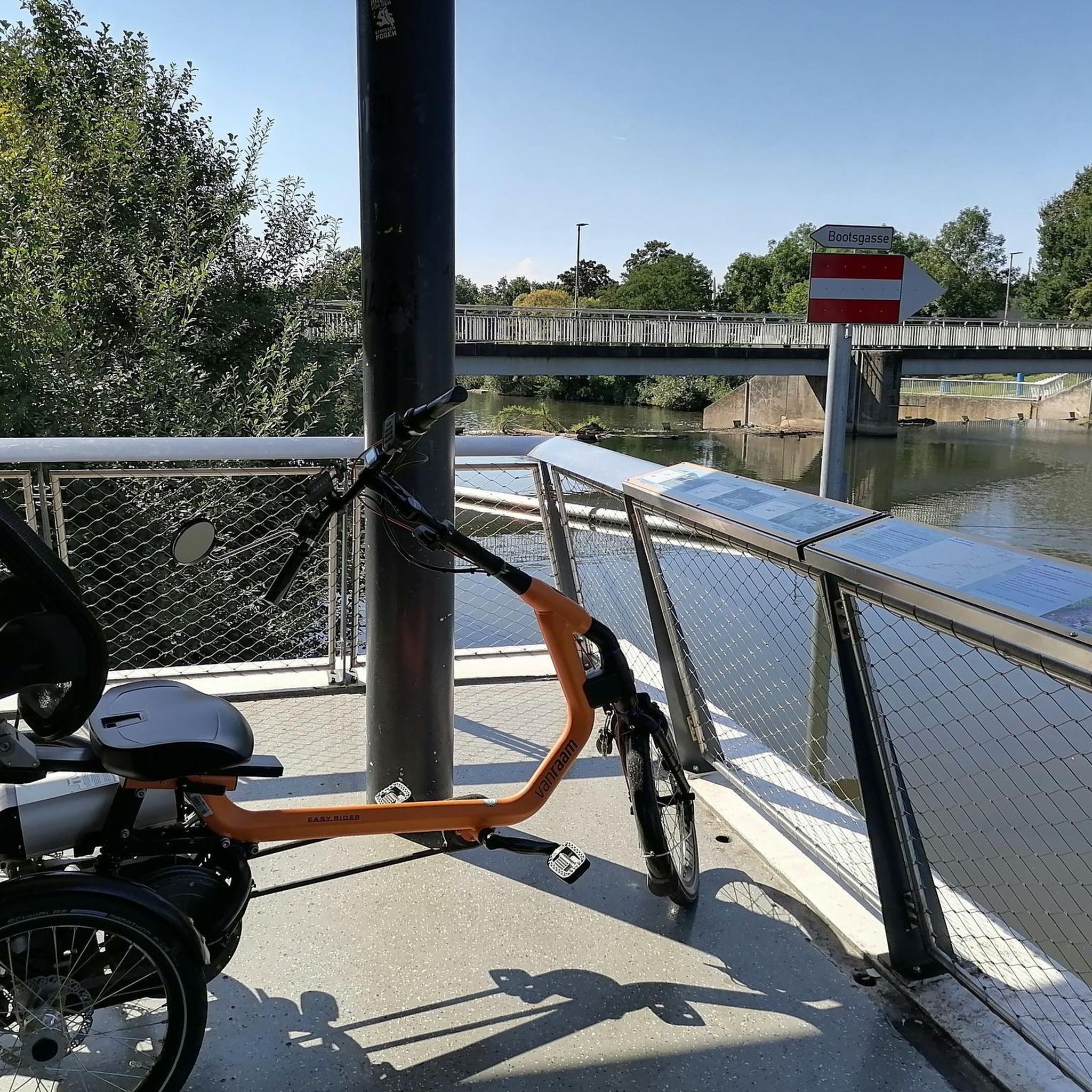
Cycle and pedestrian bridge over the Lagan
1
0

The bridge is named after Captain John Shaw of Oliver Cromwell's army, who built an oak bridge here in 1655. A stone bridge was built by Thomas Burgh in 1691, although this was destroyed by flooding, which led to it being replaced by the present bridge in 1709.
3
0


The path, which is part of National Cycle Route 9, offers a peaceful atmosphere that is ideal for relaxed bike rides - but walkers, joggers and dog owners also appreciate the route. The contrast between the quiet river and the partially flooded sections that can appear after heavy rain is particularly exciting. Sometimes the path leads directly to the water, and it almost seems as if the Lagan wants to reclaim a bit more space. The trees are reflected in the calm waters, which creates an almost mystical atmosphere in cloudy weather. Another highlight are the small, branching mountain bike trails that bring a bit of adventure to the tour. If you want a change and don't just want to follow the river, these trails offer a welcome change.
1
0
The old stone bridge stretches majestically over the still water, which is perfectly reflected and creates a calm, almost magical atmosphere. The surrounding nature is inviting and offers a wonderful backdrop with green meadows and shady paths. A light wind blows through the trees and the sounds of nature accompany you with every pedal stroke.
1
0

Perhaps the most significant development of the strike occurred when Sands entered the election campaign for a seat in the Parliament for Northern Ireland's County of Fermanagh and South Tyrone. On 10 April, after 41 days of hunger strike and to the great shock of the IRA leadership, Sands won the seat by more than 30,000 votes. His election sent shockwaves throughout Ireland and within the British government. After all, Britain's criminalisation policy was based on its claims that the IRA had little public support and was a gang of renegade criminals. Despite Sands' new political status as an MP and mounting public pressure, the British government under Prime Minister Margaret Thatcher refused to take even a step towards reconciliation. Sands' condition continued to deteriorate and he remained confined to the prison infirmary. Eventually, on 3 May, Sands fell into a coma. His family was called to visit and on Tuesday, May 5, 1981, Sands died after 66 days on hunger strike. Sands' death sparked enormous reactions around the world. Hundreds of thousands demonstrated in support of the prisoners' demands, the US government issued a statement of "deep regret", Irish unions went on strike, newspapers around the world condemned Thatcher's "glory" in allowing a parliamentary colleague to die, and riots broke out in the streets of Northern Ireland. His funeral procession was attended by more than 100,000 people. After Sands, nine more prisoners died before the hunger strike was finally ended on October 3, 1981. Shortly afterwards, all prisoners were granted reforms that largely met their demands.(Source: https://www.britannica.com/biography/Bobby-Sands)
2
0
Frequently Asked Questions
What are the best outdoor activities or trails to explore around Lambeg North?
The area around Lambeg North is excellent for outdoor enthusiasts. The Lagan Towpath is a highly popular traffic-free route perfect for walking, running, or cycling, stretching from the Castlereagh hills to Lisburn. Shaw's Bridge provides a major access point to the towpath and offers canoe access to the River Lagan. For a relaxing experience within a city park, Ormeau Park in nearby Belfast offers cycling paths, walking trails, and recreational facilities. Additionally, you can find various running, road cycling, and mountain biking trails in the wider area.
What historical sites can I visit in and around Lambeg North?
Lambeg North is rich in history. You can explore the historic Shaw's Bridge, which dates back to 1709 and is named after Captain John Shaw. The village itself is home to the historically significant Lambeg Church, with records indicating a church presence as early as 1598, and Wolfenden's Bridge, a Grade B+ listed structure over the River Lagan. Nearby, Belfast City Hall is an impressive architectural landmark offering guided tours, and the Belfast Peace Wall Murals provide a powerful cultural and historical insight into the city's past.
Are there family-friendly attractions around Lambeg North?
Yes, several attractions cater to families. The Lagan Towpath is a traffic-free environment suitable for family walks or bike rides. Ormeau Park in Belfast offers playgrounds, cycling paths, and open spaces for children to enjoy. Belfast City Hall is also considered family-friendly, and the Belfast Peace Wall Murals can offer an educational experience for older children.
What natural features can I enjoy near Lambeg North?
The most prominent natural feature is the River Lagan, which flows alongside the village. The Lagan Towpath offers scenic views of the river and surrounding natural landscapes. Ormeau Park, while a city park, provides a pleasant mix of nature with its old trees, flower gardens, and green spaces, perfect for a relaxing stroll.
Are there any wheelchair accessible places or trails?
Yes, several locations are wheelchair accessible. The Lagan Towpath has a hard surface, making it suitable for wheelchair users, though it is also used by cyclists. Shaw's Bridge, which provides access to the towpath, is also accessible. In Belfast, Belfast City Hall is wheelchair friendly, offering accessible tours and facilities.
What is the best time of year to visit Lambeg North for outdoor activities?
The best time for outdoor activities around Lambeg North is generally during the spring (April-May) and summer (June-August) months when the weather is milder and days are longer. Autumn (September-October) also offers beautiful scenery, especially in places like Ormeau Park. While winter walks are possible, be prepared for colder, wetter conditions.
Where can I find parking facilities for attractions in Lambeg North?
For access to the Lagan Towpath, Shaw's Bridge is a major access point that offers parking facilities. For attractions in Belfast, such as Belfast City Hall and Ormeau Park, various public car parks are available within the city center and surrounding areas.
Are there any cultural points of interest related to the village's name?
Yes, the village of Lambeg is famously the namesake of the traditional Lambeg drum, highlighting a strong local cultural identity. While there isn't a specific museum dedicated solely to the drum in the village, its cultural significance is deeply embedded in the area's heritage.
What do visitors enjoy most about the attractions around Lambeg North?
Visitors particularly appreciate the blend of history and nature. The tranquility and traffic-free environment of the Lagan Towpath are frequently praised, offering a peaceful escape. The historical significance of sites like Shaw's Bridge and the architectural grandeur of Belfast City Hall are also highly rated. Many enjoy the opportunity to combine outdoor activity with cultural exploration.
Can I find cafes or pubs near the main attractions?
Yes, along the Lagan Towpath, you can find refreshment options such as the Gatekeepers Lodge at Shaw's Bridge, or a French van at Minnowburn for coffee and drinks. In nearby Belfast, particularly around Belfast City Hall and Ormeau Park, there is a wide array of cafes, restaurants, and pubs to choose from.
Are there any hidden gems or less-known historical buildings in Lambeg North?
Beyond the more prominent sites, Lambeg North holds several less-known historical gems. These include Glenmore House, a 17th-18th century manor house with industrial heritage, and Lambeg Old National School, built in 1849 and now a converted dwelling. Chrome Hill, an original 17th-century home, is also notable for its connection to pioneering printing methods.

Get inspired with the komoot mobile app


Explore more
Still not found the Highlight you’re looking for? See guides of the top attractions in other regions:
