Attractions and Places To See around Ballyvesey - Top 19
Best attractions and places to see around Ballyvesey, a locality within Northern Ireland, are primarily found in the surrounding region of Antrim and Newtownabbey. This area offers a mix of natural features, cultural sites, and historical landmarks. Visitors can explore diverse landscapes, from coastal paths to historical castles, providing varied experiences. The region's proximity to Belfast also allows access to significant urban attractions.
Best attractions and places to see around Ballyvesey
- The most popular attractions is Belfast Castle, a…
Last updated: July 6, 2026
Holywood Esplanade and Coastal Path
Highlight • Cycleway
Translated by Google •
Tip by

Clonard Martyrs' Memorial Garden
Highlight • Monument
In memory of:
IRA members, ex-prisoners, political activists and civilians from the Clonard area.
Information on those commemorated
Date of incident: January
Description:
Medium sized memorial …
Translated by Google •
Tip by

Sign up now to discover places like this
Get recommendations on the best single tracks, peaks, & plenty of other exciting outdoor places.
Sign up for free
Bayardo Bar Memorial
Highlight • Monument
Translated by Google •
Tip by

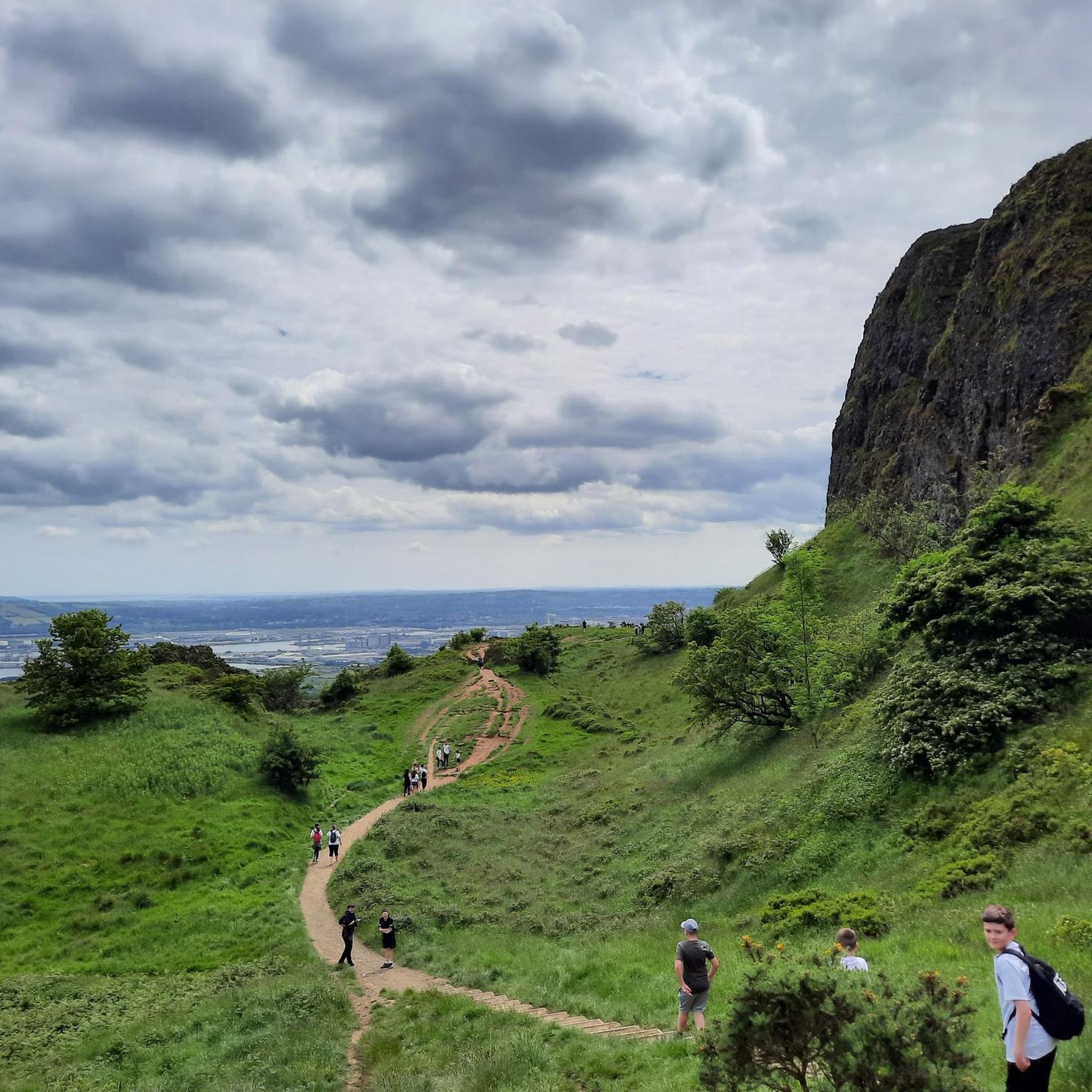
Cave Hill
Highlight • Natural Monument
Tip by

Belfast Castle
Highlight • Historical Site
Tip by
Sign up for free to discover even more attractions around Ballyvesey.
Sign up for free
Already have an account?
Start today with a free account
Your next adventure awaits.
Login or Signup


Tips from the Community

The route runs along Strangford Lough and offers impressive views of the water and the surrounding landscape. The colourful rows of houses along the esplanade are particularly attractive and give the place a special charm. The route is suitable for different types of bikes.
1
0

Clonard Martyrs Memorial Garden In memory of: IRA members, ex-prisoners, political activists and civilians from the Clonard area. Information on those commemorated Date of incident: January Description: Medium sized memorial garden divided into three interconnected sections; surrounded by walls, railings and three metal gates. The central section contains a large Celtic cross on a plinth, a large plaque attached to a wall and four flags. The side sections contain plaques and memorial benches.(Source: https://cain.ulster.ac.uk/victims/memorials/static/monuments/546.html)
4
1
By 1975, the conflict in Northern Ireland known as the Troubles had already lasted for more than six years. On 10 February 1975, the Provisional IRA and the British government agreed to a ceasefire and resumed negotiations. The IRA agreed to stop carrying out attacks on the British security forces, and the security forces largely ceased their raids and searches. [1] However, there were opponents of the ceasefire on both sides. In the early hours of 31 July 1975, the popular Miami Showband were driving back to Dublin after a performance in Banbridge. In Buskhill (outside Newry), they were stopped at a checkpoint by Ulster Volunteer Force (UVF) gunmen wearing British Army uniforms. Some of the gunmen were soldiers from the Ulster Defence Regiment. The gunmen ordered the group to line up facing a trench. While one gunman took the names and addresses of the band members, two others hid a bomb under the driver's seat of their minivan. However, the bomb detonated prematurely and the two men were blown to pieces. The surviving gunmen then opened fire on the five band members, killing three and wounding two. [4] According to journalists Peter Taylor and Alan Murray, the attack on the Bayardo was retaliation for the massacre. (Source: Wikipedia)
1
0
The Bayardo Bar bombing occurred on 13 August 1975 in Belfast, Northern Ireland. A unit of the Provisional Irish Republican Army (IRA) led by Brendan McFarlane carried out a bomb and gun attack on a pub on Aberdeen Street in the loyalist Shankill area. IRA members claimed that the pub was targeted because it was frequented by members of the Ulster Volunteer Force (UVF). Four Protestant civilians and one UVF member were killed, and over 50 people were injured. According to journalists Alan Murray and Peter Taylor, it was a reprisal for the Miami Showband massacre almost two weeks earlier, when members of the popular Dublin band were shot dead by the UVF at a fake military checkpoint. McFarlane and two other IRA volunteers, Peter "Skeet" Hamilton and Seamus Clarke, were sentenced to life imprisonment for carrying out the Bayardo attack. (Source: Wikipedia)
1
0


A real gem of a coastal route considering just how close it is to Belfast. You can ride on through past the logistics base ( its just vehicles that cant ), and on to Holywood. At the beginning of the Coastal route, just after the Airport Road entrance there are wetlands, popular with migrating birds, and an inlet to the left where you will find the best collection of intact seashells I have seen. Perfect spot for a sunset too. And the row of different coloured Houses on the Esplanade are a real charm. You can continue on to Bangor via the North Down coastal path. That route is perhaps more suited to a Bike with at least 8 Gears, and Tyres no smaller than 25s. I have completed it on a Track Bike, but it was a bit of a bone shaker.
0
0
There is a great Pub / Restaurant on route, just passed The Esplanade called 'The Dirty Duck'. Boasts a Beer Garden with perfect vistas of the Lough and Cave Hill.
0
0
Frequently Asked Questions
Where is Ballyvesey located and what kind of attractions can I expect in the surrounding area?
Ballyvesey is a locality within Northern Ireland, situated near Whiteabbey and within the wider Antrim and Newtownabbey area. The region offers a diverse range of attractions, including historical sites, natural coastal paths, and significant cultural landmarks. You can expect a mix of urban and natural experiences, from exploring castles to enjoying scenic coastal routes.
What are some of the most popular historical sites near Ballyvesey?
Among the most popular historical sites are Belfast Castle, a magnificent 19th-century castle set on the slopes of Cave Hill, and Titanic Belfast, a visitor attraction dedicated to the story of the famous passenger liner. Other notable sites include the Clonard Martyrs' Memorial Garden and the Bayardo Bar Memorial, which commemorate significant historical events.
Are there good hiking or walking trails near Ballyvesey?
Yes, there are several excellent hiking and walking trails. For easy walks, you can explore routes like the Cave Hill Country Park loop or trails around Belfast Castle. More extensive options include the Cave Hill – Belfast Castle loop from Church of the Holy Evangelists, which is a moderate hike. You can find more details on these and other routes in the Hiking around Ballyvesey guide and the Easy hikes around Ballyvesey guide.
What kind of cycling routes are available around Ballyvesey?
Cycling enthusiasts will find a variety of routes. The Holywood Esplanade and Coastal Path offers impressive views along Strangford Lough and is suitable for different types of bikes. For more challenging rides, options include the Divis & The Black Mountain loop or the Carrickfergus Castle – Beach with View of Bangor loop. Discover more cycling adventures in the Cycling around Ballyvesey guide.
What natural features and scenic viewpoints can I explore near Ballyvesey?
The region boasts stunning natural beauty. You can enjoy the coastal views from the Holywood Esplanade and Coastal Path. Further afield, Northern Ireland offers iconic natural features like the unique basalt columns of the Giant's Causeway, the mystical Dark Hedges, and the scenic waterfalls of Glenariff Forest Park. Victoria Park, near Whiteabbey, also provides tranquil walking trails around a lake with diverse water birds.
Are there family-friendly attractions available near Ballyvesey?
Yes, many attractions cater to families. Titanic Belfast is an engaging experience for all ages, telling the story of the ship with interactive exhibits. Belfast Castle, with its surrounding parkland, is also a great spot for families to explore. Additionally, the Ulster Folk Museum and Ulster Transport Museum offer educational and fun insights into the region's history and transport.
When is the best time of year to visit attractions around Ballyvesey?
The spring and summer months (April to September) generally offer the most pleasant weather for exploring outdoor attractions and enjoying coastal paths. However, many indoor historical sites and museums, such as Titanic Belfast, are open year-round and can be enjoyed regardless of the season. Autumn brings beautiful foliage to parks and forests, while winter can offer a quieter, more atmospheric experience at some historical sites.
How can I get to the main attractions around Ballyvesey, and is parking available?
Many attractions, especially those in and around Belfast like Belfast Castle and Titanic Belfast, are accessible by public transport from Belfast city centre. For attractions further afield, driving is often the most convenient option. Parking is generally available at major sites; for instance, parking at Belfast Castle is free. It's advisable to check specific attraction websites for detailed transport and parking information.
Are there any wheelchair-accessible attractions or paths?
Yes, several attractions are designed to be wheelchair-accessible. Titanic Belfast is fully accessible, and the Clonard Martyrs' Memorial Garden is also noted as wheelchair-accessible. While some natural trails may have varied terrain, many urban parks and esplanades offer paved, accessible paths. Always check with individual venues for specific accessibility details.
What do visitors enjoy most about the attractions around Ballyvesey?
Visitors frequently appreciate the rich historical context, the stunning natural landscapes, and the variety of experiences available. The impressive architecture of places like Titanic Belfast and the scenic views from coastal paths are often highlighted. The blend of cultural insights and outdoor activities, from exploring castles to cycling along the lough, provides a well-rounded experience for many.
Are there options for wildlife spotting near Ballyvesey?
Yes, the region offers opportunities for wildlife spotting, particularly in its natural parks and coastal areas. Victoria Park, near Whiteabbey, is home to various water birds like swans, geese, ducks, and herons. Further afield, Strangford Lough, a designated Area of Outstanding Natural Beauty, is known for its abundant wildlife, including seals, otters, and Brent geese. Rathlin Island, accessible by ferry, is also excellent for observing seals and puffins.
Can I find places to eat or stay near the attractions?
The areas surrounding Ballyvesey, particularly in Newtownabbey and Belfast, offer a wide range of cafes, pubs, restaurants, and accommodation options. Many attractions, such as the Holywood Esplanade and Coastal Path, have eateries nearby. For example, 'The Dirty Duck' pub is mentioned as being on the route with a beer garden offering lough views. You'll find ample choices to suit various tastes and budgets.
Most popular routes around Ballyvesey
Most popular attractions around Ballyvesey

Get inspired with the komoot mobile app


Explore more
Still not found the Highlight you’re looking for? See guides of the top attractions in other regions:
