Attractions and Places To See around Tullaghoge - Top 6
Best attractions and places to see around Tullaghoge include a variety of historical sites and natural areas. The region offers opportunities to explore ancient ruins, significant historical monuments, and expansive forest parks. Visitors can discover local heritage and engage with the natural landscape. The area provides a blend of cultural exploration and outdoor activities.
Best attractions and places to see around Tullaghoge
- The most popular attractions is Drum Manor House Ruins, a historical site that consists of the remains…
Last updated: June 29, 2026
Drum Manor House Ruins
Highlight • Historical Site
Tip by

Wellbrook Beetling Mill
Highlight • Historical Site
Showing Translation
Tip by

Sign up now to discover places like this
Get recommendations on the best single tracks, peaks, & plenty of other exciting outdoor places.
Sign up for free
Mountjoy Castle
Highlight • Historical Site
Translated by Google •
Tip by

Drum Manor Forest Park Woodland Trail
Highlight • Trail
Tip by
Tullaghoge Fort
Highlight • Natural Monument
Tip by

Sign up for free to discover even more attractions around Tullaghoge.
Sign up for free
Already have an account?
Start today with a free account
Your next adventure awaits.
Login or Signup

Tips from the Community

On the banks of Lough Neagh, near the village of Brockagh, you will find the impressive ruin of Mountjoy Castle. This castle was built between 1602 and 1605 by Lord Mountjoy and served at the time as a crucial military stronghold during the turbulent years of the Nine Years' War. Unique is the special combination of building materials: the lower floor is constructed from rough natural stone, while the upper floor consists of locally fired red brick. Although the castle has been a ruin since 1648, the central block and the characteristic arrow-shaped corner towers are still clearly recognizable in the landscape.
8
0
As you cycle through the rolling landscape of County Tyrone, the Wellbrook Beetling Mill is an absolute must for a stopover. Situated in an idyllic, wooded stream valley along the Ballinderry River, this 19th-century water mill provides a stark contrast to the tranquility of its surroundings. This is the last working 'beetling mill' in the United Kingdom. "Beetling" was the final step in traditional Irish linen production: using enormous wooden hammers (beetles), powered by a water wheel nearly five metres high, the linen was processed for hours until it acquired its characteristic sheen. When the mill is running, you can hear the rhythmic thudding from afar – an impressive sound that takes you straight back to the industrial heyday of Northern Ireland.
8
0

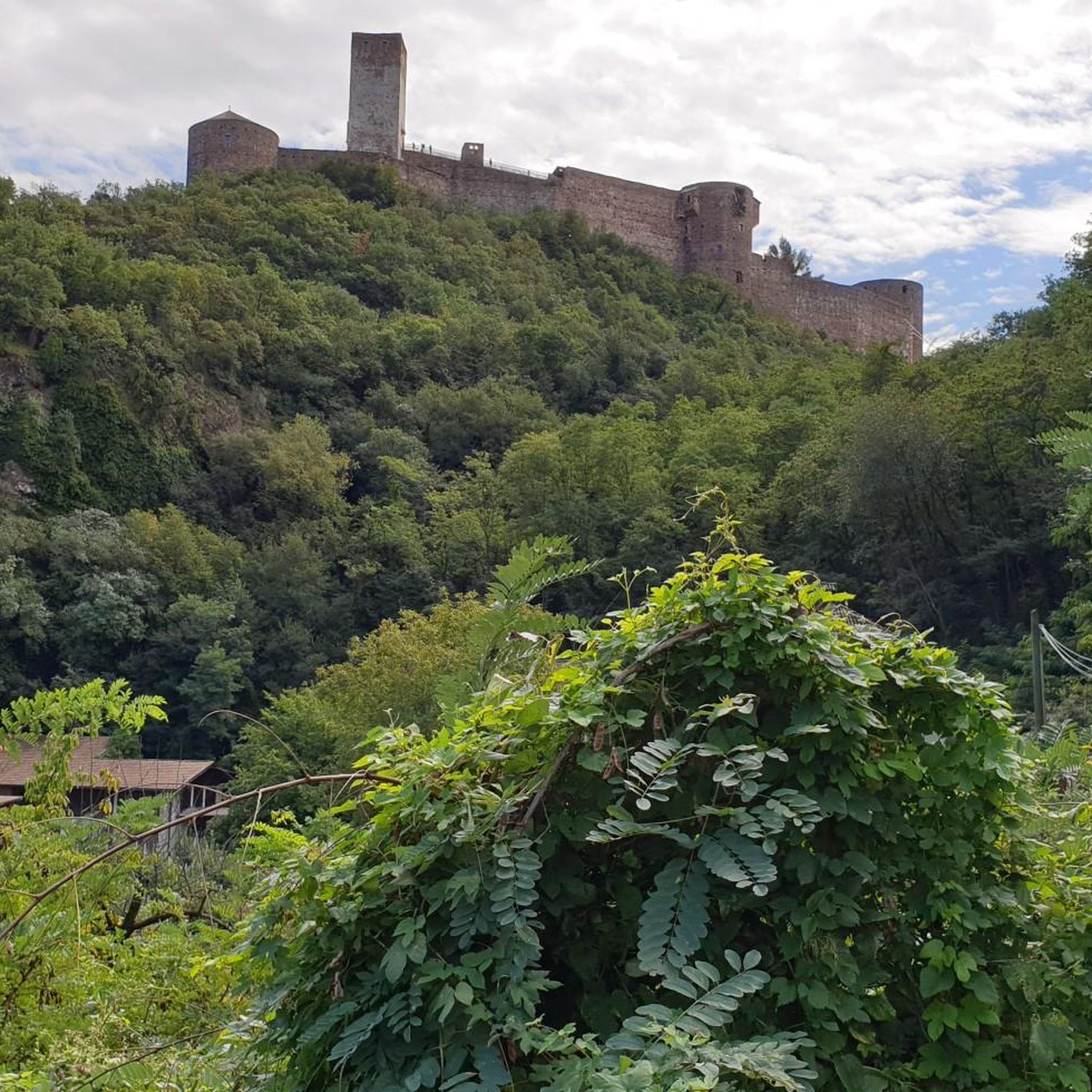
In the shadow of Northern Ireland's vast skies, the mysterious Mountjoy Castle rises on a hill above Lough Neagh. This ruined castle, whose Irish name "Caisleán Mhuinseo" whispers into the wind, stands like a proud sentinel in the village of Mountjoy, County Tyrone. The castle was built in 1602 by order of Charles Blount, 1st Earl of Devonshire and 8th Baron Mountjoy. But times have not always been kind to this building: as early as 1643, a devastating fire left scars on the walls of the castle. What remained is a two-story brick building with the ground floor clad in stone. The architecture speaks of a time of defense and vigilance - a central rectangular block protected by four spear-shaped towers, crisscrossed by embrasures. The north-western tower testifies to the fragility of time - partially collapsed, while the western curtain wall has lost its presence. The entrance, once on the south side of the eastern curtain wall, seems to whisper stories of days gone by, while wide windows on the upper floor capture the eyes of visitors. Unfortunately, an extension at the back keeps some of the castle's secrets hidden, and the interior area is closed to visitors' eyes. But even in its ruined state, Mountjoy Castle embodies the soul and history of Northern Ireland. Not only is it a State Care Historic Monument in the townland of Magheralamfield in the Mid Ulster District, but it is also a silent testament to time, inviting every walker to pause for a moment and listen to the whispers of history.
4
0

An important historic site, Tullyhogue Fort is where the O'Neills were crowned the Chiefs of Ulster. It is now planted with trees and you can enjoy views across the countryside of County Tyrone.
0
0

Here stands the remains of the once magnificent Drum Manor house. The house was built in the 1800s and was bought from the Forest Service in 1964 when it was turned into a park for the public. The park now features a campsite, hiking trails, gardens and a play park.
2
0
Drum Manor Forest Park is made up of beautiful mature deciduous woodland feauturing beech and oak. Winding forest tracks will take you on a lovely route through the area passing ponds, gardens, and a derelict manor house.
1
0

National Trust owned water powered mill, originally used in the manufacture of Linen. Well worth stopping off for a look around.
3
0

Outdoor activities include a campsite, hiking trails, gardens and a play park. There is also a large parking lot with restrooms.
1
0
Frequently Asked Questions
What historical sites can I visit around Tullaghoge?
The region is rich in history. You can explore the ruins of Drum Manor House Ruins, which was built in the 1800s and is now part of a public park. Another significant site is Mountjoy Castle, a ruined castle from 1602 located on a hill above Lough Neagh. Don't miss Tullyhogue Fort, an important historic site where the O'Neills were crowned Chiefs of Ulster, offering great countryside views. Additionally, the Derryloran Old Church Ruins and Cemetery date back to the early 16th century.
Are there family-friendly activities near Tullaghoge?
Yes, Drum Manor House Ruins is part of a public park that is very family-friendly, featuring a play park, gardens, and hiking trails. Tullyhogue Fort is also considered family-friendly, offering an open space with historical significance and views.
Where can I find easy walks or hiking trails around Tullaghoge?
For easy walks, Drum Manor Forest Park Woodland Trail offers winding forest tracks through mature deciduous woodland, passing ponds and gardens. The park around Drum Manor House Ruins also has hiking trails. You can find more detailed hiking routes, including an easy Drum Manor Forest Park loop, in the Hiking around Tullaghoge guide.
Are there any dog-friendly walking areas?
Yes, Drum Manor Forest Park Woodland Trail is noted as dog-friendly, making it a great option for walks with your canine companion through its mature woodlands and trails.
What are the best places for outdoor activities like cycling near Tullaghoge?
The area offers various cycling opportunities. You can find several routes, including the 'Cookstown loop to Killymoon Castle & Tullyhogue Fort,' in the Cycling around Tullaghoge guide. For road cycling, explore options like the 'Mountjoy Castle loop from Cookstown' in the Road Cycling Routes around Tullaghoge guide.
How long should I plan for a visit to Tullaghoge Fort?
A visit to Tullyhogue Fort typically takes about 1-2 hours to explore the historic site, appreciate the planted trees, and enjoy the views across the County Tyrone countryside.
Is there parking available at attractions around Tullaghoge?
Yes, for example, Drum Manor House Ruins, which is part of a public park, features a large parking lot with restrooms, making it convenient for visitors.
What natural features can I see in the Tullaghoge area?
You can experience mature deciduous woodland at Drum Manor Forest Park Woodland Trail, which includes ponds and gardens. Tullyhogue Fort, while historical, is also a natural monument offering expansive countryside views.
Are there any hidden gems or less-known historical sites?
While not entirely hidden, the Derryloran Old Church Ruins and Cemetery offer a glimpse into very early history, with stones from a pre-11th-century church. It's a quieter spot compared to some of the larger attractions.
What do visitors enjoy most about the attractions around Tullaghoge?
Visitors particularly appreciate the blend of historical exploration and natural beauty. The opportunity to walk through ancient ruins like Drum Manor House Ruins and Mountjoy Castle, combined with the serene woodland trails of Drum Manor Forest Park and the panoramic views from Tullyhogue Fort, are frequently highlighted.
Can I find viewpoints with scenic vistas in the area?
Yes, Tullyhogue Fort is an excellent viewpoint, offering extensive views across the countryside of County Tyrone. Mountjoy Castle also sits on a hill above Lough Neagh, providing scenic surroundings.
Most popular routes around Tullaghoge

Get inspired with the komoot mobile app


Explore more
Still not found the Highlight you’re looking for? See guides of the top attractions in other regions:
