Attractions and Places To See around Enagh - Top 15
Best attractions and places to see around Enagh include natural features like Enagh Lough, historical landmarks, and cultural sites. The region, primarily centered around Enagh Lough in County Londonderry, Northern Ireland, offers diverse landscapes. Visitors can explore a mix of historical ruins, tranquil lakes, and scenic routes. The area provides opportunities for activities such as cycling, walking, and angling.
Best attractions and places to see around Enagh
- The most popular attractions is Newry Canal Towpath, a cycle way that…
Last updated: June 29, 2026
Newry Canal Towpath
Highlight • Cycleway
Tip by

Newry Canal Towpath
Highlight • Historical Site
Showing Translation
Tip by

Sign up now to discover places like this
Get recommendations on the best single tracks, peaks, & plenty of other exciting outdoor places.
Sign up for free
Lock Keeper's Cottage Ruins
Highlight • Structure
Showing Translation
Tip by
Camlough Lake
Highlight (Segment) • Natural
Tip by

Killevy Churches Ruins
Highlight • Historical Site
Translated by Google •
Tip by

Sign up for free to discover even more attractions around Enagh.
Sign up for free
Already have an account?
Start today with a free account
Your next adventure awaits.
Login or Signup

Tips from the Community

Between the rustling trees along the Newry Canal Towpath, you'll encounter the tranquil ruin of a lock keeper's cottage. Once, this was the proud and bustling heart of the waterway, where the lock keeper stood ready day and night to operate the heavy wooden canal gates for passing barges. Today, only the robust stone walls remain, slowly being reclaimed by nature.
6
0
Quiet canal section south of Poyntzpass, where the towpath runs tightly along the narrow water. The bank is lightly overgrown with low trees and hedges, giving the stretch an intimate, green impression. The water is mostly still, forming a straight line through the open agricultural landscape. An even, traffic-free segment ideal for quiet miles on the towpath.
5
0
The Newry Canal Towpath is a 32-kilometer-long, almost entirely traffic-free green corridor connecting the towns of Portadown and Newry. It follows the towpath of the oldest canal in the British Isles, opened in 1742 to transport coal from County Tyrone to the sea. The Newry Canal Towpath offers an unparalleled cycling experience through the tranquil heart of County Armagh and County Down. This historic route, part of the National Cycle Network Route 9, takes you along a flat and largely asphalted path past fourteen monumental locks and characteristic lock-keeper's cottages. As you follow the waterway, you'll traverse a varied landscape of dense forests and open meadows, passing through welcoming villages like Scarva and Poyntzpass along the way. The path is a haven for wildlife; keep an eye out for kingfishers, swans, and otters that inhabit the reed beds. Whether you cycle the full 32 kilometers or explore just a section, the combination of industrial history and natural beauty makes this one of the absolute gems of Irish cycling routes.
5
0

On the cycle path between Newry and Portadown, the gentle idyll of Northern Ireland unfolds in all its splendor. The route winds its way past lush green meadows where cows graze peacefully, through a wonderfully quiet landscape. The gentle rise and fall of the fields, the vastness of the sky and the gentle rustling of the wind create a unique atmosphere of relaxation. Here you can let your gaze wander into the distance while the path runs picturesquely between fields and hedges. A perfect place to let your bike roll and unwind.
1
0
There is something enchanted about this old, dilapidated stone hut - as if it were whispering stories of times gone by, when the canal was still full of life and the lock keepers worked here day and night. The walls, overgrown with greenery and moss, show how nature is slowly reclaiming its place. The building itself is only a ruin, but that is precisely what makes it somehow interesting. The mixture of broken brickwork and wild growth has something melancholic about it that fits perfectly into the tranquility of the surroundings. Right next to it there is a small rest area with a bench - ideal for stopping for a moment and taking in the atmosphere.
1
0
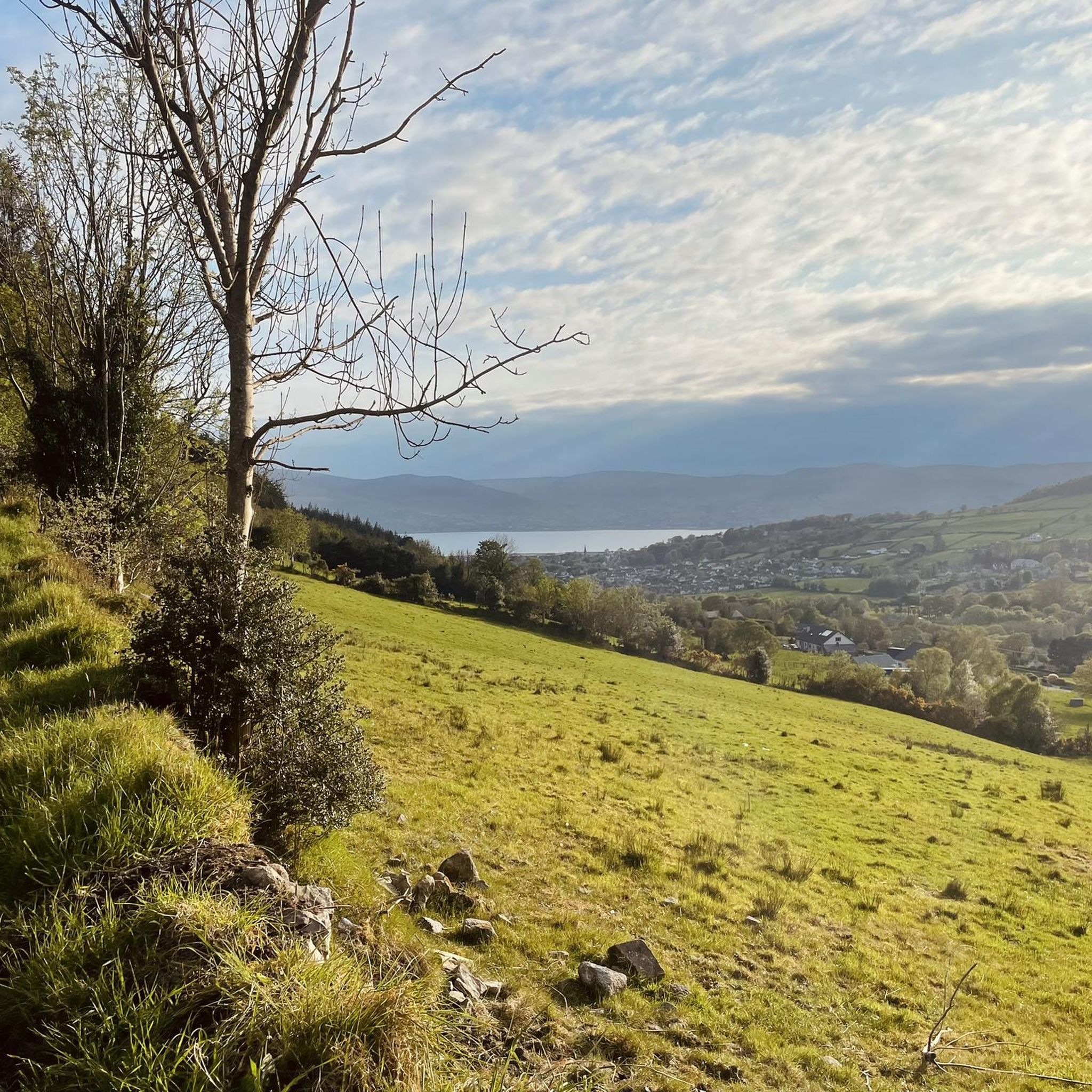
Camlough Lake is picturesquely nestled between the rolling hills of Slieve Gullion and the Ring of Gullion. Cycling along the narrow roads on the shore, you immediately feel the tranquility that emanates from the long stretch of water. The lake stretches for more than two kilometers and seems like a narrow, silent crack in the landscape - a peaceful place to take a short break or let your gaze wander over the water. I decided to take a little detour and cycled a little closer to the shore on a path. The water was almost still and reflected the range of hills that rise in the background. It may be a paradise for fishermen, but cyclists also enjoy the special atmosphere. The roads around the lake are not very busy and you can cycle in a relaxed manner without having to constantly pay attention to the traffic. One small criticism: some of the access roads are not well signposted, but if you look around a bit, you'll surely find a good place to get to the shore and enjoy the scenery.
2
0

The site can trace its roots back to the 6th century when a monastery for nuns was founded by St. Moninna. The ruins of the two joined churches that can still be seen date from the 11th and the 15th century. Look for the large slab which is said to be St Moninna's grave.
0
0
Here, many centuries ago, St. Moninna sought a place of peace and worship in the late 5th century and founded an early Christian community. Although no buildings remain from their time - for they were made of wood, a testament to their humble existence - the ground itself tells stories of a bygone era. As the wind blows through the grasses, one can almost hear the echoes of prayers and chants that once echoed in these hallowed halls. The visible evidence of history are the ruins of two churches. The West Church, built in the 11th century, bears the traces of a time of deep faith and cultural change. A few steps further rises the Eastern Church from the 15th century, a silent witness to the late medieval period, which was marked by religious and social changes. The monastery founded here functioned not only as a spiritual place, but also as a center of learning and community. Founded in 517 AD by St Moninna, it gained a reputation as one of the most important nunneries in medieval Ireland. It became a beacon of knowledge and devotion in a time often marked by turmoil and uncertainty.
3
0
Frequently Asked Questions
What natural features can I explore around Enagh?
The region is rich in natural beauty. You can visit Camlough Lake, a tranquil stretch of water nestled between the hills of Slieve Gullion and the Ring of Gullion, ideal for relaxation and scenic cycling. Enagh Lough itself, a pair of lakes in Maydown, County Londonderry, is known for its diverse wildlife, including red squirrels and Pipistrelle bats, and offers opportunities for angling and walking.
What historical sites are there to visit near Enagh?
Enagh boasts significant historical sites. Explore the weathered ruins of Killevy Churches Ruins, with the western church dating from the 11th century and the eastern from the 15th. This site, also known as Killeavy Old Churches and St. Moninna's Grave, traces its roots back to a 6th-century nunnery. Another impressive historical landmark is the Craigmore Viaduct, an 18-arch structure from 1852, which is the highest viaduct in Ireland.
Are there good cycling routes around Enagh?
Yes, the area offers excellent cycling opportunities. The Newry Canal Towpath provides a flat and scenic route where you can observe old canal lock gates and gatekeepers' cottages. Additionally, the narrow roads around Camlough Lake are perfect for a relaxed ride. For more detailed routes, you can explore the Cycling around Enagh guide and the Road Cycling Routes around Enagh guide.
Where can I go for a walk or run near Enagh?
The Newry Canal Towpath is a great option for both walking and running, offering a flat and peaceful environment. Enagh Lough itself provides walking opportunities with scenic views. For dedicated running trails, check out the Running Trails around Enagh guide, which includes routes like the Bessbrook village running loop.
Are there family-friendly attractions in the Enagh area?
Absolutely. The Newry Canal Towpath is a flat and safe option for family cycling or walking. Camlough Lake offers a peaceful setting for a family outing. Further afield, Gosford Forest Park features a Red Deer Enclosure, which can be a delightful experience for children.
What are some unique architectural or engineering landmarks to see?
The Craigmore Viaduct is a standout. This impressive 18-arch structure, designed by John Benjamin Macneill and opened in 1852, is the highest viaduct in Ireland and a prominent feature in the South Armagh landscape. Its scale and historical significance make it a remarkable sight.
Are there any hidden gems or lesser-known spots worth visiting?
Consider seeking out Green Island, also known as Templetown Island or Enagh Crannog, on Enagh Lough. It's recognized as a historical monument and holds significance, including once being a hiding place for the Bishop of Derry. For those interested in industrial heritage, the Tassagh Viaduct and the nearby old Beetling Mill offer insights into the region's past.
Where can I find scenic viewpoints around Enagh?
The area around Camlough Lake offers picturesque views, with the lake nestled between the rolling hills of Slieve Gullion and the Ring of Gullion. The surroundings of the Craigmore Viaduct also provide excellent vantage points to admire this impressive structure and the Camlough River Valley.
Can I go fishing in Enagh?
Yes, fishing is a popular activity in the area. Both Enagh Lough and Camlough Lake provide rich waters for anglers. Enagh Lough has fishing rights leased to local enterprises to promote public access, and the Enagh Trout Fishery is another point of interest for fishing enthusiasts.
When is the best time to visit Enagh's attractions?
The best time to visit Enagh's attractions largely depends on the activities you plan. Spring and summer offer pleasant weather for outdoor activities like cycling, walking, and angling, with longer daylight hours. Autumn brings beautiful foliage, especially around the loughs and viaducts. Many historical sites are accessible year-round, but checking local opening times for specific attractions is always recommended.
Are there any accessible paths or attractions for visitors with mobility considerations?
The Newry Canal Towpath is known for being a very flat and reasonably scenic route, making it suitable for those seeking accessible paths for walking or cycling. It allows for a comfortable experience observing the canal's features.

Get inspired with the komoot mobile app


Explore more
Still not found the Highlight you’re looking for? See guides of the top attractions in other regions:
