The best cycling routes around Etang D'Ouee
4.5
(113)
679
riders
100
rides
Touring cycling routes around Etang D'Ouée are situated near the commune of Gosné in Ille-et-Vilaine, France, centered around an artificial lake covering 200.3 hectares. The region features quiet country lanes and sunken paths, providing a serene environment for cycling. The landscape includes moors, a peat bog, and diverse flora and fauna, bordering the Saint-Aubin-du-Cormier forest. This area offers varied terrain suitable for exploration by touring cyclists.
Best touring cycling routes around Etang D'Ouée
- The most popular touring cycling route is…
Last updated: July 4, 2026
5.0
(1)
2
riders
34.2km
02:08
340m
340m
Moderate bike ride. Good fitness required. Mostly paved surfaces. Suitable for all skill levels.
4.0
(2)
8
riders
Hard bike ride. Good fitness required. You may need to push your bike for some segments of this route.

Sign up for free
3.5
(2)
3
riders
49.6km
03:02
400m
400m
Moderate bike ride. Good fitness required. Mostly paved surfaces. Suitable for all skill levels.
4
riders
51.5km
03:10
380m
380m
Moderate bike ride. Good fitness required. Mostly paved surfaces. Suitable for all skill levels.
2
riders
48.4km
02:59
450m
450m
Moderate bike ride. Good fitness required. Mostly paved surfaces. Suitable for all skill levels.
Get access to more routes and recommendations from other explorers.
Sign up for free
Already have an account?
Our route recommendations are based on thousands of hikes, rides, and runs completed by other people on komoot.
Start today with a free account
Your next adventure awaits.
Login or Signup


Tips from the Community

Website for the Grand Staobin medieval show: https://www.spectacle1488.bzh/ organized by Association 1488
0
0

The Église Saint-Léonard was built in the 12th century and acquired its present form in the flamboyant Gothic style in the 15th and 16th centuries. During the French Revolution, the church was deprived of its sacred function, but in the 19th century, under architects such as Aristide Tourneux, it underwent extensive renovations, including a new main façade with a large rose window. Inside, 19th-century stained-glass windows depicting episodes from the life of Saint Léonard can be seen.
1
0
The cadastral records of the Château Fort de Fougères mention two towers—the Tour Raoul and the Tour Surienne (also called "tour de Surienne")—dated between 1480 and 1485. The tower was part of the fortifications that were reinforced or rebuilt in the 15th century.
1
0

The renowned landscape painter and avant-garde colorist Emmanuel de la Villéon, who associated with the greatest independent painters of his time, experimented with different styles and brushstrokes. This collection of oil, pastel, gouache, charcoal, and ink paintings traces his career through selected works. The museum is usually open during school holidays in Zone B. The museum is currently closed due to leaks!
1
0

The work "Transhuman," by international Land Art artist Roger Rigorth, combines wood, steel, and coconut rope in a poetic and organic composition. Three large woven structures evoke the human body and its connections with nature. (excerpt from the Liffré city website)
0
0

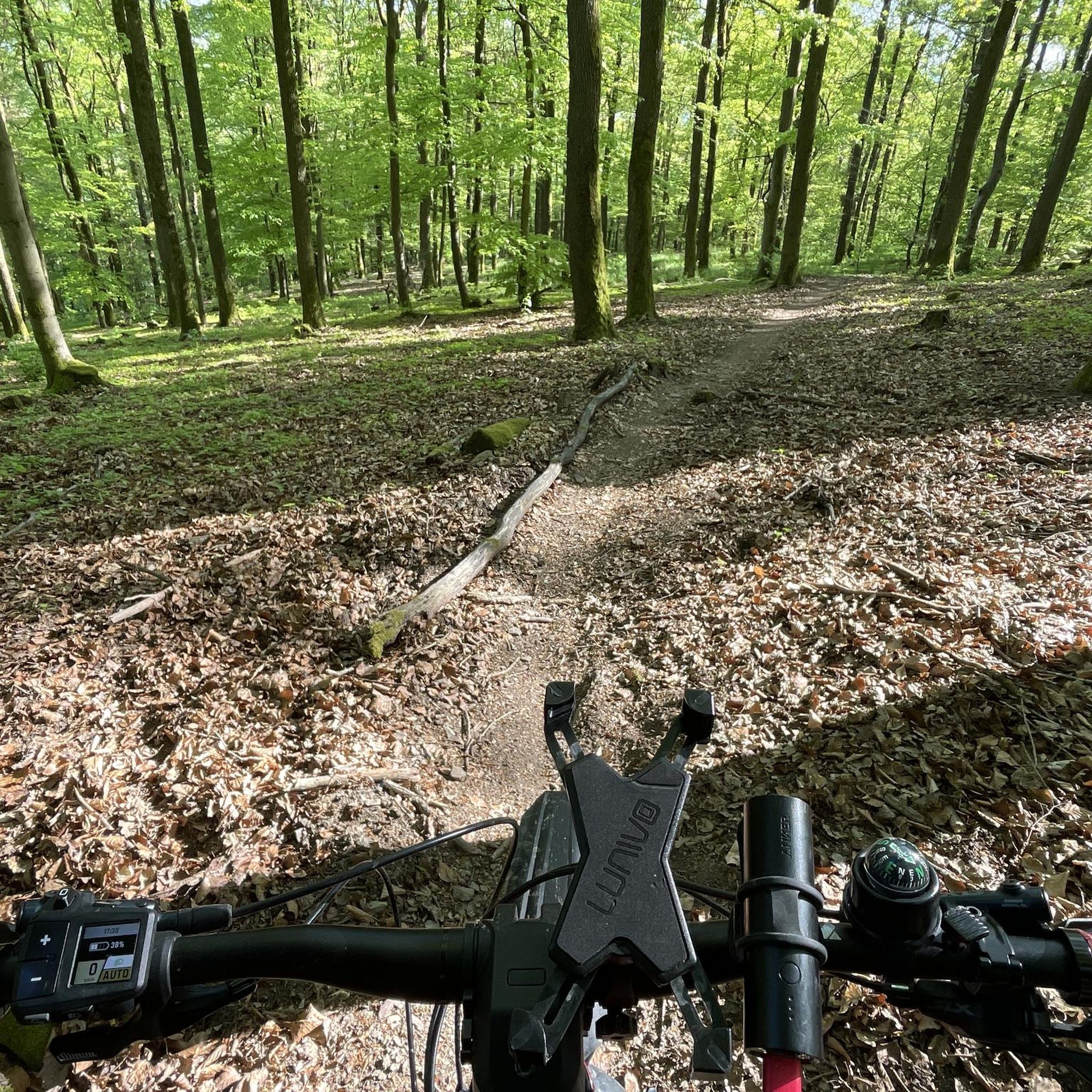
Perfect for eating a sandwich somewhere other than in the mud, and the possibility of washing your bike.
0
0
The Tour Surienne was named after Françoise de Surienne. In March 1449, in the midst of a truce between France and England, François de Surienne, a Spanish mercenary in the pay of the English, attacked in the dead of night with his 600 men. The inhabitants were slaughtered and the city plundered. In 1450, Surienne settled there and entrenched himself. Only after a two-month siege by Francis I, Duke of Brittany, who was aided by a plague epidemic, did Surienne surrender.
0
0
The largest fortress in Europe, the castle of Fougères stands on a rocky outcrop surrounded by marshland. The first castle of Fougères was built around the turn of the millennium to defend the north-eastern part of the border area of the Duchy of Brittany. Built at the crossroads of important trade routes, this primitive fortress had the main objective of monitoring the powerful neighbors and preventing their raids on Breton lands. To the north, Normandy belonged to the kings of England at the time.
4
1
Frequently Asked Questions
How many touring cycling routes are available around Etang D'Ouee?
There are over 100 touring cycling routes available around Etang D'Ouee, offering a wide range of options for different skill levels and preferences. The komoot community has highly rated these routes, with an average score of 4.5 stars.
Are there easy touring cycling routes suitable for beginners or families?
Yes, the region offers a good selection of easy touring cycling routes. The gentle topography and moderate elevation changes make many paths accessible for various fitness levels, including beginners and families looking for leisurely rides. For example, the area features small, calm roads and paths that are less strenuous.
What kind of terrain can I expect on touring cycling routes in the Etang D'Ouee area?
You can expect varied terrain, including quiet country lanes and sunken paths. The broader Ille-et-Vilaine department, where Etang D'Ouee is located, also features an extensive network of greenways, towpaths, and former railway lines, providing generally flat and accessible surfaces. Some paths might be unpaved in sections or prone to small streams after heavy rain, adding to the adventurous aspect.
Are there any circular touring cycling routes around Etang D'Ouee?
Yes, many routes in the area are designed as loops. For instance, the popular Bike loop from Gosné is a moderate 21.3-mile (34.2 km) route that explores the local countryside. Another option is the Chemin gravel loop from Mézières-sur-Couesnon, which takes you through rural landscapes.
What natural features or wildlife might I encounter while cycling?
The area around Etang D'Ouee is a "Zone Naturelle d'Intérêt Écologique, Faunistique et Floristique" (ZNIEFF), indicating rich biodiversity. You might cycle past moors and a peat bog, which is home to rare species like water lobelia and sundew. Birdwatchers may also spot the European nightjar and woodlark, making for scenic and engaging rides.
Are there historical landmarks or points of interest along the touring cycling routes?
Yes, several routes pass by historical landmarks. The Ancient Chevré Tower – Medieval hamlet of Chevré loop from Liffré-Cormier Communauté, for example, takes you past significant historical sites. You can also explore charming villages like Gosné, Saint-Aubin-du-Cormier, and Ercé-près-Liffré, which offer a glimpse into local culture.
What is the best time of year for touring cycling around Etang D'Ouee?
The region's gentle topography and varied paths make it enjoyable for touring cycling across multiple seasons. However, spring and autumn generally offer the most pleasant weather conditions for cycling, with milder temperatures and beautiful natural scenery. Be aware that some sunken paths might be prone to small streams after heavy rain.
Can I find places to eat or stay overnight near the cycling routes?
Yes, the proximity to charming villages like Gosné, Liffré-Cormier Communauté, and Saint-Aubin-du-Cormier means you can find local amenities, including places to eat and stay. These villages offer opportunities to experience local culture and complement your outdoor adventures.
Is it possible to reach the Etang D'Ouee cycling routes using public transport with a bike?
While specific public transport options for bikes directly to Etang D'Ouee are not detailed, the broader Ille-et-Vilaine department is committed to cycling infrastructure. For general information on cycling routes and potentially bike-friendly transport options in the region, you might find resources on the Ille-et-Vilaine tourism website.
Where can I park my car if I'm bringing my bike to Etang D'Ouee?
Many touring cycling routes start from or pass through local communes such as Gosné, Liffré-Cormier Communauté, Mézières-sur-Couesnon, Saint-Aubin-du-Cormier, and Ercé-près-Liffré. These villages typically offer parking facilities where you can leave your car before starting your ride.
What do other cyclists say about touring cycling in Etang D'Ouee?
The touring cycling routes around Etang D'Ouee are highly rated by the komoot community, with an average score of 4.5 stars from over 100 reviews. Cyclists often praise the serene environment, the quiet country lanes, and the diverse natural landscapes that make for an enjoyable and immersive experience.
Are there options for more challenging or advanced touring cycling routes?
Yes, for those seeking a greater challenge, there are difficult routes available. For example, the Ancient Chevré Tower – Medieval hamlet of Chevré loop from Liffré-Cormier Communauté is a difficult 24.0-mile (38.7 km) path with varied terrain. Another challenging option is the Liberty Oak – Old town loop from Ercé-près-Liffré, which covers over 60 km.
Most popular routes around Etang D'Ouee

Get inspired with the komoot mobile app


Explore more
Browse the best Cycling routes in other regions.
