The best mountain hikes around Demanda
15
hikers
4
hikes
Mountaineering routes around Demanda traverse a diverse and rugged landscape, characterized by numerous peaks, dense forests, and remnants of ancient glacial formations. The region features abrupt reliefs, deep valleys, and ravines, with elevations reaching over 2,100 meters. Craggy rock formations are common along ridgelines, offering varied terrain for ascents. Extensive forests of beech, oak, and Scots pine cover much of the lower slopes, transitioning to harsh, rocky terrain above the treeline.
Best mountaineering routes around Demanda
- The most popular mountaineering…
Last updated: June 28, 2026
10
hikers
14.6km
06:20
1,110m
1,110m
Hard mountaineering route. Very good fitness required. Mostly accessible paths. Sure-footedness required.
3
hikers
6.14km
02:34
480m
480m
Moderate mountaineering route. Good fitness required. Easily-accessible paths. Suitable for all skill levels.

Sign up for free
1
hikers
Moderate mountaineering route. Good fitness required. Easily-accessible paths. Suitable for all skill levels.
1
hikers
9.98km
03:57
720m
730m
Moderate mountaineering route. Good fitness required. Easily-accessible paths. Suitable for all skill levels.
Our route recommendations are based on thousands of hikes, rides, and runs completed by other people on komoot.
Start today with a free account
Your next adventure awaits.
Login or Signup
Popular around Demanda

Mountain Hikes around Santa Cruz Del Valle Urbión

Mountain Hikes around Villasur De Herreros

Mountain Hikes around Pineda De La Sierra

Mountain Hikes around Barbadillo De Herreros

Mountain Hikes around Rábanos

Mountain Hikes around Riocavado De La Sierra

Mountain Hikes around Valmala

Mountain Hikes around Espacio Natural de la Sierra de la Demanda
Camino Francés and Camino Finisterre – Cycling pilgrimages in Spain
Discover the unknown Burgos - Dos Aguas Trail (GR 290)
Other adventures around Demanda


Tips from the Community

Spectacular area for hiking routes
0
0
a highly recommended area for hiking.
0
0

There are many routes, both easy and difficult, to choose from. The Sierra is very beautiful, especially in autumn.
0
0

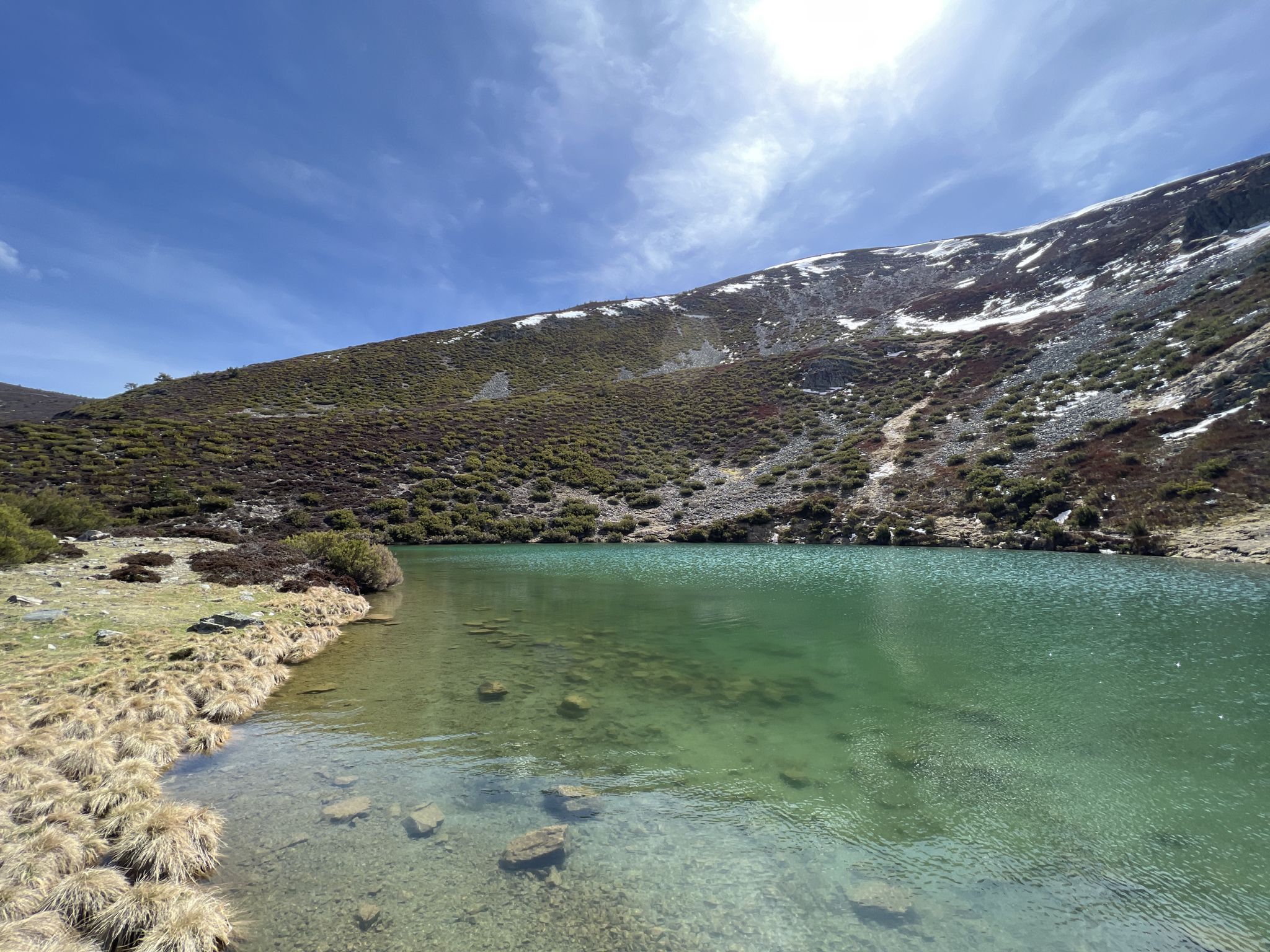
The path leaves El Portillo on the east side, goes up a few meters along a channel and enters the north side. If the mountain has snow, this section is dangerous because the cold and shady conditions keep the path icy and the fall is fatal; crampons and ice axes would be essential. The alternative is to climb directly along the channel on the east face, with less slope, sunnier and direct to the summit of San Millán (2,131 m), also called El Torruco. At the top there is a small circular stone tower adorned with a metal house and other festival motifs left by mountaineers. The southern slope of the mountain is a large mass of gentle slopes with no remains of glacial activity towards the valley of the Arlanzón River. The descent continues along the west face, enjoying extraordinary views of the Urbión River valley and the glacial cirque where the San Millán lagoon appears half frozen.
0
0
The Zarcia Recreational Zone is 2.8 kilometers from Santa Cruz del Valle Urbión along a dirt track suitable for cars, there are some potholes but with care they do not present problems. At the entrance to the picnic areas there is room for three or four cars and 150 meters before arriving there is space for many more. The route begins along the main path of the Urbión River valley, passes through a detour and after one kilometer the Altuzarra waterfalls path appears on the right, which is the return route. The path does not present orientation complications, it follows the course of the water to the head of the valley. In several sections you have to cross the riverbed or walk along the small islands that the torrent forms when there is a lot of flow, always among beech trees, holly trees, yew trees and the riverside scrub that seeks the humidity and wild environment of the glacial valley. Some reference points are the Refugio de Laguarra cabin and shortly after the crossroads where the Mirador de Domingo Sevilla trail leaves on the right, which is also a shortcut to get directly to the Altuzarra waterfalls without passing through the summit of the mountain. . On the opposite bank of the ravine is the “most famous beech tree in Burgos”, as indicated by a sign stuck on a stone near the monumental tree.
0
0

From the top of Pico Mencilla, you can see Pico Trigaza and San Millan
1
0

Small mountain village. Picturesque. There is a nice café here for a break. There aren't really many cafes here. So you should stop by.
2
0
Really a nice photo opportunity. In the village is a nice little café ideal for a break.
2
0
Frequently Asked Questions
How many mountaineering routes are available in Demanda?
The Demanda region offers a selection of 6 mountaineering routes, catering to various skill levels. These routes traverse diverse landscapes, from dense forests to rugged peaks, providing a comprehensive experience of the area's natural beauty.
What is the best time of year for mountaineering in Demanda?
The best time for mountaineering in Demanda is generally during the summer months. While the region offers year-round opportunities, routes like the ascent to Pico San Millán are best undertaken in summer to avoid heavy snow and ensure safer conditions. Always check local weather and trail conditions before heading out.
Are there any family-friendly mountaineering options in Demanda?
While many mountaineering routes in Demanda involve significant elevation gain and rugged terrain, there are options suitable for families with some hiking experience. The region's extensive trail network includes paths that are less strenuous, especially in the foothills and forested areas. For a moderate mountaineering experience, consider the Campo de los Corros – Mencilla loop from Valle del Sol, which is shorter and offers varied terrain.
What kind of wildlife might I encounter on the mountaineering routes?
The Sierra de la Demanda is rich in biodiversity. Mountaineers might spot a recovering wolf population, roe deer, wildcats, badgers, and otters. The skies are also home to various birds of prey, including golden eagles and goshawks. Maintaining a respectful distance and observing quietly is key to experiencing the region's natural inhabitants.
Are there any circular mountaineering routes in Demanda?
Yes, Demanda offers several circular mountaineering routes that allow you to start and end at the same point. A challenging option is the San Millán (2,131 m) – Zarcia Recreation Area loop from Refugio de Zárcia, which takes you to one of the region's highest peaks. For a moderate circular path, you could explore the Alto de la Campiña loop from Peña Aguda.
What are some notable natural features or landmarks to look out for?
Demanda's landscape is shaped by ancient glaciers, leaving behind numerous scenic lagoons. The region is also characterized by dense forests of beech, oak, and Scots pine, and dramatic craggy rock formations along ridgelines. You might also encounter the La Cascada Lagoon, a beautiful remnant of glacial activity. The terrain above the treeline offers sweeping views of the rugged peaks.
Are there any shelters or huts available along the mountaineering trails?
Yes, the region provides some facilities for hikers and mountaineers. The Bonicaparra Shelter, for instance, is an open hut with easy access, offering a recreational area with a fireplace, tables, benches, and a fountain. You can also find other shelters like the La Pasada Shelter and the Pinarejos Shelter, which can be useful for breaks or in emergencies.
What is the difficulty level of mountaineering in Demanda?
Mountaineering in Demanda ranges from moderate to difficult. While there are no 'easy' mountaineering routes listed in this guide, five are rated as moderate, and one is difficult. The difficult routes, such as the ascent to San Millán, involve significant elevation gain and rugged terrain, often requiring good physical fitness and experience. The region's varied topography ensures options for different ability levels.
What do other mountaineers say about the routes in Demanda?
The mountaineering routes in Demanda are highly regarded by the komoot community, with an average rating of 5.0 stars. Users often praise the challenging ascents, the sense of 'empty Spain' due to sparse human activity, and the diverse landscapes that transition from dense forests to harsh, rocky peaks. The well-maintained trails and the opportunity to explore a rugged, unspoiled wilderness are frequently highlighted.
Can I find routes that offer views of the highest peaks in Demanda?
Absolutely. Many routes in Demanda offer stunning views of the region's highest peaks. The San Millán (2,131 m) – Zarcia Recreation Area loop from Refugio de Zárcia directly ascends one of the tallest mountains, providing expansive vistas. Other routes, even if not summiting the highest peaks, navigate through terrain that offers panoramic views of the mountainous landscape, including peaks like San Lorenzo (2,271m).
Are there any historical or cultural sites near the mountaineering trails?
Beyond its natural beauty, the Demanda region also boasts historical and cultural attractions. You can find ancient monasteries, Roman ruins, and medieval to mid-century ruins. Notable sites include the Monasterio de Santo Domingo de Silos and the intriguing Sad Hill Cemetery. These sites add a rich cultural dimension to your outdoor exploration.
What kind of terrain should I expect on these mountaineering routes?
Mountaineering in Demanda involves a variety of terrain. You can expect to traverse dense forests of beech, oak, and Scots pine at lower elevations. As you ascend, the landscape transitions to more abrupt reliefs, craggy rock formations along ridgelines, and harsh, rocky terrain above the treeline. Some routes may also involve navigating glacial formations or deep valleys and ravines.
Most popular routes around Demanda
Most popular attractions around Demanda

Get inspired with the komoot mobile app


Didn’t find what you were looking for?
Check out more Mountain Hikes & Routes throughout Demanda below and find the perfect route in your destination.
Explore more
Browse the best Mountain Hikes & Routes in other regions.
