Attractions and Places To See in Saguaro National Park - Top 20
Best attractions and places to see in Saguaro National Park showcase the Sonoran Desert landscape and its iconic saguaro cacti. The park is divided into two distinct sections, the Tucson Mountain District (West) and the Rincon Mountain District (East), each offering unique natural features and cultural sites. Visitors can explore diverse ecosystems, from desert floors to higher elevation forests, and discover ancient petroglyphs.
Best attractions and places to see in Saguaro National Park
- The most popular attractions is Wasson Peak…
Last updated: May 9, 2026
Wasson Peak
Highlight • Summit
Tip by

King Canyon Wash Petroglyphs
Highlight • Historical Site
Tip by

Sign up now to discover places like this
Get recommendations on the best single tracks, peaks, & plenty of other exciting outdoor places.
Sign up for free
Hugh Norris Trail towards Apache Peak
Highlight (Segment) • Trail
Tip by

Signal Hill Petroglyphs
Highlight • Historical Site
Tip by
Saguaro National Park
Highlight • Natural Monument
The eastern section is larger …
Tip by
Sign up for free to discover even more attractions in Saguaro National Park.
Sign up for free
Already have an account?
Start today with a free account
Your next adventure awaits.
Login or Signup
Popular around Saguaro National Park
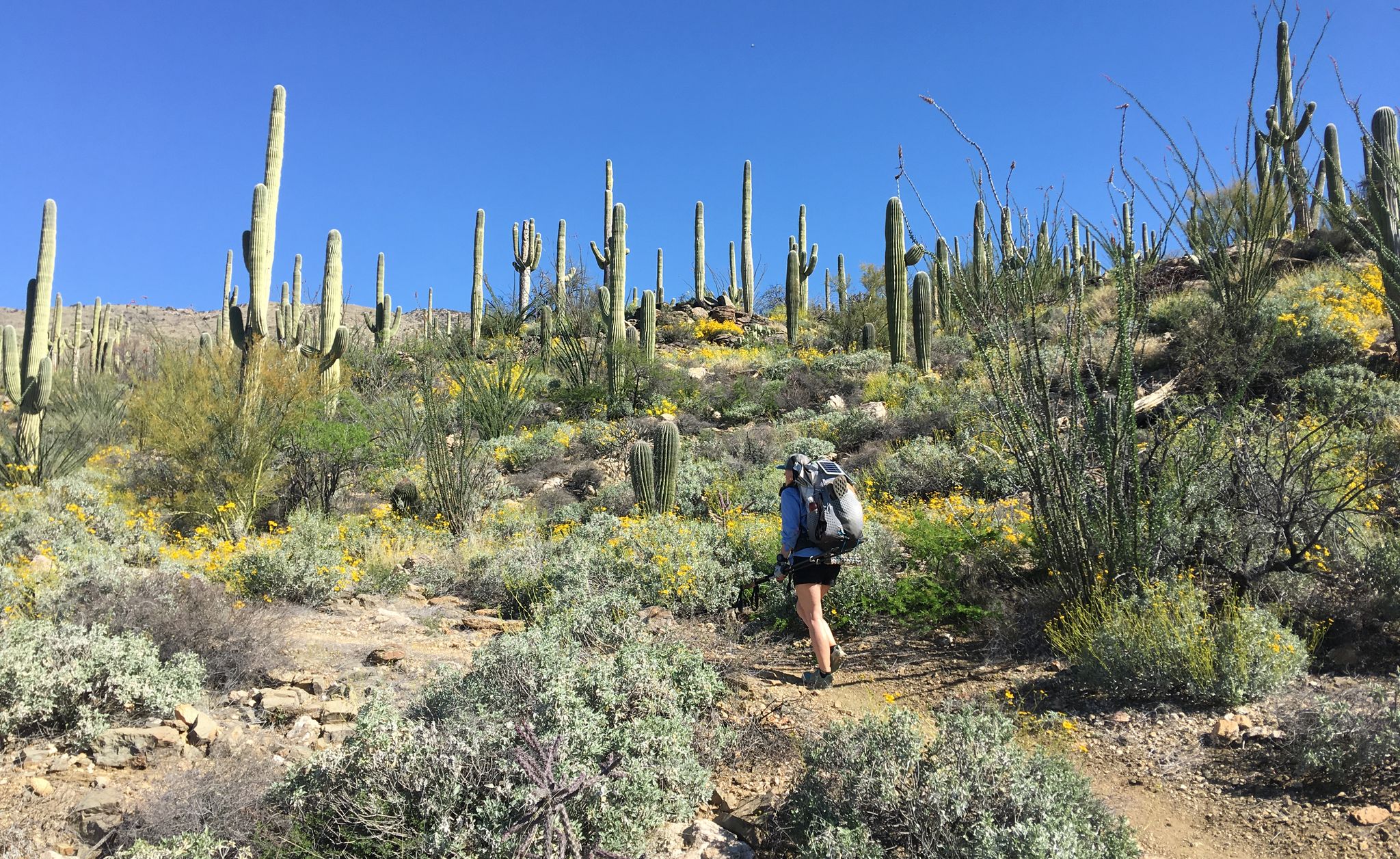
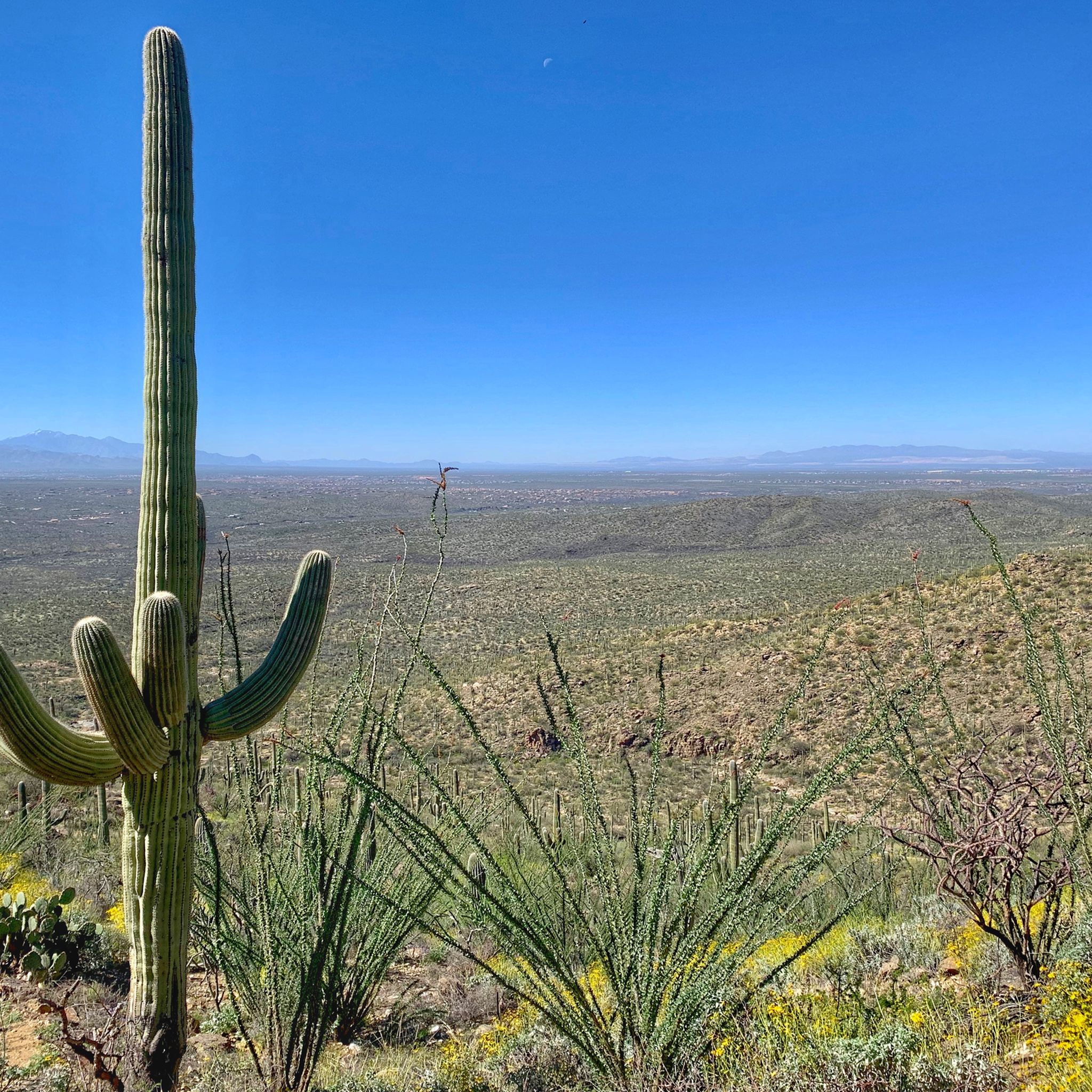
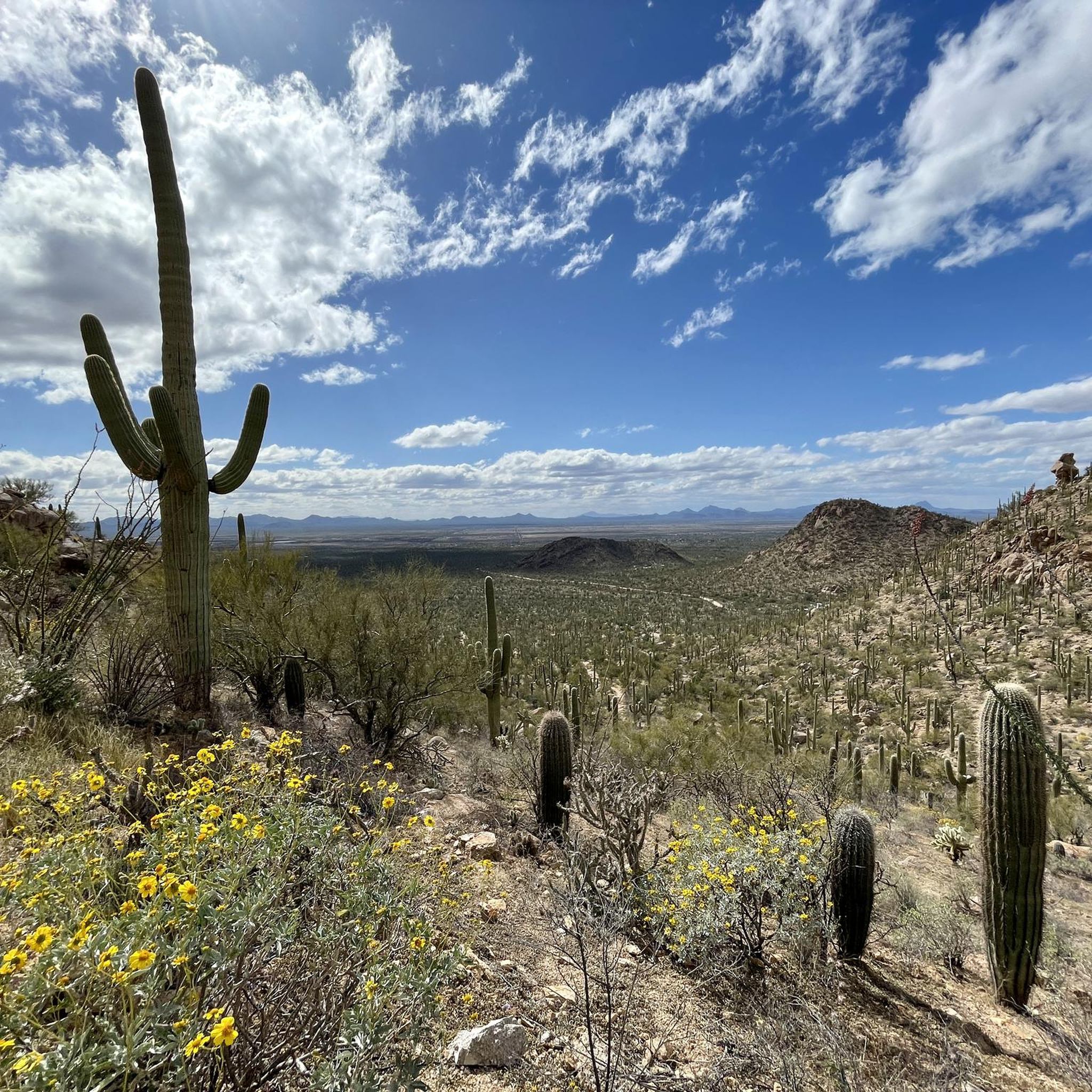
Other adventures in Saguaro National Park


Tips from the Community

From the Signal Hill Trailhead there are stairs, access is easier via Manville Trail. There are also bike racks at the picnic area, with restrooms. The prehistoric petroglyphs are in excellent condition and easy to find.
1
0

Saguaro National Park is home to the largest collection of giant saguaro cacti in the world. From the summit of Mica Mountain at 8,669 feet to the desert floor one can see a vegetation change usually only experienced on a drive from Mexico to Canada. Backcountry camping along the Arizona Trails is only allowed with a permit for Grass Shack Campground or Manning Camp. There are also some other nice official campsites in Saguaro National Park. Permits are available at: https://www.recreation.gov/camping/campgrounds/10028678
0
0

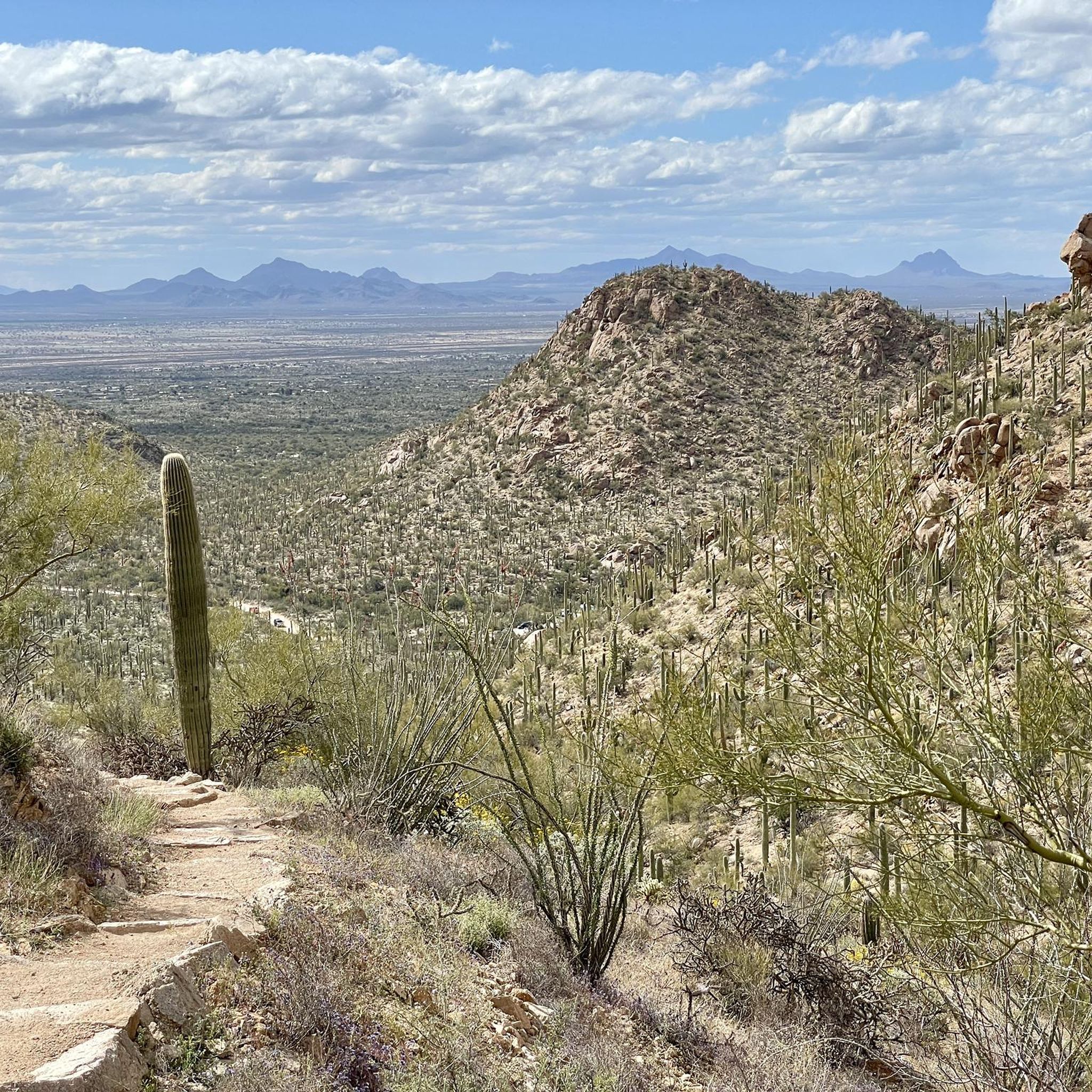
The Hugh Norris Trail offers stunning views of the surrounding mountains, as well as the cactus forests. This loop takes you past Apache Peak and parallel to Hohokam road.
0
0
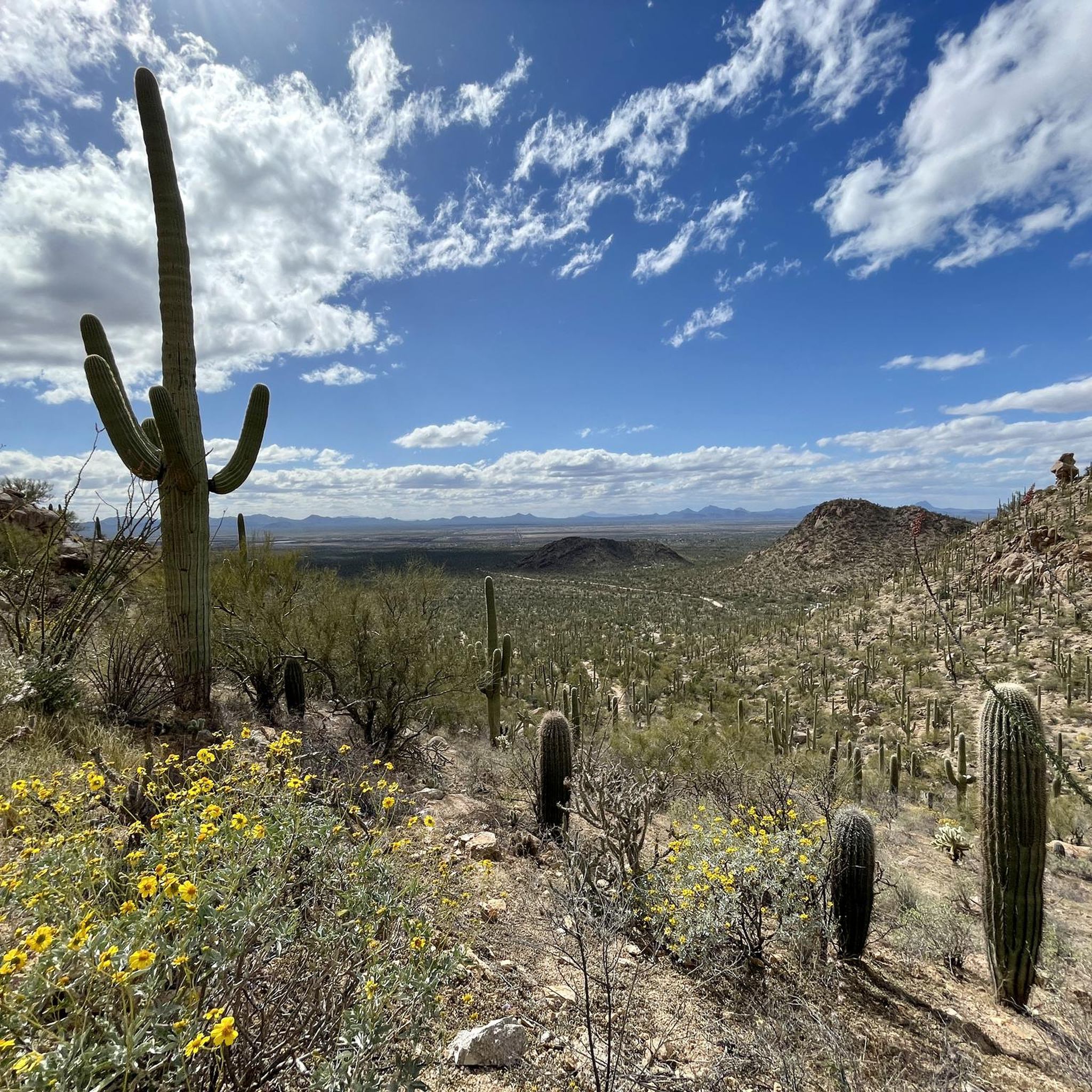
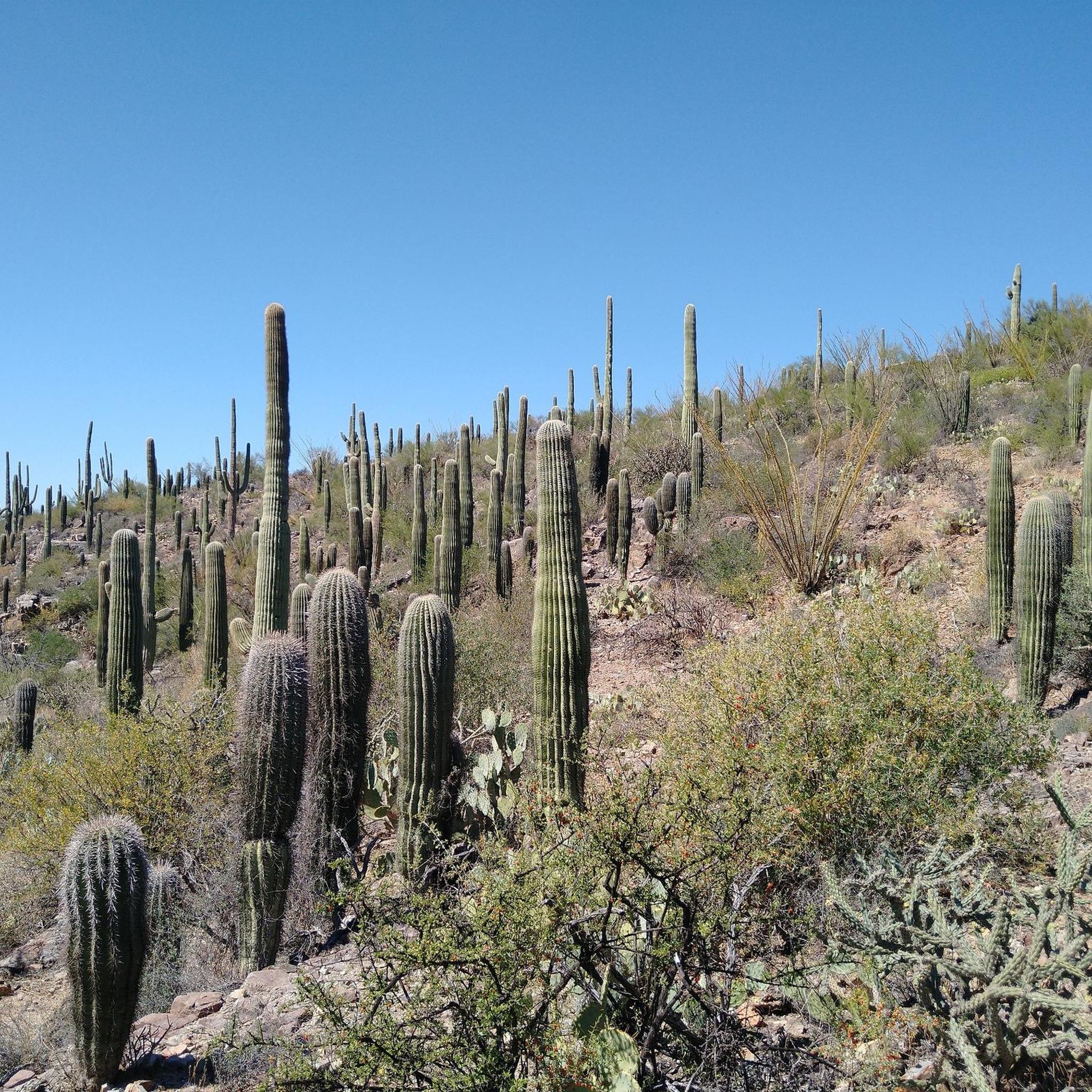
The Cactus Wren Trail is a 3.9-mile loop in the western part of Saguaro National Park. You will stroll along the majestic Saguaro cacti that grow from Mexico to the north side of the Salt River. These cacti are often used as by woodpeckers for nesting, so keep your eyes peeled for some holes in the trunk and it takes roughly a decade for a Saguaro cactus to grow one arm.
1
0

Excellent views of the park. You can see for miles on a clear day.
0
0

Look carefully at the canyon walls and rock formations as you walk along King Canyon Trail. You will see a number of petroglyphs etched into the rock surface. Most of the rock etchings found in Saguaro National Park were created by the Hohokam peoples. Do not touch the petroglyphs as oil from your skin can damage/break them down faster.
1
0
Endless desert trails, with the park to the north of this line.
0
0
As the trail name indicates, good opportunity to explore the famous Saguaro and other cactus environments, including its birdlife such as wrens. Along the way don't miss the chance to see the amazing and well visibile 800 years old rock carvings and petroglyphs
4
0
Frequently Asked Questions
What are some of the most notable natural features in Saguaro National Park?
Saguaro National Park is renowned for its iconic saguaro cacti, which are the largest cacti in the United States. You can also explore diverse desert landscapes, including the higher elevations of the Rincon Mountains in the East District, which feature oak woodlands and pine forests. Notable viewpoints include Wasson Peak in the West District, offering panoramic views, and Javelina Rocks in the East District, known for its large boulders and sunset views.
What cultural or historical sites can I visit in Saguaro National Park?
The park offers significant cultural sites, most notably the Signal Hill Petroglyphs in the West District. This site features over 200 ancient rock carvings created by the Hohokam people between 450 and 1450 AD. Another historical site is the Freeman Homestead Site in the Rincon Mountain District, offering a glimpse into early settlement.
Are there easy or family-friendly hiking trails in Saguaro National Park?
Yes, Saguaro National Park has several easy and family-friendly options. The Desert Ecology Trail in the East District is a 0.25-mile paved, ADA-compliant trail with exhibits. Similarly, the Desert Discovery Nature Trail behind the Red Hills Visitor Center in the West District is paved and wheelchair-friendly. For easy hikes, consider the Shantz and Mica View Trail or the Loma Verde Loop, both found in the East District. You can find more easy hikes in the Easy Hikes in Saguaro National Park guide.
What are some popular hiking trails for more challenging experiences in Saguaro National Park?
For more challenging hikes, consider trails leading to higher elevations. Wasson Peak in the West District offers a strenuous climb with rewarding views. In the East District, trails like the Douglas Spring Trail or the Tanque Verde Ridge Trail lead into the Rincon Mountains, offering significant elevation gain and varied ecosystems. The Hugh Norris Trail towards Apache Peak also provides stunning views and a good workout.
When is the best time to visit Saguaro National Park?
The best time to visit Saguaro National Park is generally during the cooler months, from October to April. Temperatures are more moderate, making outdoor activities like hiking more enjoyable. Summers (May to September) can be extremely hot, with daily temperatures often exceeding 100°F (38°C), though monsoon season in late summer brings dramatic thunderstorms.
What should I wear when visiting Saguaro National Park, especially in summer?
During cooler months (October-April), layers are recommended as temperatures can vary throughout the day. In summer (May-September), lightweight, light-colored, breathable clothing is essential. Always wear a wide-brimmed hat, sunglasses, and sturdy closed-toe shoes. Regardless of the season, bring plenty of water, as dehydration is a serious risk in the desert.
What are the main differences between the East and West Districts of Saguaro National Park?
Saguaro National Park is divided into two distinct sections. The Tucson Mountain District (West) is generally at a lower elevation and boasts a denser concentration of saguaro cacti. It's home to the Signal Hill Petroglyphs and the scenic Bajada Loop Drive. The Rincon Mountain District (East) is larger and more mountainous, with higher elevations that include oak woodlands and pine forests. It offers more extensive hiking trails and is the only district where backcountry camping is permitted.
Are there scenic drives in Saguaro National Park?
Yes, both districts offer scenic drives. In the West District, the Bajada Scenic Loop Drive is a 5-mile unpaved road that connects various trails and picnic areas, providing excellent views. In the East District, the Cactus Forest Loop Drive is an 8-mile paved, one-way scenic route that winds through a dense saguaro forest, offering a leisurely way to experience the desert.
What outdoor activities can I do near the attractions in Saguaro National Park?
Beyond hiking, you can enjoy cycling on routes like the Bajada Loop Drive or the Saguaro National Park – Arizona-Sonora Desert Museum loop. For running, trails such as Loma Verde and Squeeze Pen Loop are popular. You can explore more options in the Cycling in Saguaro National Park guide and the Running Trails in Saguaro National Park guide.
Where can I find visitor centers and facilities in Saguaro National Park?
Each district has its own visitor center. The Red Hills Visitor Center serves the West District, offering indoor exhibits, guided tours, and a gift shop. The Rincon Mountain Visitor Center is the primary hub for the East District, providing information and access to the Cactus Forest Loop. Both centers are great starting points for your visit.
Is Saguaro National Park suitable for stargazing?
Yes, Saguaro National Park offers excellent opportunities for stargazing. Due to its relatively dark night skies away from major city lights, visitors can enjoy clear views of the stars, especially in areas further from Tucson.
Are there any nearby attractions outside of Saguaro National Park that are worth visiting?
While not directly inside the park, the Arizona-Sonora Desert Museum, located just west of Tucson, is highly recommended. It's a 98-acre sanctuary combining a zoo, aquarium, botanical garden, natural history museum, and art gallery, showcasing the desert's diverse life. Old Tucson, a historical Western theme park, is also nearby.
Most popular routes in Saguaro National Park
Most popular attractions in Saguaro National Park

Get inspired with the komoot mobile app


Explore more
Still not found the Highlight you’re looking for? See guides of the top attractions in other regions:
