The best cycling routes around Handelsdok
4.3
(2984)
38,538
riders
1,064
rides
Touring cycling around Handelsdok is characterized by its flat, urban-integrated terrain, featuring extensive canal-side and riverside paths. The area, part of Ghent's urban regeneration, offers wide concrete paths along quays and connects to a broader network of cycle paths. These routes often follow old towpaths along waterways like the Lieve Canal, providing generally flat and well-prepared surfaces. Green infrastructure and urban parks complement the maritime industrial heritage of the district.
Best touring cycling routes around Handelsdok
- The most popular touring…
Last updated: August 14, 2026
4.4
(70)
427
riders
Moderate bike ride. Good fitness required. Mostly paved surfaces. Suitable for all skill levels.
4.6
(54)
300
riders
Moderate bike ride. Good fitness required. Mostly paved surfaces. Suitable for all skill levels.

Sign up for free
4.5
(44)
436
riders
Easy bike ride. Great for any fitness level. Mostly paved surfaces. Suitable for all skill levels.
4.3
(21)
321
riders
Easy bike ride. Great for any fitness level. Mostly paved surfaces. Suitable for all skill levels.
4.6
(37)
149
riders
Easy bike ride. Great for any fitness level. Mostly paved surfaces. Suitable for all skill levels.
Get access to more routes and recommendations from other explorers.
Sign up for free
Already have an account?
Our route recommendations are based on thousands of hikes, rides, and runs completed by other people on komoot.
Start today with a free account
Your next adventure awaits.
Login or Signup
Tips from the Community

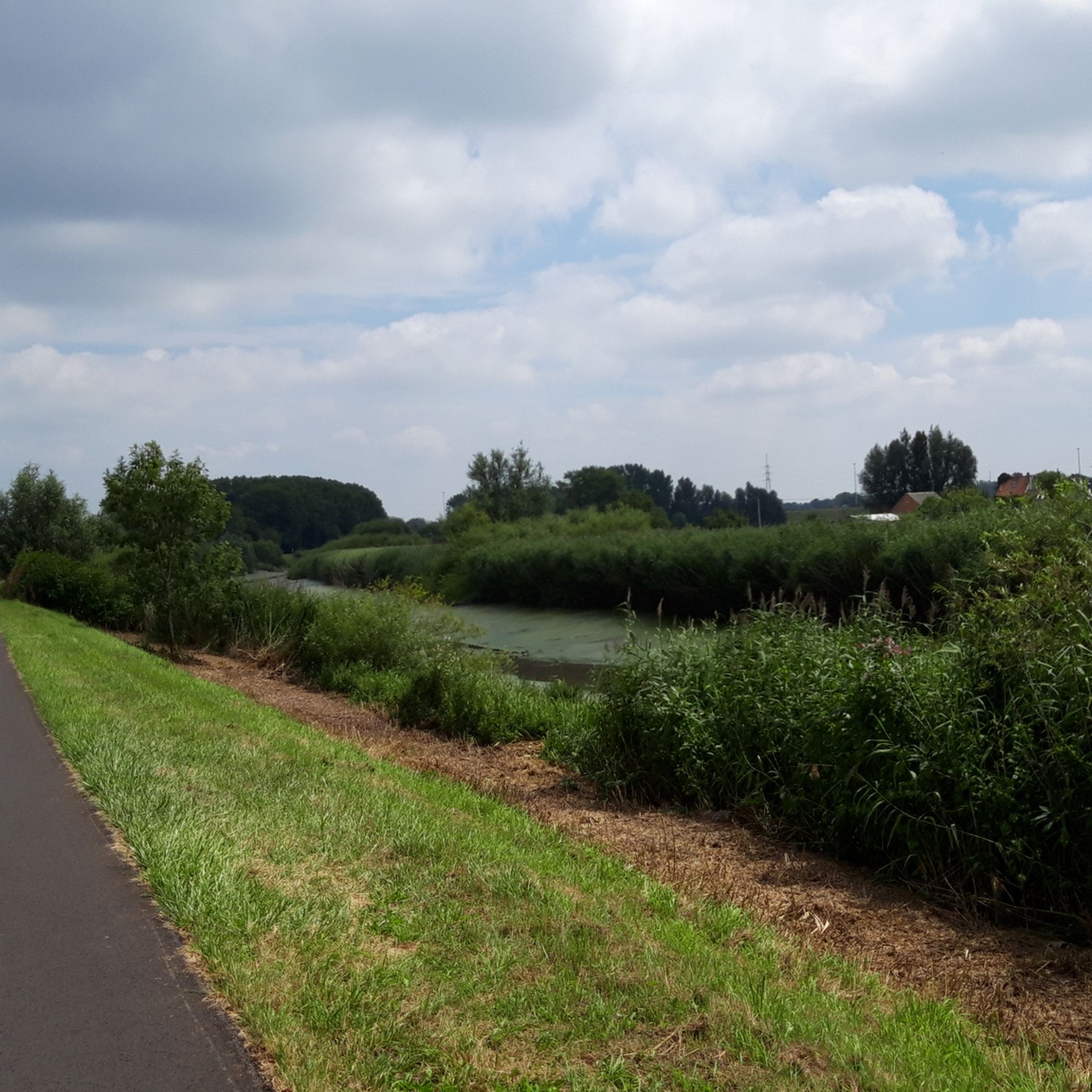
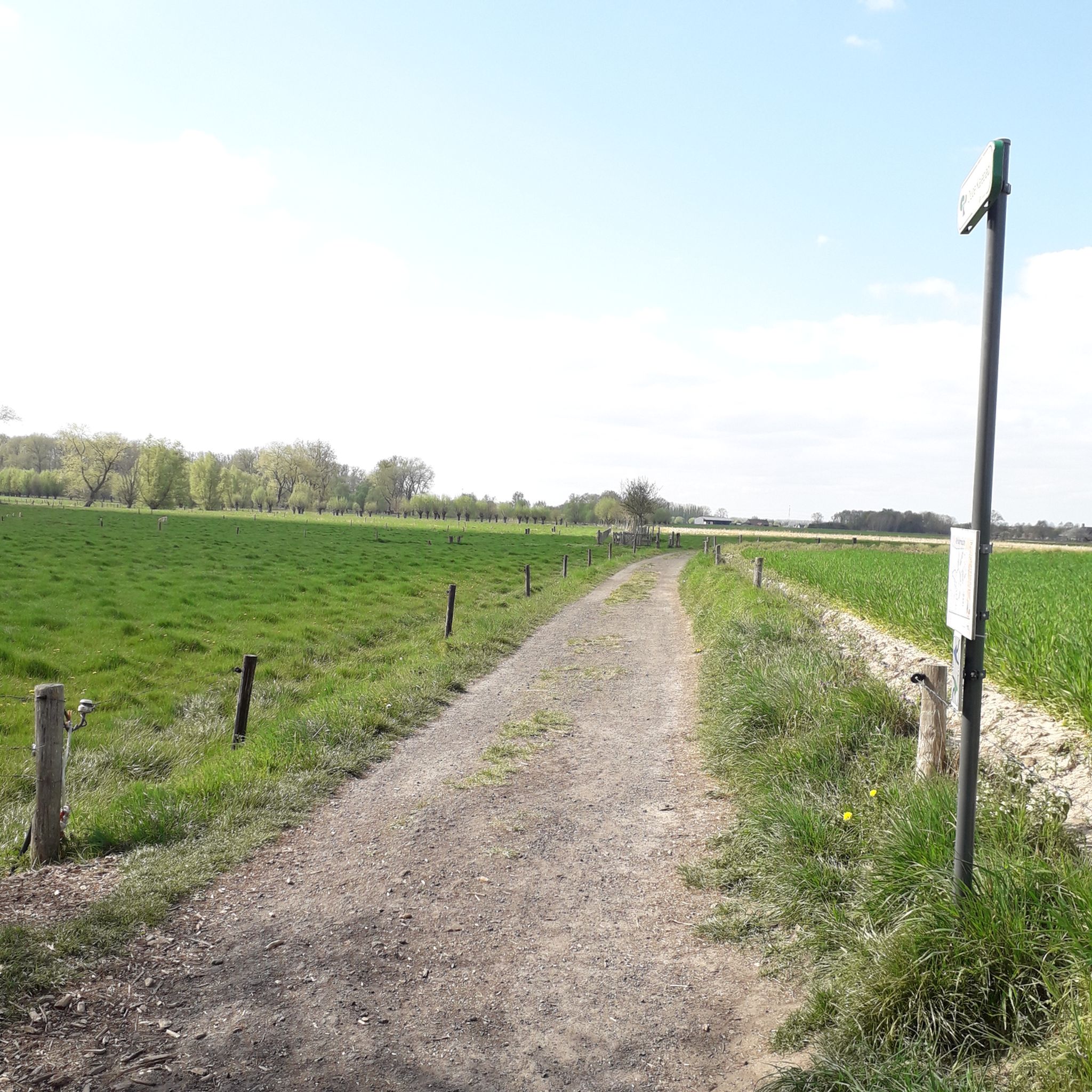
De Lieve is a historic inland waterway that was dug between 1251 and 1269 to connect Ghent with Damme (originally Aardenburg). In the 13th and 14th centuries, the canal experienced its golden age. Even when the Zwin began to silt up in the 14th and 15th centuries, and later new waterways were constructed — such as the Sasse Vaart in the 16th century and the Ghent-Bruges Canal in 1613-1614 — De Lieve retained its original function until the beginning of the 18th century. Today, parts of De Lieve are still visible. In Ghent, Evergem, and Lievegem, the canal still exists in some places as an open watercourse. In the municipality of Damme, the route is mainly recognizable as a wide strip in the landscape.
1
0
The Lieve is a historic inland waterway that was dug between 1251 and 1269 to connect Ghent with Damme (originally Aardenburg). The canal experienced its heyday in the 13th and 14th centuries. Even when the Zwin began to silt up in the 14th and 15th centuries, and later new waterways were built — such as the Sasse Vaart in the 16th century and the Ghent-Bruges Canal in 1613-1614 — the Lieve retained its original function until the beginning of the 18th century. Today, parts of the Lieve are still visible. In Ghent, Evergem, and Lievegem, the canal still exists in some places as an open watercourse. In the municipality of Damme, the route is mainly recognizable as a wide strip in the landscape.
1
0

The Drongenplein is the heart of the old village center of Drongen. The design of the Drongenplein with its pollarded lime trees and footpaths is full of nods to the past. The corten steel fencing shows the boundaries of the churchyard that was located here until the 19th century. The paths follow a route that is still visible on old city maps, and the curved bench at the war memorial is a reference to the meandering Leie.
2
0
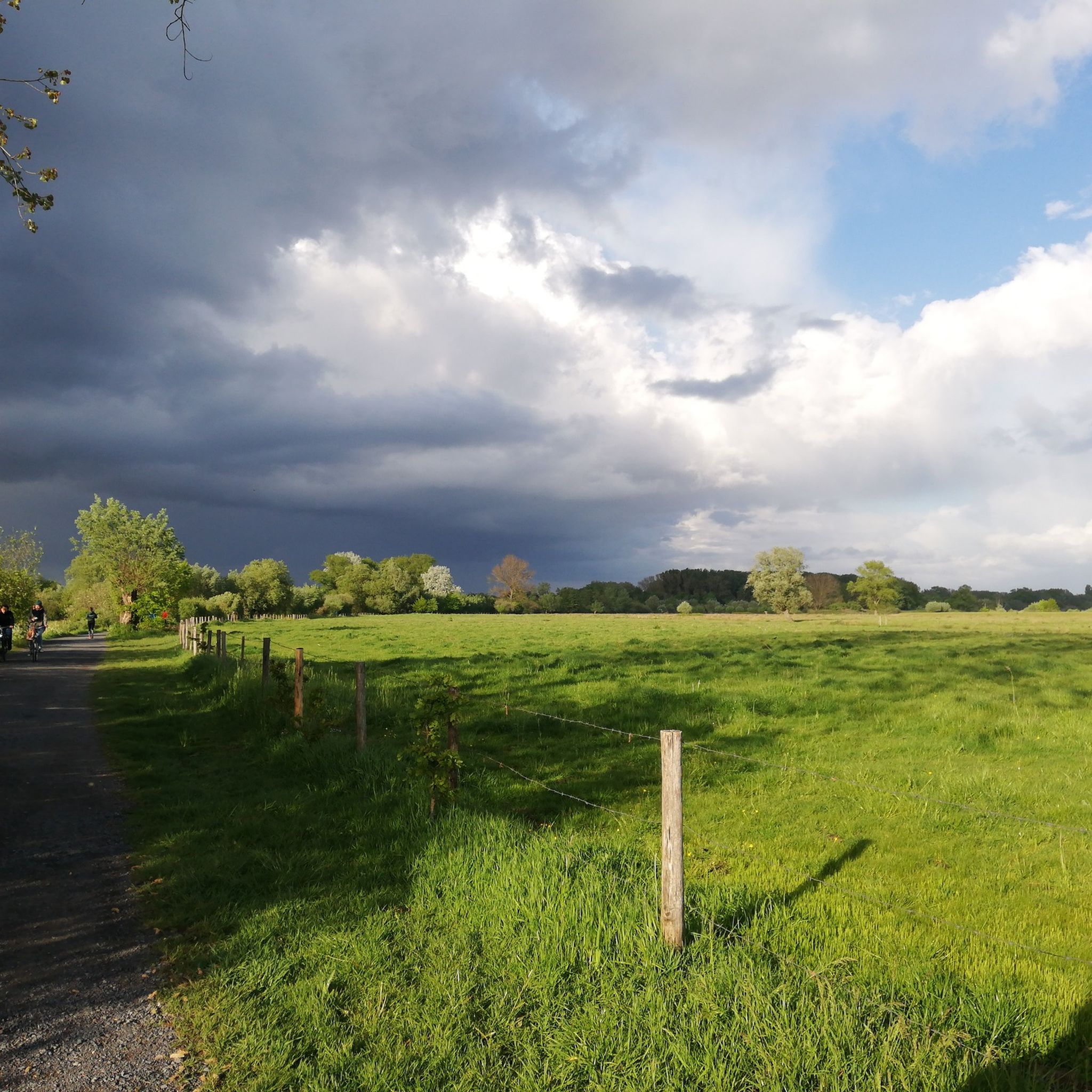
The De Assels nature reserve is part of the Levende Leie Nature Park, an extensive valley from Deinze to Ghent where nature is central. The meandering Leie forms the connecting axis between the different parts. The Meersen area is a small island between Drongen and Afsnee. The Old Leie winds through the landscape of the Assels. The grasslands are interwoven with ditches.
2
0
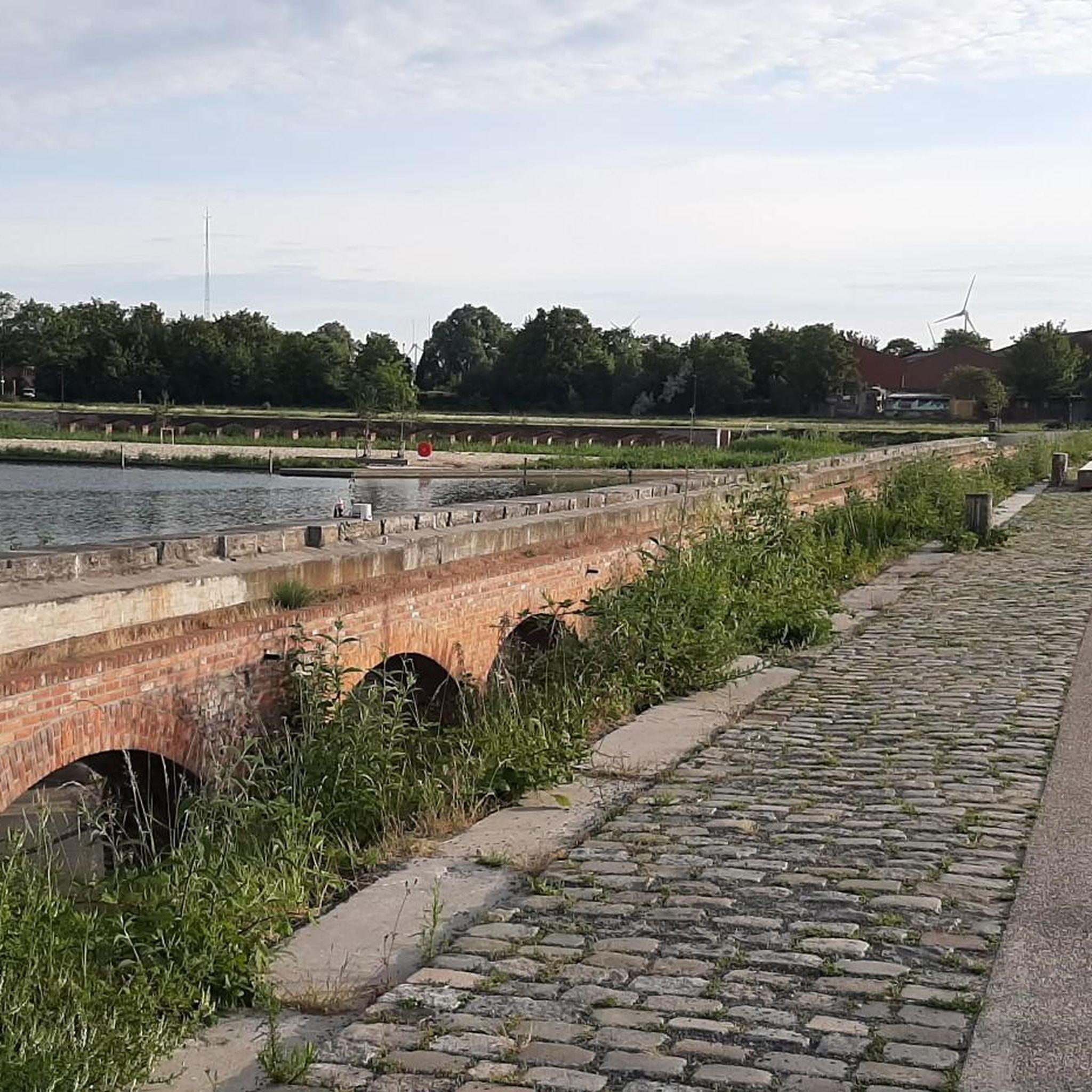
For those wondering why there was never a wider bridge to connect Assel to the civilized world: this 1927 four-part bridge is a protected monument and was restored quite recently. It therefore remains millimeter work for trucks that need to get to the other side. The name Pontbrug points to a further past when there was only a pontoon or ferry service here.
3
0
De Lieve is a historic inland waterway canal that was dug between 1251 and 1269 from Ghent to Damme, originally Aardenburg. The period of prosperity is situated in the 13th and 14th centuries. Despite the silting up of the Zwin (early 14th and early 15th centuries), the digging of the Sasse Vaart in the mid-16th century, and the digging of the Ghent - Bruges canal in 1613-1614, it retained its original function until the beginning of the 18th century. In Ghent, Evergem, and Lievegem, the Lieve has been preserved as an open watercourse in sections. The route within the municipality of Damme has been preserved as a wide strip in the landscape. Source: https://www.lievegem.be/de-lieve
7
0

The two canals that intersect here (near Merendree and Zomergem, not Sint-Joris, as initially mentioned here) are the Ghent-Bruges Canal and the Schipdonk Canal. This point is known as the Schipdonk Lock.
0
0

Best to check openings hours before you go, because the bar is not always open.
1
1
Frequently Asked Questions
How many touring cycling routes can I find around Handelsdok?
There are over 900 touring cycling routes available around Handelsdok, offering a wide range of options for cyclists. The majority of these are easy or moderate, suitable for various skill levels.
What is the general difficulty level for touring cycling routes in Handelsdok?
The terrain around Handelsdok is predominantly flat, characterized by canal-side and riverside paths. This makes most touring cycling routes easy to moderate, with gentle elevation changes. You'll find over 600 easy routes and more than 250 moderate routes.
Are there any family-friendly cycling routes near Handelsdok?
Yes, the flat and well-prepared paths along the canals and rivers make many routes suitable for families. An excellent option is the Gentbrugse Meersen Wetlands – Gentbrugse Meersen loop from Gent-Dampoort, which is an easy 22.5 km trail through green areas.
What kind of natural features and landscapes can I expect to see while cycling around Handelsdok?
While Handelsdok itself is an urban waterside area with industrial heritage, the surrounding region offers diverse natural features. You'll cycle along picturesque waterways like the Leie and Lieve Canal, through green spaces, urban parks, and wetlands. The wider Ghent area features meadows and polders, providing a blend of urban and natural scenery.
Are there any interesting landmarks or attractions to see along the cycling routes?
Absolutely! The area blends historical industrial charm with modern amenities. You can observe relics from Handelsdok's maritime past, such as harbor cranes and warehouses. Specific highlights include the Street Art at Oude Dokken, Ghent, the Blue Crane at Dok Noord, Ghent, and the redeveloped Houtdok. Many routes also pass by historic castles, such as those featured on the View of the Leie River – Ooidonk Castle loop from Gent-Dampoort.
What is the best time of year to go touring cycling in Handelsdok?
The flat terrain and extensive cycling paths make Handelsdok enjoyable for touring cycling throughout much of the year. Spring and autumn offer pleasant temperatures and beautiful scenery. Summer is also popular, though it can be busier. Even in winter, many routes remain accessible, especially those on well-maintained urban paths.
Are there any circular cycling routes available near Handelsdok?
Yes, many routes in the area are designed as loops, allowing you to start and end at the same point. For example, the Cycle Path Along the Lieve – Towpath Along the Lieve loop from Gent-Dampoort is a popular circular route that takes you through the picturesque Lieve Canal region.
Where can I find parking for cycling routes around Handelsdok?
As Handelsdok is part of Ghent's urban area, parking options are available in and around the city center. You can look for public parking garages or designated parking zones near the Oude Dokken or Gent-Dampoort, which is a common starting point for many routes.
Can I reach the cycling routes around Handelsdok using public transport?
Yes, Ghent has an excellent public transport network. Many routes, such as those starting from Gent-Dampoort, are easily accessible by train or bus, allowing you to reach the starting points conveniently without a car.
Are there cafes or restaurants along the cycling routes in Handelsdok?
The urban renewal projects in the Oude Dokken, including Handelsdok, mean a dynamic environment with new businesses, shops, and restaurants continually emerging. You'll find various cafes and eateries along the redeveloped quays and in the broader Ghent city center, perfect for a break during your ride.
What do other touring cyclists enjoy the most about touring cycling in Handelsdok?
The area is highly rated by the komoot community, with an average score of 4.3 stars from over 2,400 reviews. Reviewers often praise the flat, well-maintained paths, the blend of urban and natural scenery, and the historical industrial charm integrated into the modern landscape. The accessibility and variety of routes are also frequently highlighted.
Are there any dog-friendly cycling trails in the Handelsdok area?
While specific dog-friendly designations for cycling trails are not always explicit, the extensive network of paths along canals and through green spaces generally welcomes well-behaved dogs on a leash. Always ensure your dog is comfortable with cycling speeds and other users on shared paths.
Most popular routes around Handelsdok
Most popular attractions around Handelsdok

Get inspired with the komoot mobile app


Explore more
Browse the best Cycling routes in other regions.
