The best walks and hikes around Demitz-Thumitz
4.6
(3679)
12,981
hikers
24
hikes
Hiking around Demitz-Thumitz offers diverse landscapes at the edge of the Lusatian Mountains, characterized by rolling hills, valleys, and forests. The region is known for its "Granitdorf" identity, with historical granite mining evident in features like quarries and the Demitz-Thumitz Railway Viaduct. Numerous lakes, including the Demitz-Thumitz Quarry Lake, provide scenic points along many routes.
Best hiking trails around Demitz-Thumitz
- The most popular hiking route is Demitz-Thumitz Railway Viaduct – Mäuseturm and Lehmloch Quarry loop from Demitz-Thumitz, a 4.7…
Last updated: August 19, 2026
4.7
(23)
58
hikers
Moderate hike. Good fitness required. Easily-accessible paths. Suitable for all skill levels.
4.7
(23)
67
hikers
Moderate hike. Good fitness required. Easily-accessible paths. Suitable for all skill levels.

Sign up for free
4.5
(12)
47
hikers
Moderate hike. Good fitness required. Easily-accessible paths. Suitable for all skill levels.
4.9
(10)
33
hikers
8.38km
02:23
190m
180m
Moderate hike. Good fitness required. Easily-accessible paths. Suitable for all skill levels.
4.3
(6)
20
hikers
Easy hike. Great for any fitness level. Easily-accessible paths. Suitable for all skill levels.
Get access to more routes and recommendations from other explorers.
Sign up for free
Already have an account?
Our route recommendations are based on thousands of hikes, rides, and runs completed by other people on komoot.
Start today with a free account
Your next adventure awaits.
Login or Signup
Tips from the Community

Railway viaduct on the Bischofswerda - Bautzen line. Impressively spans the valley. Worth seeing
0
0

"Feldspar, quartz, and mica, I'll never forget those three," a schoolmaster once rhymed to help his students memorize the components of this plutonic rock. From the mid-19th century onward, granite had become a building material with steadily increasing demand. Building construction required bricks, window and door frames, steps and landings; road construction required paving stones and curbs; and railways required ballast and stones for bridge construction. Granite covers an area of 4,600 km² in Lusatia alone. This is the reason why countless quarries emerged between Kamenz and the Königshainer Hills. The area around the Klosterberg between Demitz-Thumitz and Schmölln quickly developed into the most important and largest mining area in Saxony. The steadily increasing demand for granite products led to the development of many quarries. These, in turn, attracted workers who settled in the villages surrounding the Klosterberg. In the 100 years between 1850 and 1950, the population of Demitz-Thumitz increased nearly tenfold. Source: https://www.demitz-thumitz.de/
2
0
Was part of a crane with which the stones were transported.
1
0

Presumably, a border inspection took place in 1776 or forest areas on the Klosterberg, which belonged to the St. Marienstern monastery, were transferred to the Thumitz and Döbschke manors (near Göda). The coats of arms of the manors and the monastery (with the year 1776) are carved into the granite boulder.
0
0
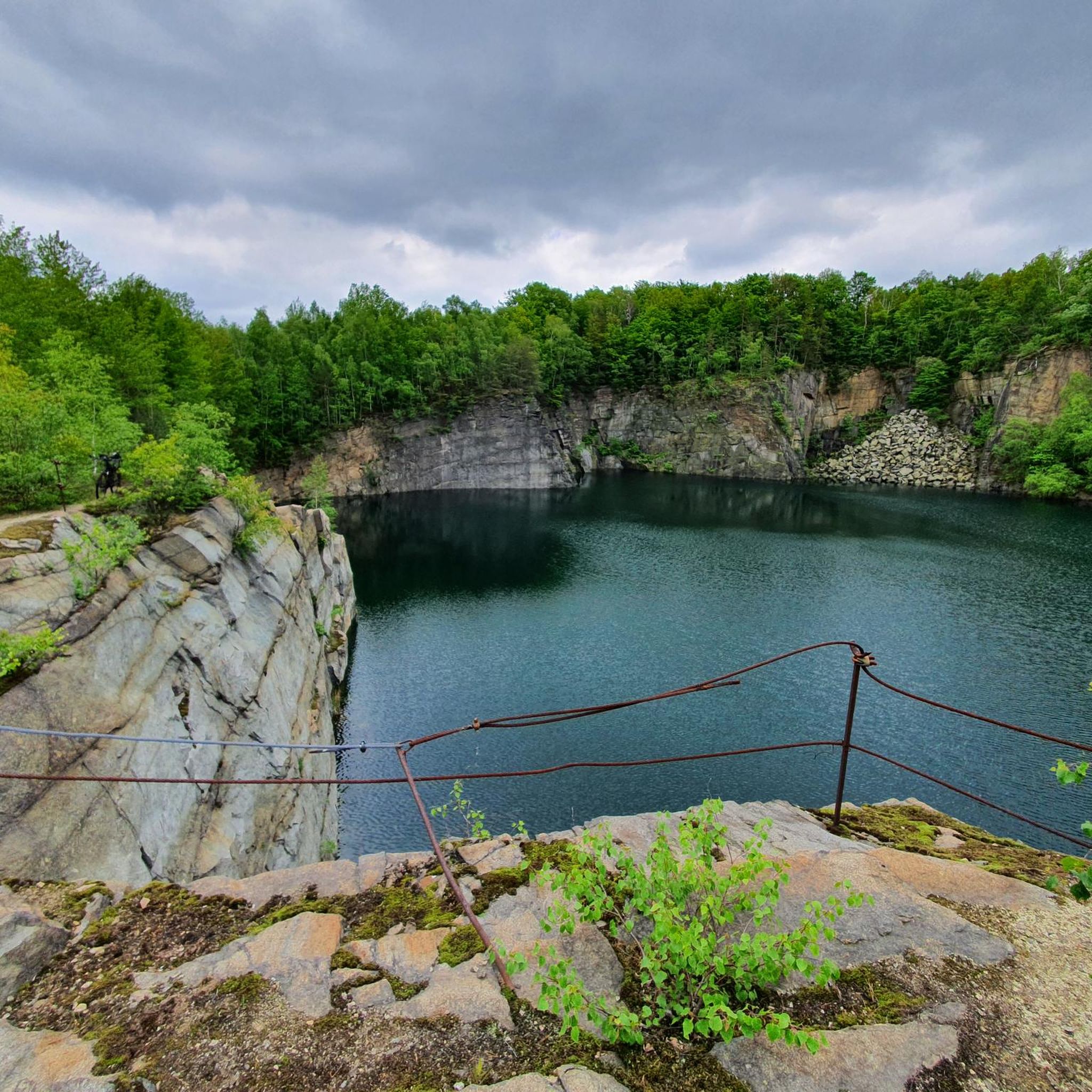
Great covered resting place with a great view of the lake and its very beautiful surroundings.
0
0
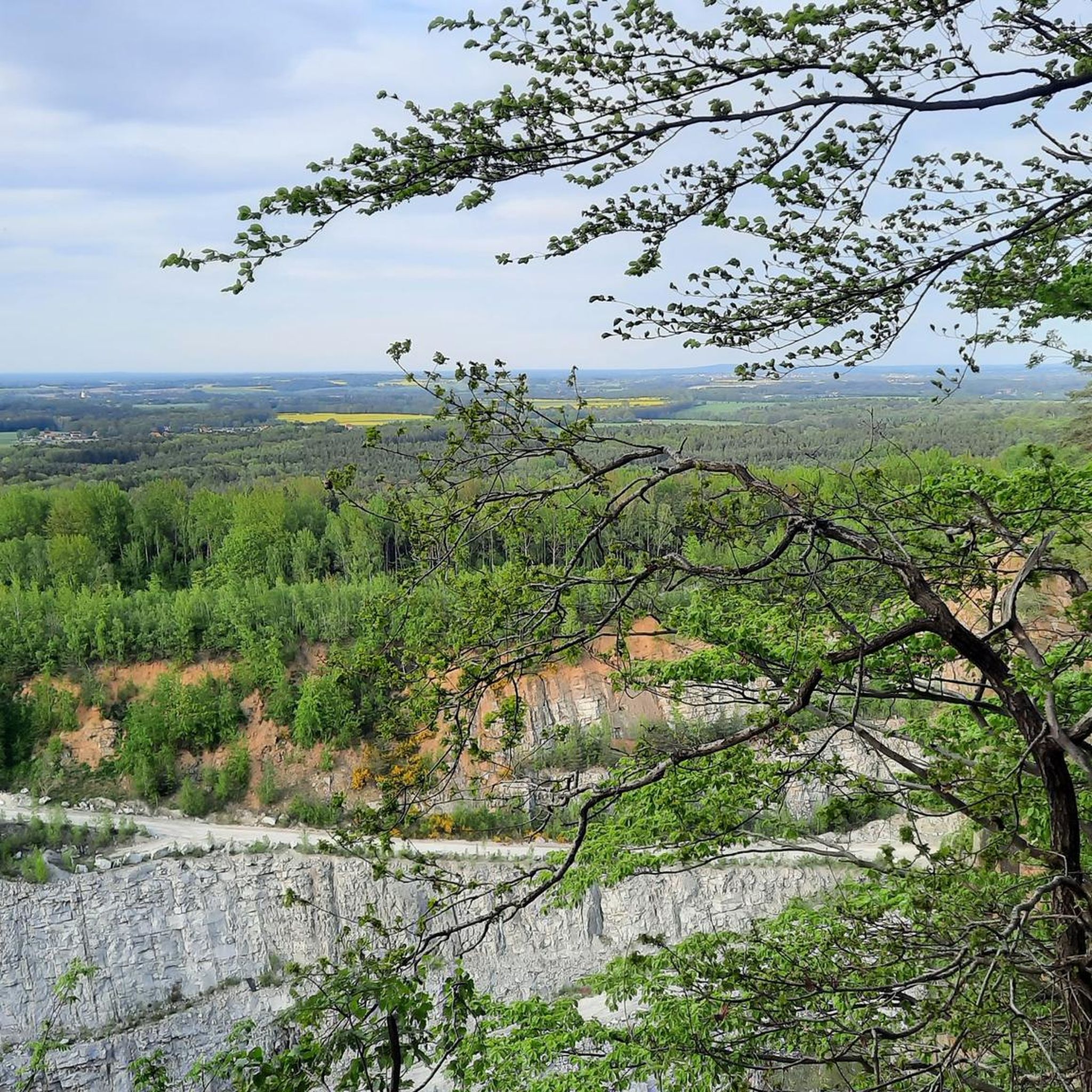
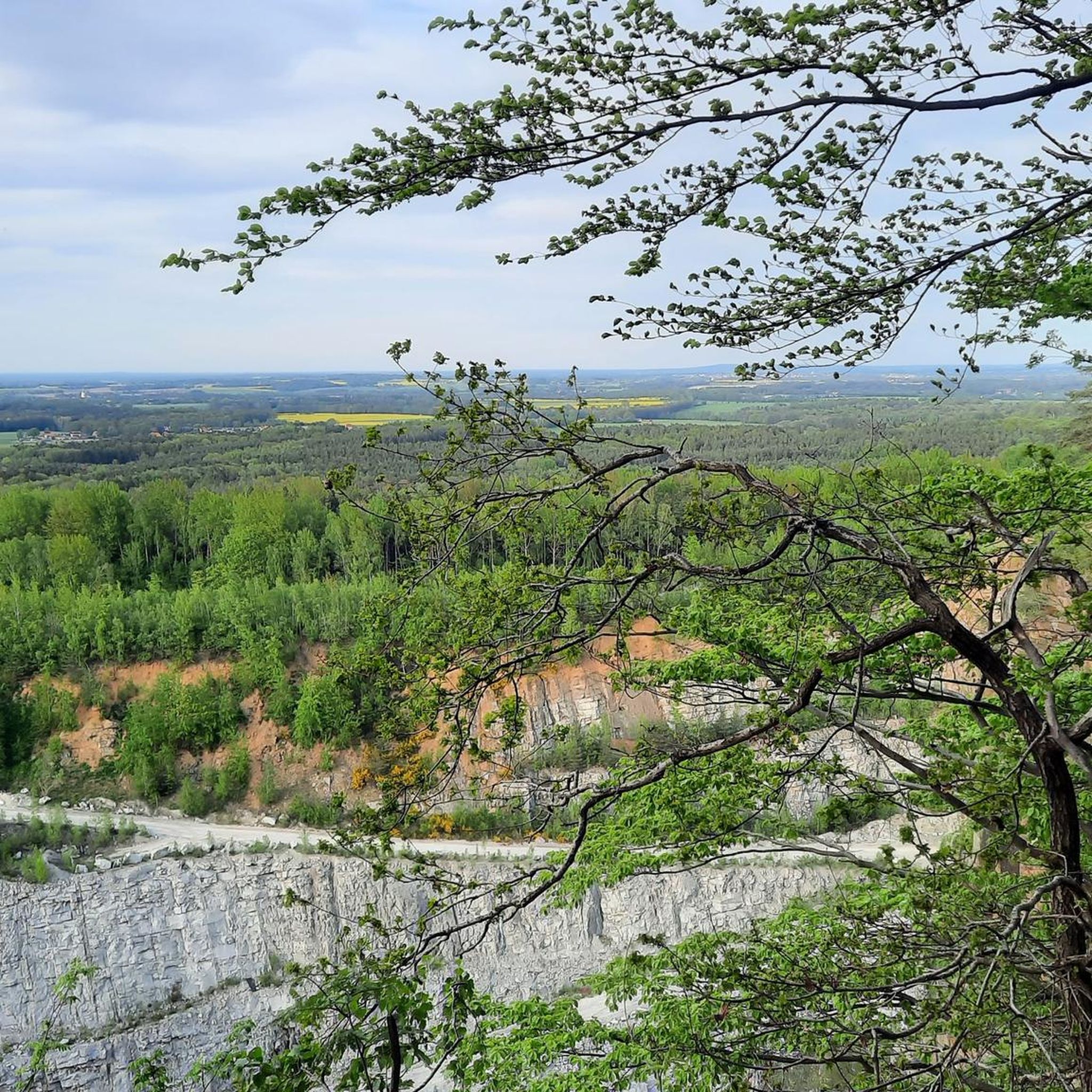
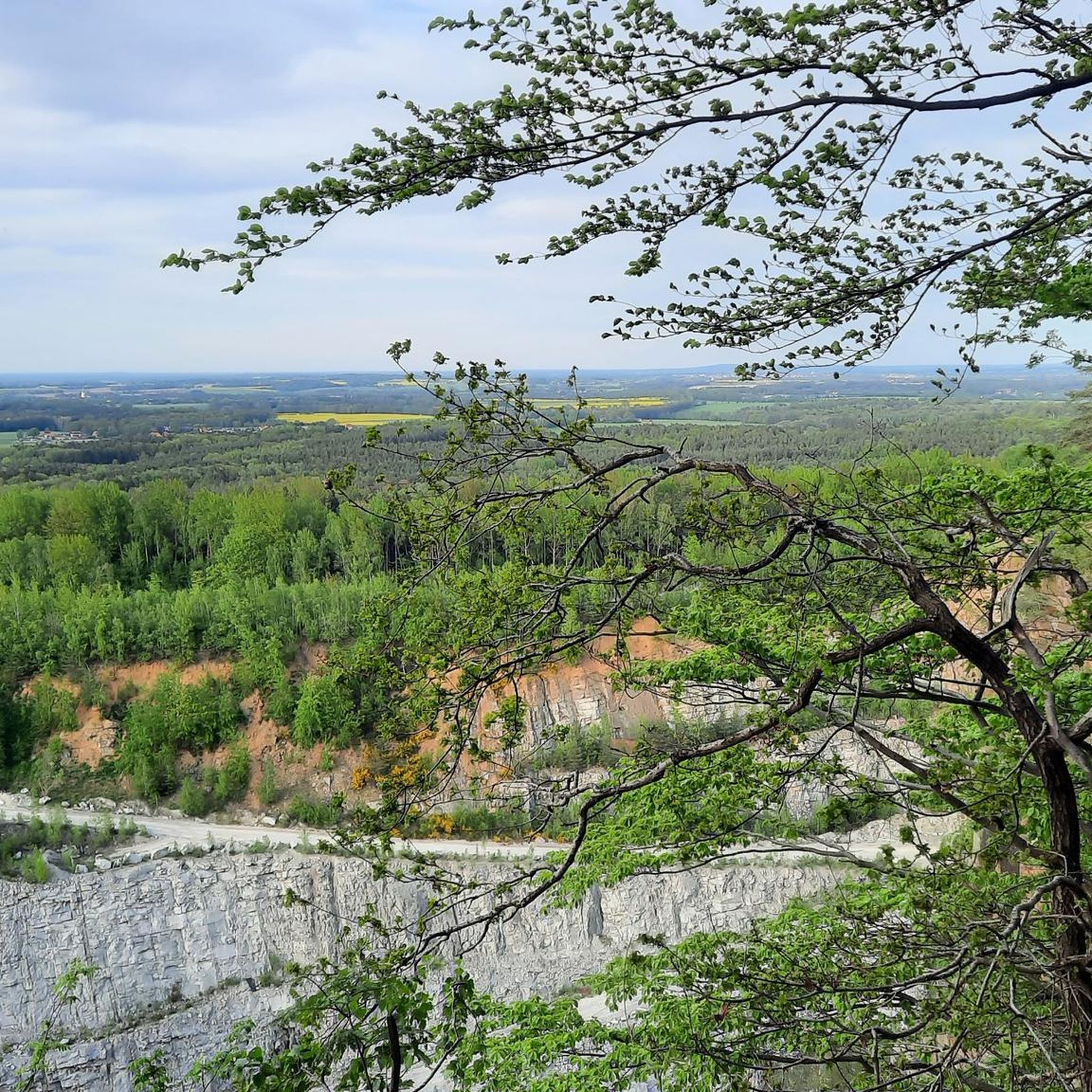
Strong view of the open pit, but be careful with children.
1
0
You should have seen it, the tiny tower on the outskirts of the village.
0
0
Historical museum, shows how the granite was worked.
0
0
Frequently Asked Questions
What kind of terrain can I expect on hikes around Demitz-Thumitz?
Hiking around Demitz-Thumitz features diverse landscapes at the edge of the Lusatian Mountains. You'll encounter rolling hills, idyllic valleys, and picturesque forests. The region is also known for its granite mining history, so routes often include former quarries and the impressive Demitz-Thumitz Railway Viaduct. Many trails also pass by scenic lakes, such as the Demitz-Thumitz Quarry Lake.
Are there easy hiking options suitable for beginners or casual walkers?
Yes, Demitz-Thumitz offers several easy hiking options. For example, the Demitz-Thumitz Quarry Lake – Demitz-Thumitz Railway Viaduct loop from Demitz-Thumitz is an easy 2.8-mile (4.5 km) trail that takes about 1 hour 20 minutes to complete, leading through varied terrain including the quarry lake and viaduct.
What are some notable natural features or landmarks to see while hiking?
The region is rich in natural and historical landmarks. You can explore sites related to the area's granite mining history, such as the Demitz-Thumitz Railway Viaduct and former quarries like Lehmloch Quarry and Tröbigau Quarry. The Valtenberg Summit and Mountain Inn, the highest elevation of the Lusatian Bergland, offers panoramic views from its König-Johann-Turm observation tower. Don't miss the Dreisesselstein, an unusually shaped granite block with three notches, which is a natural monument.
Are there any circular hiking routes in Demitz-Thumitz?
Yes, many of the popular routes in Demitz-Thumitz are circular. For instance, the Demitz-Thumitz Railway Viaduct – Mäuseturm and Lehmloch Quarry loop from Demitz-Thumitz is a 4.7-mile (7.6 km) circular trail, and the Dreisesselstein – Demitz-Thumitz Quarry Lake loop from Demitz-Thumitz is a moderate 7.2-mile (11.6 km) circular path.
What do other hikers say about the trails in Demitz-Thumitz?
The routes in Demitz-Thumitz are highly rated by the komoot community, with an average score of 4.6 stars from over 700 reviews. Hikers often praise the diverse landscapes, the historical granite features, and the scenic lake views. Many appreciate the well-maintained paths and the variety of options for different fitness levels.
Can I find longer or more challenging hikes in the area?
While many trails are easy to moderate, Demitz-Thumitz is part of longer, more challenging routes. The Oberlausitzer Bergweg (Upper Lusatian Mountain Trail) and the Nördlicher Kammweg (Northern Ridge Trail) both traverse the area, offering extensive views and insights into the region's cultural heritage. These long-distance trails provide options for those seeking more demanding experiences.
Are there any specific viewpoints or observation towers along the trails?
Yes, the region offers several excellent viewpoints. The Mönchswalder Mountain Hut and Lookout Tower and the Butterberg Observation Tower and Mountain Inn are popular spots. Additionally, the Valtenberg Summit and Mountain Inn, with its König-Johann-Turm, provides panoramic views over the Lusatian Bergland.
What is the best time of year to go hiking in Demitz-Thumitz?
Demitz-Thumitz is enjoyable for hiking throughout much of the year. Spring and autumn offer pleasant temperatures and beautiful scenery with blooming flowers or colorful foliage. Summer is also popular, especially around the lakes. Even in winter, the region can be appealing, with opportunities for winter walks and ice skating on frozen lakes.
Are there any historical sites or cultural attractions integrated into the hiking routes?
Absolutely. The region's "Granitdorf" identity means you'll find historical granite mining sites, including the impressive Demitz-Thumitz Railway Viaduct and former quarries. The Granitroute is a thematic circular path that specifically highlights this history, including the "Alte Steinsäge" (Old Stone Saw Mill) museum. You can also find historical castles nearby, such as Rammenau Baroque Palace.
Are there any unique or less common trails to explore?
For a unique experience, consider the Taucherwald Rundweg. This trail leads through the Taucherwald, a former military restricted area, where hikers can explore abandoned bunker facilities, offering a different perspective on the region's history and landscape.
What kind of facilities or amenities can I find along the trails, such as places to eat?
While specific amenities vary by trail, you can find mountain inns and huts in the broader area. Notable options include the Picho-Baude Mountain Inn, the Luchsenburg Forest Lodge, and the mountain inns at Valtenberg Summit and Butterberg Observation Tower, which often offer refreshments and meals.
Most popular routes around Demitz-Thumitz
Most popular attractions around Demitz-Thumitz

Get inspired with the komoot mobile app


Explore more
Browse the best Hikes in other regions.
