The best cycling routes around Национални парк Фрушка гора
4.6
(120)
1,046
riders
28
rides
Touring cycling around Национални парк Фрушка гора offers diverse landscapes within Serbia's oldest national park. The region features lush deciduous and coniferous forests, rolling hills, vast meadows, and picturesque vineyards. Its unique geological history as an ancient island contributes to varied terrain, including numerous stream valleys. Elevations such as Crveni Čot (548 m) and Iriški Venac (509 m) provide panoramic views.
Best touring cycling routes around Национални парк Фрушка гора
- The most popular touring cycling route is Iriški Venac TV…
Last updated: May 3, 2026
5.0
(4)
13
riders
Hard bike ride. Very good fitness required. Mostly paved surfaces. Suitable for all skill levels.
8
riders
Hard bike ride. Very good fitness required. Mostly paved surfaces. Suitable for all skill levels.

Sign up for free
5
riders
43.9km
03:06
840m
840m
Hard bike ride. Very good fitness required. Mostly paved surfaces. Suitable for all skill levels.
4
riders
64.1km
04:19
1,040m
1,040m
Hard bike ride. Very good fitness required. Mostly paved surfaces. Suitable for all skill levels.
5.0
(1)
3
riders
34.7km
02:33
740m
740m
Hard bike ride. Very good fitness required. Mostly paved surfaces. Suitable for all skill levels.
Get access to more routes and recommendations from other explorers.
Sign up for free
Already have an account?
Our route recommendations are based on thousands of hikes, rides, and runs completed by other people on komoot.
Start today with a free account
Your next adventure awaits.
Login or Signup
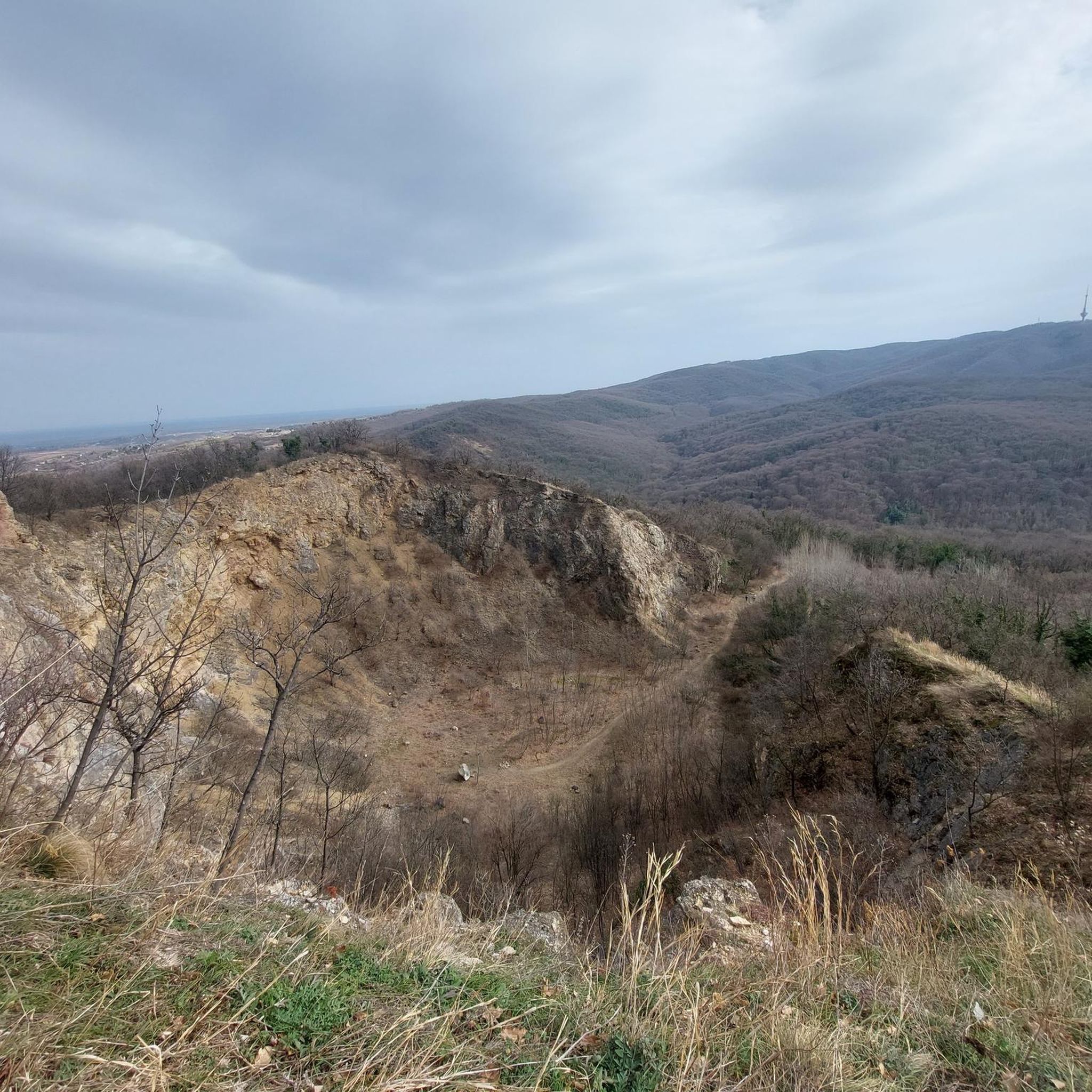
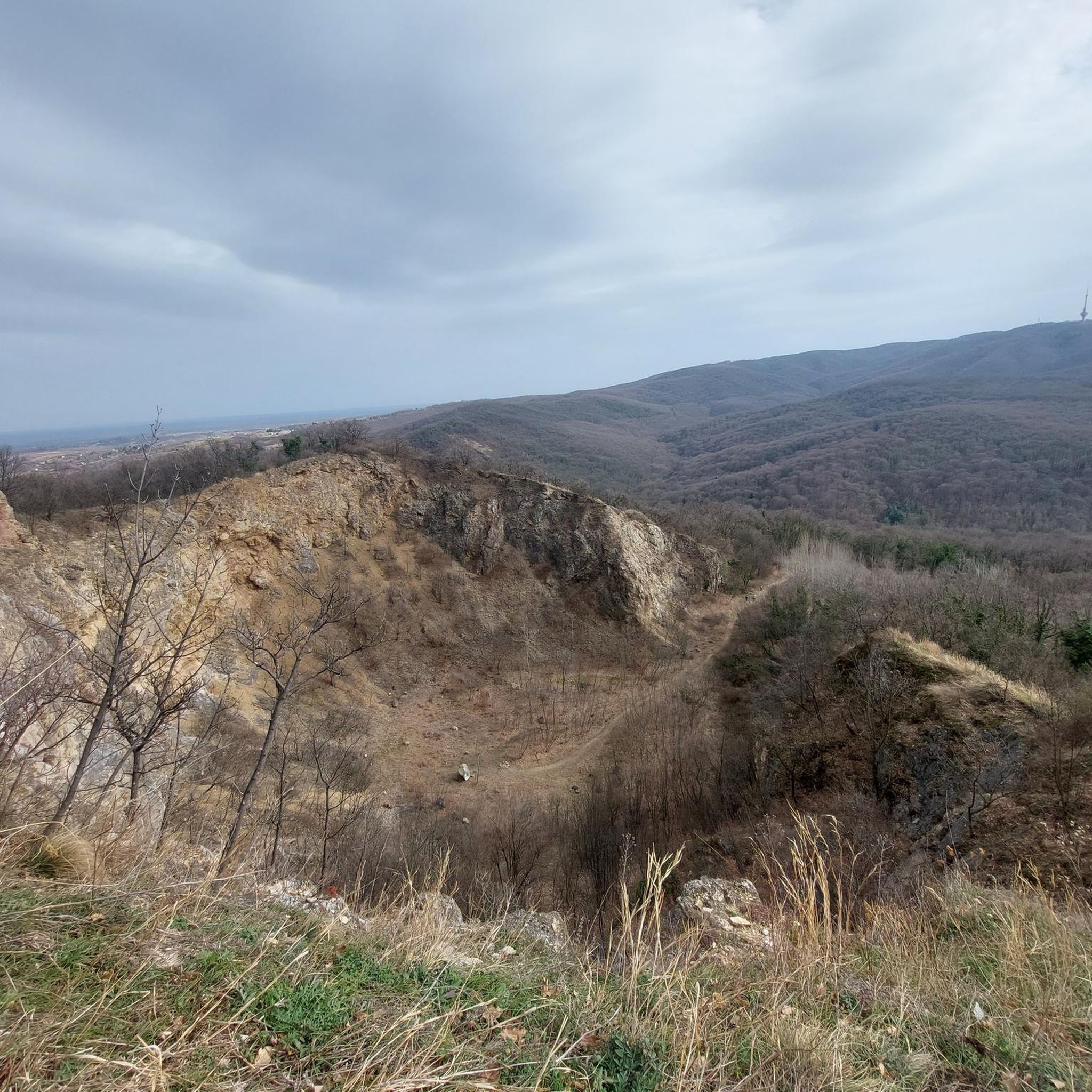
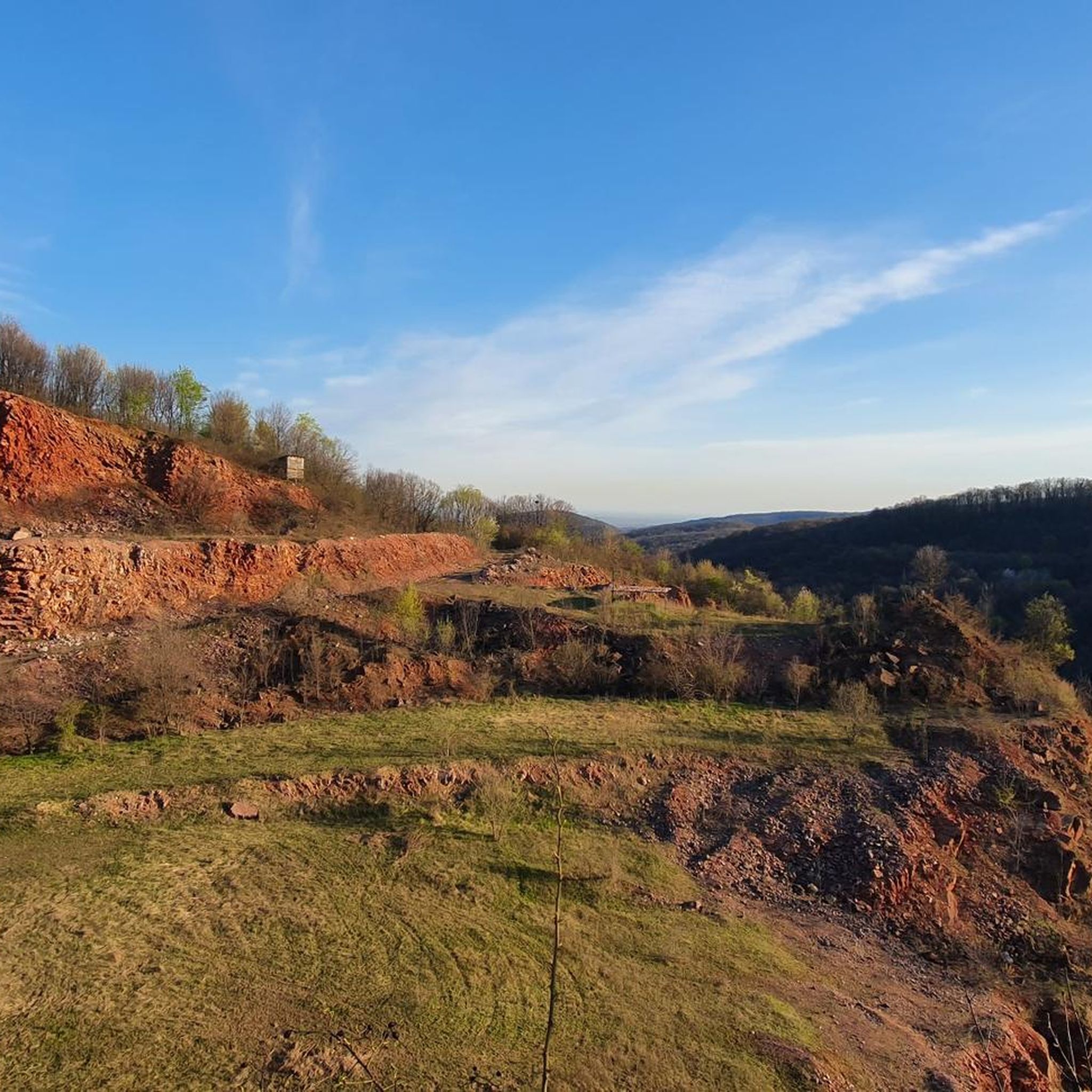
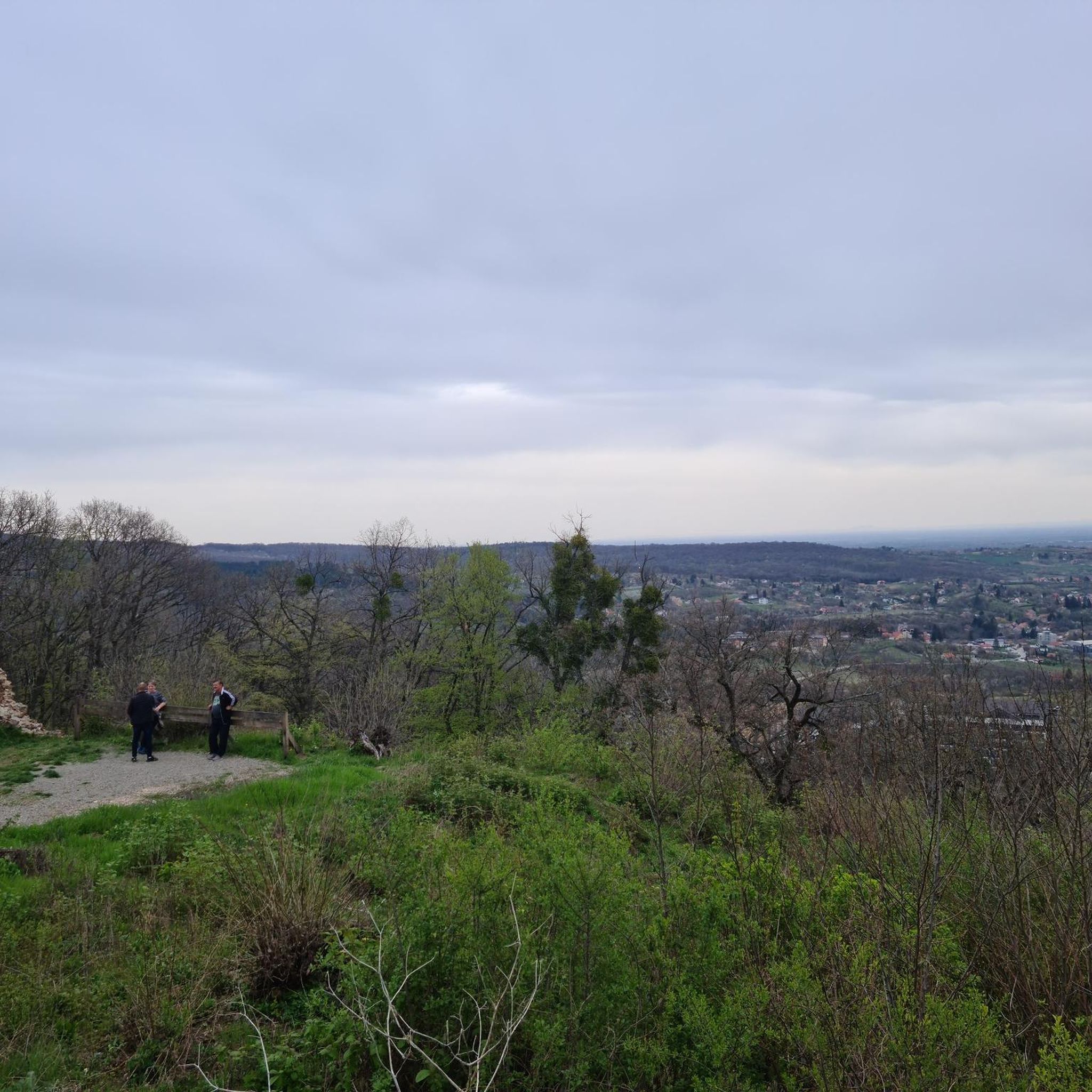

Tips from the Community

It was founded between 1509 and 1514 by Saint Maksim Brancović. It was originally planned to be converted into a mausoleum for the Branković family.
1
0

After this climb from Bešenovačko jezero towards Bešenovo, you will be able to enjoy a nice downslope ride all the way to Veliki Radinci. Low traffic, nice asphalt.
0
0

The building is a good example of modernist architecture that was dominant in Yugoslavia between the two world wars. Although the author of the hotel was Marjan Ivačić, the original project was adapted by Đorđe Tabaković, one of the leading architects of Yugoslav modernism. The hotel was erected in 1935 on the initiative of the Mountaineering Society "Fruška Gora." The society was founded in 1924 to popularize and develop local tourism, mountaineering, and re-connection with nature. Among the founders was the lawyer Ignjat Pavlas (1886-1942), a pre-war Yugoslav patriot and leader of anti-Axis demonstrations held in Novi Sad on the 27th of March 1941, as well as Vasa Stajić, a famous Serbian intellectual, politician, and anti-fascist. In the Youth Organization of the Mountaineering Society "Fruška Gora," some prominent communist and anti-fascist activists were active, such as Branko Bajić (1911-1942), a member of the Regional Committee of KPJ for Vojvodina. He used this organization as a cover to organize camping meetings of Communist Youth from the Vojvodina province on Fruška Gora before the war started. During the war, Hotel "Venac" and its surroundings were one of the most important fascist strongholds in the Fruška Gora hills, and the hotel was occupied by German and Croatian military units throughout the conflict. Iriški Venac region was liberated by the 7th Vojvodina Brigade in the middle of October 1944. After the war, the hotel was renovated and used for tourist accommodation until the civil war in Yugoslavia in the 1990s, when the hotel was transformed into a refugee center for Serbian people from Bosnia and Croatia. After their resettlement, the hotel was closed down and left to decay, which remains the case to this day. [This site is part of the Liberation Routes cycling tour "The Danube to Victory Route" (58km)] https://www.komoot.com/tour/1933369594?share_token=aRc7kQYJ01cywoOlRPXzWvplRxrDI3K22D17Rs90xCFiVo5TvF&ref=wtd
0
0
Before World War II, Iriški Venac was one of the central points of Fruška Gora, located at the intersection of Grebenski Put (Ridge Road), today called the Partizanski Put, and the road between Irig and Sremska Kamenica. As an important communication center, Iriški Venac was under the armed control of the occupiers throughout the war and was only liberated in October 1944 by the units of the 7th Vojvodina Brigade. The monument known as "Freedom", dedicated to the fallen fighters and the National Liberation Movement (NOP) of Vojvodina, is one of the first more representative monuments erected in the territory of Vojvodina, and it is also among the most impressive monuments erected in the first decade after liberation across the entire territory of Yugoslavia. Even though Iriški Venac was not of major importance for the Fruška Gora partisans, it was chosen for the location of this monument, being the tourist and traffic center of the mountain. It was unveiled on July 7th, 1951, on the 10th anniversary of the Uprising in Serbia, in the presence of around 100,000 citizens. The author of the monument is the renowned sculptor Sreten Stojanović. "Freedom" belongs to the group of figurative-architectural monuments. The monument is built of Belovac stone and paved with Motajnica granite. The total height of the monument is 36 meters, and the figure of a woman - the personification of the ideal of freedom - at the top of the obelisk is 7 meters high. By some accounts, the figure of the woman is oriented towards Bosnia, because that is where most of the partisans from Srem and the entire Vojvodina province went to combat. In front of the obelisk, on a high pedestal, there is a composition made up of six figures, symbolizing the people of Srem and Vojvodina who rose up in revolt. The base of the monument is framed by a bronze relief 50 meters long, which, through several chronological and thematic units, presents the development and course of the People's Liberation Struggle (NOB) in the area of Srem. Among other things, the relief depicts the entry and terror of the occupiers, the beginning of the uprising, the cooperation between the common people and the partisans, armed conflicts with the occupiers, and the final victory. [This site is part of the Liberation Routes cycling tour "The Danube to Victory Route" (58km)] https://www.komoot.com/tour/1933369594?share_token=aRc7kQYJ01cywoOlRPXzWvplRxrDI3K22D17Rs90xCFiVo5TvF&ref=wtd
1
0
[There are two historical monuments. The more visible one is a large stone block surrounded by smaller stones, but there is also another, smaller memorial nearby.] - Monument to Three Fallen Partisans This location was one of the important reconnaissance points for the Danube Partisan Detachment, known as “Lipa” (which means Linden tree). On the first day of the Great enemy offensive, 25th of August 1942, two prominent fighters of the 3rd Company of the Danube Detachment, Svetozar Golubović Mitraljeta and Paja Zarić King, as well as courier Vasa Vojnović Crni, were killed here after encountering German units. The rest of the 3rd Company successfully broke through the enemy encirclement and retreated to the Čortanovci forests near the Danube shores. - Monument of the 4th Company of the Danube Partisan Detachment The Danube Detachment was formed in February 1942, initially consisting of groups of fighters from Irig and Krušedol. While the Fruška Gora Detachment operated in the western part of the mountain, the Danube Detachment focused its activities on the eastern part of Fruška Gora. Both detachments grew in numbers by the summer of 1942, expanding to five companies, which operated mainly in the area between Iriški Venac and Sremski Karlovci, but also established contacts with other Danube locations in eastern Srem. At the height of its activity, the Danube Detachment's companies would raid villages, burn archives, drive out occupying forces, carry out sabotage, and seize weapons and food. The further growth of the Danube Detachment was halted by the Great Enemy Offensive in August 1942, which did not result in many casualties among the partisans but temporarily severed the ties between the local population and the partisans due to brutal fascist terror in the villages. After most fighters were sent to Bosnia in November 1942, where the first Vojvodina brigades were formed, the remaining fighters of the Fruška Gora and Danube Detachments formed the First Srem Detachment in 1943. Throughout Fruška Gora, along the Partizanski put, during the 1970s and 1980s, memorials were erected. These are large stone blocks marking the locations of the partisan detachments and their companies. [This site is part of the Liberation Routes cycling tour "The Danube to Victory Route"] https://www.komoot.com/tour/1933369594?share_token=aRc7kQYJ01cywoOlRPXzWvplRxrDI3K22D17Rs90xCFiVo5TvF&ref=wtd
0
0
The building is a good example of modernist architecture that was dominant in Yugoslavia between the two world wars. Although the author of the hotel was Marjan Ivačić, the original project was adapted by Đorđe Tabaković, one of the leading architects of Yugoslav modernism. The hotel was erected in 1935 on the initiative of the Mountaineering Society "Fruška Gora." The society was founded in 1924 to popularize and develop local tourism, mountaineering, and re-connection with nature. Among the founders was the lawyer Ignjat Pavlas (1886-1942), a pre-war Yugoslav patriot and leader of anti-Axis demonstrations held in Novi Sad on the 27th of March 1941, as well as Vasa Stajić, a famous Serbian intellectual, politician, and anti-fascist. In the Youth Organization of the Mountaineering Society "Fruška Gora," some prominent communist and anti-fascist activists were active, such as Branko Bajić (1911-1942), a member of the Regional Committee of KPJ for Vojvodina. He used this organization as a cover to organize camping meetings of Communist Youth from the Vojvodina province on Fruška Gora before the war started. During the war, Hotel "Venac" and its surroundings were one of the most important fascist strongholds in the Fruška Gora hills, and the hotel was occupied by German and Croatian military units throughout the conflict. Iriški Venac region was liberated by the 7th Vojvodina Brigade in the middle of October 1944. After the war, the hotel was renovated and used for tourist accommodation until the civil war in Yugoslavia in the 1990s, when the hotel was transformed into a refugee center for Serbian people from Bosnia and Croatia. After their resettlement, the hotel was closed down and left to decay, which remains the case to this day. [This site is part of the Liberation Routes Hiking Tour "The Liberation Walk" (6km)] https://www.komoot.com/tour/1881448190?share_token=aQX2irH9OHv16zbghqkWFCaaumiVA4C634I6ri4nXXDKLs8eSK&ref=wtd
0
0
The Jovičić family from Jazak joined the People's Liberation Movement (NOP) in early 1941. The most prominent member of this family was Dušanka (1923-1998). From the very beginning of the uprising, Dušanka, her parents, and her brothers supported the activities of the Fruška Gora Partisan Detachment, and from the spring of 1942, they participated in combat operations with partisan units. Dušanka initially served as a courier and later as a fighter in the Fruška Gora Detachment. From September 1943, she was the political commissar of the 4th Battalion of the 3rd Vojvodina Brigade. She fought with Vojvodina units in Bosnia, Herzegovina, Montenegro, and Serbia, and was wounded three times during the final operations for the liberation of Yugoslavia. Dušanka's father, Sava, was killed in the basement of the Vrdnik Monastery Mala Ravanica, while her mother and two sisters perished in Jasenovac concentration camp. Her older brother, Milan, died in the battles for the liberation of Šabac. In 1951, Dušanka and her two surviving brothers, Georgije and Branko Jovičić, erected a memorial in the form of a gravestone dedicated to all the fallen members of their family. After the war, Dušanka married People's Hero Kosta Nađ, a volunteer in the Spanish Civil War, prominent partisan commander and general of 3rd Yugoslavian Army. [This site is part of the Liberation Routes cycling tour "Fruška Gora Liberation Circuit"] https://www.komoot.com/de-de/tour/1870928931?share_token=arNOGj2dKOO605JTe2ZpbVW7s7N624smYsy5No7bVl78oCzjv4&ref=wtd
0
0
The monument dedicated to the victims of fascism and the fallen fighters of the People’s Liberation Movement (NOP) in Jazak was erected in 1956. The monument is constructed from stone blocks arranged in the shape of a truncated pyramid, with a red star on top. Embedded in it are marble plaques with the names of 200 fallen fighters and civilian victims. This monument is a typical example of the early memorials erected in the first decade after the war. Its form is similar to the older monuments erected in the Balkan region following previous wars. As is the case here, these monuments were usually placed in the center of settlements, near churches and other important buildings, such as post offices, municipal offices, cultural centers, or local shops. Most of these monuments were later replaced with more modern, artistically and architecturally designed memorials. In the 1980s, newer metal inscriptions were added around the monument, highlighting key events from the village’s history during World War II. [This site is part of the Liberation Routes cycling tour "Fruška Gora Liberation Circuit"] https://www.komoot.com/de-de/tour/1870928931?share_token=arNOGj2dKOO605JTe2ZpbVW7s7N624smYsy5No7bVl78oCzjv4&ref=wtd
0
0
Frequently Asked Questions
What kind of terrain can I expect when touring cycling in Nacionalni park Fruška gora?
Nacionalni park Fruška gora, once an island in the ancient Pannonian Sea, offers a diverse landscape. You'll encounter rolling hills, lush deciduous and coniferous forests, vast meadows, and picturesque vineyards. The terrain includes numerous stream valleys, with routes ranging from paved roads to more challenging unpaved segments, some featuring significant elevation changes.
Are there touring cycling routes suitable for families or beginners in Fruška gora?
Yes, Fruška gora offers a variety of cycling routes catering to different skill levels. While many routes feature significant elevation, there are shorter, easier options available, particularly on paved roads. The park's diverse network allows families and beginners to find suitable paths to enjoy the scenery.
What natural attractions can I see along the touring cycling routes in Fruška gora?
The park is rich in natural beauty. You can discover unique geological features, various stream valleys, and scenic viewpoints offering panoramic vistas. Notable natural highlights include the Dumbovački Waterfall and the Orlovo Bojište Viewpoint. The park is also home to over 1,000 plant species and diverse fauna.
Are there any cultural or historical landmarks to visit while cycling in Fruška gora?
Absolutely. Fruška gora is known as the 'Serbian Holy Mountain' due to its 16 preserved Orthodox monasteries, built between the 15th and 18th centuries. These historical and spiritual sites, such as Krušedol, Novo Hopovo, Staro Hopovo, and Velika Remeta Monasteries, can be incorporated into your cycling tours. You might also encounter monuments like the Monument to Freedom (Spomenik Slobode).
What is the best time of year for touring cycling in Nacionalni park Fruška gora?
The park is generally suitable for cycling from spring through autumn. Spring brings lush greenery and comfortable temperatures, while autumn offers beautiful foliage. Summer can be warm, but the forested areas provide shade. It's always advisable to check local weather conditions before planning your trip.
Are there any circular touring cycling routes available?
Yes, many of the touring cycling routes in Fruška gora are designed as loops, allowing you to start and end at the same point. For example, the Iriški Venac TV tower memorial – Fruška Gora TV Tower loop from Fruska Gora National Park is a popular circular option, as is the Zmajevac Viewpoint – Iriški Venac TV tower memorial loop from Vrdnik Monastery.
Where can I park my car when visiting Fruška gora for cycling?
Popular tourist centers and picnic areas like Iriški Venac and Stražilovo often have designated parking facilities. When planning your route, look for trailheads near these areas or other established parking spots within the national park.
Can I bring my dog on the touring cycling trails in Fruška gora?
Nacionalni park Fruška gora is generally welcoming to visitors with dogs, but it's important to keep your dog on a leash, especially in protected areas and near wildlife. Always ensure you clean up after your pet to maintain the park's natural environment.
What are the typical distances and durations for touring cycling routes in Fruška gora?
Routes vary significantly. You can find shorter loops like the Iriški Venac – Zmajevac loop (9 km, 35 minutes) for a quick ride. More challenging routes, such as the Дебела липа – Бели камен loop from Vrdnik Monastery, can be over 60 km and take more than 4 hours, featuring substantial elevation gain.
What do other touring cyclists enjoy most about cycling in Nacionalni park Fruška gora?
The area is highly rated by the komoot community, with an average score of 4.6 stars. Reviewers often praise the diverse landscapes, the blend of natural beauty with historical monasteries, and the variety of routes that cater to different fitness levels, from easy loops to challenging rides with significant elevation.
Are there options for bike rentals or guided cycling tours in Fruška gora?
Yes, bike rentals and equipment are available at the Info Centre at Iriški Venac. Guided cycling tours are also an option, providing customized routes and necessary gear for those who prefer a structured experience.
Are there any cafes or places to eat along the cycling routes?
The region has a long tradition of viticulture, with numerous vineyards and over 60 family-owned wine cellars where you can sample local wines. Picnic areas like Iriški Venac and Stražilovo are ideal for rest stops. You'll also find various cafes and restaurants in the towns and villages surrounding and within the park.
How many touring cycling routes are available in Nacionalni park Fruška gora?
There are over 25 touring cycling routes available in Nacionalni park Fruška gora, offering a wide range of distances and difficulty levels to explore the park's diverse landscapes.
Most popular routes around Национални парк Фрушка гора
Most popular attractions around Национални парк Фрушка гора

Get inspired with the komoot mobile app


Explore more
Browse the best Cycling routes in other regions.
