The 20 Most Amazing Peaks in Abruzzo
Best mountain peaks in Abruzzo are found within its rugged Apennine terrain, home to the Gran Sasso, Majella, and Sirente-Velino massifs. This central Italian region is characterized by extensive national parks and nature reserves, protecting a rich diversity of flora and fauna. The landscape features high peaks, vast plateaus, and deeply carved valleys, offering varied experiences for explorers.
Best mountain peaks in Abruzzo
- The most popular mountain peaks is Monte Aquila Summit, a summit that offers a panoramic view of the Gran Sasso area. This peak is characterized by a metallic red cross at its top.
- Another must-see spot is Corno Grande Western Summit, a summit that is the highest peak on the Italian Peninsula at 2,912 meters above sea level. It is part of the Gran Sasso massif and its northern corrie holds Europe's southernmost glacier.
- Visitors also love Campo Imperatore Summit, a summit that serves as the arrival point of the Campo Imperatore road at an altitude of 2,100 meters. Various hiking trails start from here, including routes to the western peak of Corno Grande.
- Abruzzo is known for its high summits, challenging climbs, and scenic mountain passes. The region offers a variety of mountain peaks to see and explore, from the limestone formations of Gran Sasso to the vast plateaus of Majella.
- The mountain peaks in Abruzzo are appreciated by the komoot community, with over 260 upvotes and more than 230 photos shared by visitors.
Last updated: October 9, 2026
Corno Grande Western Summit
Highlight • Summit
You can hike it as a loop, following the 'direttissima' sign going up, and the main trail coming down. Also helps to avoid the weekend crowds in the morning ;-) Campo Imperatore is the starting point komoot.de/tour/3906922
Tip by

Monte Aquila Summit
Highlight • Summit
Translated by Google •
Tip by

Sign up now to discover places like this
Get recommendations on the best single tracks, peaks, & plenty of other exciting outdoor places.
Campo Imperatore Summit
Highlight • Summit
Translated by Google •
Tip by

Monte Camicia summit
Highlight • Summit
Start at the well-signposted parking lot at 20 degrees and sun, sunshine stayed up to the summit but don't underestimate the cold wind, clouds can come up quickly and three days ago we encountered thunderstorms and hail at Monte Brancastello (2385), about 5 km as the crow flies , Weather does not necessarily stick to the forecast.
Total time up/down 5.5 hours, including a 0.5 hour break at the summit. The panorama is impressive!
If you can ( still ) and want to, the neighboring Monte Prena is also interesting, but for both together really good physical condition is required!
Translated by Google •
Tip by

Monte Amaro Summit
Highlight • Summit
Translated by Google •
Tip by

Passo San Leonardo
Highlight • Mountain Pass
Translated by Google •
Tip by
Capo la Serra Pass
Highlight • Mountain Pass
Translated by Google •
Tip by

Majelletta Summit
Highlight • Summit
Translated by Google •
Tip by

Maccione Pass
Highlight • Mountain Pass
Translated by Google •
Tip by

Monte Salviano Pass
Highlight • Mountain Pass
Translated by Google •
Tip by

Sign up for free to discover even more peaks in Abruzzo.
Already have an account?
Start today with a free account
Your next adventure awaits.
Popular around Abruzzo
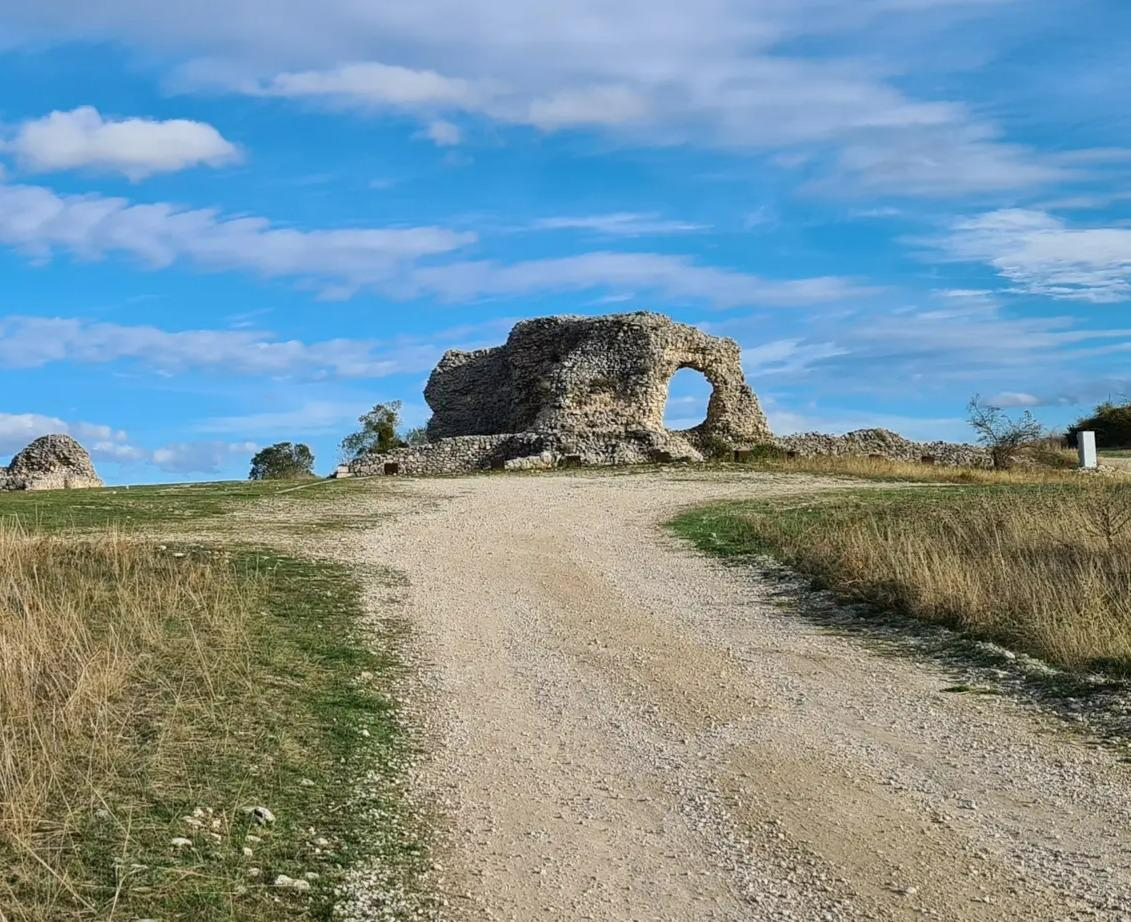
Tratturo Magno – On the roads of transhumance
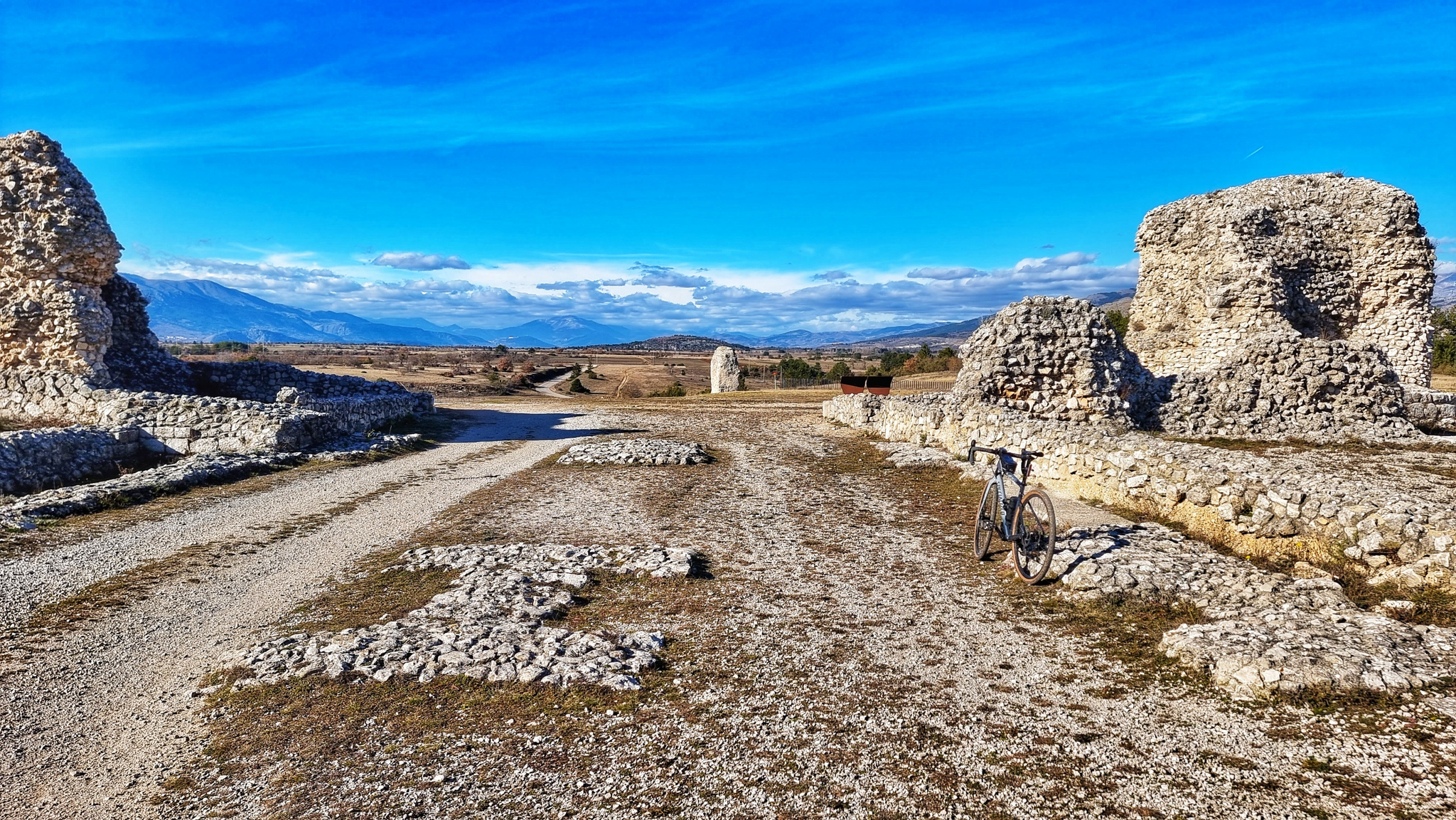
The Tratturo Magno – From the Apennines to the TavoIiere, 300 kilometers
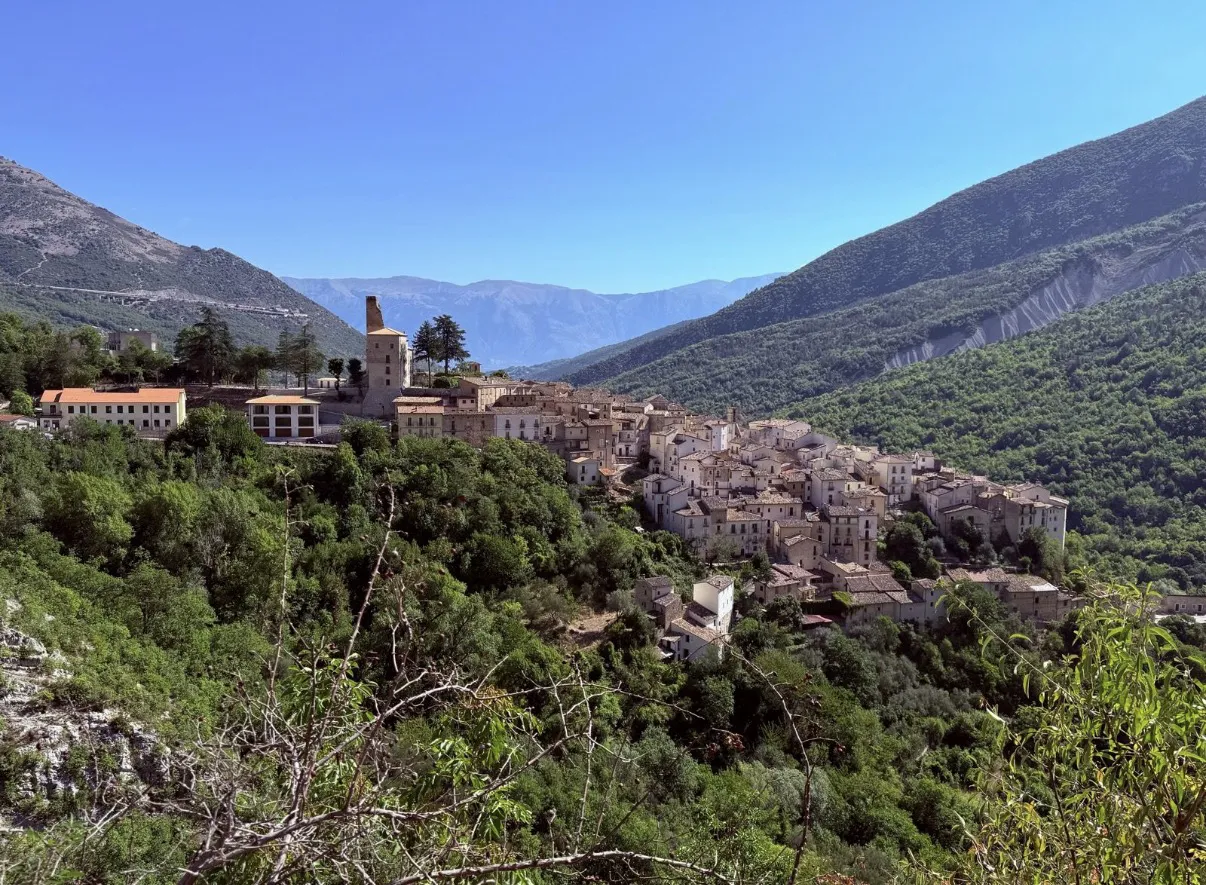
Cycling in Abruzzo – among villages, history and nature
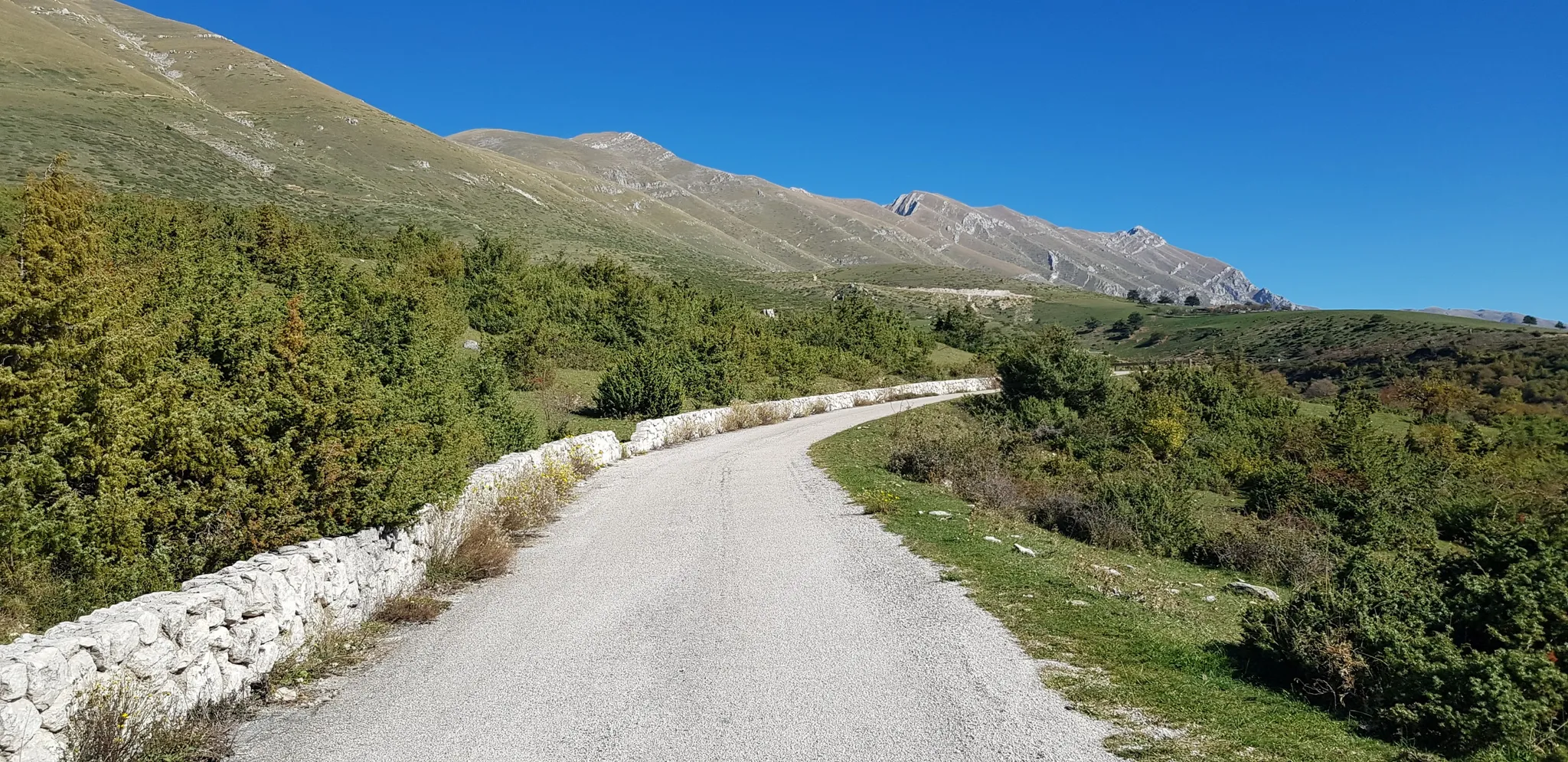
The Apennine Cycleway (Part 2) - From Umbria to Calabria
Hike along shepherds tracks in Italy – Via del Tratturo
Hike from Rome to the Adriatic Sea – Way of St. Thomas
A colourful journey – hike in the Simbruini Mountains
Interiora - A Journey into the Remote Areas of Italy
Natural Park Walk – part 4 from Accumoli to L'Aquila
Trieste to Santa Maria di Leuca – the Adriatic Cycle Route
Other adventures in Abruzzo


Tips from the Community

The small sacred monument encountered on Monte AMARO is – in addition to the view on offer – perhaps also a fitting place for a brief moment of reflection. Christiane Völkel commented a few years ago on the wonderfully fitting sentence by the Italian poet Francesco Petrarca (who lived in the 14th century), "One always has the sky above oneself," as follows: "What's the use of praying? The question moves me (...) I have found the answer and the certainty for myself that when I pray I am with the Lord, or rather, that He is often noticeably closer to me when I pray than usual. This leaves me the opportunity to pour out my heart to Him (...) This familiarity with Him makes me believe in Him."
0
0

The endpoint by car is the large mountain square Piazzale di Campo Imperatore (2,130 meters). The breathtaking mountain road SS17bis leads you from the valley right up to the doors of the Hotel Campo Imperatore and the Astronomical Observatory. Why shouldn't you miss Campo Imperatore? Because here you are right in the middle of the high mountains without a strenuous climb. At an altitude of 2,130 meters, you are surrounded by impressive mountain peaks and begin one of the most beautiful hiking areas in the Apennines. The car journey there is an experience in itself: a winding road through the spectacular landscape of 'Little Tibet', where you often encounter horses, cows, and large flocks of sheep along the way. At the top, you will also find a unique mix of nature, history, and culture, with the historic hotel where Mussolini was imprisoned, the highest church in Italy, the astronomical observatory, and cozy food trucks where you can enjoy local specialties such as fresh pecorino and generously filled sandwiches.
5
0

after 13 kilometers of climbing, it's a very appreciable refreshment stop
0
0

Given the steepness, trekking poles are recommended.
0
0

It has nothing to envy of the equally beautiful Dolomite landscapes
0
0

The Normal Route is a fairly simple route, except for the last 400 meters, the gully and the ridge, which, being EEA grade (expert equipped hikers), require considerable physical strength and technique. Mountaineering boots are also required, and a helmet is recommended. Since the ridge is also quite technical, it is absolutely not suitable for those with a fear of heights, the elderly, children, or anyone without mountaineering experience.
3
0

what beautiful places to cycle
0
0

A Classic from Campo Imperatore, I recommend excursions even for those who are new to the area, beautiful panorama
0
0
Frequently Asked Questions
What are some of the most notable mountain peaks to explore in Abruzzo?
Abruzzo is home to several impressive peaks across its main massifs. In the Gran Sasso massif, you'll find Corno Grande Western Summit, the highest peak in the Apennines, and Monte Aquila Summit, known for its panoramic views. The Majella massif features Monte Amaro, the second-highest in the Apennines, while Monte Velino is the highest in the Sirente-Velino Regional Park.
How challenging are the mountain peaks in Abruzzo for hikers?
The mountain peaks in Abruzzo offer a range of difficulties. Peaks like Corno Grande Western Summit and Monte Amaro provide challenging climbs, often requiring significant altitude differences and suitable for experienced hikers. However, there are also intermediate options like Monte Aquila Summit, which offers fantastic views without extreme difficulty, and easier rambles on plateaus like Campo Imperatore.
When is the best time to visit Abruzzo for mountain hiking?
The best time for mountain hiking in Abruzzo is typically from late spring to early autumn (May to October). During these months, the weather is generally more stable, and trails are free of snow, especially at lower to mid-altitudes. Higher peaks like Corno Grande can remain snow-covered for much of the year, offering different challenges. Winter is popular for skiing and snowshoeing.
Are there family-friendly mountain hikes available in Abruzzo?
Yes, while many peaks offer challenging ascents, there are options for families. The vast and picturesque Campo Imperatore plateau, accessible via cable car to Campo Imperatore Summit, offers opportunities for rambling and enjoying magnificent views without a full ascent. Some trails around Monte Velino are also described as easy, providing stunning panoramic views.
What kind of wildlife can I expect to see in the Abruzzo mountains?
Abruzzo is renowned for its rich biodiversity, protected by extensive national parks and nature reserves. You might spot rare species such as the golden eagle, Abruzzo chamois, Apennine wolf, and the Marsican brown bear. Deer are also common, particularly around the Majella massif where you might hear them roaring in September.
What historical or cultural sites are near the mountain peaks in Abruzzo?
The Abruzzo mountains are rich in history and culture. The Majella massif, for instance, is home to ancient hermitages built into the rocks, such as Santo Spirito a Majella and San Bartolomeo in Legio. The Sirente-Velino region offers Roman ruins like Alba Fucens and various medieval hamlets with castles and churches, providing fascinating insights into the area's past.
What outdoor activities can I do near the mountain peaks in Abruzzo?
Beyond hiking, Abruzzo offers a variety of outdoor activities. You can find numerous road cycling routes, including challenging ascents to places like Campo Imperatore, as detailed in the Road Cycling Routes in Abruzzo guide. There are also scenic cycling tours, like the Tour of Lake Campotosto, found in the Cycling in Abruzzo guide. Additionally, you can explore beautiful waterfall hikes, such as the Camosciara and Nymphs' Waterfall Trail, highlighted in the Waterfall hikes in Abruzzo guide.
Are there specific routes for rock climbing in Abruzzo?
Yes, the Gran Sasso massif, particularly around Corno Grande Western Summit and Corno Piccolo, is known for offering some of the best rock climbing in Europe. These peaks feature rough vertical walls made of limestone and dolomite, ideal for climbers seeking challenging routes.
What are the views like from the highest peaks in Abruzzo?
From the highest peaks, the views are truly breathtaking. From Corno Grande Western Summit, on clear days, you can see the Adriatic Sea. Monte Amaro offers a magnificent skyline walk with moon-like landscapes. From Monte Velino, it's possible to see as far as St. Peter's in Rome on clear days, providing expansive panoramic vistas across the Apennines.
How long does it typically take to hike Corno Grande?
Hiking Corno Grande Western Summit via the 'via normale' (standard route) from Campo Imperatore is a challenging hike that typically takes around eight hours to reach the summit and return. It requires good physical condition and attention due to steep paths and scree.
What is the difference between hiking in Gran Sasso and Majella massifs?
The Gran Sasso massif, home to Corno Grande Western Summit, is characterized by sharp peaks, deeply carved valleys, and glacial formations, often likened to the Alps. It offers very challenging climbs and rock climbing opportunities. The Majella massif, featuring Monte Amaro, is known for its vast plateaus, mystical atmosphere, and rich flora, with challenging climbs and unique cultural sites like hermitages built into rocks. Both offer rugged beauty but with distinct geological and cultural features.
Are there any mountain passes in Abruzzo that offer great views or cycling opportunities?
Yes, Abruzzo has several scenic mountain passes. Passo San Leonardo, connecting Pacentro to Sant'Eufemia a Majella, offers wonderful views of the Majella and Mount Morrone and is an excellent base for excursions, including to Monte Amaro. It's also popular with cyclists for its gentle slopes. Other passes like Capo la Serra Pass and Maccione Pass also provide great viewpoints and cycling routes.
Most popular routes in Abruzzo
Most popular attractions in Abruzzo

Get inspired with the komoot mobile app


Didn’t find what you were looking for?
Discover Abruzzo’s best peaks and summits by region:
Explore more
See even more amazing summits in Abruzzo with these guides:
