Attractions and Places To See around Ottobeuren - Top 20
Best attractions and places to see around Ottobeuren include a mix of historical sites, religious architecture, and natural river landscapes. Located in the Allgäu region of Bavaria, Ottobeuren is known for its Benedictine Abbey and surrounding areas that offer various points of interest. The region features both cultural landmarks and opportunities to explore the local environment. Visitors can discover a range of attractions, from historic town centers to scenic river crossings.
Best attractions and places to see around Ottobeuren
- The most popular attractions is Iller Adventure Footbridge and Observation Tower, a bridge that spans the Iller river. This location offers views of the river and surrounding landscape, and is a popular spot for hikers.
- Another must-see spot is Iller Suspension Bridge and Observation Tower in Legau, a bridge over the Iller near a barrage. This 80-meter suspension bridge provides access to a semi-natural Iller shore and features a 23-meter high observation deck.
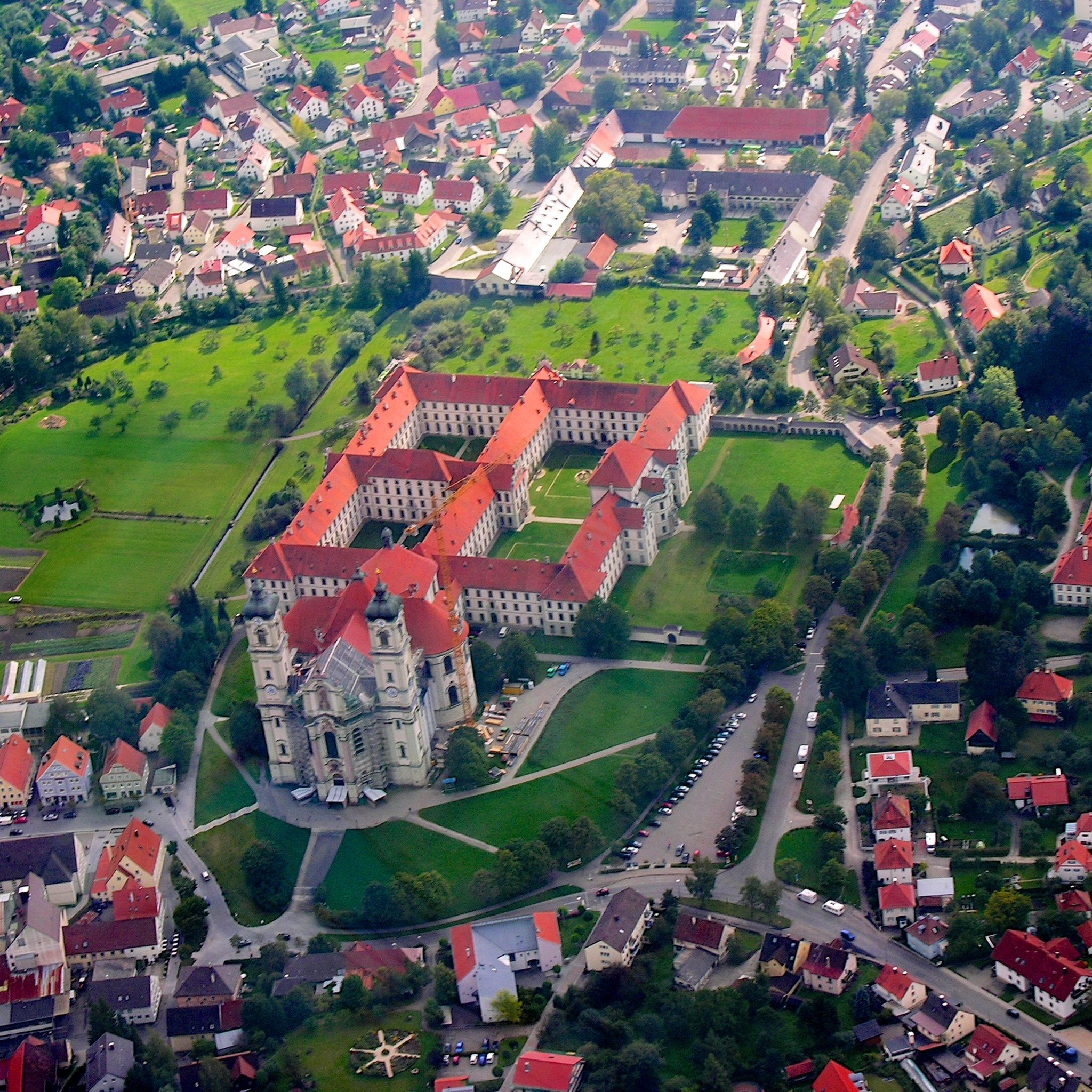
- Visitors also love Basilica of St. Alexander and St. Theodor, Ottobeuren, a religious building and significant historical site. This Baroque church is part of the Benedictine Abbey of Ottobeuren and features two 82-meter-high onion domes.
- Ottobeuren is known for its historical sites, religious buildings, and scenic viewpoints. The area offers a variety of attractions, including impressive architecture and natural river features, suitable for different interests.
- The attractions around Ottobeuren are appreciated by the komoot community, with over 1,100 upvotes and more than 400 photos shared by visitors.
Last updated: August 16, 2026
Ottobeuren Market Square and Basilica
Highlight • Settlement
Probably none of the visitors who stay in Ottobeuren today, for a shorter or longer period of time, can imagine how this approximately 1,500-year-old, historic town was founded.
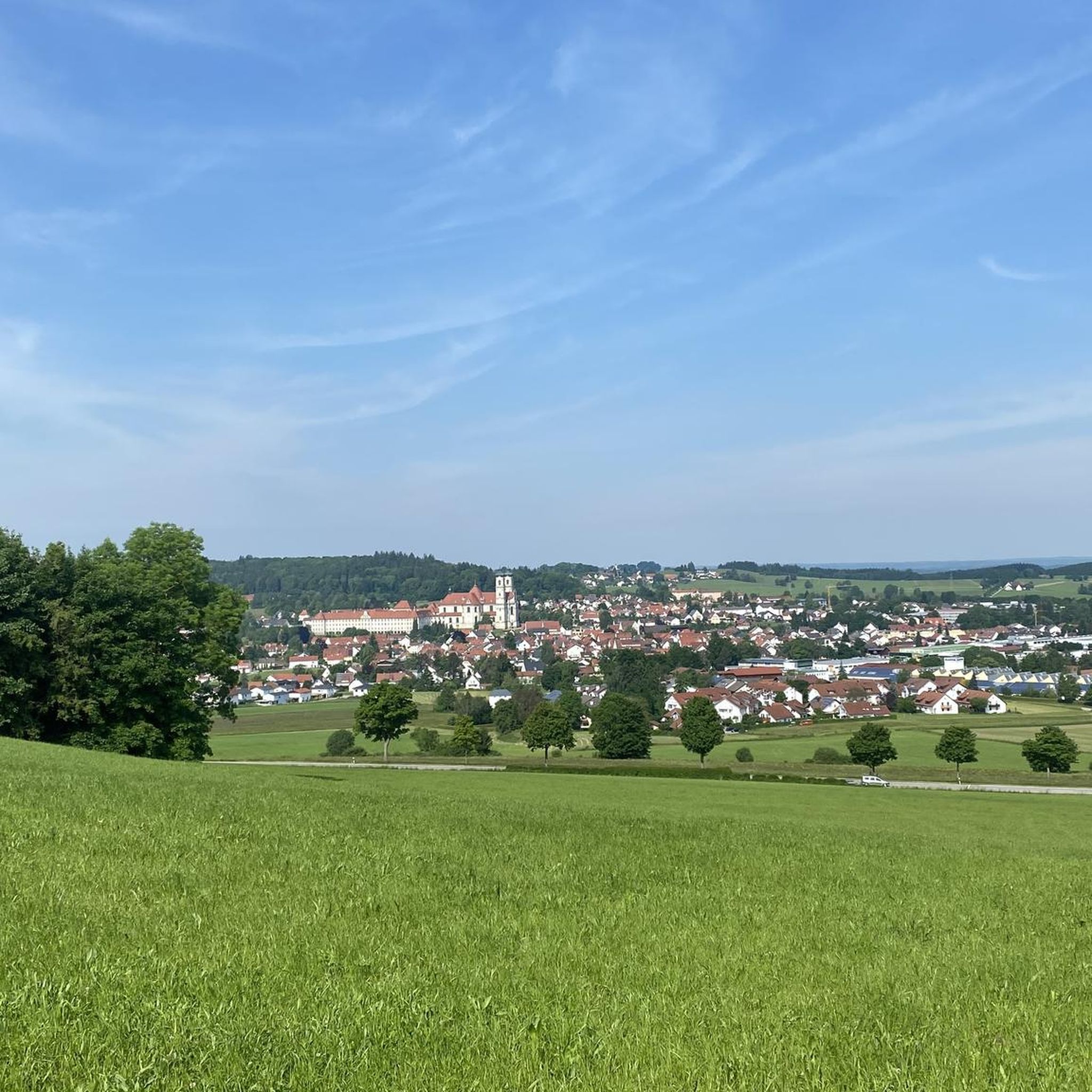
When visitors arrive in Ottobeuren from all directions by private car, taxi, or bus, their first gaze is usually drawn to the mighty basilica with its monastery buildings.
No one considers that the very ground they have just set foot on was once impassable terrain, moorland, swamp, and densely wooded area.
Nevertheless, a man had dared to gain a foothold here, clear the forest, and establish a human settlement. What Stone Age hunters and fishers had failed to achieve much earlier—namely, to settle here—had become the life's work of a man named Uot. At the site where the market square stands today, the first giant trees soon collapsed under the axe blows of the Uot farmers.
Huts were built from rough beams, livestock was raised, and fields were cultivated. Only a few huts in the middle of the forest housed the Uot clan. Uot, the Swabian, founded Ottobeuren in the 5th century.
Text / Source: Ottobeuren Tourist Office, Marktplatz 14, Ottobeuren
ottobeuren.de/de/marktgemeinde/rathaus/markt-chronik.php
Translated by Google •
Tip by

Memmingen Market Square
Highlight • Settlement
Translated by Google •
Tip by

Sign up now to discover places like this
Get recommendations on the best single tracks, peaks, & plenty of other exciting outdoor places.
Sign up for free
Iller Adventure Footbridge and Observation Tower
Highlight • Bridge
Translated by Google •
Tip by

Iller Suspension Bridge and Observation Tower in Legau
Highlight • Bridge
On the southern shore, a 23-meter high observation deck provides a view of the nearby Illersteilwand
Translated by Google •
Tip by

Basilica of St. Alexander and St. Theodor, Ottobeuren
Highlight • Religious Site
Translated by Google •
Tip by

Sign up for free to discover even more attractions around Ottobeuren.
Sign up for free
Already have an account?
Start today with a free account
Your next adventure awaits.
Login or Signup
Popular around Ottobeuren

With Kneipp through nature – Happiness Trails (Glücksweg) in Allgäu
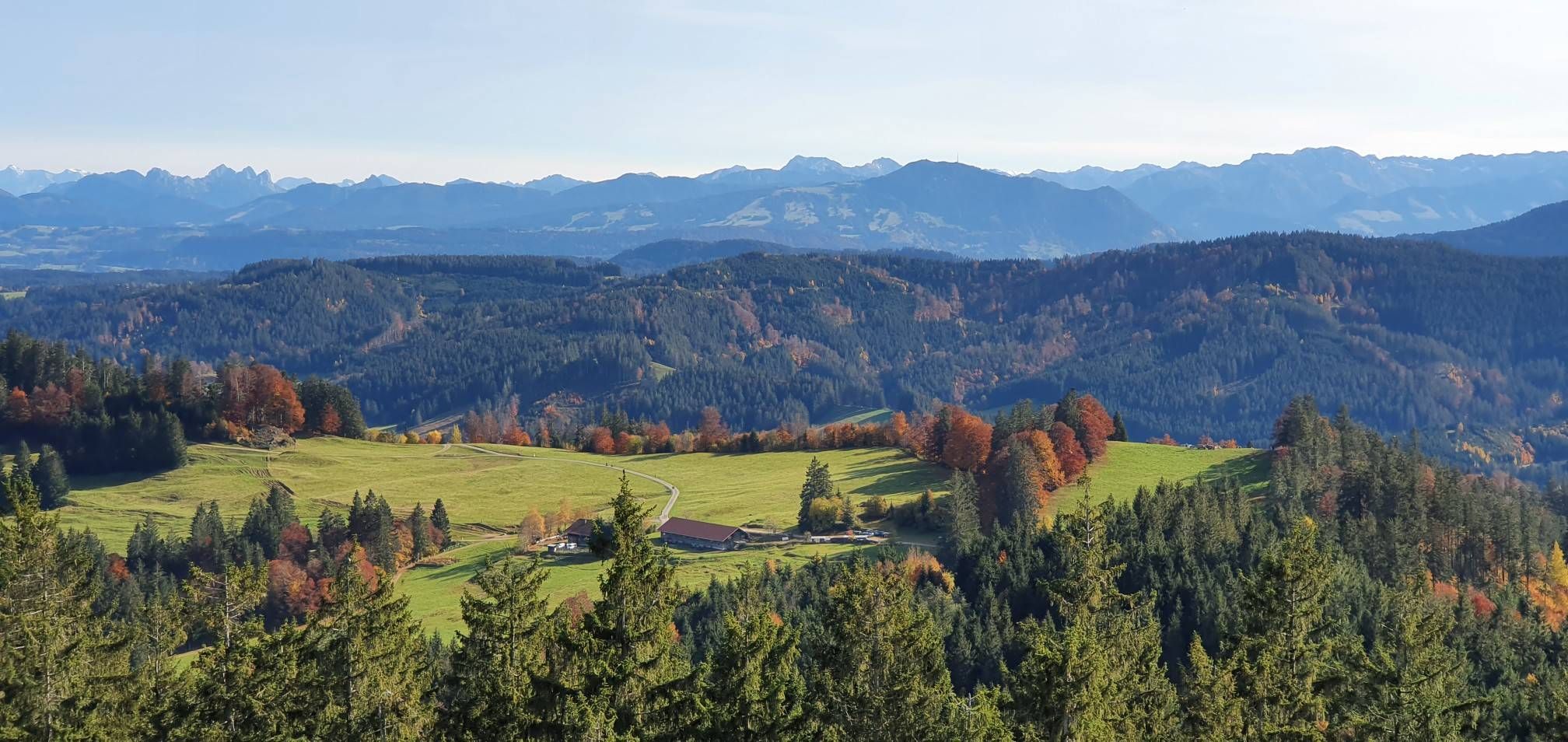
Alpine foothills on the Meadow Walkers’ Route – Allgäu hiking trilogy
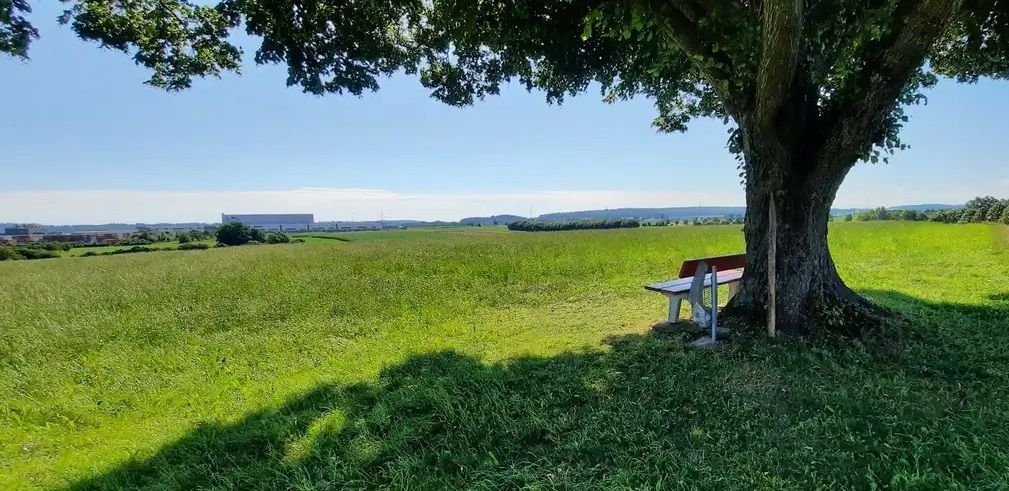
A saintly hike in the Allgäu – Crescentia Pilgrimage Route
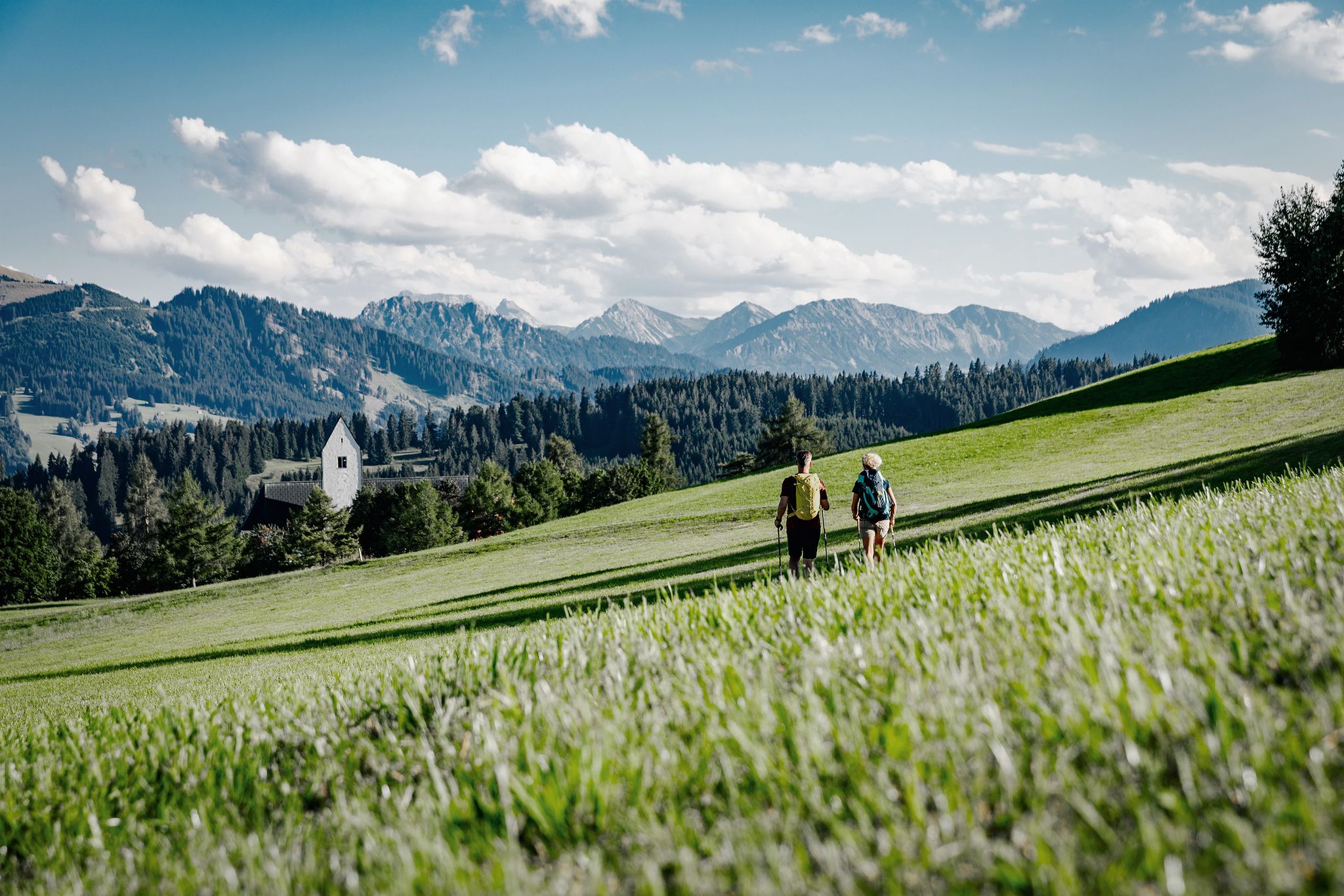
Frühlingsgefühle „loading“ – Halb- & Tagestouren im Allgäu

Radfahren in Ottobeuren - Bayerisches Alpenvorland
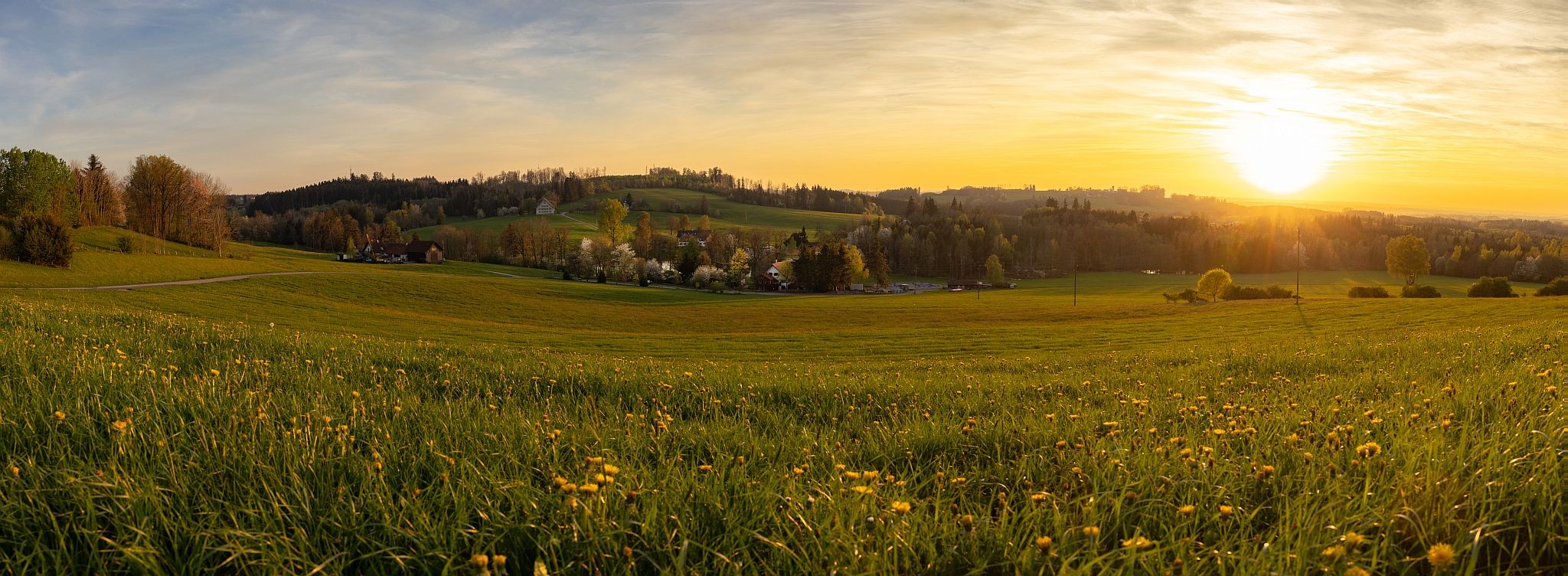
Wandern in Ottobeuren - Bayerisches Alpenvorland
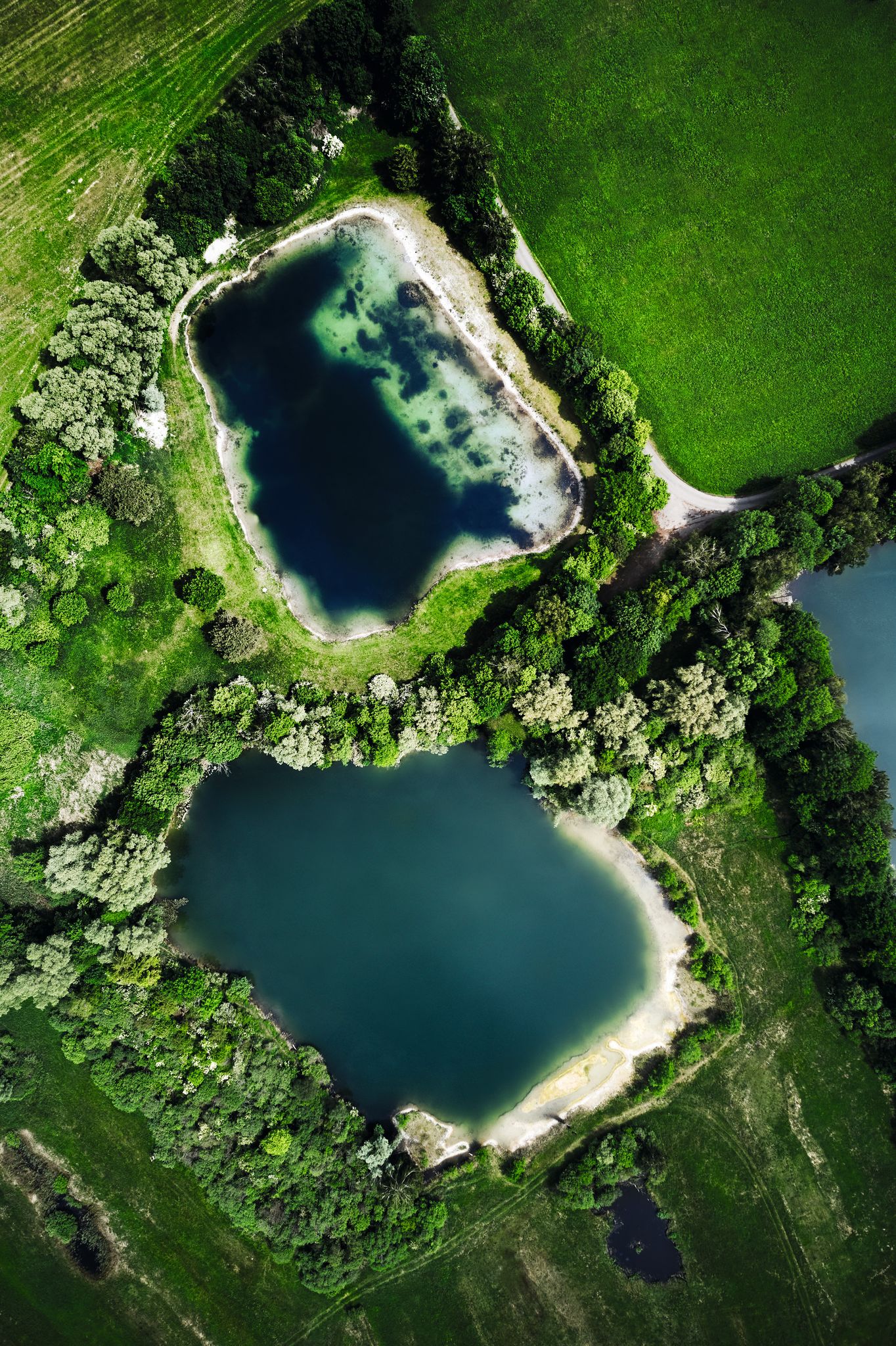
Glückswege Allgäu im Unterallgäu
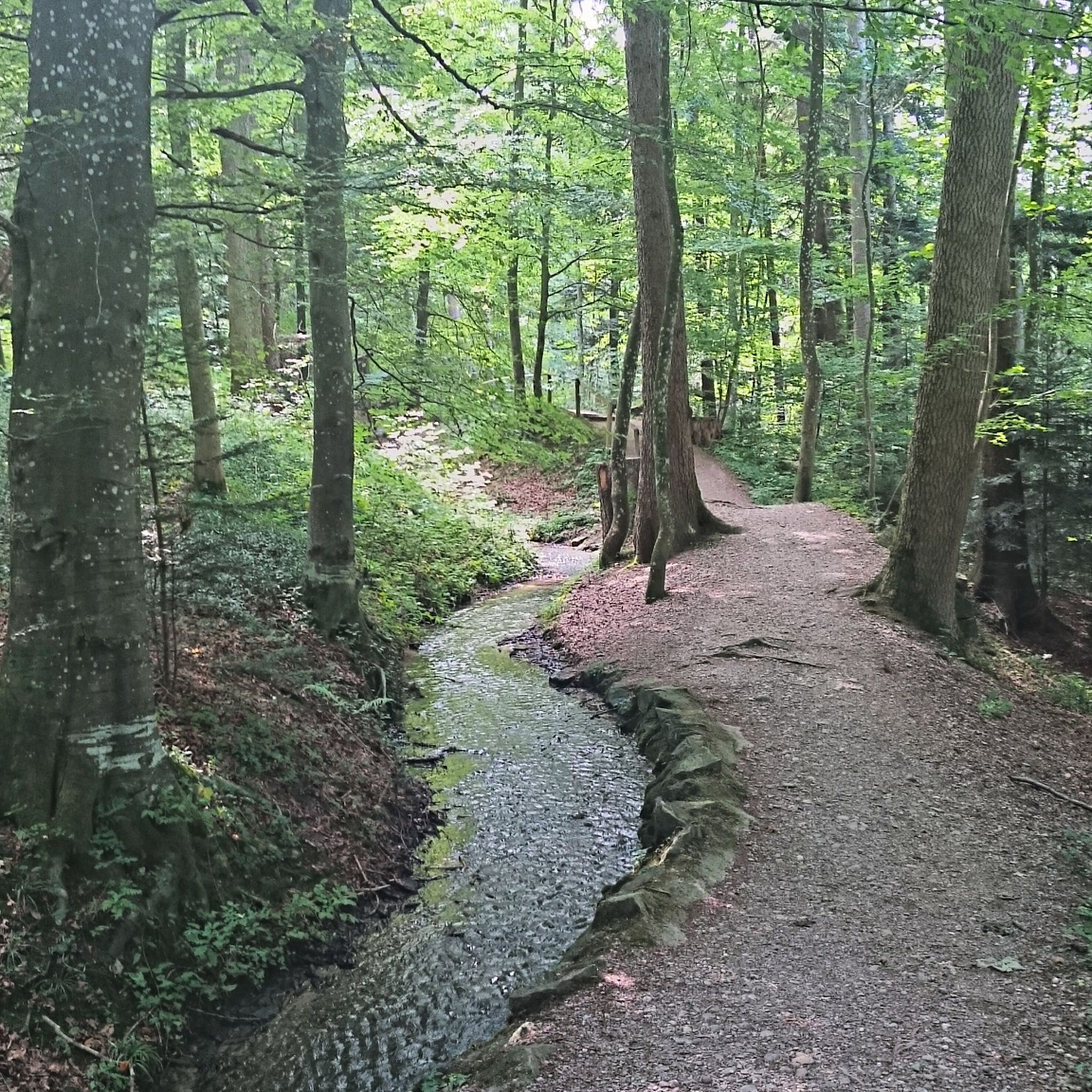
Hiking around Ottobeuren
Cycling around Ottobeuren
Road Cycling Routes around Ottobeuren
Other adventures around Ottobeuren


Tips from the Community

Beautiful suspension bridge over the Iller with a viewing tower offering a magnificent view. It swings quite a bit in strong winds.
0
0

The suspension bridge and the approximately 20-meter-high observation tower invite visitors to explore. From the tower, you can enjoy a magnificent view of the weir and the idyllic floodplains of the Iller River. A pebble beach is also located nearby, right on the riverbank, perfect for dipping your feet in the cool water.
2
0

The blue suspension bridge spans the river near Rotkreuz and offers an exciting crossing with a gentle sway – a popular photo spot and stop for hikers. Directly next to it is a freely accessible observation tower, from which you can enjoy magnificent views of the Iller and the surrounding landscape. Both locations are easily integrated into a circular hike and offer a beautiful combination of nature experience and views.
7
0

Suspension bridge construction & observation tower
1
0

Ottobeuren Market Square / Market Chronicle Probably none of the visitors who stay in Ottobeuren today, for a shorter or longer period of time, can imagine how this approximately 1,500-year-old, historic town was founded. When visitors arrive in Ottobeuren from all directions by private car, taxi, or bus, their first gaze is usually drawn to the mighty basilica with its monastery buildings. No one considers that the very ground they have just set foot on was once impassable terrain, moorland, swamp, and densely wooded area. Nevertheless, a man had dared to gain a foothold here, clear the forest, and establish a human settlement. What Stone Age hunters and fishers had failed to achieve much earlier—namely, to settle here—had become the life's work of a man named Uot. At the site where the market square stands today, the first giant trees soon collapsed under the axe blows of the Uot farmers. Huts were built from rough beams, livestock was raised, and fields were cultivated. Only a few huts in the middle of the forest housed the Uot clan. Uot, the Swabian, founded Ottobeuren in the 5th century. Text / Source: Ottobeuren Tourist Office, Marktplatz 14, Ottobeuren https://www.ottobeuren.de/de/marktgemeinde/rathaus/markt-chronik.php
14
0
Basilica of St. Alexander and St. Theodore, Ottobeuren The magnificent basilica, dedicated to the two Roman martyrs Alexander (162) and Theodore (306), is certainly one of the most beautiful Baroque churches in southern Germany. With its two 82-meter-high onion domes, it stands on a gently rising ridge west of the market square, visible from afar above the valley of the western Günz River. Due to its dominant, free position within the entire building complex, the basilica plays an undeniable presiding role. This concept of placing the church in front of the monastery was not, however, an Ottobeuren invention. Rather, it can be traced back to the famous Swabian architectural theorist Joseph Furtenbach, who published it in 1628 in his work "Architectura Civilis" as the ideal form for a women's monastery. Other monasteries were also built according to this pattern: Kempten in 1651, Seedorf/CH in 1682, Obermarchtal in 1686, Holzen in 1696, Klosterwald in 1714, Sießen in 1716, and Fiecht/Tyrol in 1707. The foundation stone was laid on September 27, 1737, at the present main portal. During the reigns of Abbots Rupert Neß and Anselm Erb, it was built as a monastery church from 1737 to 1766 by Simpert Kraemer (until 1748) and Johann Michael Fischer. The very rich late-Bavarian furnishings include dome and ceiling frescoes and altarpieces by Johann Jakob and Franz Anton Zeiller from Tyrol, stucco figures by Johann Joseph Christian, and stucco work by Johann Michael Feuchtmayer the Younger. It boasts two widely renowned Baroque choir organs by Karl Joseph Riepp: the four-manual Trinity Organ with 47 stops and the two-manual Holy Spirit Organ with 27 stops, both with a French sound. The choir stalls are by Martin Hermann (carpentry) and Johann Joseph Christian (reliefs). The focal point of the church is the Romanesque crucifix (ca. 1220). The church's unusual north-south orientation is due to its location within the overall complex, whose floor plan is in the shape of a cross. In 1926, the monastery church was elevated to a Papal Basilica/Basilica Minor by Pope Pius XI. Text / Source: Benedictine Abbey of Ottobeuren, Sebastian-Kneipp-Str. 1, Ottobeuren https://www.abtei-ottobeuren.de/content/klosteranlage/die-basilika/
14
0

This great market square with numerous restaurants and sights is located in the middle of Memmingen's old town.
6
1

The old market squares used to be the center of the cities. This is where life took place.👍
5
1
Frequently Asked Questions
What historical and cultural sites can I explore in the Ottobeuren region?
The region is rich in history and culture. A prominent site is the Ottobeuren Market Square and Basilica, which has a history spanning approximately 1,500 years. The magnificent Basilica of St. Alexander and St. Theodor, Ottobeuren, part of the Benedictine Abbey, is a significant Baroque church known for its impressive architecture and two 82-meter-high onion domes. You can also visit the Memmingen Market Square, known for its beautiful Renaissance town hall and historic buildings.
Are there any natural attractions or scenic viewpoints near Ottobeuren?
Yes, the area offers several scenic spots, particularly along the Iller river. The Iller Adventure Footbridge and Observation Tower provides excellent views of the river and surrounding landscape. Another notable spot is the Iller Suspension Bridge and Observation Tower in Legau, an 80-meter bridge over the Iller near a barrage, featuring a 23-meter high observation deck with views of the Illersteilwand.
What kind of outdoor activities can I do around Ottobeuren?
The Ottobeuren area is ideal for various outdoor activities. You can find numerous routes for hiking, cycling, and mountain biking. For hiking, explore trails like the 'Glücksplaneten (Happy planet) trail' or the 'Glücksheimat (Happy home) loop'. Cyclists can enjoy routes such as the 'Rail Trail Near Westerheim – Memmingen Old Town loop'. Mountain bikers have options like the 'Organ Pipes – Shaded forest gravel path loop'. You can find more details on these activities in the dedicated guides for hiking, cycling, and MTB trails around Ottobeuren.
Are there easy hiking trails suitable for beginners or families in the area?
Absolutely. The region offers several easy hiking trails perfect for beginners or families. For instance, the 'Glücksplaneten (Happy planet) trail' is an easy 5.6 km route exploring the solar system. Another easy option is the 'Kneipp Facility, Ottobeuren – Bridge Over the Motzabach loop', which is about 6.2 km. These trails provide a gentle introduction to the local landscape. More options can be found in the hiking guide for Ottobeuren.
Where can I find family-friendly attractions in Ottobeuren?
Many attractions in the Ottobeuren region are considered family-friendly. The Iller Adventure Footbridge and Observation Tower and the Iller Suspension Bridge and Observation Tower in Legau are popular choices, offering exciting crossings and observation decks. The Ottobeuren Market Square and Basilica and the Basilica of St. Alexander and St. Theodor are also suitable for families interested in history and architecture. Additionally, the Memmingen Market Square is a pleasant spot for families to relax and explore.
Is Ottobeuren Abbey accessible for visitors, and is there parking available?
The Basilica of St. Alexander and St. Theodor, which is part of the Benedictine Abbey of Ottobeuren, is a major attraction. While the specific accessibility details for the entire Abbey complex are best checked directly with the Abbey, the market square area around it is generally accessible. Parking is typically available in designated areas within Ottobeuren, often within walking distance of the market square and basilica.
What are some popular cycling routes around Ottobeuren?
Ottobeuren offers a variety of cycling routes for different skill levels. Popular options include the 'Rail Trail Near Westerheim – Memmingen Old Town loop' (moderate, 32.5 km) and the 'View of Ottobeuren Abbey – Günz Stream loop' (moderate, 46.3 km). For an easier ride, consider the 'View of Ottobeuren – Path Along the Riedbach loop' (easy, 24 km). You can explore more routes in the Cycling around Ottobeuren guide.
Can I find places to eat or drink near the attractions or hiking trails?
Yes, you'll find options for refreshments. The Ottobeuren Market Square is noted for having several good localities around its artistic fountain. Similarly, the Memmingen Market Square has cafes and restaurants where you can take a break. While specific cafes directly on hiking trails might be limited, many trails start or pass through villages or towns where you can find eateries.
What do visitors particularly enjoy about the attractions in Ottobeuren?
Visitors frequently praise the impressive architecture of the Basilica of St. Alexander and St. Theodor, often described as one of the most beautiful Baroque churches in Southern Germany. The scenic river landscapes and the unique experience of crossing the Iller Adventure Footbridge and Iller Suspension Bridge are also highly rated. The historic market squares, like Ottobeuren's and Memmingen's, are appreciated for their charm and inviting atmosphere.
What is the best time of year to visit Ottobeuren for outdoor activities?
The spring, summer, and early autumn months (roughly April to October) are generally the best for outdoor activities like hiking and cycling around Ottobeuren. During these periods, the weather is typically mild and pleasant, making it ideal for exploring the natural landscapes and historical sites. Late autumn can also be beautiful with fall foliage, while winter offers a different charm, though some outdoor activities might be limited by snow or colder temperatures.
Are there any specific attractions that are wheelchair accessible?
Yes, the Memmingen Market Square is noted as being wheelchair accessible, making it a good option for visitors with mobility needs. For other attractions, it's advisable to check their individual accessibility information, as historical sites can sometimes have limitations.
How can I reach attractions near Ottobeuren using public transport?
Ottobeuren is connected by local bus services, which can help you reach nearby towns and some attractions. For broader travel, the nearest major train station is in Memmingen, which has regional connections. From Memmingen, you can use local buses or taxis to get to Ottobeuren and its surrounding points of interest. Planning your route with local public transport schedules is recommended for specific destinations.
Are there opportunities for wildlife spotting near Ottobeuren?
The natural river landscapes, particularly along the Iller, provide opportunities for observing local wildlife. Birdwatching is common, and you might spot various species in the semi-natural areas around the Iller bridges. Exploring the quieter hiking and cycling trails away from urban centers can increase your chances of encountering local fauna.
Most popular routes around Ottobeuren
Most popular attractions around Ottobeuren

Get inspired with the komoot mobile app


Explore more
Still not found the Highlight you’re looking for? See guides of the top attractions in other regions:
