Attractions and Places To See in Indonesia - Top 20
Best attractions and places to see in Indonesia include a diverse array of natural features, cultural sites, and historical landmarks spread across its many islands. The archipelago is characterized by active volcanoes, vast crater lakes, and extensive coral reefs. Indonesia offers a rich cultural tapestry with ancient temples and traditional villages. Visitors can explore a variety of landscapes, from mountainous regions to coastal areas.
Best attractions and places to see in Indonesia
- The most popular attractions is Bromo Crater,…
Last updated: August 30, 2026
Campuhan Ridge Walk
Highlight (Segment) • Trail
Tip by

Bromo Crater
Highlight • Volcano
Translated by Google •
Tip by

Sign up now to discover places like this
Get recommendations on the best single tracks, peaks, & plenty of other exciting outdoor places.
Sign up for free
Sacred Monkey Forest Sanctuary
Highlight • Forest
Translated by Google •
Tip by

Sarang Walet Waterfall
Highlight • Waterfall
Translated by Google •
Tip by
Summit Trail to Mount Rinjani
Highlight (Segment) • Summit
Translated by Google •
Tip by

Sunrise at the Ijen Crater
Highlight • Volcano
Translated by Google •
Tip by

Borobudur Temple
Highlight • Religious Site
but you can also walk all around. but it is still very beautiful.
Translated by Google •
Tip by

Pura Tirta Empul Water Temple
Highlight • Religious Site
Translated by Google •
Tip by

Tirta Gangga Water Palace
Highlight • Monument
Translated by Google •
Tip by
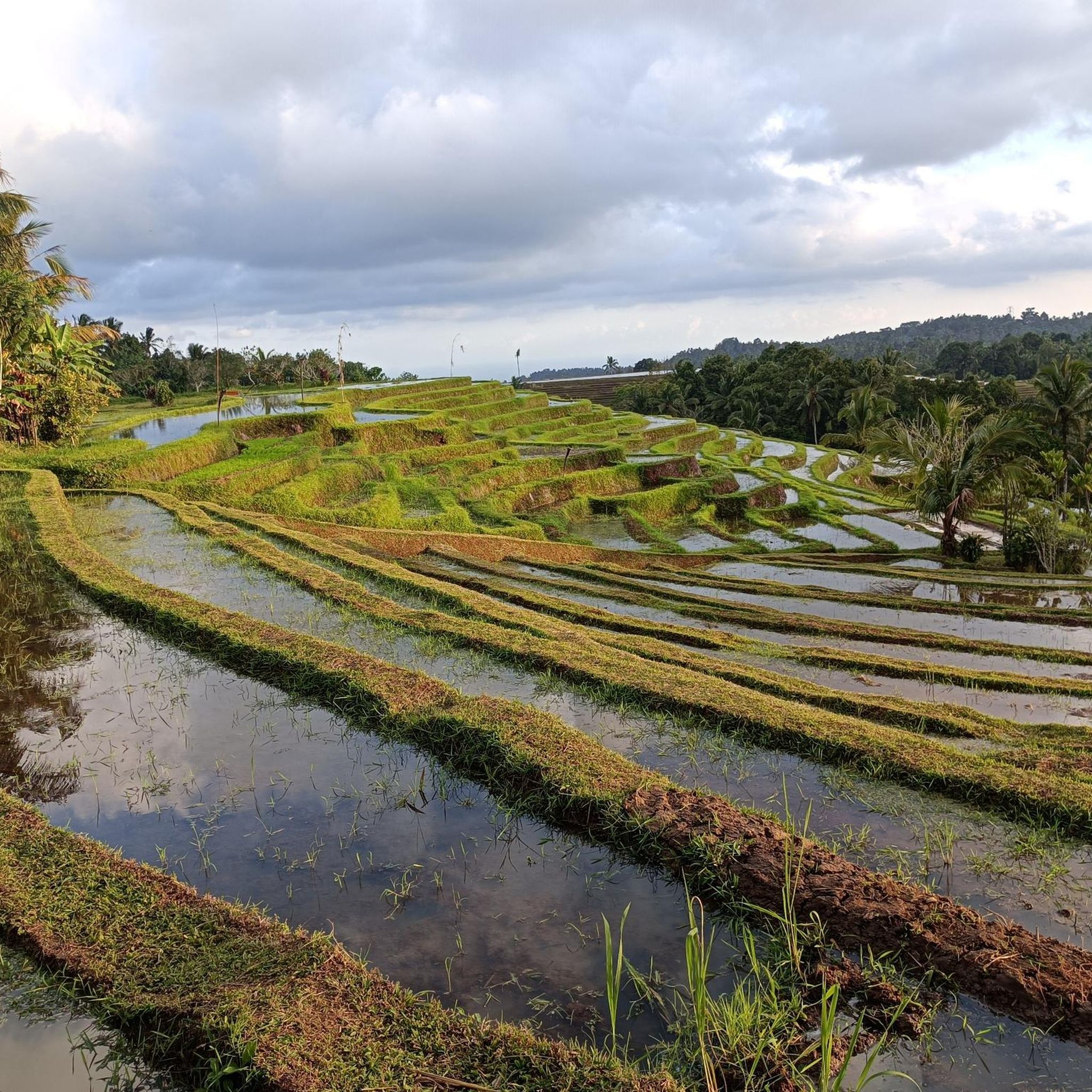
Tegallalang Rice Terraces
Highlight • Natural Monument
Translated by Google •
Tip by
Sign up for free to discover even more attractions in Indonesia.
Sign up for free
Already have an account?
Start today with a free account
Your next adventure awaits.
Login or Signup

Other adventures in Indonesia

Tips from the Community

This path is a picturesque, free hiking trail in the middle of Ubud. The route runs along an idyllic ridge between two rivers and offers fantastic views of green valleys, jungle, and rice fields. The path is just under 4 km long round trip.
0
0

Borobudur, a colossal Buddhist monument in Central Java, Indonesia, lies 42 km northwest of Yogyakarta. "The monument combines the symbolic forms of (i) the stupa, a Buddhist memorial mound housing relics; (ii) the temple mountain, modeled after the Hindu Mount Meru; and (iii) the mandala, a mystical Buddhist symbol of the universe, representing the square as a symbol of the earth and the circle as a symbol of the sky." Source: https://www.britannica.com/topic/Borobudur Borobudur is the largest Buddhist monument in the world and, along with Bagan in Myanmar and Angkor Wat in Cambodia, is one of the most important archaeological sites in Southeast Asia. Borobudur is a popular pilgrimage destination for Buddhists and the most visited tourist attraction in Indonesia. Candi Borobudur was built between approximately 778 and 850 AD from gray andesite (lava rock). From around the year 1000, Borobudur was buried under volcanic ash and overgrown with vegetation until the monument was rediscovered in 1814. Archaeologists restored the site between 1907 and 1911; a second restoration was completed in 1983. The monument consists of ten stacked platforms—six square and three circular—crowned by a central dome. At its base, the monument measures 118 meters square and reaches a height of 42 meters. Pilgrims and visitors can access the monument through an extensive system of stairs and corridors. Candi Borobudur was declared a UNESCO World Heritage Site in 1991. Detailed information about Candi Borobudur can be found at: https://www.orientalarchitecture.com/sid/180/indonesia/yogyakarta-java/borobudur-temple (Visited on June 13, 2012 & April 30, 2018)
1
0
Mount Bromo is an active volcano and a Hindu pilgrimage site. The volcano lies within the Sandsea caldera, which formed several thousand years ago. The last major eruption, classified as category 3 (out of a maximum VIE 8), occurred in 2010/2011. Moderate and explosive eruptions (VIE 1-2) occur regularly, most recently in December 2023. During volcanic activity, access to the popular volcano is closed. Visits are usually made from Cemorolawang, a village situated on the rim of the Sandsea caldera. Visitors travel by jeep, on horseback, or on foot down the caldera and across the flat Tengger Sand Sea to the base of Mount Bromo. From there, a path leads uphill, or visitors can ride horses to the bottom of the concrete staircase that ascends to the crater rim. Hundreds of people make the journey to the crater rim daily. Caution and consideration are therefore advised on the narrow path at the top. (Visited on April 16, 2006 and May 12, 2018) https://volcano.si.edu/volcano.cfm?vn=263310&vtab=Eruptions
2
0

It's about 1km from the parking lot to the crater rim, with the last section up a flight of stairs. There's a great view into the crater, with Semeru Volcano in the background. Those sensitive to sulfur may want to wear a mask – it smells of sulfur! You can also ride a horse with a guide to the stairs and back.
2
0
If you want to see the Blue Fire and the sunrise, you should set off early. The gates open at 2:00 a.m., and you can begin the climb up Ijen. It's about 4 km to the top and 600 meters in elevation. The path is wide and well-maintained, with some steep climbs. You'll definitely need a headlamp. Then you can descend into the crater to see the natural phenomenon known as the Blue Fire, which is caused by the combustion of sulfur gases. The path is rocky and requires some surefootedness—but I found it manageable in sneakers. The fire wasn't big when I was there, but it was still fascinating! You definitely need a mask, as it smells strongly of sulfur down there! Masks and headlamps are available for rent. Afterward, you climb back up and can watch the sunrise. You need a bit of luck, as fog often rises from the crater, and you can't see much. Truly beautiful, BUT it's a mass event! Many of those who climb up, and especially those who descend into the crater, don't have the fitness for it, and especially not the surefootedness. So, you have to set off right away at two o'clock! People are also crowding around the blue fire.
0
0

There are still some relatively intact Buddha statues in the stupas.
0
0

Frequently Asked Questions
What are some of Indonesia's most impressive natural features?
Indonesia is home to a wide array of natural wonders. You can witness the spectacular sunrise views over the caldera of Bromo Crater, an active volcano in East Java. Another unique volcanic attraction is the Ijen Crater, known for its rare blue flames. The country also boasts the world's largest crater lake, Lake Toba in Sumatra, and the vibrant, color-changing Kelimutu lakes in Flores. For marine life, Sarang Walet Waterfall offers a refreshing experience amidst lush forests.
Are there any family-friendly attractions in Indonesia?
Yes, Indonesia offers several attractions suitable for families. The Sacred Monkey Forest Sanctuary in Ubud, Bali, is a popular choice, featuring ancient temples and a large population of monkeys in a natural setting. The Tegallalang Rice Terraces are also considered family-friendly, offering scenic beauty and a glimpse into traditional Balinese agriculture. Additionally, the Tirta Gangga Water Palace provides a serene environment with water basins and ponds that families can enjoy.
What historical and cultural sites should I visit in Indonesia?
Indonesia is rich in history and culture. The Borobudur Temple Compounds in Central Java is the world's largest Buddhist monument and a UNESCO World Heritage site. Also in Central Java, the Prambanan Temple Compounds is a magnificent 9th-century Hindu temple complex. In Bali, the Pura Tirta Empul Water Temple is a significant religious site known for its holy spring. Yogyakarta is considered a cultural hub, offering the Sultan's Palace and traditional Javanese performances.
What kind of outdoor activities can I do near these attractions?
Indonesia offers diverse outdoor activities. You can find challenging trails for hiking, such as the Summit Trail to Mount Rinjani, which is a demanding but rewarding ascent. For those interested in cycling, there are various routes available, including gravel biking and touring. You can explore options like gravel biking routes or general cycling tours across Indonesia. Running enthusiasts can also find numerous running trails, from moderate loops on the Gili Islands to more difficult urban routes in Jakarta.
Are there any challenging hikes or adventure travel opportunities?
Absolutely. For advanced adventurers, the Summit Trail to Mount Rinjani is a highly challenging trek, often taking multiple days. The ascent to Bromo Crater also offers a challenging but rewarding experience, especially for those seeking panoramic sunrise views. The Sunrise at the Ijen Crater is another demanding volcanic hike known for its unique blue flames. These trails often involve rocky, slippery, and steep terrain, requiring sturdy shoes and good physical condition.
What is the best time to visit Indonesia for outdoor activities and beaches?
Generally, the dry season, which runs from May to September, is considered the best time to visit Indonesia for outdoor activities and enjoying the beaches. During this period, you can expect sunny days and lower humidity, ideal for volcano hikes, exploring rice terraces, and water sports. The rainy season, typically from October to April, can bring heavy downpours, especially in certain regions, which might impact hiking conditions or beach activities.
What unique cultural experiences can I find in Indonesia?
Beyond the well-known temples, Indonesia offers unique cultural experiences such as visiting the Tana Toraja region in Sulawesi, famous for its elaborate funerary rituals and distinctive traditional architecture. In Bali, Ubud serves as a cultural heartland, offering wellness, art, and tranquility, alongside the traditional Subak irrigation system, a UNESCO Cultural Landscape. You can also experience traditional Javanese performances like Wayang Kulit (shadow puppetry) in Yogyakarta.
Where can I see wildlife in Indonesia?
Indonesia is a biodiversity hotspot. Komodo National Park is famous as the home of the Komodo dragons and boasts rich marine biodiversity. Raja Ampat in West Papua is globally recognized for its incredibly diverse marine life and pristine coral reefs. For orangutan sightings, Tanjung Puting National Park in Kalimantan is an excellent place to see them in their natural habitat, while Gunung Leuser National Park in Sumatra is a critical habitat for critically endangered Sumatran orangutans.
Are there any scenic walks or trails that are less strenuous?
Yes, for a less strenuous but equally scenic experience, consider the Campuhan Ridge Walk in Bali. This trail offers beautiful views of lush green valleys and rice fields. The Tegallalang Rice Terraces also provide accessible paths for walking and enjoying the picturesque landscape without extreme difficulty.
What do visitors enjoy most about the attractions in Indonesia?
Visitors frequently praise the breathtaking natural beauty, from the panoramic views at Bromo Crater to the serene landscapes of the Tegallalang Rice Terraces. The unique cultural experiences, such as those at the Sacred Monkey Forest Sanctuary and ancient temples, are also highly appreciated. Many find the blend of adventure and tranquility, along with the warmth of the local culture, to be particularly memorable.
What should I wear for volcano hiking in Indonesia?
For volcano hikes like Bromo Crater or Mount Rinjani, warm clothing is highly recommended, especially for early morning ascents when temperatures can be quite cold. Sturdy hiking shoes with good grip are essential due to rocky, slippery, and sometimes sandy terrain. A headlamp is also crucial for pre-dawn starts. Layers are advisable as temperatures can change significantly from base to summit.
Are there any islands known for pristine waters and diving?
Yes, the Gili Islands (Gili Trawangan, Gili Meno, and Gili Air) off the coast of Lombok are renowned for their pristine waters, excellent diving, snorkeling, and relaxed atmosphere. Raja Ampat in West Papua is another world-class destination for divers, celebrated for its incredibly diverse marine life and vibrant coral reefs. Flores, particularly around Komodo National Park, also offers stunning tropical scenery and adventure activities, including diving.
Most popular routes in Indonesia
Most popular attractions in Indonesia

Get inspired with the komoot mobile app


Didn’t find what you were looking for?
Are you keen on exploring more awesome places nearby? Browse our guides:
Explore more
Still not found the Highlight you’re looking for? See guides of the top attractions in other regions:
