Attractions and Places To See in Laos - Top 20
Best attractions and places to see in Laos include a diverse range of historical, cultural, and natural sites. This landlocked country in Southeast Asia features the Mekong River, limestone karsts, and numerous waterfalls. Laos offers visitors a blend of ancient traditions, well-preserved temples, and lush landscapes. Its rich history and natural features provide varied exploration opportunities.
Best attractions and places to see in Laos
- The most popular attractions is Luang Prabang Morning Market, a settlement that offers a glimpse into local life. This bustling market provides fresh produce and exotic foods, serving as a typical meeting place for locals.
- Another must-see spot is Wat Xieng Thong, a religious building and one of the most important and oldest Buddhist temples in Laos. Its complex features ornate shrines and prayer halls, set within a beautiful garden on the banks of the Mekong.
- Visitors also love Kuang Si Waterfalls, a multi-tiered waterfall with turquoise pools. This natural monument is a popular destination for swimming and is located a short drive from Luang Prabang.
- Laos is known for its ancient temples, stunning waterfalls, and vibrant markets. Visitors can explore historical sites, engage with local culture, and discover diverse natural landscapes.
- The attractions in Laos are appreciated by the komoot community. With more than 30 upvotes and over 30 photos, these places offer diverse experiences for explorers.
Last updated: August 30, 2026
Luang Prabang Morning Market
Highlight • Settlement
The market is bustling with vegetables, fruit, colorful robes and silk scarves.
Translated by Google •
Tip by

Wat Xieng Thong
Highlight • Religious Site
It was built in 1560/61 under the reign of King Setthathirath and there are three legends about it.
Until 1975 it was a royal temple and a place where the former kings of Laos were crowned.
Translated by Google •
Tip by
Sign up now to discover places like this
Get recommendations on the best single tracks, peaks, & plenty of other exciting outdoor places.
Sign up for free
Haw Pha Bang Temple, Royal Palace Grounds
Highlight • Religious Site
The Wat May temple in the Royal Palace grounds was founded by King Anourouth in the late 18th century.
However, construction of the pagoda only began during the reign of King Manthatourath in 1821. It was completed 70 years later by King Sakkarine.
Translated by Google •
Tip by
Patuxai Monument
Highlight • Monument
Translated by Google •
Tip by

That Luang
Highlight • Religious Site
According to tradition, missionaries of the Indian emperor Ashoka, who stayed here in the 3rd century BC, are said to have erected a reliquary for a splinter of bone from the sternum of Buddha.
The sacred stupa of That Luang was built in 1566 on Siamese models of the Sukhothai era, a few years after King Setthathirath moved the capital from Luang Prabang to Vieng Chan.
Translated by Google •
Tip by
Wat Si Saket
Highlight • Religious Site
Crafted from wood, stone, silver, bronze or clay.
There are 10,136 small Buddha figures in the niches on the inner walls, and another 120 larger statues of the Enlightened One on the floor.
Translated by Google •
Tip by
Old Town of Luang Prabang
Highlight • Historical Site
Translated by Google •
Tip by

Wat Nong Sikhounmuang
Highlight • Religious Site
Translated by Google •
Tip by
Kuang Si Waterfalls
Highlight • Waterfall
Tip by

Somphamit (Liphi) Waterfall
Highlight • Waterfall
There is an entrance fee and it's worth it.
Also has very clean toilets.
Translated by Google •
Tip by

Sign up for free to discover even more attractions in Laos.
Sign up for free
Already have an account?
Start today with a free account
Your next adventure awaits.
Login or Signup
Tips from the Community

Always delicious food, no matter what time of day
0
0

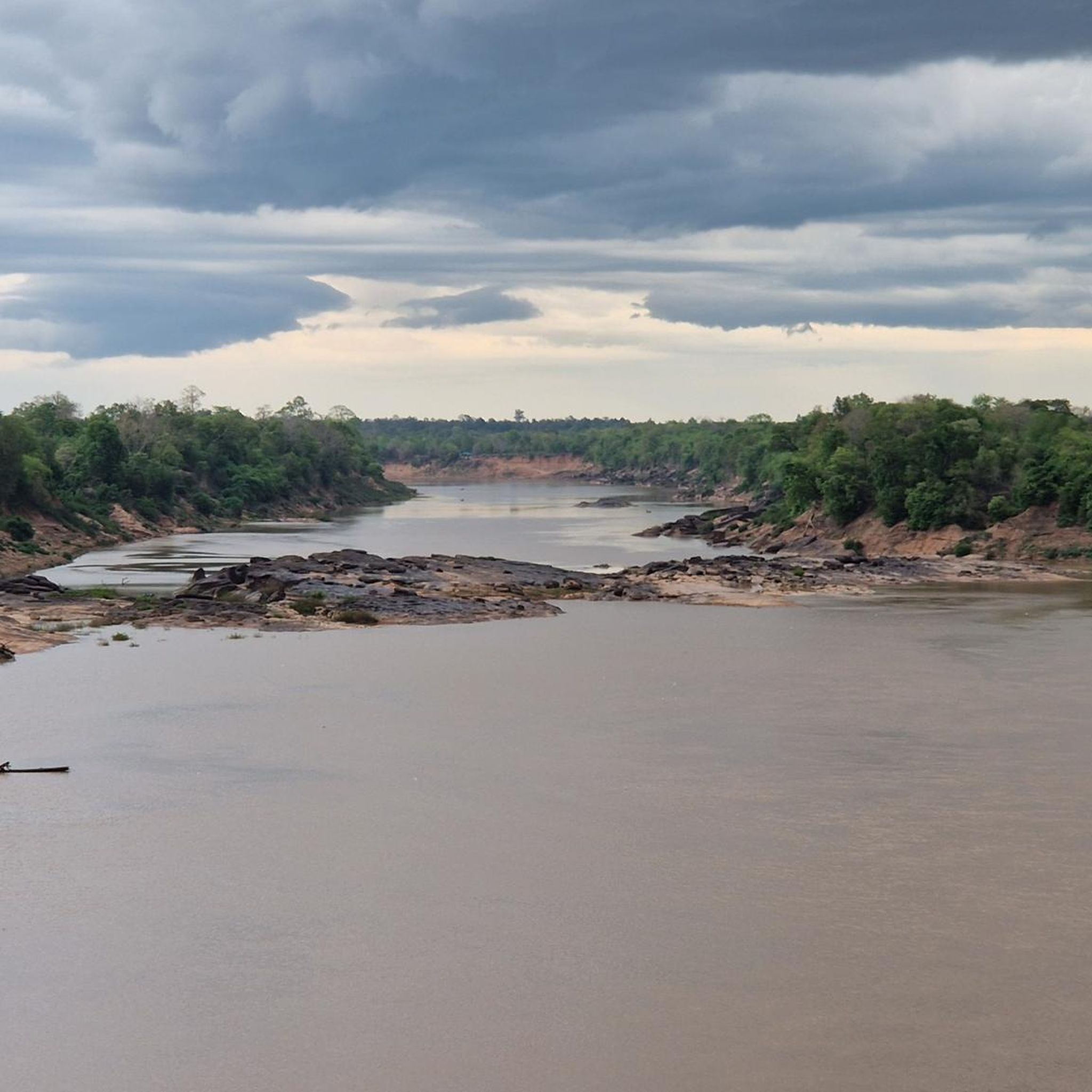
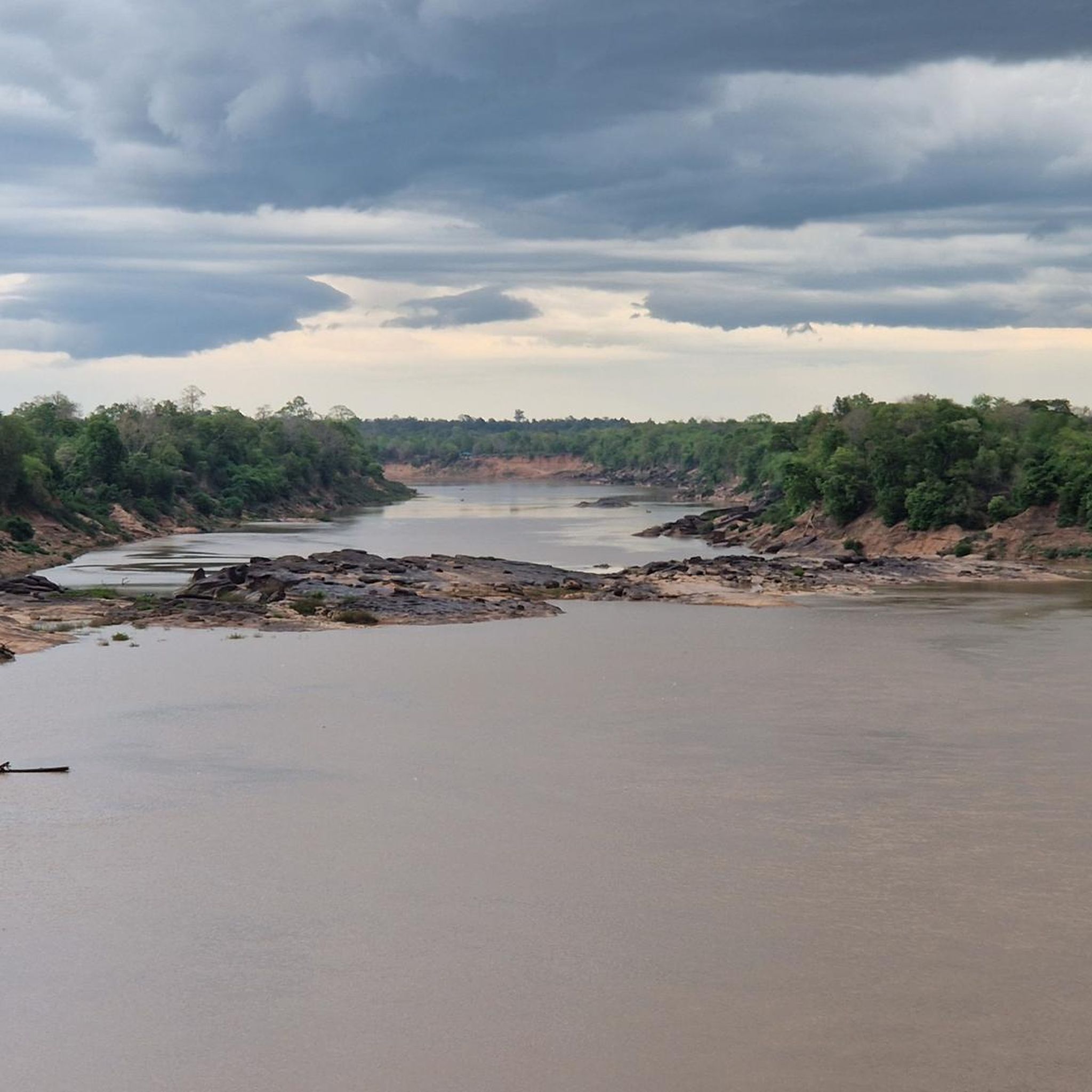
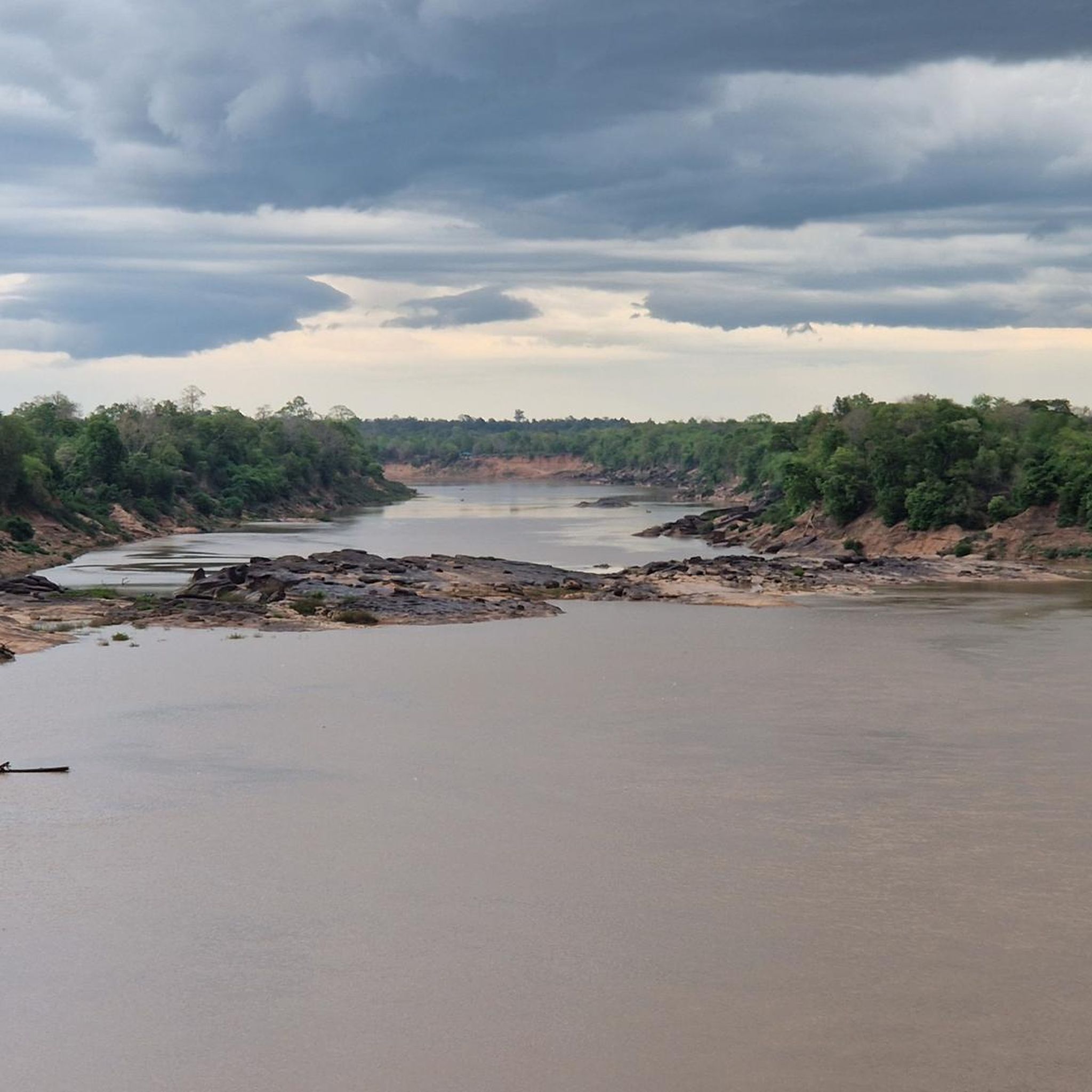
Don Khon is the site of the Liphi Falls (officially known as Taat Somphamit). It is located about 15 km south of Muang Khong. Starting from the village of Baan Khon, 1 km down a path, the Liphi Falls cascade over rugged boulders. The falls have a drop of only a few meters, but their volume and power are impressive. A second waterfall is located 500 meters downstream. Fishermen use traps and nets to catch fish in the pools at the base of the falls. A unique attraction are the Irrawaddy dolphins, sacred to the Laotian people. The Center for the Protection and Conservation of Freshwater Dolphins is located on the border between Laos and Cambodia. Called "Pla kha" in Lao, the freshwater dolphins inhabit only this part of the Mekong. They are not afraid of humans and frolic when they see people. Source: https://vietlongtravel.com/de/News/laos-reisef%C3%BChrer/Liphi-Wasserf%C3%A4lle
1
0
The original stupa was built on this site in 1566 by King Saysetthathirath and restored in 1953. The golden stupa is 45 meters high and is said to contain a relic of the Buddha. The golden centerpiece of this stupa resembles the curve of an elongated lotus blossom. Only the top is covered with real gold; the rest of the stupa is painted gold. Today, it is the most important national cultural monument in Laos. Source: https://www.tourismlaos.org/that-luang/
1
0
Patuxai (Lao: ປະຕູໄຊ, [pátǔː sáj] "Gate of Victory", French also Monument des Morts) is a triumphal arch in the Laotian capital, Vientiane. The 49-meter-high monument stands at the end of Xang Avenue. Patuxai was built in the 1960s as a "Monument to the Heroes of the Royal Army", i.e., for Laos' independence from France (1949). When the Pathet Lao seized power in 1975, the massive concrete structure was nameless for 20 years. It was generally known simply as Anousavali (Monument). On the 20th anniversary of the seizure of power in 1995, the Arch of Triumph was rededicated "To the Heroes of August 23, 1975" (the day the monarch seized power in Vientiane). Confectionery turrets and sculptures from Indian mythology adorn the four-arched concrete structure. The numbers four and seven magically recur in the dimensions of the structure: the four pillars measure 4 × 4 meters, and the entire structure is 7 × 7 meters high. The monumental structure remains unfinished to this day, although the Laotian government has repeatedly approved new funds. Cement that the US had originally intended for the construction of an airfield for the Vietnam War was used here. In addition, building materials were diverted into other canals and used in villas and residential buildings. Currently, the building is primarily of interest to tourists. For a fee, visitors can climb the upper platforms, which offer a panoramic view of the city. The interior floors house numerous tourist shops. Source: https://de.wikipedia.org/wiki/Patuxai
1
0
Patuxai (Lao: ປະຕູໄຊ, [pátǔː sáj] "Gate of Victory", French also Monument des Morts) is a triumphal arch in the Laotian capital, Vientiane. The 49-meter-high monument stands at the end of Xang Avenue. Patuxai was built in the 1960s as a "Monument to the Heroes of the Royal Army", i.e., for Laos' independence from France (1949). When the Pathet Lao seized power in 1975, the massive concrete structure was nameless for 20 years. It was generally known simply as Anousavali (Monument). On the 20th anniversary of the seizure of power in 1995, the Arch of Triumph was rededicated "To the Heroes of August 23, 1975" (the day the monarch seized power in Vientiane). Confectionery turrets and sculptures from Indian mythology adorn the four-arched concrete structure. The numbers four and seven magically recur in the dimensions of the structure: the four pillars measure 4 × 4 meters, and the entire structure is 7 × 7 meters high. The monumental structure remains unfinished to this day, although the Laotian government has repeatedly approved new funds. Cement that the US had originally intended for the construction of an airfield for the Vietnam War was used here. In addition, building materials were diverted into other canals and used in villas and residential buildings. Currently, the building is primarily of interest to tourists. For a fee, visitors can climb the upper platforms, which offer a panoramic view of the city. The interior floors house numerous tourist shops. Source: https://de.wikipedia.org/wiki/Patuxai
0
0
Wat Si Saket is the oldest temple in Laos' capital, Vientiane, and a popular destination for devout Buddhists and many tourists. With its pagodas and 19th-century murals depicting the life of the Buddha, visitors encounter a deeply religious atmosphere. The 6,840 intricately crafted Buddha statues, constructed from a variety of materials including stone, wood, silver, and bronze, also make Wat Si Saket a truly remarkable place to visit. In 1808, King Anouvong had the Buddhist temple built. As ruler of Lang Xang, as the region around Laos was then known, which was dependent on Siam, Anouvong sought independence and sent his army against Siam. Following a heavy defeat, the city of Vientiane was completely destroyed. Only a few buildings, including Wat Si Saket, were spared. Since then, the temple and its numerous Buddha statues have been said to possess magical powers. Source: https://www.explorer.de/reiseziele/asien/laos/wat-si-saket.html
0
0
The Morning Market This small market is the Laotian "supermarket," where fresh fruit, vegetables, and meat are offered in display cases that don't always correspond to what we're used to in most of our countries. Some produce comes from the surrounding jungle and will certainly be highly exotic to travelers from Western countries. Starting at 8 a.m., this is a bustling place; a typical meeting place for Laotians who come to buy and/or sell. It's a busy place! You'll find many unusual foods such as ox blood in gelatinous cubes, snakes, bats, grilled insects (worms, grasshoppers, bee larvae, crickets, butterfly pupae), fly-covered entrails, caramelized pig's head, and all kinds of leaves and plants used in traditional dishes. Source and further information: https://www.luangprabang-laos.com/The-morning-market
1
0
Located near Luang Prabang, this waterfall awaits you even at the end of the dry season with impressive masses of water cascading over 30 meters of water. In addition to the main waterfall, the water's path forms countless turquoise pools where you can swim and refresh yourself. It's obvious that this beautiful place is no longer unknown. Source: https://faszination-suedostasien.de/tat-kuang-si-wasserfall-luang-prabang/#smooth-scroll-top
0
0
Frequently Asked Questions
What are some of the most impressive natural attractions in Laos?
Laos offers breathtaking natural beauty. Don't miss the multi-tiered Kuang Si Waterfalls near Luang Prabang, famous for its turquoise pools. The adventure capital, Vang Vieng, boasts stunning limestone karst peaks and the Nam Song River, ideal for tubing and kayaking. In southern Laos, the Mekong River expands into
Si Phan Don (4000 Islands), a tranquil archipelago where you might spot rare Irrawaddy dolphins and witness the powerful Khone Phapheng Falls. The Bolaven Plateau is renowned for its coffee plantations and dramatic waterfalls like Tad Fane and Tad Yuang. For a unique experience, explore the 7.5-kilometer long Kong Lor Cave by boat.
Which historical and cultural sites are essential to visit in Laos?
Laos is rich in history and culture. The UNESCO World Heritage city of Luang Prabang is a cultural heart, home to the ancient Wat Xieng Thong temple, the Royal Palace Museum, and the sacred Mount Phousi. In Vientiane, the capital, you can see the national symbol, Pha That Luang, and the iconic Patuxai Monument. Further south, the ancient pre-Angkorian Khmer temple complex of Wat Phu in Champasak is another UNESCO site. The mysterious Plain of Jars in Xieng Khouang Province, with its thousands of megalithic stone jars, offers a unique archaeological experience.
Are there family-friendly attractions in Laos?
Yes, many attractions in Laos are suitable for families. The Kuang Si Waterfalls are a popular choice for swimming and enjoying nature. In Luang Prabang, the Morning Market offers a vibrant cultural experience, and the Wat Xieng Thong temple and Royal Palace Grounds are also family-friendly. The Patuxai Monument and Pha That Luang in Vientiane are accessible for all ages. Many natural sites provide gentle walks and opportunities for children to explore.
What outdoor activities can I do near these attractions?
Laos offers a variety of outdoor activities. Near Luang Prabang, you can find cycling routes like the 'Wat Xieng Thong Temple – Kuang Si Waterfalls loop' or the 'Wat Nong Sikhounmuang loop'. For hiking, there are easy trails such as the 'Wat Xieng Thong – Luang Prabang Morning Market loop' and the 'Kuang Si Waterfall – Kuang Si Waterfalls loop'. Vang Vieng is known for tubing, kayaking, rock climbing, and caving. The Nam Ha National Protected Area is excellent for trekking and kayaking. You can find more details on routes in the Cycling in Laos, Easy hikes in Laos, and Hiking in Laos guides.
When is the best time to visit Laos for sightseeing and outdoor activities?
The best time to visit Laos is generally during the dry season, from October to April. During these months, the weather is cooler and less humid, making it ideal for exploring historical sites, enjoying natural attractions, and engaging in outdoor activities like hiking and cycling. The Mekong River levels are also suitable for boat trips. The rainy season (May to September) can bring lush landscapes but also heavier rainfall and higher humidity, which might impact travel to some remote areas.
Where can I experience local life and markets in Laos?
To experience authentic local life, visit the Luang Prabang Morning Market. This bustling market is a typical meeting place for locals, offering fresh produce, exotic foods, and a glimpse into daily routines. You'll find a wide array of items, from fruits and vegetables to unique jungle produce and traditional dishes. It's a vibrant spot to observe the local culture and interact with vendors.
What are some unique cultural experiences in Laos?
Beyond visiting temples, witnessing the early morning alms-giving ceremony in Luang Prabang is a profound cultural experience where saffron-robed monks collect offerings from locals. Exploring the sacred Pak Ou Caves, accessible by boat from Luang Prabang, houses thousands of Buddha effigies. In Vientiane, the Buddha Park (Xieng Khuan) offers a surreal open-air garden with over 200 Hindu and Buddhist statues. The Plain of Jars also provides a unique historical enigma.
Are there any specific viewpoints offering panoramic views?
Yes, Laos has several excellent viewpoints. In Luang Prabang, climbing Mount Phousi offers panoramic views of the city, the Mekong, and Nam Khan rivers, especially stunning at sunset. In Vientiane, the top of the Patuxai Monument provides city views. The ancient Wat Phu complex in Champasak also offers spectacular vistas of the surrounding landscape. For those seeking adventure, Vang Vieng's limestone karst peaks provide numerous opportunities for elevated views.
Where can I find opportunities for wildlife spotting?
For wildlife enthusiasts, the Bokeo Nature Reserve in northern Laos is known for its dense forests and rare wildlife. It's particularly famous for the Gibbon Experience, a canopy-level trek that offers a chance to spot gibbons and other species. The Nam Ha National Protected Area also provides opportunities for exploring diverse ecosystems and potentially encountering local wildlife during treks or river trips.
What is the significance of the Mekong River in Laos?
The Mekong River is often called the 'lifeblood of Laos,' flowing through the entire country and shaping its geography, culture, and economy. It offers numerous opportunities for scenic cruises, allowing visitors to explore riverside villages and experience the country's rural charm. Key attractions like Luang Prabang and Si Phan Don (4000 Islands) are directly influenced by the Mekong, providing unique landscapes and cultural experiences along its banks.
Are there easily accessible tourist spots in Laos?
Many of Laos's main attractions are relatively easy to access. In Luang Prabang, sites like the Morning Market, Wat Xieng Thong, and the Royal Palace Museum are centrally located. The Kuang Si Waterfalls are a short drive from Luang Prabang with good road access. In Vientiane, the Patuxai Monument and Pha That Luang are within the city. Public transport options like tuk-tuks and taxis are widely available in urban areas to reach these sites.
What kind of religious buildings can I visit in Laos?
Laos is predominantly Buddhist, and its landscape is dotted with magnificent religious buildings. The most prominent include Wat Xieng Thong in Luang Prabang, a masterpiece of Lao Buddhist art. Also in Luang Prabang, you can visit Haw Pha Bang Temple within the Royal Palace Grounds and Wat Mai Suwannaphumaham. In Vientiane, the golden Pha That Luang is the national symbol, and Wat Si Saket is one of the oldest temples. The ancient Wat Phu in Champasak, a UNESCO site, transitioned from a Hindu to a Buddhist complex over centuries.
Most popular attractions in Laos

Get inspired with the komoot mobile app


Didn’t find what you were looking for?
Are you keen on exploring more awesome places nearby? Browse our guides:
Explore more
Still not found the Highlight you’re looking for? See guides of the top attractions in other regions:
