The best walks and hikes around Falkenfels
4.5
(372)
1,621
hikers
45
hikes
Hiking around Falkenfels offers a network of trails through varied terrain. The region is characterized by its rolling hills, dense woodlands, and historical sites such as castles. These features provide a diverse landscape for outdoor activities. The trails often lead through forests and open areas, with moderate elevation changes.
Best hiking trails around Falkenfels
- The most popular hiking route is Neukirchen Castle – Rötz Castle Circular Trail loop from Falkenfels, a 3.5 miles (5.7 km) trail that takes 1…
Last updated: October 8, 2026
4.8
(11)
38
hikers
5.65km
01:37
130m
130m
Easy hike. Great for any fitness level. Easily-accessible paths. Suitable for all skill levels.
4.9
(9)
27
hikers
Moderate hike. Good fitness required. Easily-accessible paths. Suitable for all skill levels.

4.4
(8)
25
hikers
Moderate hike. Good fitness required. Easily-accessible paths. Suitable for all skill levels.
4.5
(4)
16
hikers
5.56km
01:33
100m
100m
Easy hike. Great for any fitness level. Easily-accessible paths. Suitable for all skill levels.
5.0
(5)
15
hikers
11.5km
03:11
200m
200m
Moderate hike. Good fitness required. Easily-accessible paths. Suitable for all skill levels.
Get access to more routes and recommendations from other explorers.
Already have an account?
Our route recommendations are based on thousands of hikes, rides, and runs completed by other people on komoot.
Start today with a free account
Your next adventure awaits.

Tips from the Community

St. Nicholas Church The exterior of this small church undoubtedly bears Romanesque features, suggesting a date between the end of the 10th and the middle of the 13th century. However, if one were to believe the old folk tale that a pagan temple once stood here, this would mean that the earliest origins of this church date back to pre-Christian times, and that this site was chosen as the successor to a pagan place of worship. In fact, St. Nicholas Church had declined in importance after the castle chapel had developed over time into the main church. The fact that skulls were once excavated around the church suggests that the cemetery was originally located here, and that, in the early days of the town's history, the dead were buried in St. Nicholas. In 1717, the church was remodeled in the Baroque style. It consists of the nave and the recessed, semicircular choir in the east. A shingled turret with an onion dome rises on the gable roof of the nave to the west. The high altar was built in the second half of the 17th century. Between two smooth, blue marbled columns with golden capitals, each supporting the entablature and the altarpiece, stands a statue of St. Nicholas, the church's patron saint, in a shrine with golden decorations. To the left is John the Baptist and to the right is St. Christopher. In the altarpiece stands a figure of St. Sebastian, accompanied by two angels. Among the figures, which are small in comparison to the columns, the altar features a large votive painting, a depiction of St. Anne and Her Three Children, a depiction of the Virgin Mary and her mother Anne holding the infant Jesus. At the top of the picture, the Holy Spirit is painted in the form of a dove. At the bottom of the picture, a married couple is depicted praying and apparently supplicating the saints. The coat of arms on the left identifies the man as Wilhelm von Paulsdorf, while the coat of arms on the right is that of his third wife, Helena von Ortenburg. Source: Excerpts from www.wikipedia.de / www.ak-heimatgeschichte.mitterfels-online.de
2
0
Pilgrimage Church of St. John Called "St. John by the Oak", the first beginnings were probably a wayside cross or a small chapel as a resting place for the carters on the old road that led from Italy across the Danube to Bohemia. In 1664 it was mentioned as a small chapel with a portable altar that had been desecrated by the Swedes during the Thirty Years' War. The current church is an attractive baroque building from around 1721, very nicely situated next to a small property. The nave has three window axes and a flat ceiling. The slightly recessed choir of one bay closes off on three sides. Tuscan pilasters structure the entire room. The west gallery with a curved parapet is supported by two wooden columns. The west portal has a straight lintel. The square projecting west tower stands in the central axis; the top of its three floors has bevelled corners and a shingled onion dome. The portal vestibule has a cross vault. A beautiful frame stucco from the time the church was built has been applied to the nave ceiling. The high baroque altar dates from 1729, with two straight and two twisted columns, between them the altarpiece of the Baptism of Christ by John, created around 1670. In the elevator between volute pilasters is the image of the Immaculata, framed by acanthus carvings. The antependium has foliage carvings. The early baroque side altars were made in 1609 in the Windberg monastery and bought at auction for St. Johann in 1803. Two columns flank each shell niche. In the niches on the left are Mary with the child on a crescent moon, in the elevator St. Anne Selbdritt; on the right St. Sebastian, in the elevator St. Florian. The originals of the elevator figures were stolen in the 1960s. The confessional is a stylish baroque creation from the beginning of the 18th century. Major restorations took place in 1879, 1968 and 1985. The current organ comes from Haunkenzell and was installed in 2004. The roof structure and interior were completely restored from 2009 to 2011. Source: Extracts from information boards and pilgrimage churches in the diocese of Regensburg
3
0
St. Joseph's Castle Chapel Built on medieval castle walls and dedicated to St. George as a castle chapel. In 1693 a new building was built in honor of the Holy Family, especially St. Joseph, with the founding of a St. Joseph's Brotherhood by Baroness Theresia von Weichs. Devastated by fire in 1807, the church was rebuilt with changes. In 1888, the tower and roof structure burned out again due to a lightning strike, and the tower was given a crenellated crown when the new building was built. In 1897, it was expanded to its current size with neo-baroque interior design. In 1967, the church was completely remodeled, with the ceiling and roof structure being renewed and the interior redesigned. From 1991 to 1993, it was renovated again, restoring the original condition and returning the late baroque altar and the figures of saints. The renovated church and the people's altar were consecrated on March 21. Source: information board
3
0
Falkenfels Castle Around 1100, the Counts of Bogen built the castle on the rock that slopes steeply on three sides. From 1232, the Knights of Hohenfels ruled the castle, and from 1400, the Falkensteiners of Falkenfels. In 1331, “Valkenfelss” is mentioned in a copy from the 15th century as a landed estate. In 1425, the castle came into the possession of the Frauenbergers and remained so until their extinction in 1480. The castle was plundered by the Hussites in 1425 and conquered by troops of Duke Albrecht IV in the Böckler War in 1468. The Frauenbergers were followed by the Paulsdorfers. In the Löwler War, the castle was besieged for a week in 1492 and burned down after the capitulation on June 8, 1492, but was then rebuilt by Hans von Paulsdorf. In 1525, the property passed to the Seyboltstorffer family through marriage. From 1607 to 1796, the noble family of Barons von Weichs owned Falkenfels Castle. In the Thirty Years' War, the castle was set on fire by the Swedes in 1641, but was then rebuilt. On April 15, 1796, Josef Maria von Weichs sold Falkenfels and the associated manorial estates to Baron Gabriel von Buchstetten for 320,000 guilders. In 1807, the castle was again burned down, but was rebuilt. After the end of the Falkenfels manorial estate, the castle economy was destroyed in 1820. In 1821, the Lang family acquired the castle and set up a brewery here, which lasted until 1934. In 1925, a fire destroyed large parts of the complex, after which it was only partially rebuilt. From 1919 to 1950, the castle belonged to the Schimmelmann family. On May 8, 1951, the furniture manufacturer Franz Xaver Baier from Straubing bought the castle and converted it into a hotel with a restaurant. The castle was also increasingly used as a conference and congress building. Since 2001, the castle has belonged to the publisher Udo Sieber. Falkenfels Castle was originally surrounded by two terraced ring walls, one above the other. Today, the fortifications are only preserved on the north side. Approximately in the middle of the east side is the keep from the 13th century, the battlements are from a later period. The baroque castle chapel of St. Joseph was built in the 17th century on medieval foundations. It contains gravestones of Falkenfels castle lords. The outer areas of Falkenfels Castle are freely accessible, otherwise it serves as a castle hotel and restaurant. Source: Excerpts from www.wikipedia.de
5
0

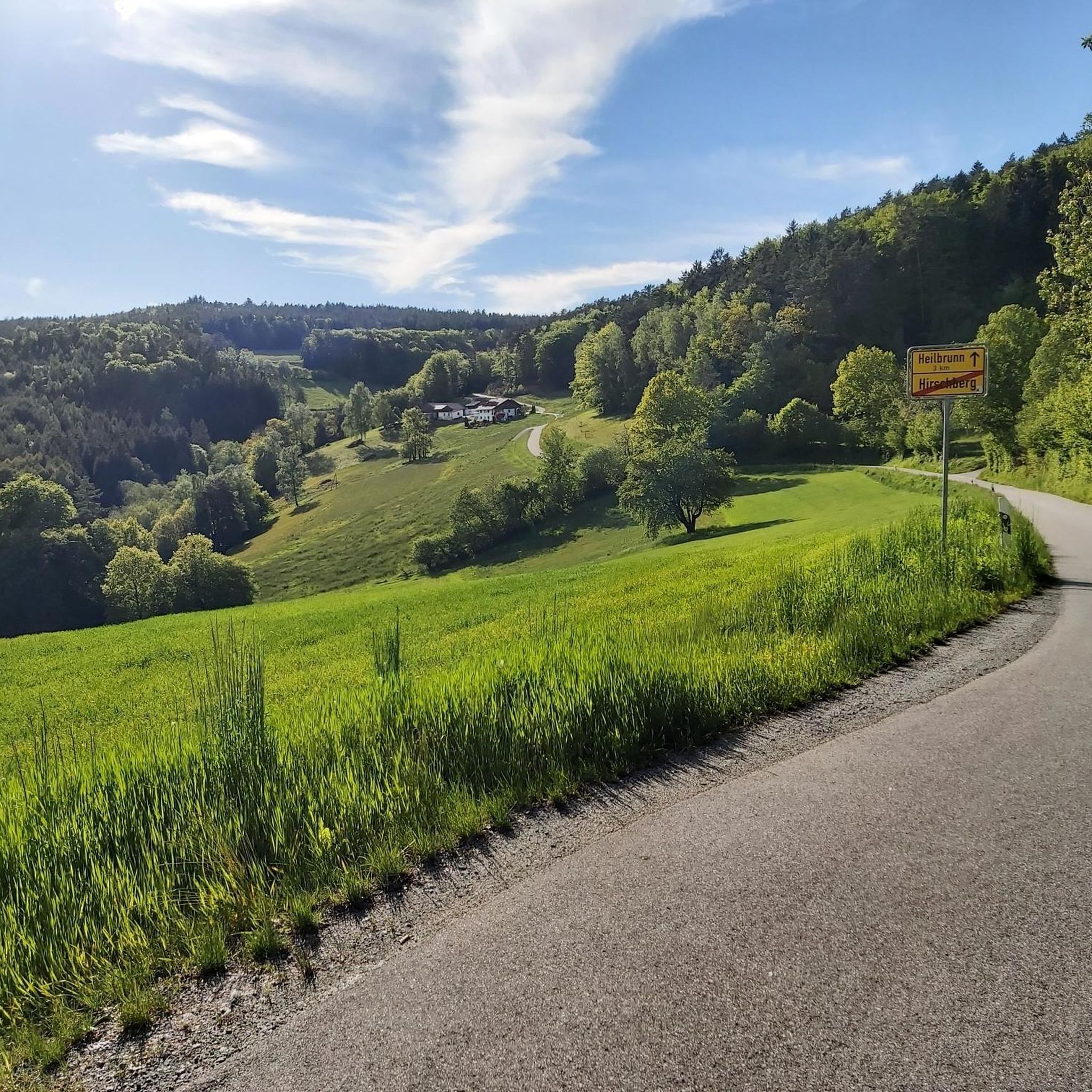
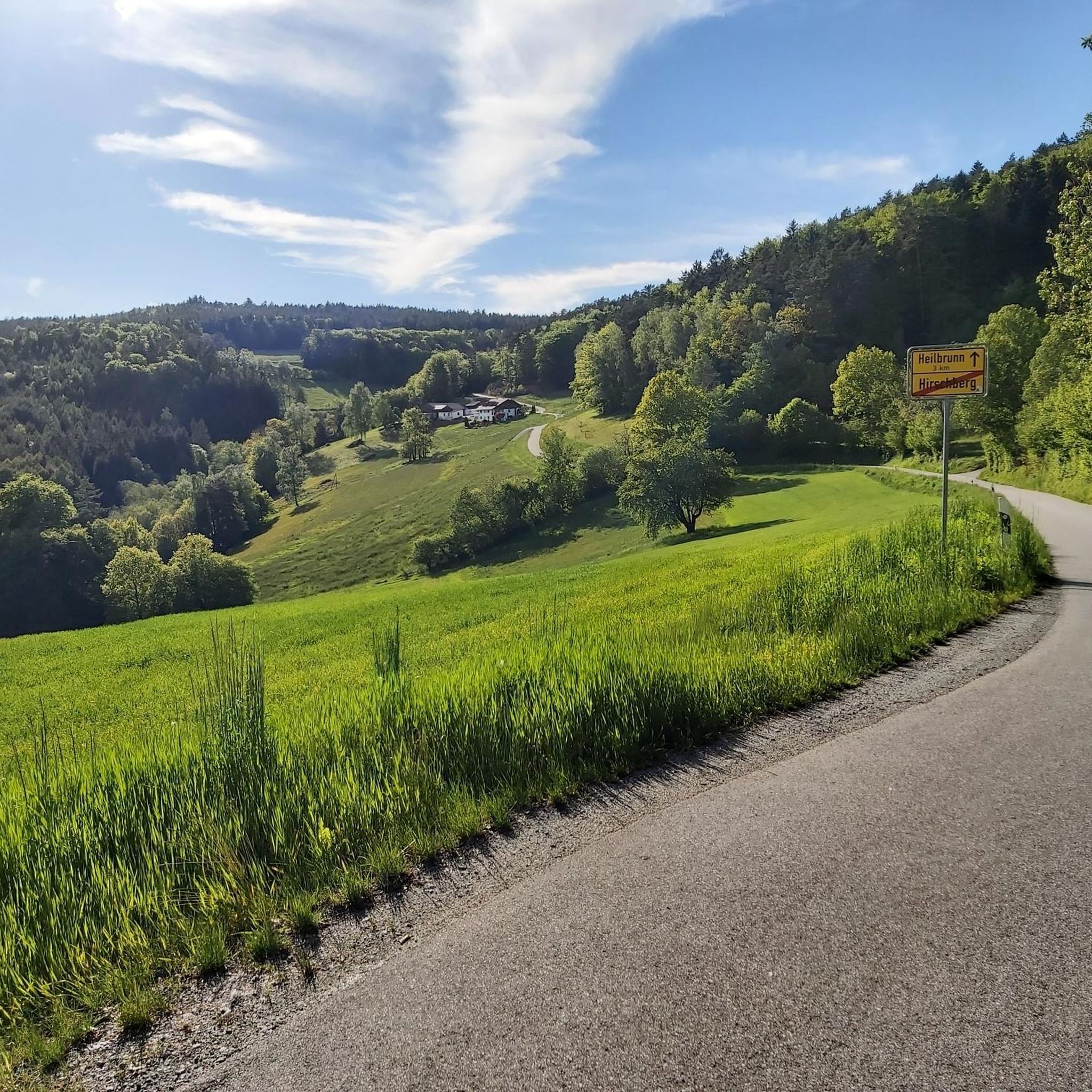
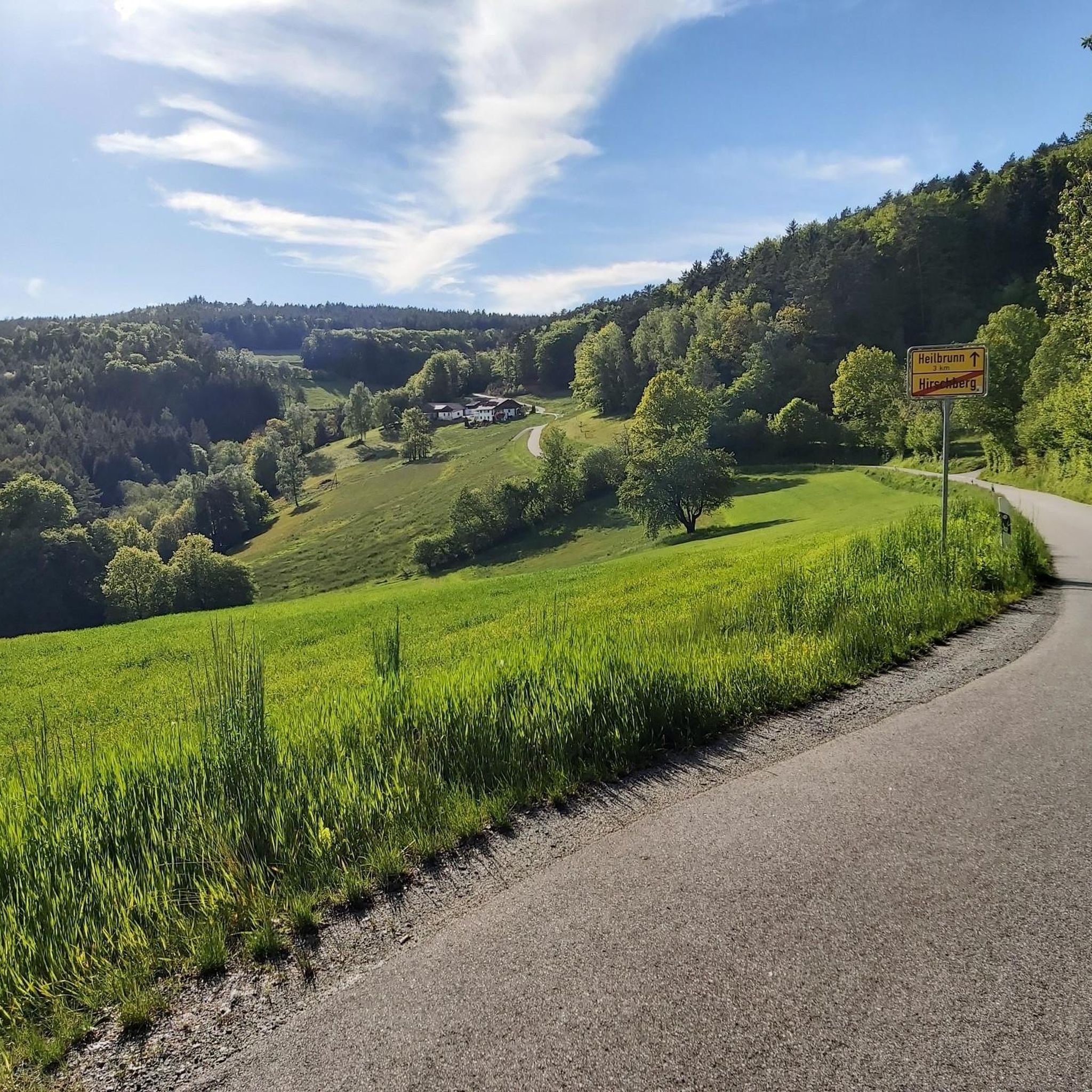
Beautifully restored chapel. Maintained by the residents of Hirschberg
1
0
At every celebration everything is beautifully decorated
2
0

Nice little church near Falkenfels
2
0

Frequently Asked Questions
How many hiking trails are available around Falkenfels?
Falkenfels offers a wide selection of hiking trails, with over 40 routes available. These range from easy walks to more challenging moderate hikes, ensuring options for various ability levels.
Are there easy hiking options suitable for beginners or families?
Yes, Falkenfels has over 20 easy hiking routes. A great option for families or beginners is the Neukirchen Castle – Falkenfels Castle loop from Falkenfels, which is about 3.5 miles (5.7 km) long and features gentle elevation changes.
What kind of scenery and attractions can I expect on hikes in Falkenfels?
The region is characterized by rolling hills, dense woodlands, and historical sites. You can explore various castles like Falkenfels Castle or Mitterfels Castle. Natural highlights include the Perlbachtal gorge and the Brandmoos Nature Reserve.
Are there any circular hiking routes in the area?
Many trails in Falkenfels are designed as loops. For example, the Falkenfels Castle – Pilgrimage Church of St. John loop from Falkenfels is a moderate 7.8-mile (12.6 km) circular trail that takes you through historical sites and scenic landscapes.
What do other hikers enjoy the most about hiking in Falkenfels?
The area is highly rated by the komoot community, with an average score of 4.5 stars from over 350 reviews. Reviewers often praise the diverse landscape, the well-maintained paths, and the combination of natural beauty with historical landmarks like the many castles.
Are there viewpoints or panoramic spots along the trails?
Yes, several routes offer expansive views. The Panoramic views to take a deep breath – Waldwelt Forest Shelters loop from Falkenfels is specifically designed to showcase stunning vistas and passes through forest shelters where you can rest and enjoy the scenery.
Is Falkenfels suitable for hiking with dogs?
Generally, the trails around Falkenfels are dog-friendly, offering varied terrain through forests and open areas. It's always recommended to keep your dog on a leash, especially near wildlife or livestock, and to carry water for both yourself and your pet.
What is the best time of year to go hiking in Falkenfels?
Spring and autumn are ideal for hiking in Falkenfels, offering pleasant temperatures and beautiful scenery as nature awakens or changes colors. Summer is also popular, but be prepared for warmer weather. Winter hikes are possible, especially on cleared paths, but some trails might be slippery or less accessible.
Are there options for parking at the trailheads?
Most popular trailheads and starting points in and around Falkenfels offer designated parking areas. It's advisable to check specific route descriptions on komoot for detailed information on parking availability at the start of your chosen hike.
Can I find places to eat or drink along the hiking routes?
While specific pubs directly on every trail might be limited, many routes pass through or near villages where you can find traditional Bavarian inns and restaurants. Planning your route to include a stop in a local village is a good way to enjoy regional cuisine.
What should I wear for hiking in Falkenfels?
Given the varied terrain and potential for moderate elevation changes, wear comfortable, sturdy hiking shoes with good grip. Layered clothing is recommended to adapt to changing weather conditions, and always bring water, especially on longer routes.
Most popular routes around Falkenfels
Most popular attractions around Falkenfels

Get inspired with the komoot mobile app


Explore more
Browse the best Hikes in other regions.
