Attractions and Places To See around Fischlham - Top 20
Best attractions and places to see around Fischlham, a municipality south of Wels in Upper Austria, offer a blend of historical, cultural, and natural experiences. The region is characterized by the Traun and Alm rivers, providing numerous paths for outdoor activities. Visitors can explore significant landmarks and natural preserves, making it a diverse destination for exploration.
Best attractions and places to see around Fischlham
- The most popular attractions is Trodatsteg Bridge, a bridge fully reserved for non-motorized locomotion. It…
Last updated: September 27, 2026
Lambach Abbey
Highlight • Religious Site
Translated by Google •
Tip by

Steckerlfisch Grill Harald Wenk
Highlight • Restaurant
Translated by Google •
Tip by

Sign up now to discover places like this
Get recommendations on the best single tracks, peaks, & plenty of other exciting outdoor places.
Wels Town Square
Highlight • Settlement
Translated by Google •
Tip by

Trinity Church Stadl-Paura
Highlight • Religious Site
Translated by Google •
Tip by
Trodatsteg Bridge
Highlight • Bridge
Translated by Google •
Tip by

Sign up for free to discover even more attractions around Fischlham.
Already have an account?
Start today with a free account
Your next adventure awaits.
Tips from the Community

Arch. Highlight and great to look at...
3
1


The Baroque pilgrimage church of Stadl-Paura rises on a hill near the right bank of the Traun River and was built between 1714 and 1724 by Johann Michael Prunner and Francesco Messenta. An earlier chapel dedicated to St. Blaise stood on the same site and was already mentioned in the early Middle Ages. The Trinity Church is considered Johann Michael Prunner's masterpiece. It is a creation of the highest perfection, both architecturally and theologically. Of particular note is that it was planned and constructed as a symbolic building with many allusions to the Holy Trinity. Francesco Borromini was an artistic role model for many architects of the time, including Johann Michael Prunner. Recognizable Borromini influences include the sweeping and receding exterior walls and towers, and the interior floor plan with the semicircular altar niches (in the towers), which respond to the circular central space. And the indirect light that streams in from above and from the sides, illuminating the altarpieces and the small fresco in the lantern. The wall openings behind the altars, the use of indirect light, and the church furnishings are all the work of Francesco Messenta in his role as interior designer.
2
1

A pharmacy founded around 1600, which has been owned by the Fritsch-Richter family for over 100 years, has developed into an international healthcare services company (Richter Pharma AG), and the location at Stadtplatz 12 to 14 and Hafergasse 1 to 3 has become a 3,500 m2 inner-city center with a unique world of experience. You can find more information about the history of the pharmacy and the symbolism in the following text. Symbolism: The eagle is considered a symbol of heaven, the snake for the earth, the underworld or wisdom, among other things. The interplay of these symbols can be found in a wide variety of traditions and religions, from the Sumerians to the Maya and the Grail story. The Rod of Asclepius is a staff wrapped around a snake and is also known as a snake staff. Originally it was an attribute of Asclepius, the god of medicine in Greek mythology. Today it is the symbol of the medical and pharmaceutical profession. In Austria, pharmacists use the Aesculapius symbol and form the snake and staff into a large curved A. Can you spot the snake? Source: www.wels.at/welsmarketing/events/top-events/welser-weihnachtswelt/welser-lichterpfad/22-adler.html
5
3

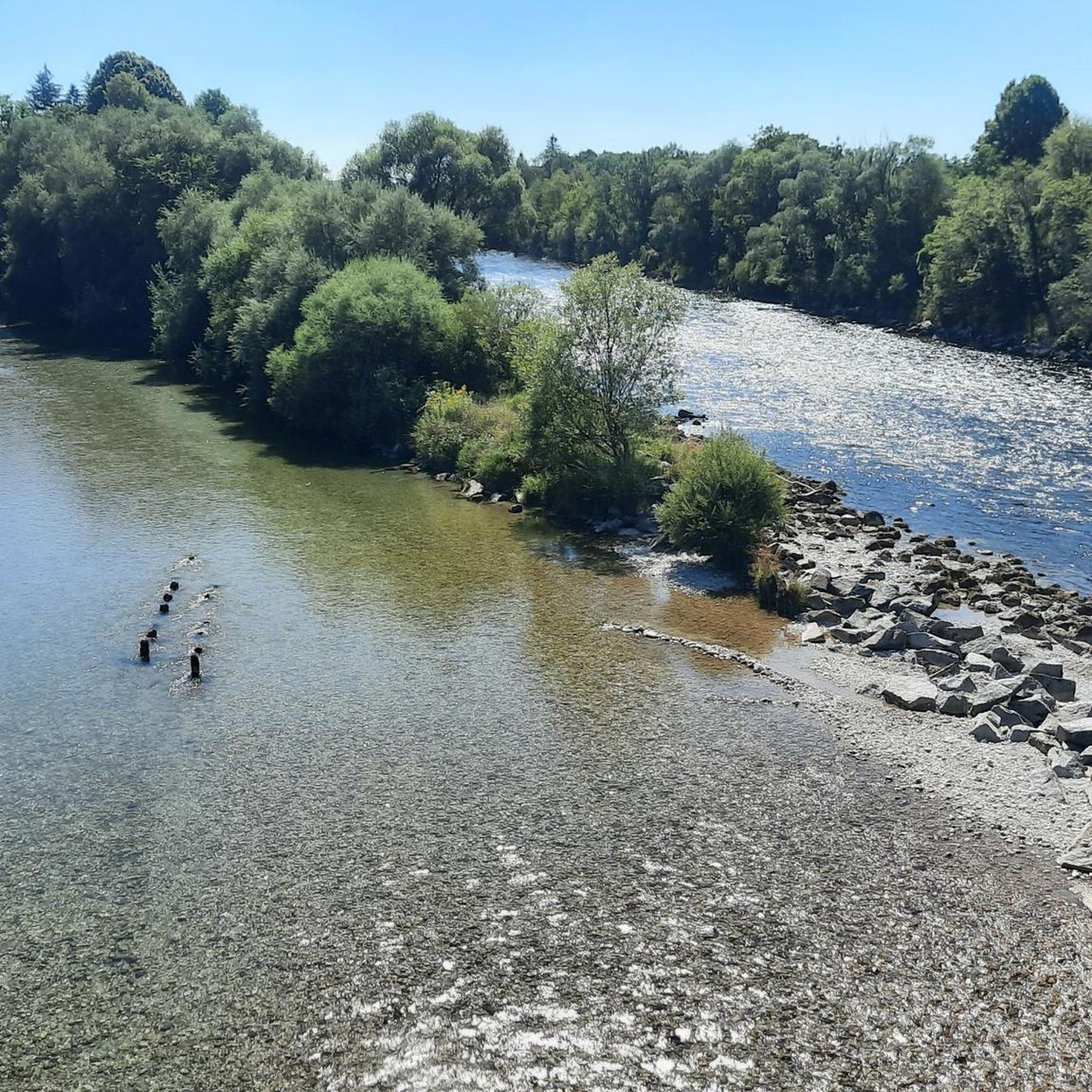
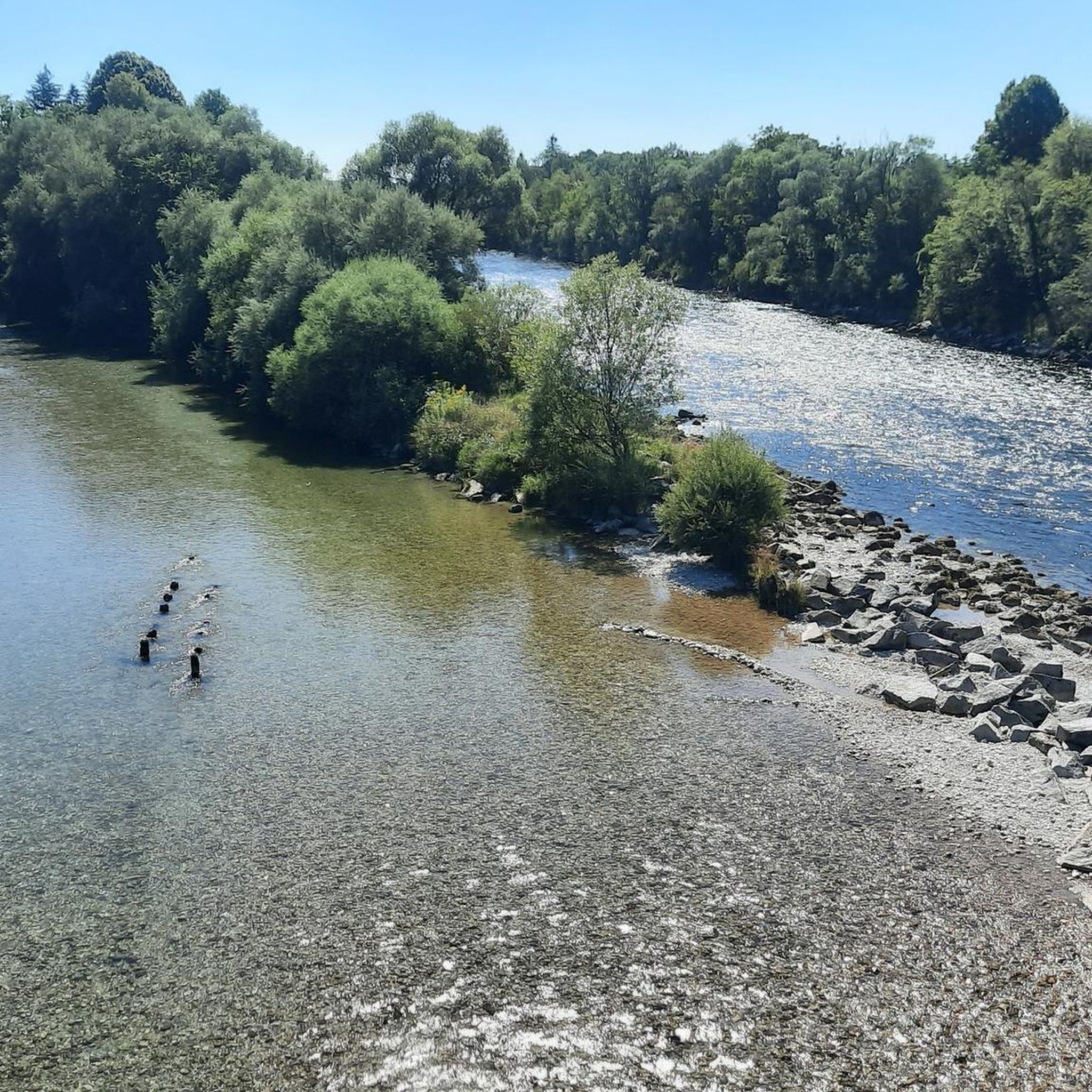
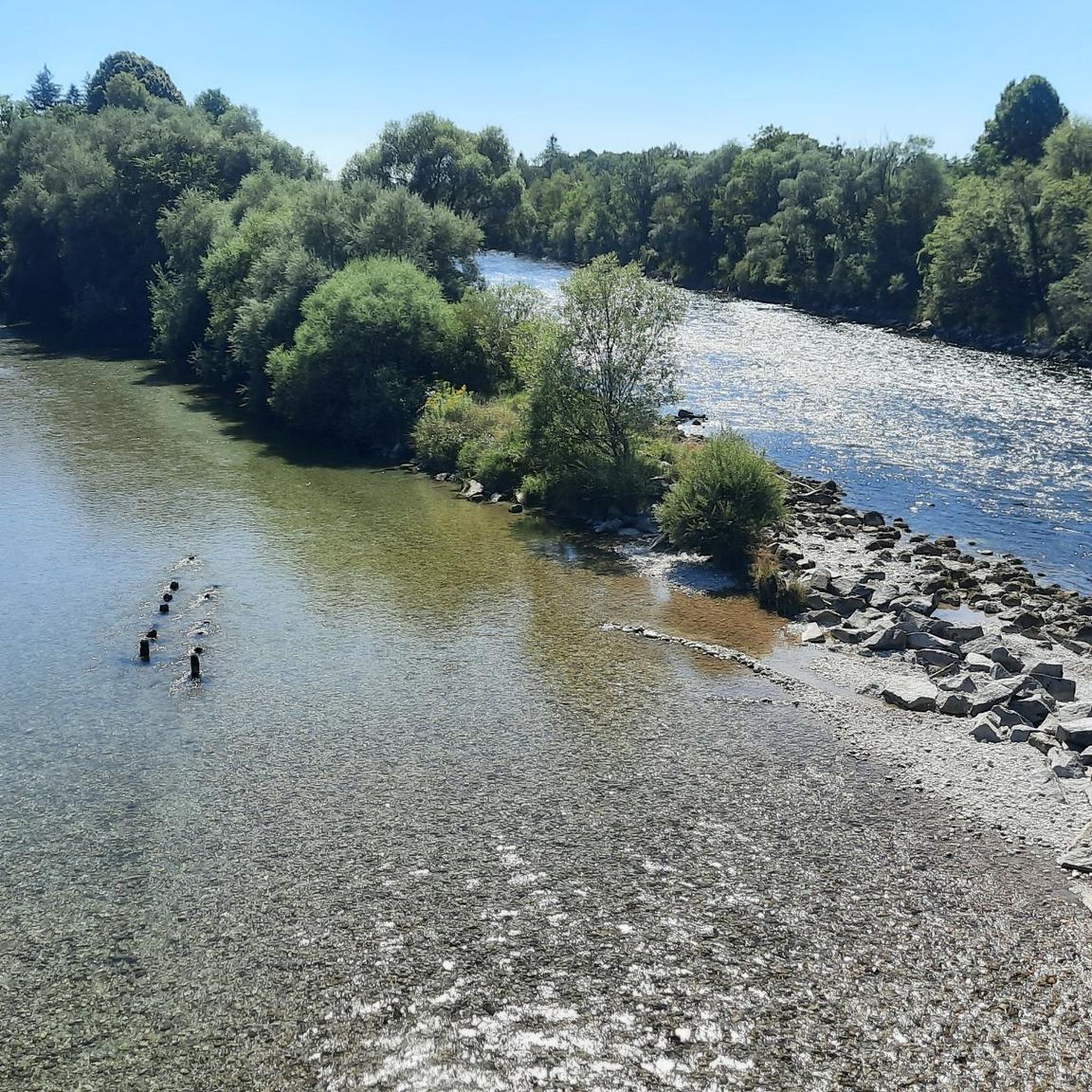
Important connection between Wels and Thalheim - only for pedestrians and cyclists!
2
1
Center of Wels The first houses were built in the 13th century
6
2

Absolutely! Almost an island...
1
1
Frequently Asked Questions
What historical and cultural sites can I visit near Fischlham?
The region offers several significant historical and cultural sites. You can explore the Lambach Abbey, an 11th-century Benedictine monastery on the Way of St. James, known for its Romanesque frescoes and Baroque elements. Another must-see is the magnificent Baroque Trinity Church Stadl-Paura, unique for its triple design. Additionally, the Gothic Parish Church with its rare 'Fischerkanzel' and the beautifully restored Bernau Moated Castle are notable landmarks.
Are there any natural preserves or scenic spots for relaxation in Fischlham?
Yes, the "Fischlhamer Au" Nature Preserve is an ideal spot for relaxation and extended walks. The region is also characterized by the Traun and Alm rivers, offering numerous scenic paths along their banks for tranquil strolls. The Traunfall is another natural scenic spot nearby.
What kind of outdoor activities, like hiking or cycling, are available near Fischlham?
Fischlham is a popular region for hiking and cycling. You can find many routes along the Traun and Alm rivers. For hiking, consider easy trails like the "Riverside Beach on the Alm – Alm Footbridge loop" or the "Villa Rustica Totenhölzl – Almsteg" circular route. Cyclists can enjoy paths like the one crossing the Trodatsteg Bridge. You can find more options in the easy hikes around Fischlham guide or the road cycling routes around Fischlham guide.
Are there family-friendly attractions in the Fischlham area?
Absolutely. Families can enjoy interactive exhibits at the Welios Science Center in Wels or visit the Zoo Schmiding / Museum - Meeting of Cultures, which combines a zoo with a museum. For a fun day out, Aquapulco, an amusement park in Bad Schallerbach, is also accessible from Fischlham. Many of the historical sites like Lambach Abbey and Wels Town Square are also considered family-friendly.
Can I find wheelchair-accessible attractions or trails?
Yes, some attractions are noted for their accessibility. The Wels Town Square and the Trodatsteg Bridge are both considered wheelchair accessible, offering pleasant areas for exploration.
What makes the <a href="https://www.komoot.com/highlight/350831" target="_blank" rel="noopener">Trinity Church Stadl-Paura</a> unique?
The Trinity Church Stadl-Paura is renowned for its unique Baroque design where everything, from altars to colors, appears in threes. It was built between 1714 and 1725 as a vow after the plague passed Lambach, making it a truly distinctive architectural and spiritual site.
Where can I find a good meal or stop for a break while exploring?
The Lambach Abbey features a monastery restaurant in its inner courtyard, perfect for a break. Additionally, Steckerlfisch Grill Harald Wenk is an idyllically located eatery popular with hikers and cyclists, offering tasty food in a pleasant setting.
Are there any specific walking or cycling routes recommended along the rivers?
Yes, the region is rich with paths along the Traun and Alm rivers. Popular options include the "Riverside Beach an der Alm – Almsteg" circular route, an easy and picturesque path. The "Almsteg – Fischtreppe Reuharting" circular tour through the Almtal is also a local favorite for both walking and cycling. The Trodatsteg Bridge provides a pleasant bike path connecting Thalheim to Wels.
What is the best time of year to visit Fischlham attractions?
The spring and summer months (May to September) are generally ideal for visiting Fischlham, as the weather is pleasant for outdoor activities like hiking and cycling along the rivers and exploring the nature preserves. Cultural sites and historical landmarks are typically accessible year-round, but the warmer months allow for a more comfortable overall experience.
What is the <a href="https://www.komoot.com/highlight/150754" target="_blank" rel="noopener">Wels Town Square</a> known for?
The Wels Town Square is known for its elongated shape and numerous arcaded courtyards, making it a great place for strolling and stopping at various establishments. It forms the historical and social heart of Wels, impressing visitors with its continuous rows of colorful townhouses from the Gothic, Renaissance, and Baroque periods.
Are there any dog-friendly walking options near Fischlham?
While specific dog-friendly designations for all trails are not detailed, the numerous paths along the Traun and Alm rivers, as well as the "Fischlhamer Au" Nature Preserve, generally offer ample opportunities for walks with dogs, provided they are kept on a leash and local regulations are followed.
What is the <a href="https://www.komoot.com/highlight/112029" target="_blank" rel="noopener">Trodatsteg Bridge</a> used for?
The Trodatsteg Bridge is fully reserved for non-motorized locomotion, serving as an integral footpath and cycle path connecting Thalheim to Wels. It's appreciated for its modern architecture and is a popular spot for cyclists and pedestrians.
Most popular routes around Fischlham
Most popular attractions around Fischlham

Get inspired with the komoot mobile app


Explore more
Still not found the Highlight you’re looking for? See guides of the top attractions in other regions:
