Top 9 Castles around Straßburg
Best castles around Straßburg offer a journey through centuries of history in the historical Alsace area. This region is rich in impressive fortresses, many of which are easily accessible. These castles showcase diverse architectural styles, from medieval mountain fortresses to ruins with modern cultural spaces. The area provides a captivating blend of historical exploration and scenic views of the Vosges mountains and the Alsace plain.
Best castles around Straßburg
- The most popular castles is Petersberg Castle Ruins (Burgruine Petersberg),…
Last updated: October 4, 2026
Friesach Castle Construction
Highlight • Historical Site
Castle construction in Friesach is extraordinary in itself: a hilltop castle is being built on a mountain hill south of the medieval town of Friesach …
Translated by Google •
Tip by

Hochkraig Castle
Highlight • Castle
Translated by Google •
Tip by

Sign up now to discover places like this
Get recommendations on the best single tracks, peaks, & plenty of other exciting outdoor places.
Petersberg Castle Ruins (Burgruine Petersberg)
Highlight • Castle
Translated by Google •
Tip by

Frauenstein Castle
Highlight • Castle
Showing Translation
Tip by

Pöckstein Castle
Highlight • Castle
Translated by Google •
Tip by
Sign up for free to discover even more castles around Straßburg.
Already have an account?
Start today with a free account
Your next adventure awaits.

Other adventures around Straßburg

Tips from the Community

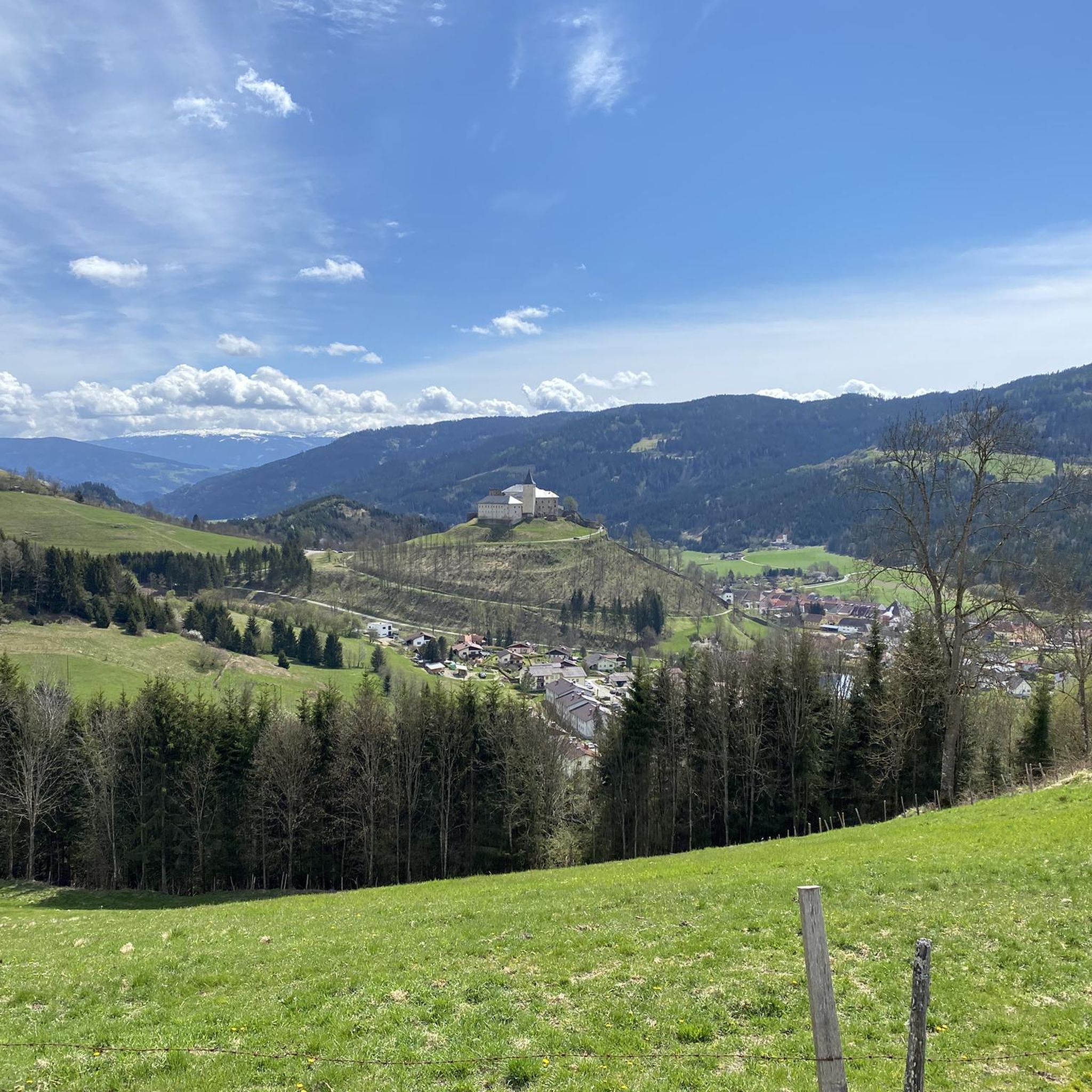
The late medieval Frauenstein Castle is one of the best-preserved late Gothic castles in Carinthia and was originally a rare moated castle. Even though it is now privately owned and cannot be visited from the inside, it is worth taking a look at the impressive complex from the outside.
0
0

A former bishops' residence, you can also view the castle from the inside by appointment.
0
0


A magnificent building at the confluence of two rivers….
2
0

A very special round with a great view of the city of Friesach 🤩
1
0

should you have been upstairs, great view
1
0

A short evening hike is also very nice when the entire area is illuminated.
1
0

Experience castle building in Friesach Castle construction in Friesach is extraordinary in itself: a hilltop castle is being built on a mountain hill south of the medieval town of Friesach with the craftsmanship from bygone times. The focus of interest is the process of building without the aid of modern equipment. Only through the traditional craftsmanship of those involved, supported by powerful Noriker horses, a castle complex with two towers, palas, curtain walls and chapel emerges in a construction period of around 40 years. The construction site is a "history laboratory". The visitors can watch the craftsmen supported by ESF funds in their arduous activities, rediscover knowledge that was believed to be lost and thus learn from the past. You will experience everyday life in the Middle Ages, immerse yourself in the Middle Ages, step out of the daily narrow, oppressive time schedule and into a "delayed time". And they marvel at the contemporary medieval handicraft that used to get by without technical aids. You "experience" the authentic working day on a medieval construction site in peace and tranquility.
1
0
Frequently Asked Questions
Which castles near Strasbourg offer the best panoramic views?
For breathtaking panoramic views, consider visiting Château du Haut-Kœnigsbourg, which offers vistas of the Alsace plain, Vosges mountains, Black Forest, and even the Alps on clear days. Similarly, Château du Hohlandsbourg provides a magnificent 360-degree view of the Alsace plain, Vosges Mountains, and Black Forest, with Strasbourg Cathedral's spire and the Swiss Alps visible on clear days. From Château de Lichtenberg, you can enjoy beautiful views of the Northern Vosges Regional Nature Park.
Are there family-friendly castles to visit near Strasbourg?
Yes, several castles are great for families. Château du Haut-Kœnigsbourg is a popular destination for families, offering insights into medieval life. Château de Fleckenstein features a 'Castle of Challenges' with playful and interactive experiences. Château du Hohlandsbourg is also considered an excellent option for families and children due to its interactive scenography, archaeological artifacts, and multimedia games.
What is the best time of year to visit castles in the Alsace region?
The castles in the Alsace region are generally best visited from spring through autumn (April to October) when the weather is mild and conducive for exploring the outdoor grounds and enjoying the panoramic views. During these months, most castles have extended opening hours and host various events. Winter visits can be picturesque, especially after snowfall, but some facilities or access might be limited.
Which castles near Strasbourg are known for their unique architecture or historical significance?
Château du Haut-Kœnigsbourg is iconic for its extensive restoration and 15th-century mountain fortress architecture, showcasing drawbridges, fortified walls, and a weapons room. Château de Fleckenstein is unique as a 'troglodyte castle' carved into a striking rock formation, with rooms built directly into the cliff. Château de Lichtenberg stands out for blending medieval architecture with modern cultural spaces and contemporary glass structures, showcasing nine centuries of history.
Can I find hiking trails near the castles in the Vosges mountains?
Yes, the castles in the Vosges mountains are often surrounded by excellent hiking opportunities. For instance, Château de Fleckenstein is situated amidst magnificent pine woods and offers numerous hiking trails. The area around Château de Lichtenberg also provides opportunities for circular walks within the Northern Vosges Regional Nature Park.
How accessible are the castles near Strasbourg by public transport?
Accessibility varies by castle. Château du Haut-Kœnigsbourg is relatively accessible, with shuttle buses available from Sélestat train station. For other castles, public transport options might be more limited, often requiring a combination of train and bus, or a car for the final leg of the journey. It's advisable to check specific routes and schedules for each castle.
Are there any castles near Strasbourg that offer medieval reenactments or cultural events?
Yes, Château du Hohlandsbourg serves as a center for medieval reenactments, history, and cultural events, providing an interactive and playful experience. Château de Lichtenberg also functions as a cultural and historical center, hosting exhibitions, artistic creations, and various events throughout the year.
Which castle is the largest fortified castle in Alsace?
Château du Hohlandsbourg is known as the largest fortified castle in Alsace. Dating back to the 13th century, it sits at an altitude of 620 meters and features high granite walls enclosing a grand courtyard.
What kind of natural features can I expect to see around these castles?
The castles are often nestled in scenic natural settings. You can expect to see the vast Alsace plain, the rolling Vosges mountains, and the dense Black Forest from various viewpoints. Many castles, like Château de Fleckenstein and Château de Lichtenberg, are surrounded by forests, offering a blend of historical exploration and natural beauty.
Are there any castles that were significantly restored or rebuilt?
Château du Haut-Kœnigsbourg underwent extensive restoration at the beginning of the 20th century under Kaiser Wilhelm II, providing a remarkable insight into medieval architecture. Château de Lichtenberg, after being left in ruins, saw significant restoration in the 1990s, with contemporary elements added to the existing ruins. Château du Hohlandsbourg also underwent extensive restoration in the 1990s.
Which castle is known for its 'troglodyte' features?
Château de Fleckenstein is famously known as a 'troglodyte castle' because it was carved into a striking rock formation, with many of its rooms built directly into the cliff itself. This unique construction makes it a fascinating site to explore.
Most popular attractions around Straßburg

Get inspired with the komoot mobile app


Explore more
Looking for the best castles somewhere else? Discover other guides around Straßburg:
