Top 13 Caves around Eggendorf
Best caves around Eggendorf are situated within the wider Lower Austria region, which is characterized by varied geological formations. The area features a range of natural features, including significant cave systems. These subterranean landscapes provide opportunities for exploration and offer insights into the region's natural history. The terrain around Eggendorf and its surrounding areas includes both accessible and more challenging cave environments.
Best caves around Eggendorf
- The most popular caves is Höhlturm, a historical site that is one of…
Last updated: August 29, 2026
Eisenstein Cave
Highlight • Cave
Translated by Google •
Tip by

Höhlturm
Highlight • Historical Site
Translated by Google •
Tip by

Sign up now to discover places like this
Get recommendations on the best single tracks, peaks, & plenty of other exciting outdoor places.
Sign up for free
Steinerner Stadl
Highlight • Natural Monument
Translated by Google •
Tip by
Wilder Ofen Cave
Highlight • Cave
Translated by Google •
Tip by

Gainfarner Cave
Highlight • Cave
Translated by Google •
Tip by
Sign up for free to discover even more caves around Eggendorf.
Sign up for free
Already have an account?
Start today with a free account
Your next adventure awaits.
Login or Signup
Tips from the Community

A bouldering paradise Among climbers (especially boulderers), the Steinerne Stadl is known far beyond the region and is considered one of the most extreme bouldering sites in Lower Austria. Since you climb almost exclusively under the horizontal rock roof of the stone bridge, the area demands extremely athletic moves. The showpiece of the around 30 routes is the boulder diagonal "Outer Limits" (difficulty grade 7c+/8a trav.), which leads completely through the roof.
1
0

Inside the stone barn, remains of stone tools and ceramics have been found, and it is now assumed that this cave also served as a cult room from the Neolithic to the Iron Age (and possibly later). Its proximity to the Hoffmannshöhle suggests a resonance/connection.
2
0
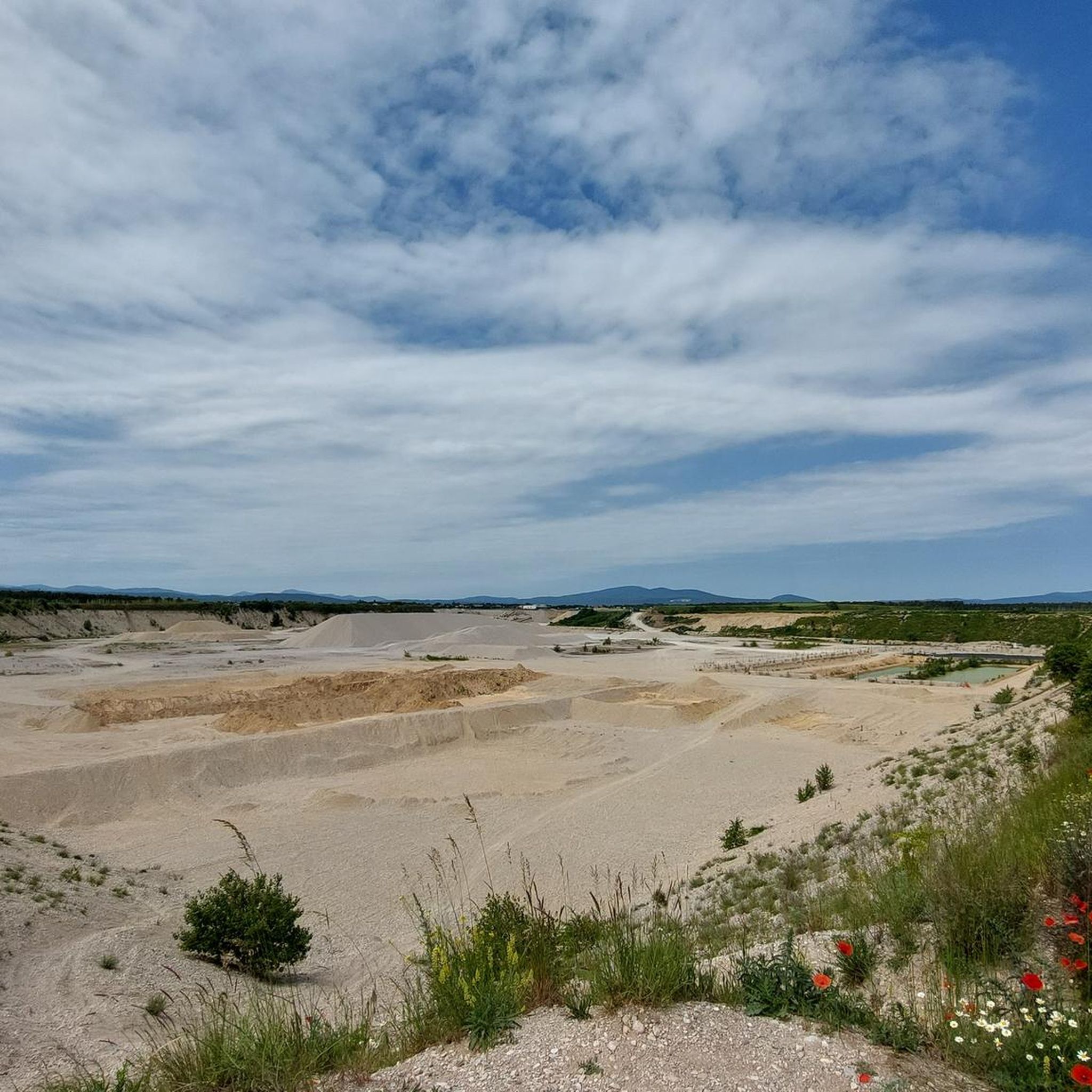
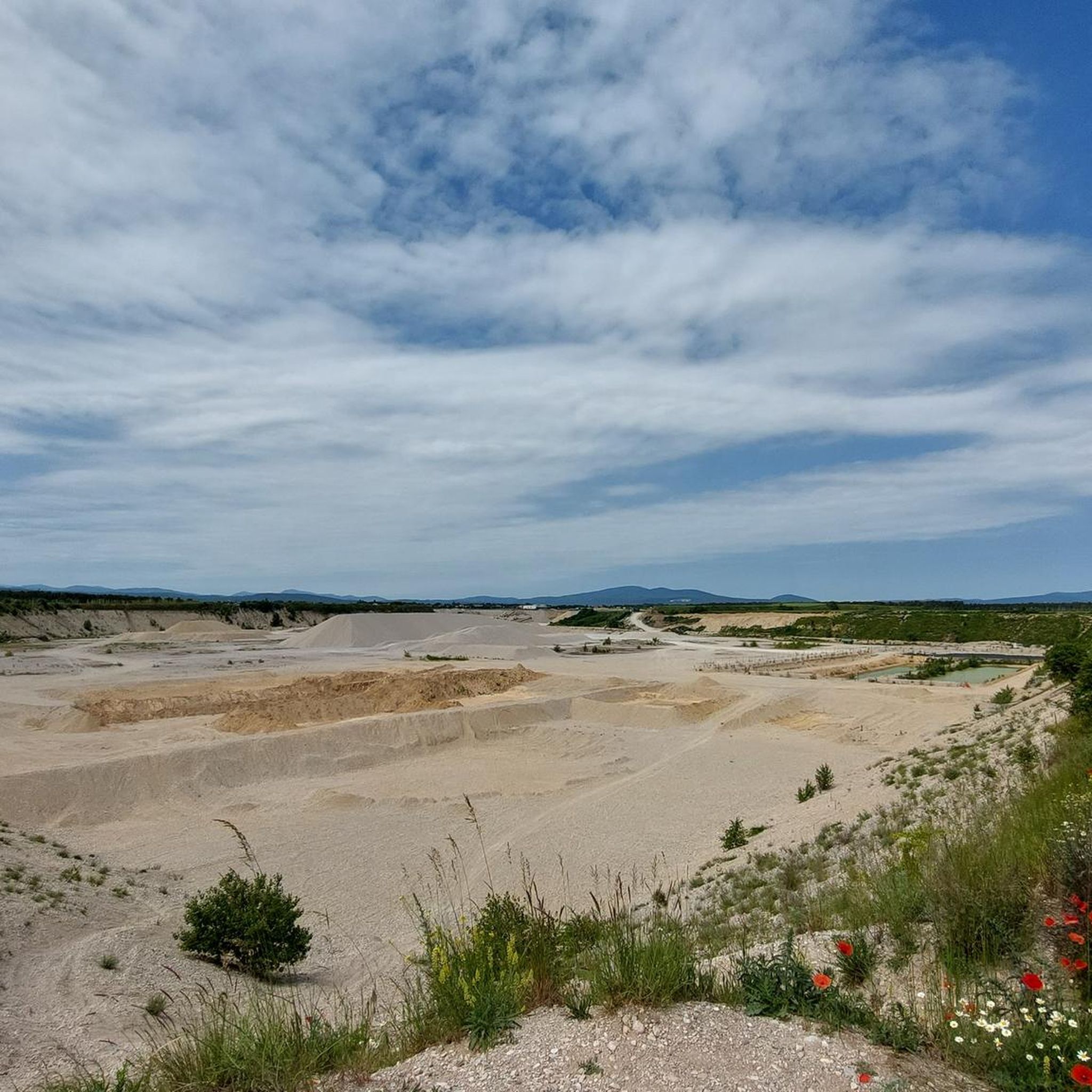
This is a former sand quarry. Between the sand layers, there are also large, angular stones due to the rapid deposition at the time. The sandy material, also called "Gainfarner Dolmitsand", was formerly used as braking sand for the Vienna tramway, as well as for brick production, etc.
2
0
In the cave there is a thermal spring, whose water temperature is indicated to be between 13 and 16.5 degrees Celsius.[1][2] The Eisensteinhöhle is located in a fault zone striking NNE-SSW and dipping at an average of 47°, directly at the edge of the Eastern Alps against the Vienna Basin and shows up to 5 superimposed gangways; its maximum horizontal extent is 147 m.
1
0
This is a former sand quarry for friction sand. Between the sand layers, there are sometimes large stones that are angular due to the rapid deposition at the time. The sandy material, also called "Gainfarner Dolmitsand", was formerly used as braking sand for the Vienna tram, and for brick production, etc.
0
0
The panoramic trail with a beautiful circular view over the market town and magnificent views into the valley begins at the Höhlturm (a small ruin that served as an observation post for the Starhemberg ruin) and, after a steep, sweaty climb on beautiful forest paths, leads to Henninger, which is not directly on the hiking trail.
1
0

A super great place that you should see
0
0

Unfortunately, part of the cave has collapsed, so entering the cave is prohibited.
0
0
Frequently Asked Questions
What types of caves can I explore around Eggendorf?
The region around Eggendorf, within Lower Austria, offers a diverse range of cave experiences. You can find large historical caves like Höhlturm, natural rock bridges such as Steinerner Stadl, and challenging thermal caves like Eisenstein Cave. There are also more intimate forest caves like Finkenhaus Cave and water caves such as Myralucke.
Are there any family-friendly caves near Eggendorf?
Yes, several caves in the broader region are suitable for families. The Wilder Ofen Cave is noted for its large rooms and is considered interesting for children. The Seegrotte Hinterbrühl, with Europe's largest underground lake and a boat ride, offers an engaging experience for all ages, featuring step-free access to most areas.
What is the best time of year to visit caves around Eggendorf?
Many caves maintain a constant temperature year-round, making them suitable for visits in any season. For example, the Eisenstein Cave is consistently +13°C, and Seegrotte Hinterbrühl is 9°C. Show caves like Einhornhöhle typically operate from Easter to the end of September on Sundays and public holidays. It's always best to check specific opening times for individual caves before planning your visit.
What gear or clothing should I bring for caving in the Eggendorf region?
For more adventurous caving experiences, such as the one-hour tour in Eisenstein Cave, visitors are typically equipped with helmets, overalls, boots, and carbide lamps. For less strenuous show caves, comfortable walking shoes and a light jacket are usually sufficient due to the cool, constant temperatures underground.
Are there any caves with historical significance near Eggendorf?
Absolutely. Höhlturm is a historical site and one of the largest caves in the Mandling-Waxeneck area. The Steinerner Stadl, a natural rock bridge, has evidence of ancient human use, with stone tools and ceramics found inside, suggesting it served as a cult room from the Neolithic period to the Iron Age. The Seegrotte Hinterbrühl also offers insights into its history as a mine.
What are some unique geological features of the caves in this region?
The caves around Eggendorf showcase diverse geological formations. The Eisenstein Cave is a significant thermal cave with a spring at its deepest point and features like coral and popcorn sinter. The Myralucke Cave is an episodically active water cave, notable for being the source of the Mirabach. The Seegrotte Hinterbrühl is famous for housing Europe's largest underground lake.
Can I find challenging caving experiences or via ferratas near Eggendorf?
Yes, for those seeking more adventure, the region offers challenging options. The Eisenstein Cave tour involves navigating loamy steps and four iron ladders. The Myralucke Cave includes siphon sections requiring specialized equipment. Additionally, the Frauenluckensteig on Hohe Wand is a via ferrata that passes through a 15-meter vertical cave shaft, combining climbing with caving.
What outdoor activities can I combine with a visit to the caves?
The area around Eggendorf is excellent for various outdoor activities. You can find numerous hiking and cycling routes. For hiking, explore options like the 'Fischa Spring – Fischa Stream loop' or the 'Way of the Cross – Chapel loop'. Cyclists can enjoy routes such as the 'Wiener Neustädter Canal loop' or the 'Schlosspark Pottendorf loop'. You can find more details on these activities in the Hiking around Eggendorf and Cycling around Eggendorf guides.
Are there any caves with underground lakes or water features?
Yes, the Seegrotte Hinterbrühl is home to Europe's largest underground lake, covering 6,200 square meters, offering an impressive boat ride experience. The Myralucke Cave is also a notable episodically active water cave, known for being the source of the Mirabach.
What is the Finkenhaus Cave like?
The Finkenhaus Cave (Kat.Nr. 1864/42) is a more intimate cave experience, hidden in the forest between the Andreasstein and the Pfaffenkogel. It's described as a place to 'tuck your head and take a look inside,' suggesting a less developed, natural exploration opportunity.
What do visitors enjoy most about the caves around Eggendorf?
Visitors appreciate the diversity of experiences, from accessible guided tours to challenging caving adventures. Highlights like Höhlturm are praised for their size and picnic areas, while Eisenstein Cave is valued as a unique thermal cave. The natural beauty and geological history, along with the opportunity for exploration, are frequently mentioned.
Is the Seegrotte Hinterbrühl accessible for everyone?
The Seegrotte Hinterbrühl offers step-free access for most of its tour, making it quite accessible. However, the lower level where the boat ride on the underground lake takes place may have some steps. It maintains a constant temperature of 9°C year-round.
Most popular routes around Eggendorf
Most popular attractions around Eggendorf

Get inspired with the komoot mobile app


Explore more
Extend your search for the best caves by checking out these guides of the top ones around Eggendorf:
