The best MTB trails around Forheim
4.6
(613)
1,964
riders
364
rides
Mountain biking around Forheim offers diverse terrain characterized by rolling hills, dense forests, and significant elevation changes, particularly within the Franconian Switzerland region. The landscape features unique karst topography with impressive rock formations and river valleys carved by waterways like the Regnitz and Trubach. This area provides a network of mountain bike trails suitable for various skill levels, from gentle paths to challenging singletracks.
Best mountain bike trails around Forheim
- The most popular mountain bike trail is Niederhaus Castle Ruins…
Last updated: June 27, 2026
3
riders
24.6km
02:15
400m
400m
Moderate mountain bike ride. Good fitness required. Advanced riding skills necessary.
5.0
(1)
4
riders
40.2km
03:25
630m
630m
Moderate mountain bike ride. Good fitness required. Advanced riding skills necessary.

Sign up for free
3.0
(1)
7
riders
42.4km
02:50
370m
370m
Moderate mountain bike ride. Good fitness required. Advanced riding skills necessary.
5.0
(1)
5
riders
25.3km
01:30
210m
200m
Easy mountain bike ride. Great for any fitness level. Suitable for all skill levels.
5.0
(1)
4
riders
50.6km
03:28
350m
350m
Moderate mountain bike ride. Good fitness required. Suitable for all skill levels.
Get access to more routes and recommendations from other explorers.
Sign up for free
Already have an account?
Our route recommendations are based on thousands of hikes, rides, and runs completed by other people on komoot.
Start today with a free account
Your next adventure awaits.
Login or Signup
Tips from the Community


The 1,000 mm gauge Härtsfeld Railway from Neresheim to Dillingen/Donau served the Härtsfeld on the eastern Swabian Jura in Baden-Württemberg from 1901 until its closure in 1972. After the closure of the "Schättere", the track facilities were completely dismantled and the vehicles scrapped. In 1984, the "Freundeskreis Schättere" was formed, which emerged a year later as the Härtsfeld-Museumsbahn e.V. (HMB). Original vehicles and some identically constructed vehicles were purchased and restored, tracks and switches were laid, and a museum was established in the former Neresheim station building. On May 16, 1996, the first groundbreaking ceremony for the reconstruction of the first, 3 km long section took place, which was then officially opened on October 20, 2001, on the hundredth birthday of the railway. A second section of approx. 2.6 km to the Härtsfeldsee was built between 2007 and 2021 and officially opened on August 1, 2021. The third section to Dischingen is yet to be built. From June 20 - 21, 2026, the 1,000 mm gauge tank locomotive "RUR"🚂 from the Selfkantbahn narrow-gauge railway museum in Gangelt-Schierwaldenrath was a guest. It was built in 1899 by the Henschel & Sohn locomotive factory in Kassel for the Dürener Dampfstraßenbahn (Düren Steam Tramway). It is one of the few surviving tank steam locomotives developed for inner-city tram operation. After its later conversion to a steam storage locomotive, it served as a works locomotive in the Schoeller paper mill in Birkesdorf before coming to the Selfkantbahn in 1972 as a non-operational exhibit. Its handover to the partner company KLEINBAAN Service of the Dutch narrow-gauge enthusiast Wim Pater in 2013 enabled its complete restoration to its original condition as a fired wet steam locomotive. The RUR is the only surviving steam locomotive of the formerly eight 1,000 mm gauge narrow-gauge railways in the Rhenish Bay and, at 126 years old, is the oldest operational steam locomotive in the Rhineland. It is based at the Selfkantbahn and runs on selected operating days and makes guest appearances at other 1,000 mm gauge museum railways.
0
0

Located directly on the forecourt of the castle
0
0

The Church of the Assumption of Mary is one of Dillingen's most important religious buildings and is closely linked to the life of Sebastian Kneipp. For him, his fellow students, and teachers, it was something like a private church, as it belonged to the seminary where Kneipp studied theology from 1848 onward. Thus, it is not only architecturally interesting but also a central location during his years in Dillingen. The church was originally built in the 17th century and acquired its present Rococo form in the 18th century.
0
0

Beautifully renovated old town with the school in the building
0
0

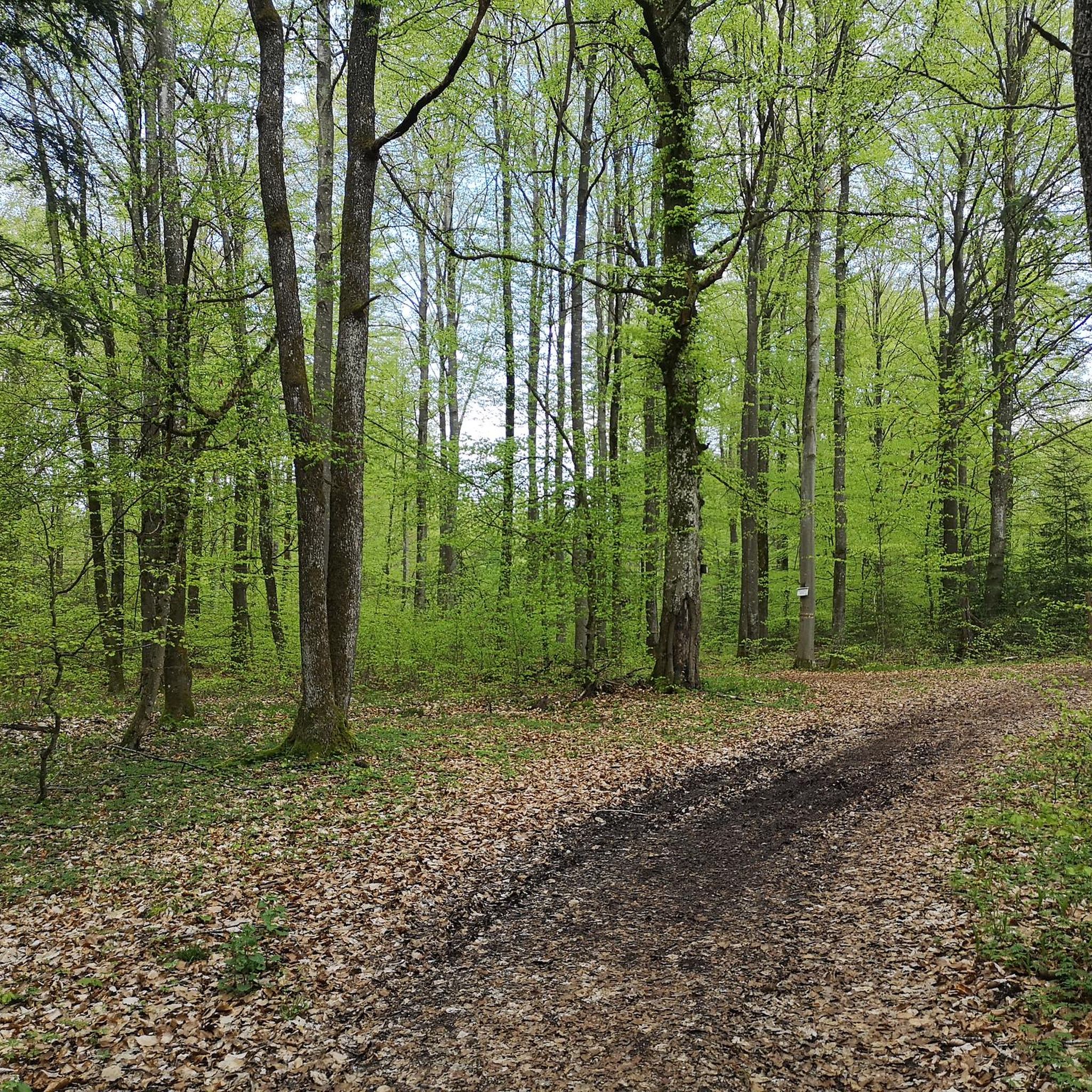
A fantastic highlight of the tour. The path leads from the top, practically through the castle ruins, down to the pond :-)
0
0

In Königsstrasse in Dillingen you will find everything you need for a culinary break.
0
0
Three territories – the Duchy of Bavaria, the County of Öttingen, and that of Prince Thurn and Taxis – met here.
0
0
Frequently Asked Questions
How many mountain bike trails are available around Forchheim?
The Forchheim region offers a comprehensive network of over 380 mountain bike trails. These routes cater to a wide range of abilities, ensuring there's something for every rider.
What are the difficulty levels of mountain bike trails in Forchheim?
You'll find a good mix of difficulties. There are 61 easy trails, 297 moderate routes, and 29 challenging trails for experienced riders. This variety ensures that both beginners and advanced mountain bikers can find suitable options.
When is the best time of year for mountain biking in Forchheim?
The most favorable seasons for mountain biking in Forchheim are spring and autumn. During these times, the weather is typically mild, and the trails are generally dry, offering optimal riding conditions.
What kind of terrain can I expect on mountain bike trails near Forchheim?
The terrain around Forchheim is incredibly diverse, characterized by rolling hills, dense forests, and significant elevation changes, especially within the Franconian Switzerland region. You'll encounter unique karst topography with impressive rock formations, as well as picturesque river valleys carved by waterways like the Regnitz and Trubach.
Are there any specific natural features or landmarks to look out for on the trails?
Absolutely. The region is known for its unique karst landscape, featuring dramatic rock formations and an extensive network of caves. Notable natural features include the Eagle mountain and the Blankenstein (664 m). You might also encounter impressive natural rock formations like those near the Oswald Cave or the Riesenburg Collapse Cave mentioned in the region's research.
Can I find trails with good viewpoints in the Forchheim area?
Yes, the region offers several elevated areas with fantastic vistas. The Ehrenbürg and the Walberla, for instance, provide sweeping views of the natural landscape and Franconian Switzerland. For specific viewpoints, consider routes that pass by highlights like the View of the Ipf near Bopfingen or the Eisbühl Summit Cross and Valley View.
Are there family-friendly mountain bike trails in Forchheim?
Yes, Forchheim has 61 easy mountain bike trails that are suitable for families or those looking for a more relaxed ride. These routes often feature gentler paths through forests and along river valleys, providing a pleasant experience for all skill levels.
Are there any circular mountain bike routes available?
Many of the mountain bike routes in Forchheim are designed as loops, allowing you to start and finish at the same point. An example is the moderate Niederhaus Castle Ruins – Bollstadt Transmission Tower loop from Hagburg, which offers varied terrain over 24.5 km.
What are some longer mountain bike routes for experienced riders?
For experienced riders seeking longer distances, the region offers several options. The Neresheim Abbey – Katzenstein Castle loop from Ederheim is a moderate 39.5 km trail that takes about 3 hours 21 minutes to complete, leading through historical sites and natural scenery.
What do other mountain bikers say about the trails in Forchheim?
The mountain bike trails in Forchheim are highly rated by the komoot community, with an average score of 4.6 stars from over 445 reviews. More than 1700 mountain bikers have used komoot to explore the varied terrain, often praising the diverse landscapes and well-maintained paths.
Are there any historical sites or cultural attractions near the mountain bike trails?
Forchheim itself is rich in history, boasting a well-preserved medieval and Baroque appearance. You can explore the Kaiserpfalz (Imperial Palace), the town church of St. Martinus, or the historic Town Hall. While not directly on every trail, these sites are easily accessible from many starting points and offer a cultural complement to your ride.
Are there options for advanced mountain bikers seeking a challenge?
Yes, Forchheim and the surrounding Franconian Switzerland region provide challenging options for advanced riders. The landscape features steep climbs and exhilarating descents, with 29 difficult trails available. Dedicated bike parks with obstacles and jumps are also present for those seeking adrenaline.
Most popular attractions around Forheim

Get inspired with the komoot mobile app


Explore more
Browse the best MTB trails in other regions.
