The best walks and hikes around Odivelas
4.5
(1238)
14,043
hikers
346
hikes
Hiking around Odivelas offers access to diverse landscapes, ranging from urban green spaces to the natural parks surrounding the Lisbon District. The municipality serves as a convenient base for exploring areas like Monsanto Forest Park and the Sintra-Cascais Natural Park. These regions feature varied terrain, including ancient limestone quarries, lush vegetation, and coastal views. The elevation changes are generally gentle within Odivelas itself, with more significant climbs found in nearby natural areas.
Best hiking trails around Odivelas
- The most popular hiking route is Golf loop from National Library of Portugal, a 3.1 miles (4.9 km) trail that takes 1 hour 16 minutes to complete. This easy route explores urban green spaces near the National Library.
- Another top favourite among local hikers is Campo Pequeno Bullring – Estádio José Alvalade loop from Campo Grande, an easy 4.7 miles (7.5 km) path. This loop connects notable city landmarks and urban areas.
- Local hikers also love the Mural of a Man Playing Guitar loop from Estádio José Alvalade, a 2.7 miles (4.4 km) trail leading through urban neighborhoods and cultural points, often completed in about 1 hour 9 minutes.
- Hiking around Odivelas is defined by its proximity to urban parks, diverse natural parks like Sintra-Cascais, and varied landscapes including lush vegetation and coastal paths. The network offers options for different ability levels, from easy city walks to more challenging trails in nearby natural areas.
- The routes in Odivelas are highly rated by the komoot community with an average score of 4.5 stars from over 1,000 reviews. More than 14,000 hikers have used komoot to explore Odivelas's varied terrain.
Last updated: July 2, 2026
5.0
(1)
56
hikers
5.55km
01:26
30m
30m
Easy hike. Great for any fitness level. Easily-accessible paths. Suitable for all skill levels.
33
hikers
Easy hike. Great for any fitness level. Easily-accessible paths. Suitable for all skill levels.

Sign up for free
4.0
(1)
24
hikers
4.55km
01:13
50m
50m
Easy hike. Great for any fitness level. Easily-accessible paths. Suitable for all skill levels.
4
hikers
12.5km
03:32
240m
240m
Moderate hike. Good fitness required. Mostly accessible paths. Sure-footedness required.
3
hikers
5.13km
01:20
30m
30m
Easy hike. Great for any fitness level. Easily-accessible paths. Suitable for all skill levels.
Get access to more routes and recommendations from other explorers.
Sign up for free
Already have an account?
Our route recommendations are based on thousands of hikes, rides, and runs completed by other people on komoot.
Start today with a free account
Your next adventure awaits.
Login or Signup

Tips from the Community

The Mário Soares Garden, also known as Campo Grande Garden, is located in the parish of Alvalade, on the street named Campo Grande, being the largest garden in the center of Lisbon, occupying an area of 13.38 hectares, reaching 1,200m in length by 200m in width. The garden is divided into 2 zones, by Av. do Brasil: the North zone with 6ha and the South zone with 5ha.
3
0
Author: Nuno Saraiva Year of execution: 2018 Description: On Nelson Mandela International Day, July 18, the Alvalade Parish Council inaugurated the mural honoring the South African statesman, internationally recognized for his fight for freedom and peace. The painting is by Nuno Saraiva, in collaboration with João Carola, Marcelo Duchamp and Carine Demoustier. Nelson Mandela (1918-2013) was president of South Africa and leader of the anti-Apartheid movement, sentenced to life imprisonment in 1964, and released in 1990, after great international pressure. In 1994, after achieving multiracial elections, he was elected the first democratic president of South Africa. He passed away in Johannesburg, the city of his childhood, on December 5, 2013. Location: Rua Dr. João Soares
3
0

The Guarita de Monsanto is a historic structure located in the Monsanto Forest Park in Lisbon. Although not one of the park's best-known sites, it is part of the complex of military fortifications built in the Serra de Monsanto as part of Lisbon's defensive system in the late 19th and early 20th centuries.
3
0
The Monsanto Interpretation Center (CIM) is the ideal gateway to an in-depth exploration of the Monsanto Forest Park, Lisbon's largest green space. This center offers a unique educational and environmental experience, combining nature, culture, and sustainability.
3
0
Excellent restaurant, very old and with a pleasant atmosphere. Excellent food and fair prices for the type of restaurant. Hours Monday 12:00-23:00 Tuesday 12:00-23:00 Wednesday 12:00-23:00 Thursday 12:00-23:00 Friday 12:00-23:00 Saturday 12:00-23:00 Sunday 12:00-23:00
4
1
The park has three distinct areas: the Central Nave of Quinta das Conchas, the Woods and the Lilacs. The Central Nave, the largest area, is made up of large lawns dotted with trees and offers open views, which invite you to play ball and have picnics on the grass. It is bordered at the highest point by a group of olive and olive trees and, at the bottom, next to the large lake, there is a mass of large eucalyptus trees, classified as a grove of trees of public interest, where there are picnic tables, in an excellent area for relaxing. The Woods, a denser forest area with more intact nature, is made up of a varied set of tree species, with a stand of trees of the ZelKova Serrata species, also classified as a public interest, standing out, as well as Himalayan cedars and Buçaco cedars. In some places, there is a dense cover of shrubs, such as adernos, sanguinhos, elders and hawthorns, which are very important for several species of birds as shelter, feeding and nesting sites. Separated from Quinta das Conchas by a wall, we have Quinta dos Lilases, a more secluded environment, with its famous artificial lake, of romantic inspiration, representing the islands of São Tomé and Príncipe. The vegetation is marked by the alignment of olive trees next to the wall of Quinta das Conchas and by the presence of eucalyptus, poplars, ash trees, gleditsias and species of the Quercus genus. The shrub layer is reduced, with pomegranate trees and notable groups of old and large box trees standing out. The clearing areas are covered in dry grassland. This farm has a community orchard area, recently built as part of a Participatory Project. The existence of diverse habitats gives this Park great value in terms of biodiversity, with a higher number of species than usual for urban green spaces.
2
1
The name of the park indicates that in the past there were two large quintas here. Quinta is a tough word to translate, it is similar to the French château or country house. Those quintas were called Conchas and Lilases. The quintas were built in the 16th century and were always inhabited by prosperous Portuguese families who traded in coffee. Since 1966 the quintas have been managed by the city of Lisbon. For a long time nothing was done with the quintas and the surrounding lands. In 2005, the quintas were opened to the public and the park was laid out.
2
1

Frequently Asked Questions
How many hiking trails are available around Odivelas?
There are over 350 hiking routes around Odivelas, offering a wide variety of experiences. These include easy urban walks and more challenging trails in the surrounding natural parks. You'll find options for all skill levels, from short strolls to longer excursions.
Are there easy hiking trails suitable for beginners in Odivelas?
Yes, Odivelas offers many easy hiking trails perfect for beginners. Out of over 350 routes, more than 230 are classified as easy. These often explore urban green spaces and offer gentle terrain. An example is the Campo Pequeno Bullring – Churrasqueira do Campo Grande loop from Campo Grande, which is an easy 5.1 km path.
What natural parks can I explore near Odivelas for hiking?
Odivelas serves as a convenient base for exploring several significant natural parks. You can easily access Monsanto Forest Park, known for its diverse vegetation and routes like the 'Trail of the Six Quarries'. The Sintra-Cascais Natural Park is also readily accessible, offering stunning coastal views, lush landscapes, and historical sites. Further south, Arrábida Natural Park provides harmonious landscapes with green mountains meeting the ocean.
Are there any circular hiking routes around Odivelas?
Yes, many of the hiking routes around Odivelas are circular, allowing you to start and end at the same point. For instance, the Golf loop from National Library of Portugal is a popular circular trail that explores urban green spaces.
What do other hikers say about the trails in Odivelas?
The hiking routes around Odivelas are highly regarded by the komoot community, holding an average rating of 4.5 stars from nearly 1,200 reviews. Over 14,000 hikers have used komoot to explore the area, often praising the diverse landscapes and the accessibility to both urban green spaces and natural parks.
Are there family-friendly hiking options near Odivelas?
Absolutely. Many of the easier trails around Odivelas are suitable for families. Monsanto Forest Park, for example, offers diverse terrain and integrated natural and cultural landscapes that can be enjoyable for all ages. Look for routes classified as 'easy' for the most family-friendly experiences.
Can I bring my dog on the hiking trails around Odivelas?
Many natural areas and parks around Odivelas are dog-friendly, but it's always best to check specific park regulations or individual trail rules. Monsanto Forest Park is generally welcoming to dogs, but they should typically be kept on a leash. Always ensure your dog is under control and that you clean up after them.
What kind of landmarks or attractions can I see while hiking near Odivelas?
Hiking near Odivelas offers opportunities to see a mix of natural and historical landmarks. You can explore beautiful gardens like Gulbenkian Garden or Quinta das Conchas and Lilases Park. Historical sites such as St. George's Castle or the Palace of the Marquises of Fronteira are also accessible, offering cultural points of interest alongside your outdoor adventure.
Are there any moderate or challenging hikes for experienced hikers?
Yes, while Odivelas itself has many easy routes, the surrounding natural parks offer more challenging options. There are over 100 moderate routes and 18 difficult routes available. For a moderate challenge, consider the Guarita loop from Alfornelos, which covers 12.5 km with significant elevation changes.
How can I access hiking trails near Odivelas using public transport?
Odivelas's proximity to Lisbon means many trailheads, especially those in urban parks like Monsanto Forest Park, are accessible via public transport. Lisbon's extensive metro and bus network can connect you to various starting points. For specific routes, it's advisable to check local transport schedules to plan your journey to the trailhead.
Are there any urban hikes that connect city landmarks?
Yes, Odivelas's location allows for urban hikes that connect notable city landmarks. An example is the Campo Pequeno Bullring – Estádio José Alvalade loop from Campo Grande, an easy 7.5 km path that links significant urban areas and points of interest.
What is the best time of year to go hiking around Odivelas?
The region around Odivelas generally enjoys a mild climate, making hiking pleasant for much of the year. Spring (March to May) and autumn (September to November) are often ideal, with comfortable temperatures and lush landscapes. Even winter can offer good hiking conditions, though some trails might be muddier after rain. Summers can be hot, so early morning or late afternoon hikes are recommended during this season.
Are there any trails that offer viewpoints or scenic vistas?
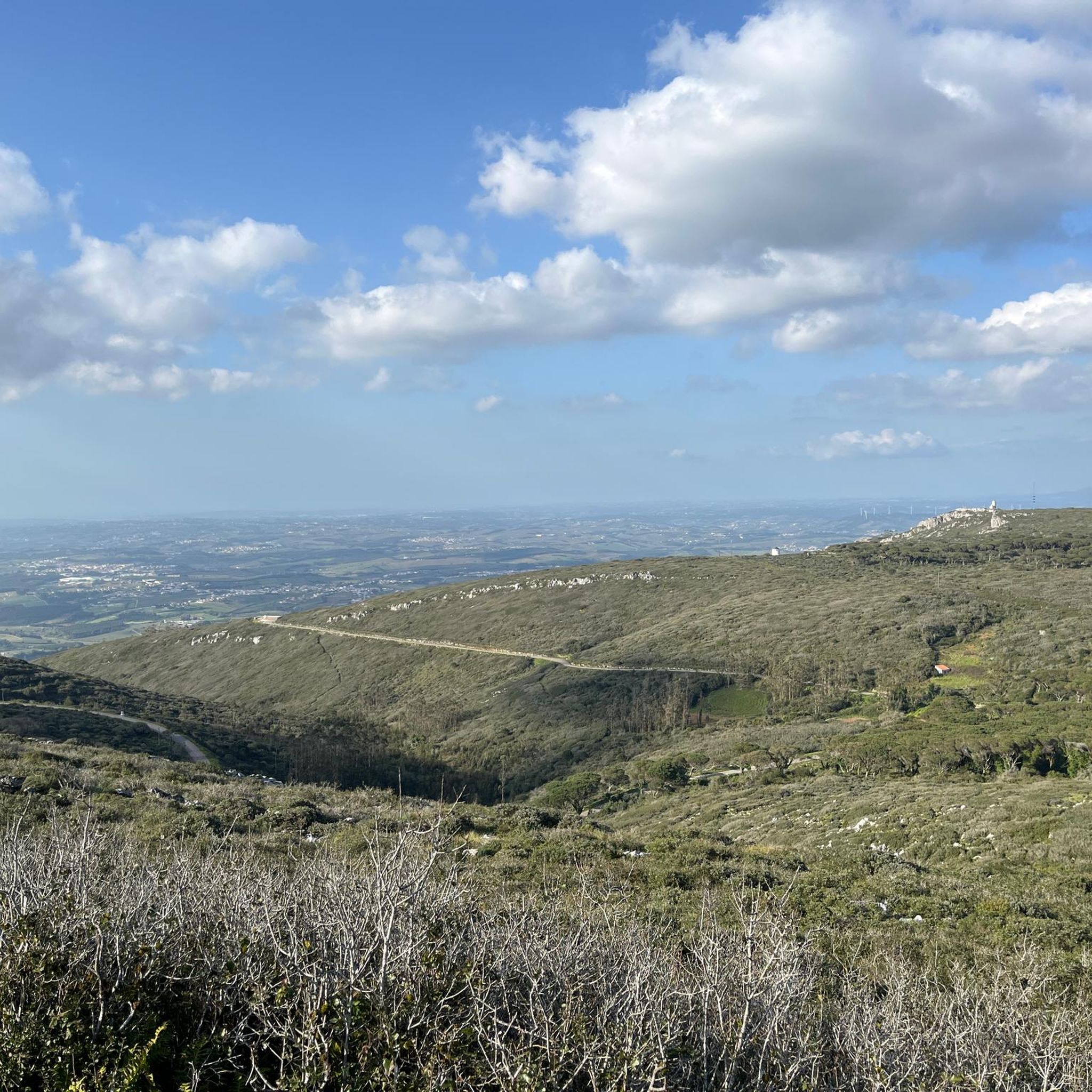
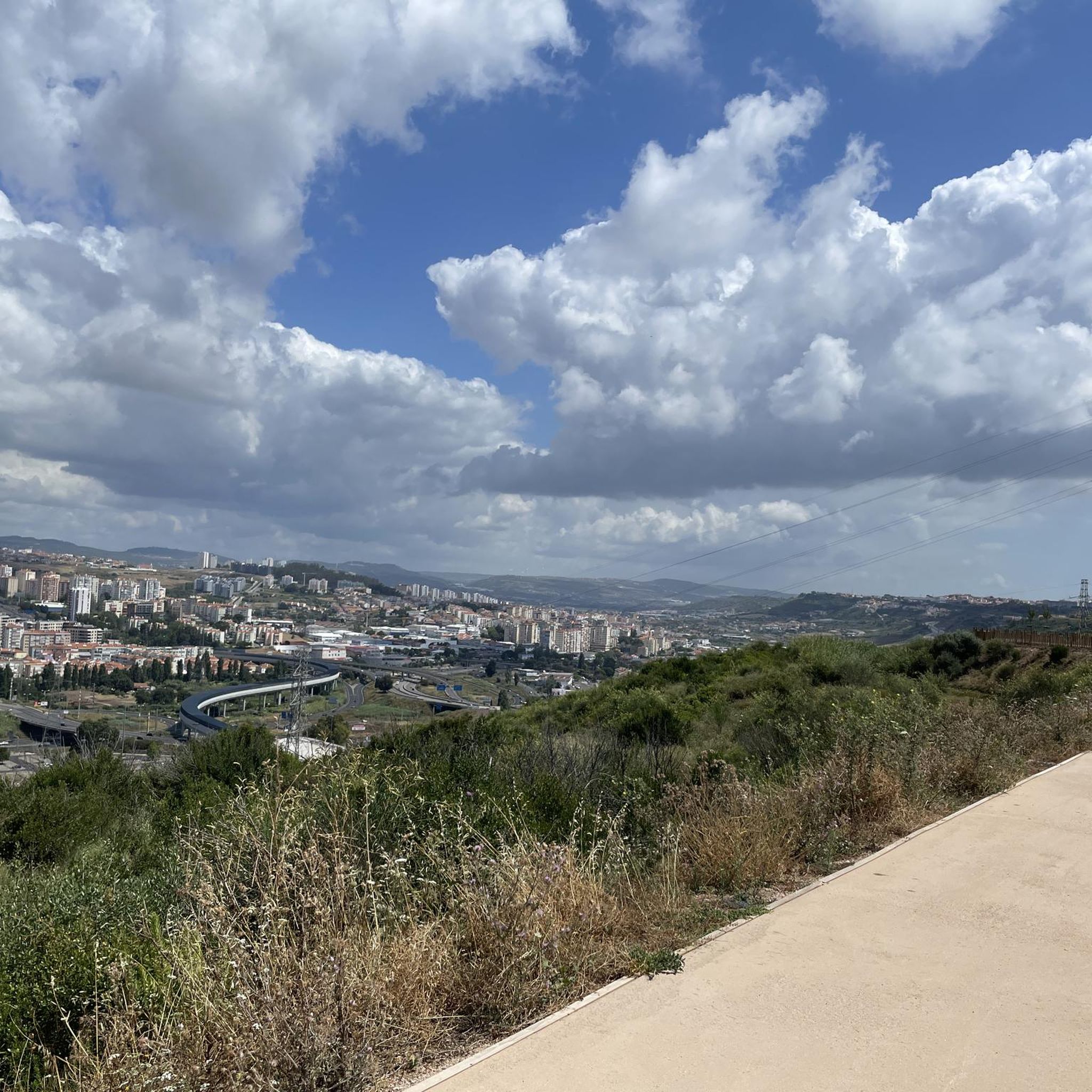
Yes, especially in the nearby natural parks. The Sintra-Cascais Natural Park, readily accessible from Odivelas, is renowned for its stunning coastal views and dramatic limestone cliffs, offering numerous scenic vistas. Monsanto Forest Park also provides elevated points with views over the city and surrounding areas.
Most popular attractions around Odivelas

Get inspired with the komoot mobile app


Explore more
Browse the best Hikes in other regions.
