The best cycling routes around Loures
4.9
(13)
174
riders
18
rides
Touring cycling around Loures offers a diverse landscape, ranging from riverside trails to undulating terrain with hills and agricultural plains. The region features varied topography, including rolling hills and dense forests, providing a mix of challenging climbs and rewarding descents. Ancient volcanic activity has shaped a landscape characterized by scenic valleys and fresh springs. This blend of natural features creates an engaging backdrop for touring cyclists.
Best touring cycling routes around Loures
- The most popular touring cycling route is Café…
Last updated: August 29, 2026
26
riders
27.7km
02:04
250m
250m
Moderate bike ride. Good fitness required. Mostly paved surfaces. Suitable for all skill levels.
18
riders
39.4km
02:42
300m
300m
Moderate bike ride. Good fitness required. Mostly paved surfaces. Suitable for all skill levels.

Sign up for free
5.0
(2)
11
riders
18.8km
01:17
90m
90m
Easy bike ride. Great for any fitness level. Mostly paved surfaces. Suitable for all skill levels.
5.0
(1)
14
riders
24.9km
01:40
100m
100m
Easy bike ride. Great for any fitness level. Mostly paved surfaces. Suitable for all skill levels.
10
riders
63.2km
04:12
970m
970m
Hard bike ride. Very good fitness required. Mostly paved surfaces. Suitable for all skill levels.
Get access to more routes and recommendations from other explorers.
Sign up for free
Already have an account?
Our route recommendations are based on thousands of hikes, rides, and runs completed by other people on komoot.
Start today with a free account
Your next adventure awaits.
Login or Signup
Tips from the Community

Heard the bell of this church from my quiet time at Parque de Merendas some nights ago in Pero Negro...so I thought...go find that bell this morning...and I did!!! 🔥 💪😊
0
0

The National Palace of Mafra, located in the town of Mafra, Portugal, is a monumental complex that includes a palace, a convent, a basilica, and the Tapada de Mafra (hunting grounds). Construction began in 1717, commissioned by King John V of Portugal in fulfillment of a vow for the succession of his wife, and it is the most important monument of Portuguese Baroque. Since 2019, the Palace has been a UNESCO World Heritage Site.
2
0


Nice pitsop for a drink on a hot summer day!
1
0

Baroque architectural complex comprising a Palace, a Basilica and a Convent, together with gardens and a vast Tapada, forming a historical heritage complex covering over 1,200 hectares, inscribed on the UNESCO World Heritage List in 2019. Built by order of King João V in fulfilment of a succession vow, Mafra Palace is one of the most important Baroque monuments in Portugal and one of the largest in Europe, occupying a construction area of 38,000 m2, with around 1,200 rooms, 5,200 doors and windows and 156 staircases. UNESCO has recognised this monument as a feat of architecture, engineering and human genius. Based on designs by Filippo Juvarra, its final design was carried out by the German Johann Friedrich Ludwig (João Frederico Ludovice) and construction was led by the kingdom's chief engineer, Custódio Vieira. The first stone was laid on 17 November 1717 and the Basilica was consecrated on 22 October 1730. The Basilica, inspired by the great churches of Rome, has one of the most significant collections of Italian sculpture of its time, with 58 statues, a large crucifix with archangels in adoration and three high reliefs, as well as an important collection of paintings, representing some of the most famous painters active in Italy and France in the early 1730s. The collection of vestments and liturgical implements is also very significant, due to its quality and rarity. The Palace Library is one of the most iconic spaces in the monument. With a refined selection of around 30,000 volumes, it is one of the exponents of Enlightenment knowledge representative of the court culture of the first half of the 18th century. Also noteworthy is the bell ringing ensemble, with 120 bells, which include two of the largest carillons of the 18th century, cast in Antwerp and Liège in the workshops of Willem Witlockx and Nicolas Levache, respectively. The bells are accompanied by two clocks dating from the first half of the 18th century, as well as four automatons for automatic music. Inside the Basilica is a set of pipe organs, unique in the world, consisting of six instruments designed to play together, built between 1792 and 1807 by the Portuguese organ builders António Machado e Cerveira and Joaquim Peres Fontanes. The Mafra Palace has been a member of the Association of European Royal Residences since 2009.
5
0
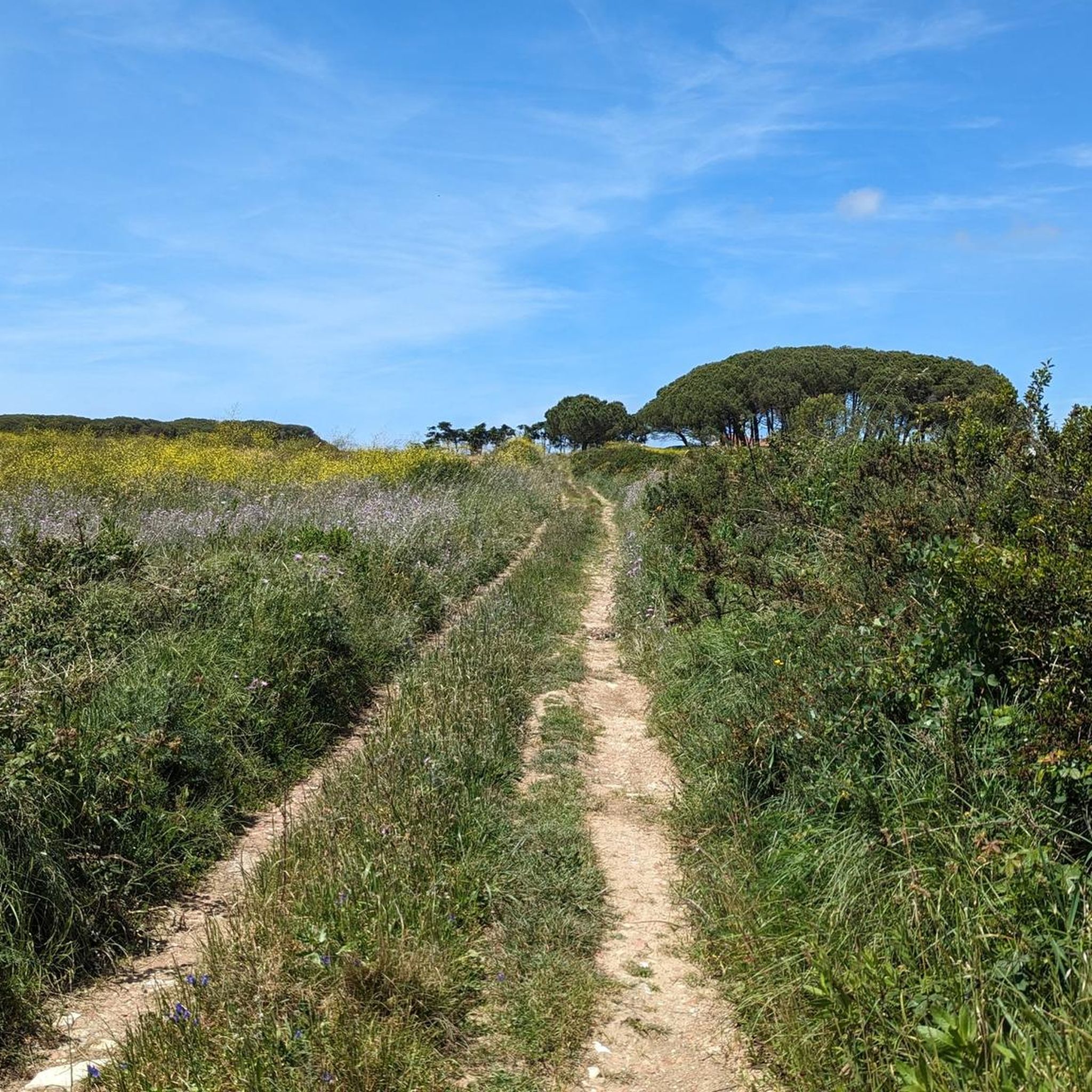
Official path of the Caminho de Fátima, it gets really muddy in case of rain but definitely a beautiful gravel road.
0
0

Frequently Asked Questions
What kind of terrain can I expect when touring cycling around Loures?
Loures offers a diverse landscape for touring cyclists, ranging from mostly flat riverside trails along the Trancão River to more undulating terrain with hills and agricultural plains. This variety caters to different fitness levels, providing options from relaxed rides to more challenging ascents.
How many touring cycling routes are available in the Loures area?
There are 18 touring cycling routes documented in the Loures area on komoot. These routes vary in difficulty, with 7 easy, 3 moderate, and 8 difficult options, ensuring there's something for every skill level.
Are there any easy touring cycling routes suitable for beginners or families in Loures?
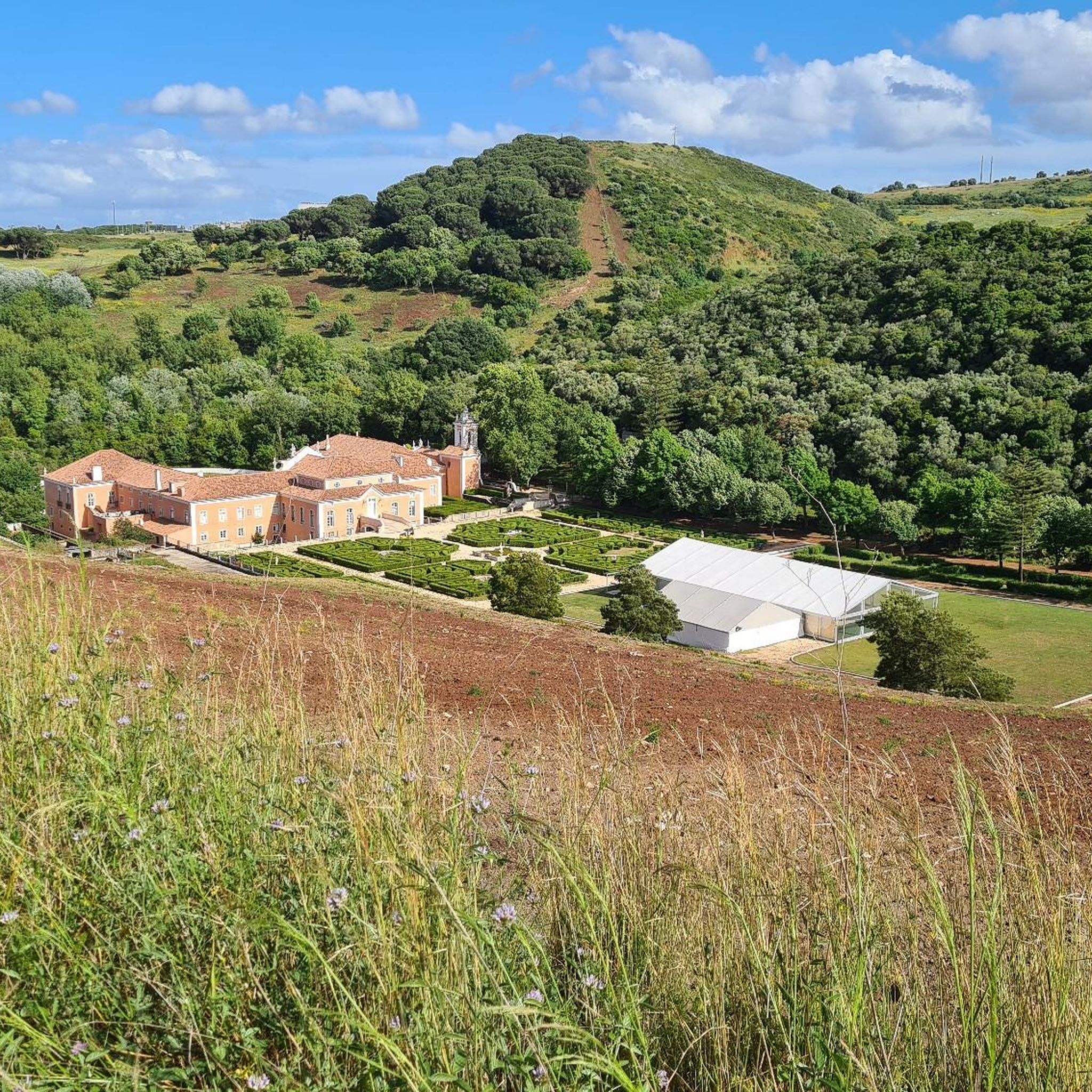
Yes, Loures has several easy touring cycling routes. An excellent option for a relaxed ride is the São Julião do Tojal Palace loop from Loures, which covers 18.8 km with minimal elevation gain. Another easy route is the Caminho de Fátima – Caminho de Casal de Cambra loop from Loures, spanning 24.9 km.
What are some notable natural features or landmarks I can see along the touring cycling routes?
While cycling around Loures, you can encounter various natural and man-made attractions. Highlights include the serene Tagus Estuary, and the picturesque Anços Waterfall and Old Mill Ruins. You might also pass by the Alameda Luminous Fountain.
Are there any routes that offer coastal views or lead towards the coast?
Yes, some routes in the Loures area connect to coastal regions. The Caminho de Fátima – Café at Pescadores Beach loop from Infantado is a popular 39.9 km route that leads towards coastal views, offering a different natural experience compared to the inland trails.
What do other touring cyclists say about the routes in Loures?
The touring cycling routes in Loures are highly rated by the komoot community, with an average score of 4.6 stars from more than 10 reviews. Cyclists often praise the varied terrain, which includes riverside trails and agricultural plains, and the network's suitability for different ability levels.
Are there any circular touring cycling routes in Loures?
Yes, many touring cycling routes in Loures are designed as loops. Examples include the moderate Caminho de Fátima – Caminho de Casal de Cambra loop from Fanqueiro, which is 30.4 km, and the Caminho de Fátima – São Julião do Tojal Palace loop from Loures, covering 27.2 km.
What is the best time of year to go touring cycling in Loures?
While specific seasonal recommendations are not provided, the diverse topography and proximity to the coast suggest that spring and autumn would likely offer the most comfortable temperatures for touring cycling in Loures, avoiding the peak heat of summer and potential winter rains.
Can I find routes with significant elevation gain for a more challenging ride?
Absolutely. Loures features undulating terrain with hills, providing options for more challenging ascents. For instance, the Caminho de Fátima – Café at Pescadores Beach loop from Infantado includes nearly 300 meters of elevation gain, offering a more demanding experience.
Are there any routes that pass through agricultural areas?
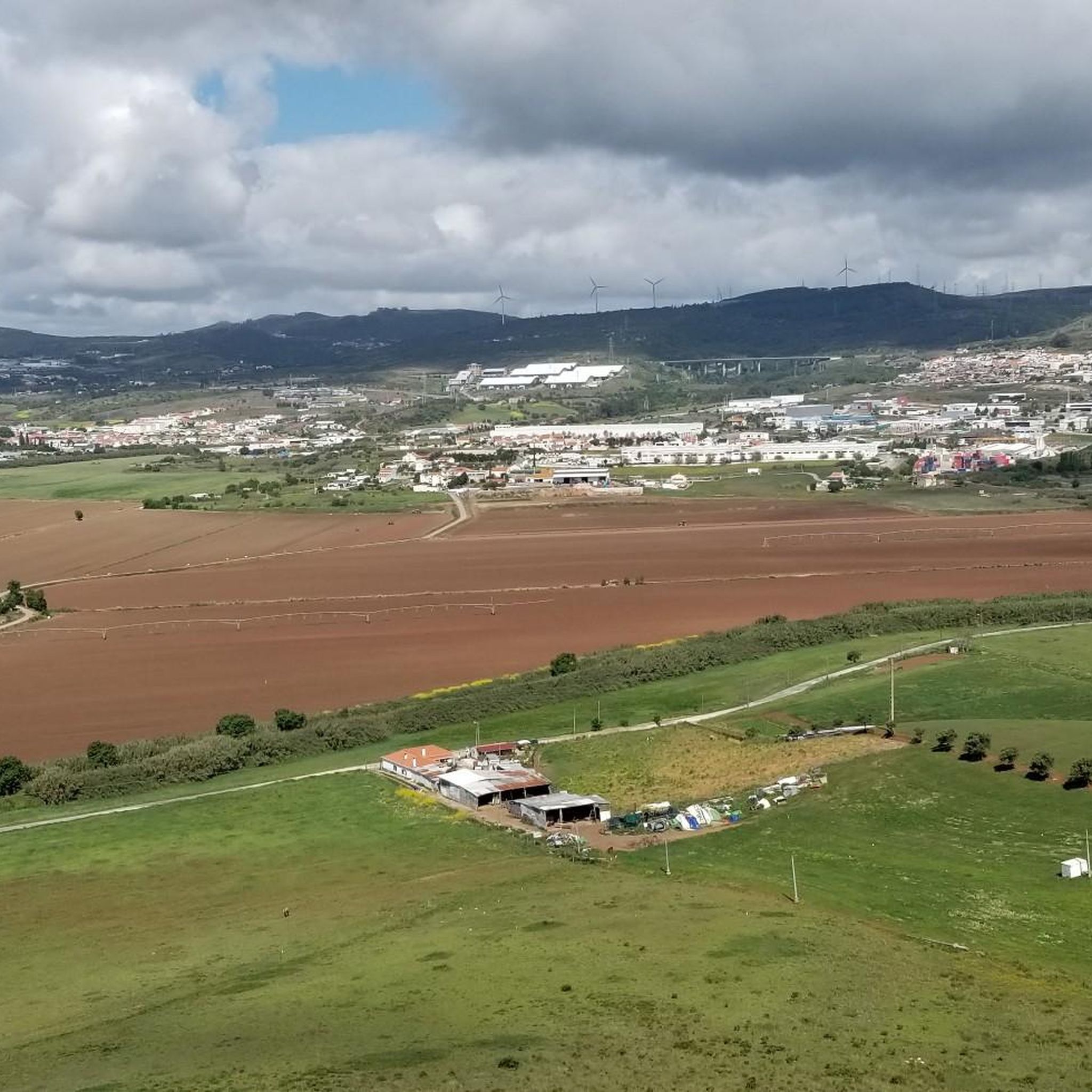
Yes, the region around Loures includes agricultural plains, and several routes traverse these areas. The Caminho de Fátima – Caminho de Casal de Cambra loop from Fanqueiro is a good example, leading cyclists through these scenic agricultural landscapes.
Are there any waterfalls accessible via touring cycling routes in Loures?
While not directly on a touring cycling route, the region around Loures is home to several waterfalls that can be explored. Notable ones include Anços Waterfall and Old Mill Ruins and Anços Waterfall itself, which are popular highlights in the area.
Most popular attractions around Loures

Get inspired with the komoot mobile app


Explore more
Browse the best Cycling routes in other regions.
