The best walks and hikes around Charneca
4.5
(1293)
15,110
hikers
402
hikes
Hiking around Charneca offers diverse terrain, characterized by pine forests, coastal cliffs, and varied landscapes suitable for outdoor activities. The region provides a network of trails ranging from easy walks to more challenging routes. These paths often feature natural elements like dense woodlands and open areas, providing varied scenery for hikers. The area's geography supports both tranquil excursions and more strenuous treks.
Best hiking trails around Charneca
- The most popular hiking route is Golf loop from National Library of Portugal…
Last updated: June 27, 2026
5.0
(1)
56
hikers
5.55km
01:26
30m
30m
Easy hike. Great for any fitness level. Easily-accessible paths. Suitable for all skill levels.
40
hikers
7.36km
01:59
100m
100m
Easy hike. Great for any fitness level. Easily-accessible paths. Suitable for all skill levels.

Sign up for free
22
hikers
4.42km
01:10
40m
40m
Easy hike. Great for any fitness level. Easily-accessible paths. Suitable for all skill levels.
27
hikers
6.53km
01:41
30m
30m
Easy hike. Great for any fitness level. Easily-accessible paths. Suitable for all skill levels.
4.0
(1)
24
hikers
4.55km
01:13
50m
50m
Easy hike. Great for any fitness level. Easily-accessible paths. Suitable for all skill levels.
Get access to more routes and recommendations from other explorers.
Sign up for free
Already have an account?
Our route recommendations are based on thousands of hikes, rides, and runs completed by other people on komoot.
Start today with a free account
Your next adventure awaits.
Login or Signup

Tips from the Community

The Sun Man is a monumental sculpture by Jorge Vieira. At approximately 20 meters high and weighing 15 tons, it is an anthropomorphic structure inspired by the sun. This work is considered a kind of testamentary synthesis of the author's oeuvre, a symbiosis of surrealism and abstraction with three-dimensional exploration. Jorge Ricardo da Conceição Vieira was born on November 16, 1922, in Lisbon and died in 1998 in Évora.
5
0
Ingenious: you have to look closely to see what kind of junk the Lynx is made of.
5
1

The Alameda Dom Afonso Henriques is a wide, landscaped avenue located in the heart of Lisbon, in the São João de Deus area, currently part of the parish of Areeiro. It is an iconic urban space that combines history, monumental architecture, and greenery.
3
1

Alameda Park, officially Jardim da Alameda Dom Afonso Henriques, is a public park in Lisbon. It features expansive lawns, mature trees, and flowerbeds, providing a tranquil retreat from the hustle and bustle of the city. The park is divided by Avenida Almirante Reis into two large lawns, with a small garden at the eastern end and the Instituto Superior Tecnico at the western end. A notable feature is the Fonte Luminosa, a monumental fountain that enhances the park's aesthetic. The park is also a public transport hub, intersecting the red and green lines of the Lisbon Metro at Alameda Station. It is a popular spot for relaxation, picnics, and community events.
1
1
Pastelaria Versailles is one of Lisbon's most iconic cafés, located at Avenida da República 15A, in the Saldanha neighborhood. Founded in 1922, it is a true classic that combines tradition, elegance, and flavor. It was the first major café in the Avenidas Novas neighborhood, and since its opening, it has been a meeting point for Lisbon families and visitors.
6
0

Most people rush through Oriente Station, dazzled by Calatrava’s roof or hurrying to catch a train. But if you ride the escalators up to the top level and walk toward the river, you’ll find a quiet promenade with sweeping views of the Vasco da Gama Bridge stretching for miles across the Tagus. It feels like you’ve stepped outside the city, even though you’re standing right above Lisbon’s busiest hub. Just off to the side there’s a tucked-away café overlooking the water—rarely crowded, perfect for a peaceful break.
1
0
Right next to the giant Iberian Lynx sculpture in Parque das Nações—created by street artist Bordalo II from recycled plastic—there’s a hidden spot most visitors overlook. If you turn your back to the lynx and stroll toward the Vasco da Gama Tower, you’ll find a quiet bench with a sweeping view of the Tagus and the park’s striking modern architecture. It’s a rare place where you can take in both the wild, colorful street art and the calm of the river at the same time. Hardly any tourists stop here, which makes it perfect for catching your breath or snapping a unique photo.
3
0

The park has three distinct areas: the Central Nave of Quinta das Conchas, the Woods and the Lilacs. The Central Nave, the largest area, is made up of large lawns dotted with trees and offers open views, which invite you to play ball and have picnics on the grass. It is bordered at the highest point by a group of olive and olive trees and, at the bottom, next to the large lake, there is a mass of large eucalyptus trees, classified as a grove of trees of public interest, where there are picnic tables, in an excellent area for relaxing. The Woods, a denser forest area with more intact nature, is made up of a varied set of tree species, with a stand of trees of the ZelKova Serrata species, also classified as a public interest, standing out, as well as Himalayan cedars and Buçaco cedars. In some places, there is a dense cover of shrubs, such as adernos, sanguinhos, elders and hawthorns, which are very important for several species of birds as shelter, feeding and nesting sites. Separated from Quinta das Conchas by a wall, we have Quinta dos Lilases, a more secluded environment, with its famous artificial lake, of romantic inspiration, representing the islands of São Tomé and Príncipe. The vegetation is marked by the alignment of olive trees next to the wall of Quinta das Conchas and by the presence of eucalyptus, poplars, ash trees, gleditsias and species of the Quercus genus. The shrub layer is reduced, with pomegranate trees and notable groups of old and large box trees standing out. The clearing areas are covered in dry grassland. This farm has a community orchard area, recently built as part of a Participatory Project. The existence of diverse habitats gives this Park great value in terms of biodiversity, with a higher number of species than usual for urban green spaces.
2
1
Frequently Asked Questions
How many hiking trails are available in Charneca?
Charneca offers a wide variety of hiking opportunities, with over 400 routes available. These trails cater to different preferences, from easy strolls to more challenging treks.
What kind of landscapes can I expect to see while hiking in Charneca?
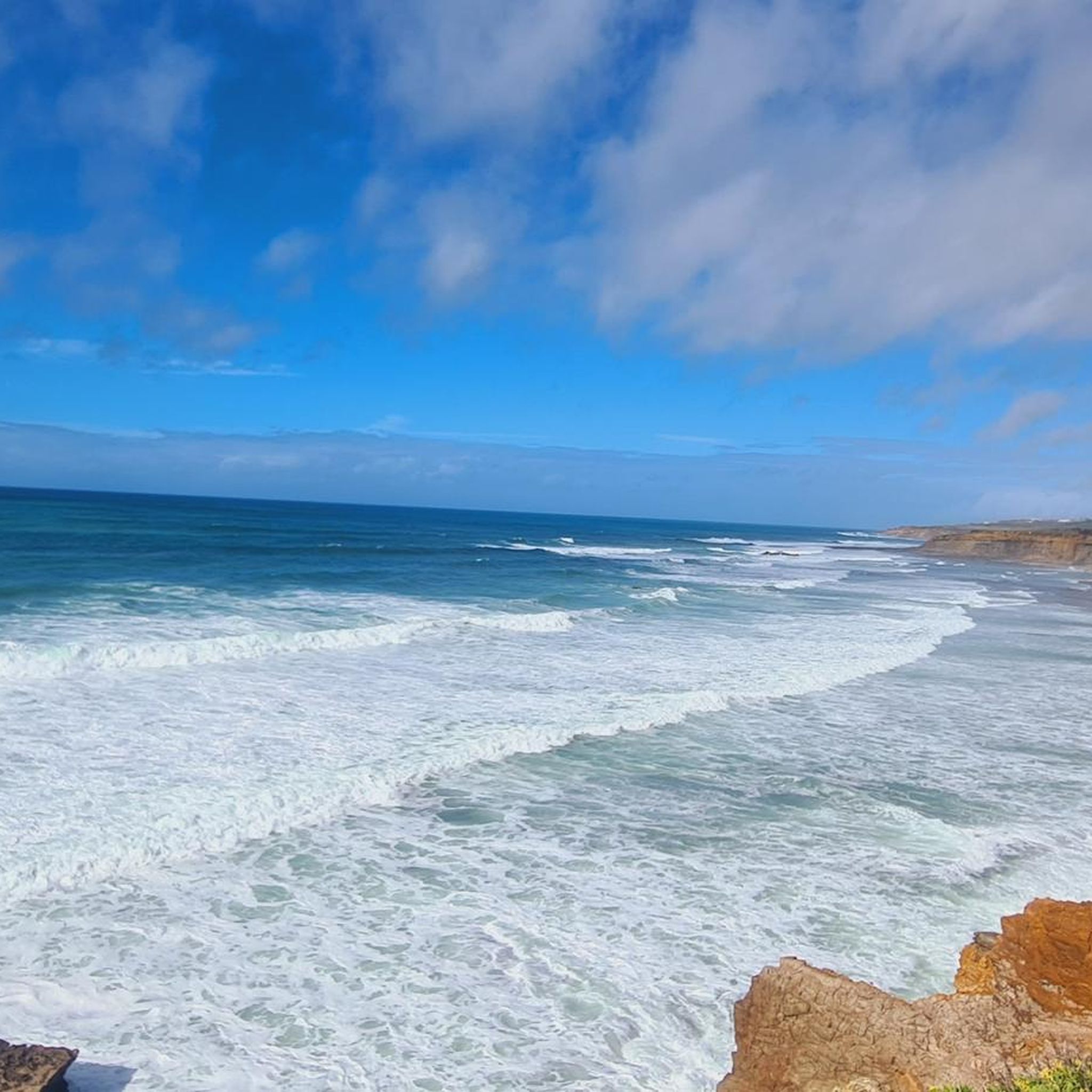
Hiking in Charneca provides a diverse experience, characterized by verdant pine forests, dramatic coastal cliffs, and tranquil beaches. You can explore areas like the Mata Nacional dos Medos, known for its dense pine forests, or enjoy scenic views along the impressive cliffs near Fonte da Telha.
Are there hiking options for beginners or those looking for an easy walk?
Yes, Charneca is very welcoming for beginners and those seeking easier walks. More than 260 of the available routes are classified as easy, offering pleasant paths with minimal elevation gain. An example of an easy route is the Golf loop from National Library of Portugal, which is 3.1 miles (4.9 km) long.
What is the best time of year to go hiking in Charneca?
The region is enjoyable for hiking throughout much of the year. While specific seasonal considerations aren't detailed, the presence of secluded beaches and natural reserves suggests pleasant conditions outside of peak summer heat. Spring and autumn generally offer mild temperatures ideal for exploring the diverse landscapes.
Are there any circular hiking routes in Charneca?
Yes, many of the hiking routes in Charneca are designed as loops, allowing you to start and end at the same point. For instance, the Hiking loop from Alvalade is a 2.7 miles (4.4 km) trail that takes you through urban parks and residential areas.
Can I bring my dog on the hiking trails in Charneca?
While specific regulations for dogs on all trails are not provided, many natural areas in Portugal are generally dog-friendly, especially on leash. It's always recommended to check local signage or specific park rules for areas like Mata Nacional dos Medos before heading out with your canine companion.
Are the hiking trails in Charneca suitable for families with children?
Yes, Charneca offers many family-friendly options. With a significant number of easy trails, families can find routes that are suitable for all ages and fitness levels. The diverse terrain, including pine forests and coastal areas, provides engaging environments for children to explore.
What are some notable landmarks or attractions I can see near the hiking trails?
Beyond the natural beauty, you can explore various historical and natural landmarks. Nearby attractions include historical sites like St. George's Castle and the Palace of the Marquises of Fronteira. For natural sights, consider visiting the Eduardo VII Park Viewpoint or the University of Lisbon Botanical Garden.
What do other hikers enjoy most about hiking in Charneca?
The hiking routes in Charneca are highly rated by the komoot community, with an average score of 4.5 stars from over 1100 reviews. Hikers often praise the diverse terrain, which includes serene pine forests and scenic coastal features, offering varied scenery for all ability levels.
Are there any longer or more challenging hikes available in Charneca?
Yes, for those seeking a greater challenge, Charneca also offers more strenuous options. While many routes are easy, there are 116 moderate and 26 difficult trails available. These longer treks can last up to five hours with substantial elevation changes, requiring good to very good fitness and sturdy shoes.
Is public transport or parking available near the trailheads in Charneca?
While specific parking and public transport details for every trailhead are not universally listed, Charneca de Caparica is generally accessible. Many routes, especially those closer to urban areas like the Iberian Lynx Sculpture – Praça das Nações loop from Aeroporto, are often well-connected by public transport or have nearby parking facilities.
Most popular attractions around Charneca

Get inspired with the komoot mobile app


Explore more
Browse the best Hikes in other regions.
