The best road cycling routes around Carnota
4.8
(13)
1,272
riders
93
rides
Road cycling routes around Carnota, located on Spain's Costa da Morte in Galicia, offer diverse terrain. The region features a long sandy coastline, dramatic cliffs, and the prominent Monte Pindo, which rises to 627 meters. Cyclists can find a mix of coastal roads with sea views and routes through the Galician countryside. The area provides quiet paved roads suitable for various fitness levels.
Best road cycling routes around Carnota
- The most popular road cycling route is Alenquer – Alenquer Wine…
Last updated: May 16, 2026
5.0
(1)
75
riders
68.7km
03:03
350m
350m
Moderate road ride. Good fitness required. Some segments of this route may be unpaved and difficult to ride.
36
riders
80.3km
04:01
1,180m
1,180m
Hard road ride. Very good fitness required. Mostly well-paved surfaces and easy to ride.

Sign up for free
22
riders
Moderate road ride. Good fitness required. Mostly well-paved surfaces and easy to ride.
25
riders
57.5km
02:35
570m
570m
Moderate road ride. Good fitness required. Mostly well-paved surfaces and easy to ride.
22
riders
35.3km
01:37
400m
400m
Moderate road ride. Good fitness required. Mostly well-paved surfaces and easy to ride.
Get access to more routes and recommendations from other explorers.
Sign up for free
Already have an account?
Our route recommendations are based on thousands of hikes, rides, and runs completed by other people on komoot.
Start today with a free account
Your next adventure awaits.
Login or Signup

Tips from the Community

The National Palace of Mafra, located in the town of Mafra, Portugal, is a monumental complex that includes a palace, a convent, a basilica, and the Tapada de Mafra (hunting grounds). Construction began in 1717, commissioned by King John V of Portugal in fulfillment of a vow for the succession of his wife, and it is the most important monument of Portuguese Baroque. Since 2019, the Palace has been a UNESCO World Heritage Site.
2
0
Constantino Palha Municipal Park is one of the main tourist attractions in Vila Franca de Xira, located next to the train station and the Tagus River. It occupies an area of 400 meters in front of the river and is considered the most charismatic garden in the city. Highlights: - Bandstand: a 19th-century bandstand is one of the park's main attractions, where cultural events frequently take place. - Lakes: the lakes are a characteristic element of the garden, adding a touch of serenity to the environment. - Playground: a fun area for children, making it a popular destination for families. - Cafeteria: offers a cozy place to relax and enjoy the river view. - Paths: the winding paths allow visitors to take pleasant walks through the garden, enjoying nature and the view of the Tagus River.
1
0


Baroque architectural complex comprising a Palace, a Basilica and a Convent, together with gardens and a vast Tapada, forming a historical heritage complex covering over 1,200 hectares, inscribed on the UNESCO World Heritage List in 2019. Built by order of King João V in fulfilment of a succession vow, Mafra Palace is one of the most important Baroque monuments in Portugal and one of the largest in Europe, occupying a construction area of 38,000 m2, with around 1,200 rooms, 5,200 doors and windows and 156 staircases. UNESCO has recognised this monument as a feat of architecture, engineering and human genius. Based on designs by Filippo Juvarra, its final design was carried out by the German Johann Friedrich Ludwig (João Frederico Ludovice) and construction was led by the kingdom's chief engineer, Custódio Vieira. The first stone was laid on 17 November 1717 and the Basilica was consecrated on 22 October 1730. The Basilica, inspired by the great churches of Rome, has one of the most significant collections of Italian sculpture of its time, with 58 statues, a large crucifix with archangels in adoration and three high reliefs, as well as an important collection of paintings, representing some of the most famous painters active in Italy and France in the early 1730s. The collection of vestments and liturgical implements is also very significant, due to its quality and rarity. The Palace Library is one of the most iconic spaces in the monument. With a refined selection of around 30,000 volumes, it is one of the exponents of Enlightenment knowledge representative of the court culture of the first half of the 18th century. Also noteworthy is the bell ringing ensemble, with 120 bells, which include two of the largest carillons of the 18th century, cast in Antwerp and Liège in the workshops of Willem Witlockx and Nicolas Levache, respectively. The bells are accompanied by two clocks dating from the first half of the 18th century, as well as four automatons for automatic music. Inside the Basilica is a set of pipe organs, unique in the world, consisting of six instruments designed to play together, built between 1792 and 1807 by the Portuguese organ builders António Machado e Cerveira and Joaquim Peres Fontanes. The Mafra Palace has been a member of the Association of European Royal Residences since 2009.
5
0

Cheap and good, a nice and friendly place to stop after a long way up!
0
0
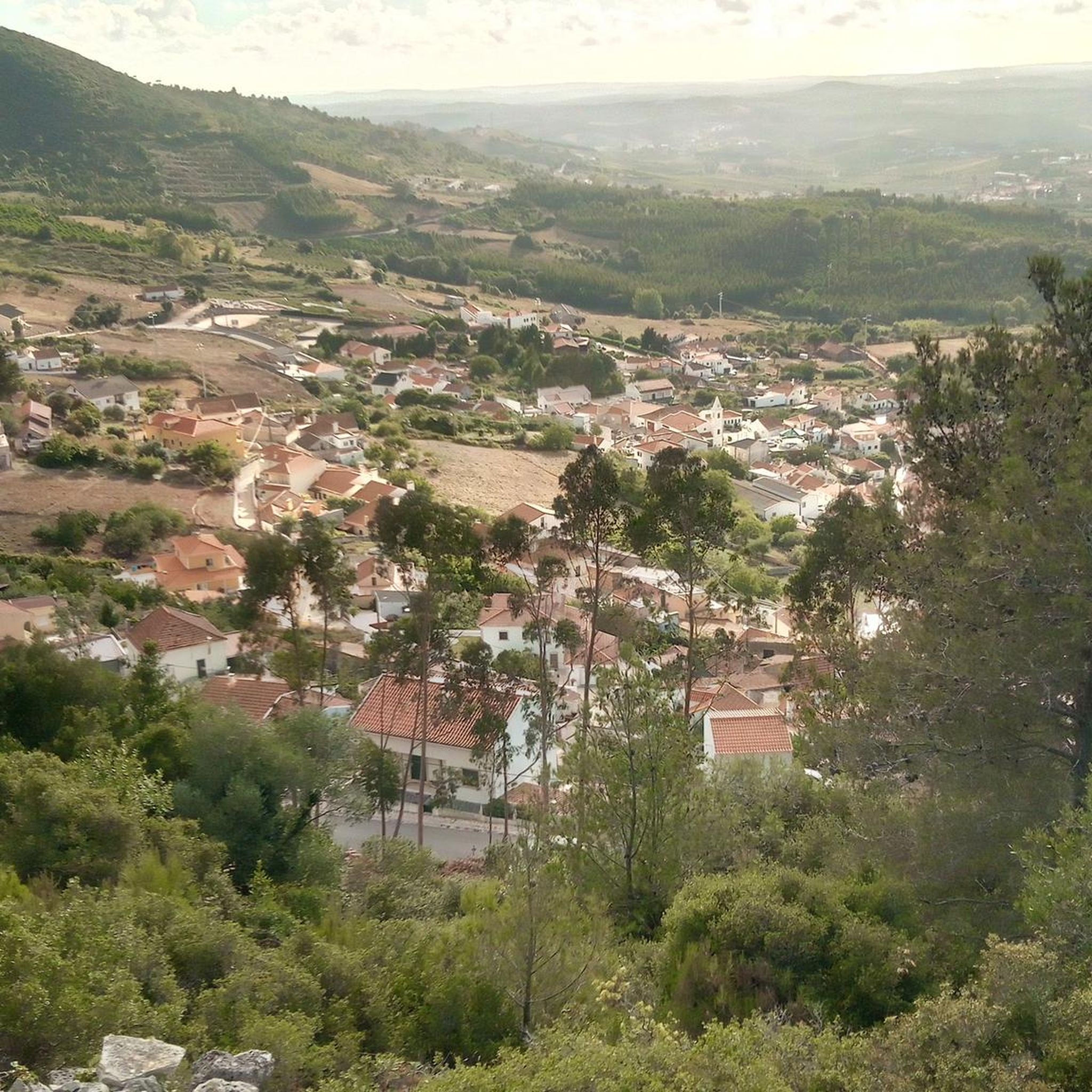
Just before entering the town of Sobral do Monte Agraço
0
0

publication of the royal charter of 26 July 1811, which, in order to mitigate the devastating effects of the French invasions, prescribed, among many other measures, the distribution of seeds to farmers in order to re-establish cereal production. The Real Celeiro was active for over sixty years, between 1812 and 1873, but, quoting Guilherme Henriques, “it died, like all good institutions, annihilated by abuses”. The City Council now holds the archive of the old Celeiro, which, although not very voluminous, nevertheless allows us to reconstruct almost the entire history of this important local institution of the 19th century. Commissioned to be rebuilt by the Municipality of Alenquer in 2002, it opened its doors as the Wine Museum and headquarters of the Lisbon Wine Route in 2006. Its interior was remodeled and its museology project renewed at the end of 2018, and it reopened its doors to visitors in February 2019. (Source: www.alenquer.pt)
10
0

At this location at the top of the Serra de Montejunto, also known as "Torre" due to the various antennas that were installed there, is the Chapel of Our Lady of the Snows, which may have been built in the 13th century and remodelled and expanded during the 16th century and later. Inside, the altars covered with 17th century tiles and the altarpiece of the main altar, from the 18th century, stand out. Next to the Chapel of Our Lady of the Snows, are the ruins of what is considered to be the first Dominican Convent in Portugal, built in the 12th century and abandoned after the extinction of the religious orders, and is currently in ruins. Also nearby are the ruins of the Royal Ice Factory, classified as a National Monument. Here, in the 18th century, the Dominican monks took advantage of the climatic and geological conditions and opened large tanks connected by narrow passages, one part for the production of ice and the other for its preparation, storage and conservation. The ice was later transported to Lisbon, to supply the court and the café at Terreiro do Paço, later known as Martinho da Arcada (Fernando Pessoa's Café)
2
0
Frequently Asked Questions
How many road cycling routes are available in Carnota?
Carnota offers a wide selection of road cycling routes, with over 90 options available. These routes cater to various fitness levels, ranging from easy rides to more challenging paths.
What kind of terrain can I expect on road cycling routes in Carnota?
The Carnota region provides a diverse road cycling experience. You'll find a mix of coastal roads offering panoramic sea views, routes winding through the Galician countryside, and challenging climbs up passes. The area is known for its quiet paved roads, making for pleasant rides.
Are there routes suitable for beginners or those seeking an easy ride?
Yes, Carnota has road cycling routes suitable for beginners. While many routes are moderate, there are 8 easy routes available, often featuring mostly paved surfaces and minimal elevation gain, perfect for a relaxed ride.
What are some challenging road cycling routes in Carnota for experienced riders?
For experienced cyclists seeking a challenge, Carnota offers 23 difficult routes with significant elevation changes. An example is the Forca Viewpoint – Fradinhos Pastry at Mafra loop from Malafaia, which covers 49.9 miles (80.3 km) with an elevation gain of 3,880 feet (1,183 meters).
Can I find circular road cycling routes in the Carnota region?
Yes, many of the road cycling routes in Carnota are designed as loops, allowing you to start and finish in the same location. For instance, the popular Alenquer – Alenquer Wine Museum loop from Alenquer is a 41.6 miles (66.9 km) circular trail.
What natural features or landmarks can I see while road cycling in Carnota?
Carnota's road cycling routes often pass by stunning natural features and landmarks. You can cycle along the extensive Carnota Beach, known for its dunes and marshes, or enjoy views of the majestic Monte Pindo, often called the 'Celtic Olympus'. The region also boasts dramatic cliffs along the Costa da Morte.
Are there any unique natural attractions accessible by road bike in Carnota?
Absolutely. A truly unique attraction accessible by road bike is the Ézaro Waterfall, where the River Xallas plunges directly into the sea—a rare sight in Europe. You can also explore the Marismas de Caldebarcos, a haven for waterfowl, or visit the Marechal Carmona Bridge.
What is the best time of year to go road cycling in Carnota?
Carnota's mild climate makes it suitable for road cycling for much of the year. The tourist season, particularly spring and autumn, generally offers pleasant temperatures and fewer crowds. Summer can be warm, but coastal breezes often provide relief.
Are there family-friendly road cycling options in Carnota?
While specific family-friendly routes are not detailed, the presence of 8 easy routes suggests options for families or those preferring a more relaxed pace. These routes typically feature quiet, paved roads with minimal elevation, making them suitable for various ages and skill levels.
What are the parking facilities like for cyclists in Carnota?
Information on specific parking facilities for cyclists in Carnota is not extensively detailed. However, as a popular outdoor destination, you can generally expect parking availability in or near villages and popular starting points for routes. It's advisable to check local signage upon arrival.
Is public transport available for cyclists to reach Carnota?
Public transport options to Carnota with bicycles can be limited. While local bus services connect towns in Galicia, their capacity for carrying bicycles varies. It's recommended to check with specific transport providers in advance if you plan to use public transport with your bike.
What do other cyclists say about road cycling in Carnota?
The road cycling routes in Carnota are highly rated by the komoot community, with an average score of 4.6 stars from over 10 reviews. Cyclists often praise the varied terrain, from coastal paths to countryside roads, and the opportunity to explore the region's natural beauty.
Are there any long-distance road cycling routes in the Carnota area?
Yes, Carnota offers several longer road cycling routes for those seeking extended rides. For example, the Forca Viewpoint – Fradinhos Pastry at Mafra loop from Malafaia is nearly 50 miles (80 km) long, providing a substantial challenge and scenic journey.
Can I find places to eat or stay that are cyclist-friendly in Carnota?
Carnota, being a destination on the Costa da Morte, has various local establishments. While specific cyclist-friendly cafes, pubs, or accommodations are not listed, many local businesses are generally welcoming to outdoor enthusiasts. Look for places in villages like Carnota or Ézaro for refreshments and lodging.
Most popular routes around Carnota
Most popular attractions around Carnota

Get inspired with the komoot mobile app


Explore more
Browse the best Road cycling routes in other regions.
