The best walks and hikes around Vilar De Amargo
4.2
(18)
129
hikers
7
hikes
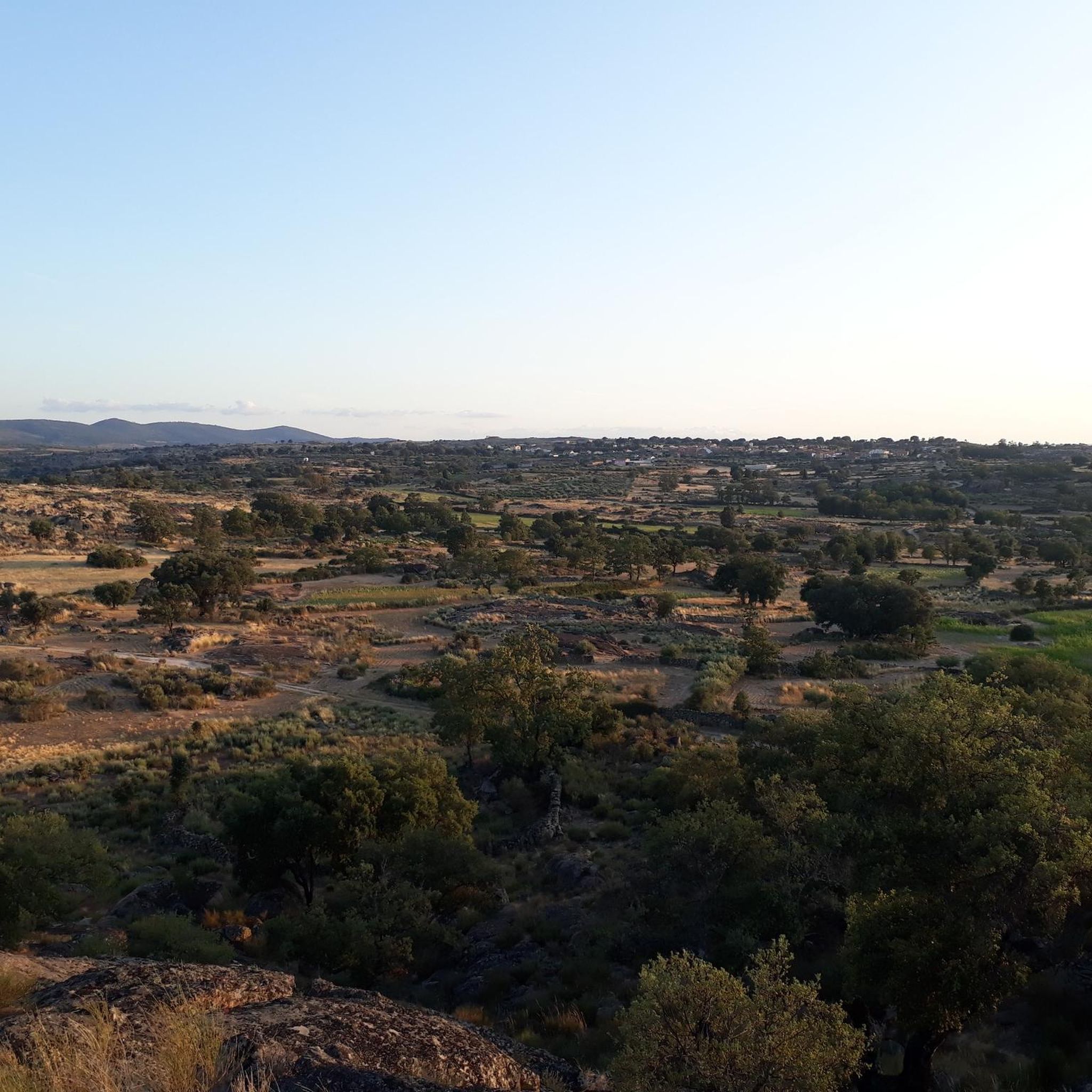
Hiking trails around Vilar De Amargo are situated within a rugged natural setting, characterized by its location on a "monte fragoso" (rugged mountain) and its proximity to the International Douro Natural Park. The region features dramatic Douro River gorges and vertical cliffs, often referred to as the "Grand Canyon of the Iberian Peninsula." Hikers will encounter diverse Mediterranean vegetation, including holm oak and cork oak forests, olive groves, and almond trees, alongside varied elevation changes.
Best hiking trails around Vilar De Amargo
- The most popular hiking route is Iron Way Trail, a 20.6 miles (33.2 km) trail that takes 9 hours 7 minutes to complete. This difficult route follows a renovated section of an old railway line, featuring 20 tunnels and 10 metallic bridges.
- Another top favourite among local hikers is Main Gate of Castelo Rodrigo – Castelo Rodrigo Village loop from Castelo Rodrigo, a moderate 7.2 miles (11.6 km) path. This trail offers a journey through history, preserving medieval outlines and providing views of Riba-Côa, Alto Douro, and the Iberian Meseta.
- Local hikers also love the Barca d'Alva – Vega Terrón River Port loop from Barca d'Alva, a 3.8 miles (6.1 km) trail leading through the Douro River landscape, often completed in about 1 hour 39 minutes.
- Hiking around Vilar De Amargo is defined by deep river gorges, rugged mountain terrain, and Mediterranean forests. The network offers options for different ability levels, from easy loops to challenging long-distance paths.
- The routes in Vilar De Amargo are highly rated by the komoot community with an average score of 4.2 stars from over 20 reviews. More than 130 hikers have used komoot to explore Vilar De Amargo's varied terrain.
Last updated: July 11, 2026
5.0
(6)
82
hikers
33.2km
09:07
540m
540m
Hard hike. Very good fitness required. Easily-accessible paths. Suitable for all skill levels.
4.4
(5)
15
hikers
Moderate hike. Good fitness required. Easily-accessible paths. Suitable for all skill levels.

Sign up for free
5.0
(2)
10
hikers
6.15km
01:39
80m
80m
Easy hike. Great for any fitness level. Easily-accessible paths. Suitable for all skill levels.
3.0
(1)
9
hikers
Moderate hike. Good fitness required. Easily-accessible paths. Suitable for all skill levels.
4.0
(2)
7
hikers
4.62km
01:21
110m
110m
Easy hike. Great for any fitness level. Easily-accessible paths. Suitable for all skill levels.
Get access to more routes and recommendations from other explorers.
Sign up for free
Already have an account?
Our route recommendations are based on thousands of hikes, rides, and runs completed by other people on komoot.
Start today with a free account
Your next adventure awaits.
Login or Signup
Popular around Vilar De Amargo

Tips from the Community

The Escadaria de Acesso ao Passeio Ribeirinho significantly shortens the walk for pedestrians between the path along the riverbank and the parking lot at the road bridge over the river. According to the Komoot map, you previously had to walk under the bridge to reach the top in a long loop. The stairs were rebuilt in March 2024 by the Município de Figueira de Castelo Rodrigo (the municipality), as the old structure was completely destroyed and abandoned. They consist of raised wooden structures resting directly on the ground. Barca d'Alva is a popular stop for Douro cruises, and these stairs facilitate the descent to the river quay and the walking path, from where you can enjoy breathtaking views of the Douro, the bridge, and the surrounding gorges. They contribute to the revitalization of the place, which had lost importance since the closure of the railway line (the Linha do Douro) in 1988. Today, it is a highlight for nature lovers and photographers, especially at sunset.
1
0
The bridge was designed and built in 1955 by the renowned Portuguese engineer Edgar Cardoso. It is considered the first motorway bridge in the Portuguese section of the Douro River and is a concrete arch bridge with a length of approximately 300 meters. It is named after the Portuguese naval officer and colonial administrator Almirante Manuel Maria Sarmento Rodrigues, who served as governor of Guinea and Mozambique under the Salazar dictatorship and later became Minister of Colonies.
1
0
When it was closed in 1985, the region lost its direct connection; the bridge fell into disrepair for decades and was inaccessible for a long time. Only in recent years has the entire route been reopened to hikers and visitors as the "Camino de Hierro" (Iron Way). Crossing the bridge offers spectacular views of the Águeda Gorge and the terraced landscapes of olive, almond, and vineyards. Today, it is an industrial monument and also a tourist highlight in the Arribes del Duero Natural Park.
1
0
The bridge was built as an iron truss structure following the French school's model (inspired by Gustave Eiffel) and spans the deeply cut Río Águeda, approximately 250 meters long and about 20 meters high above the river. The supporting structure consists of riveted steel girders resting on massive stone piers. It was part of the cross-border connection between Spain and Portugal, connecting Salamanca to Porto. Due to its challenging topography—gorges, steep mountain slopes, and narrow valleys—the line was considered one of the most spectacular railway lines in Europe, with a total of 20 tunnels and 13 bridges, of which the Águeda Bridge was the most famous. It served as the gateway to the La Fregeneda–Barca d'Alva border station, where the crossing into Portugal took place.
1
0
The former railway bridge over the Río Águeda near La Fregeneda is one of the most impressive structures on the disused La Fuente de San Esteban – Barca d’Alva railway line (opened in 1887, closed in 1985).
1
0
San Martín was a village in the municipality of La Fregeneda (Salamanca Province) on the Águeda River, directly on the border with Portugal, which was abandoned. Starting in the mid-20th century, as in many peripheral areas, a strong rural exodus began here. This was exacerbated by the closure of the cross-border railway line La Fuente de San Esteban – Barca d'Alva (a spectacular route with 20 tunnels and seven bridges along the Águeda River). After its closure, the area lost infrastructure and jobs, and the remote hamlets were abandoned.
1
0

Castelo Rodrigo holds millennia of history, from Paleolithic and Roman remains to the Muslim presence in the castle. Conquered and reconquered between the 12th and 13th centuries, it became a town and municipality under King Alfonso IX of León and passed definitively to Portugal in 1297, when King Dinis rebuilt and repopulated the castle. Marked by wars, charters, and restorations, it welcomed pilgrims on their way to Santiago and remains today one of the twelve Historic Villages of Portugal.
3
0
Castelo Rodrigo is a village with a medieval soul, where time has left its deep marks: walls, stone streets and remains of an ancient community of New Christians. Surrounded by magnificent landscapes, from the Douro International Natural Park to the Côa Valley, passing through the Serra da Marofa and the Faia Brava Reserve, this village is an invitation to contemplation and to taste. Here, history is served at the table: Marofa lamb, octopus in migas or rice are flavors that count as much as the books.
2
0
Frequently Asked Questions
How many hiking trails are available around Vilar De Amargo?
There are over 8 hiking routes recorded on komoot around Vilar De Amargo, offering a variety of experiences for different skill levels.
What types of landscapes can I expect to see while hiking near Vilar De Amargo?
Hikers in Vilar De Amargo will experience a rugged natural setting, characterized by dramatic Douro River gorges and vertical cliffs, often referred to as the 'Grand Canyon of the Iberian Peninsula'. The trails also wind through diverse Mediterranean vegetation, including holm oak and cork oak forests, olive groves, and almond trees, especially beautiful during their blossom in February and March.
Are there hiking trails suitable for beginners or those looking for an easy walk?
Yes, Vilar De Amargo offers several easy hiking options. There are 5 easy routes available, such as the Hiking loop from Barca d'Alva, which is just under 5 km long and can be completed in about 1 hour 20 minutes.
Are there any challenging hikes for experienced trekkers?
Absolutely. For experienced trekkers, the Iron Way Trail is a difficult route spanning over 33 km. This unique path follows a renovated section of an old railway line, featuring 20 tunnels and 10 metallic bridges, offering a demanding yet rewarding experience.
What is the best time of year to go hiking in Vilar De Amargo?
The region is particularly beautiful during late winter and early spring, specifically February and March, when the almond trees are in blossom. Generally, spring and autumn offer pleasant temperatures for hiking, avoiding the peak heat of summer.
Are there any historical or cultural sites to explore on hikes around Vilar De Amargo?
Yes, the area is rich in history. You can explore the historic village of Castelo Rodrigo, known for its medieval outlines and imposing walls, which offers commanding views. The Castelo Rodrigo Discovery Trail is a great way to experience this. Additionally, the Camino de Hierro, though primarily in Spain, is a remarkable engineering feat near the border, following an old railway line.
Are there any circular hiking routes near Vilar De Amargo?
Yes, there are several circular routes available. An example is the Main Gate of Castelo Rodrigo – Castelo Rodrigo Village loop from Castelo Rodrigo, a moderate 11.6 km path that takes you through historical landscapes.
What do other hikers enjoy the most about hiking in Vilar De Amargo?
The area is highly rated by the komoot community, with an average score of 4.2 stars from over 20 reviews. Reviewers often praise the dramatic Douro River landscapes, the unique historical elements like the old railway lines, and the varied terrain that offers something for everyone.
Are there any trails that offer panoramic views of the Douro River?
Many trails in the region provide stunning views of the Douro River gorges and cliffs. The International Douro Natural Park, which the area is part of, is famous for its breathtaking 'Douro cliffs'. Routes like the Barca d'Alva – Vega Terrón River Port loop from Antiga estação de Barca d'Alva offer excellent opportunities to witness these dramatic river landscapes.
Are there any specific attractions or points of interest along the hiking routes?
Beyond the natural beauty, hikers can discover several points of interest. These include the historic village of Barca d'Alva, the impressive Ponte Almirante Sarmento Rodrigues, and the Camino de Hierro with its tunnels and bridges.
Can I find trails that are suitable for families with children?
While specific 'family-friendly' designations aren't always explicit, the 5 easy routes available, such as the Hiking loop from Barca d'Alva, are generally suitable for families looking for shorter, less strenuous walks. These paths often feature gentle elevation changes and can be a great way to introduce children to hiking in the region.
Most popular routes around Vilar De Amargo
Most popular attractions around Vilar De Amargo

Get inspired with the komoot mobile app


Explore more
Browse the best Hikes in other regions.
