Attractions and Places To See around Malpartida - Top 16
Best attractions and places to see around Malpartida include a blend of historical fortifications and cultural sites. The region features well-preserved castles and historic villages, reflecting its strategic importance throughout history. These sites offer insights into past conflicts and architectural developments. Visitors can explore a variety of historical landmarks that showcase the area's rich heritage.
Best attractions and places to see around Malpartida
- The most popular attractions is Almeida Castle, a castle that is one of the best-preserved fortifications…
Last updated: May 4, 2026
Almeida Castle
Highlight • Castle
Translated by Google •
Tip by

Historic Village of Almeida
Highlight • Historical Site
Translated by Google •
Tip by

Sign up now to discover places like this
Get recommendations on the best single tracks, peaks, & plenty of other exciting outdoor places.
Sign up for free
Real Fuerte de la Concepción
Highlight • Historical Site
Translated by Google •
Tip by

Puente de los Franceses
Highlight • Bridge
Translated by Google •
Tip by

Fort of the Concepción and Redoubt of San José
Highlight • Castle
Translated by Google •
Tip by

Sign up for free to discover even more attractions around Malpartida.
Sign up for free
Already have an account?
Start today with a free account
Your next adventure awaits.
Login or Signup
Tips from the Community

Almeida stands on the plateau like a table set for history: "Al-Mêda" was the name given to it by the Arabs. Previously, it had been a Lusitanian, Roman, and then Christian fort, conquered in 1190 and definitively Portuguese in 1297. Around the medieval castle grew the town, still marked by the Puerta do Sol. After the Restoration, the town transformed into a veritable war machine: the six-pointed star-shaped fortress, with bastions, ravelins, and underground galleries that served as both shelter and prison. It was the scene of decisive battles, devastated by the explosion of 1810 and contested in the liberal wars, always rising from the ruins.
2
0

The Almeida Fort, originally founded as a castle in the 12th century, is one of the best-preserved fortifications in Portugal. It played an important role throughout its history, particularly during the Napoleonic Wars. It was heavily damaged during the Siege of Almeida in 1810 but was later rebuilt. The star fort is known for its bastions and deep moats, which were once intended to provide protection against invaders.
3
1

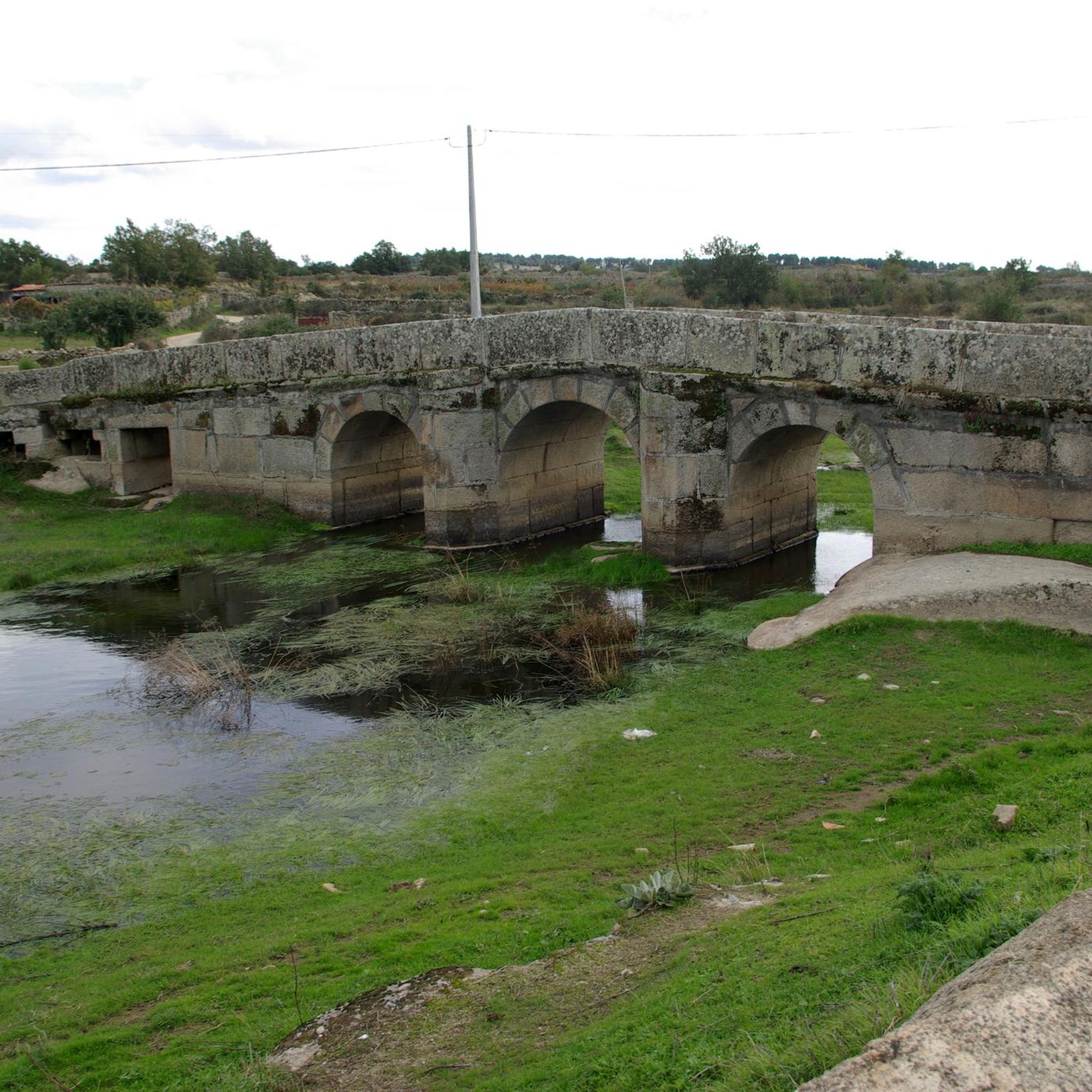
On the Camino del Fuerte, which connects the municipalities of Aldea del Obispo, Puerto Seguro and Villar de Ciervo, the Puente de los Franceses represents the historical, cultural and landscape union between these three places
4
0

The bridge lies in a valley on the Águeda River. It is particularly worth hiking there in spring or autumn as the surrounding area is beautifully green. Danger! The path there is steep and has scree.
3
0

Armed conflicts between borders have been the daily bread in these areas between the two countries. It was built in the 17th century and currently has more than three centuries of history, where its walls are still standing. Currently, it is rehabilitated and is a hotel.
0
2

The refurbishment and reconversion project of this 17th-century fortress won, in 2014, the prize for the best restoration of a military building in Spain. What are now luxury rooms on the Spanish-Portuguese border could house 1,500 infantrymen and 200 horses at his creation. The fort had two phases. The first, in the 17th century, when after the uprising in Lisbon that deposed Philip of Habsburg, it was built to serve as a base for an army that would recover Portugal. The Second, in the 18th century, when it was rebuilt to oppose the Portuguese stronghold of Almeida. During the war of independence, it was partially blown up and, for much of the 19th century, the surrounding inhabitants took advantage of it as a quarry until its sale to the private sector gave rise to the current construction.
1
0

If you walk around the wall you have a nice view and you get an impression of the defenses.
1
0
Frequently Asked Questions
What are the main historical attractions to explore around Malpartida?
The area around Malpartida is rich in history, featuring significant fortifications and historical sites. You can visit Almeida Castle, one of Portugal's best-preserved fortifications, which played a crucial role in the Napoleonic Wars. Another key site is the Historic Village of Almeida, which grew around a medieval castle and later transformed into a unique six-pointed star-shaped fortress. Additionally, the Fort of the Concepción and Redoubt of San José, a 17th-century castle, showcases the historical conflicts between Spain and Portugal.
Are there any family-friendly activities or attractions in the Malpartida area?
Yes, the Historic Village of Almeida is noted as a family-friendly historical site. Exploring its unique star-shaped fortress and medieval origins can be an engaging experience for all ages. The natural beauty of Los Barruecos Natural Monument, with its striking rock formations and stork colonies, also offers an educational and enjoyable outdoor experience for families.
What natural features can I discover near Malpartida?
Near Malpartida de Cáceres, the most prominent natural feature is the Los Barruecos Natural Monument. This area is famous for its spectacular granite rock formations, sculpted by erosion into unique shapes. It's also a vital habitat for diverse wildlife, particularly known for its significant colony of white storks nesting atop the rocks. The area also features four historic artificial ponds that enhance its scenic beauty.
Where can I find unique cultural or artistic experiences in the region?
For a unique blend of art and nature, visit the Vostell Malpartida Museum, located within the Los Barruecos Natural Monument. Housed in an 18th-century wool washing station, this museum is dedicated to avant-garde artist Wolf Vostell, integrating sculptures and installations with the natural granite landscape. The Narbón Museum, housed in a 19th-century farmhouse, also offers a significant collection of art.
Are there opportunities for outdoor activities like hiking or cycling around Malpartida?
Absolutely! The region offers various routes for outdoor enthusiasts. For hiking, you can explore trails like the 'Historic Village of Almeida loop' or the 'Puente de los Franceses loop'. Cyclists can enjoy routes such as the 'Green Route of Almeida' or the 'Villar de Ciervo loop'. You can find more details on these and other routes in the hiking guide, cycling guide, and MTB trails guide for Malpartida.
What is the significance of the white storks in Malpartida de Cáceres?
Malpartida de Cáceres is renowned as a 'European Stork Village' due to its significant colony of white storks. These majestic birds frequently nest atop the granite formations within the Los Barruecos Natural Monument, making it an important site for birdwatching and a symbol of the region's natural heritage.
Can I see any archaeological sites in the Malpartida area?
Yes, the area boasts a rich archaeological heritage. Within Los Barruecos Natural Monument and its surroundings, you can find sites dating back to the Paleolithic, Neolithic, and Roman periods. These include Neolithic settlements, ancient cave paintings and engravings at Peñas del Tesoro, and the ruins of a Roman villa. Anthropomorphic tombs and remains from Muslim and late medieval constructions also highlight the area's long history.
What kind of architecture can I expect to see in Malpartida de Cáceres Old Town?
The Old Town of Malpartida de Cáceres features quaint and serene traditional architecture. You'll observe wide, straight streets and houses characterized by large chimneys, earning its inclusion in the 'Chimney Route.' Many homes also feature 'alpoyatas,' which are stone benches by the windows, adding to the town's unique charm.
Are there any historical bridges or unique viewpoints to visit?
Yes, the Puente de los Franceses is a notable historical bridge located in a valley on the Águeda River. It represents a historical, cultural, and landscape connection between several municipalities. While the path to it can be steep, it offers beautiful views, especially in spring or autumn when the surrounding area is lush and green.
What do visitors particularly enjoy about the attractions around Malpartida?
Visitors appreciate the blend of historical significance and natural beauty. The fortifications like Almeida Castle are valued for their well-preserved state and historical importance, particularly during the Napoleonic Wars. The Historic Village of Almeida is loved for its unique star-shaped design and rich past. The natural landscapes, especially the granite formations and storks of Los Barruecos, also receive high praise for their scenic beauty and wildlife.
What is the best time of year to visit Malpartida de Cáceres for outdoor activities?
While specific weather data isn't provided, the region research suggests that the area around the Puente de los Franceses is particularly beautiful for hiking in spring or autumn, when the surroundings are green. This generally applies to other outdoor activities in the region, offering pleasant temperatures and vibrant landscapes.
Are there any specific routes recommended for exploring the area's heritage?
Beyond individual sites, Malpartida de Cáceres offers thematic routes to explore its diverse heritage. These include the 'Route of the Senses' and the 'Geological and Archaeological Heritage Route,' which allow visitors to delve deeper into the natural and historical aspects of the region.
Most popular routes around Malpartida

Get inspired with the komoot mobile app


Explore more
Still not found the Highlight you’re looking for? See guides of the top attractions in other regions:
