Attractions and Places To See around São Cristóvão - Top 20
Best attractions and places to see around São Cristóvão include historical sites and religious buildings. This region offers a variety of landmarks, from medieval castles to ancient churches, showcasing centuries of history and architectural evolution. Visitors can explore structures that preserve important testimonies of medieval and modern history, often with views of the Alentejo landscape. The area provides opportunities to discover significant cultural heritage.
Best attractions and places to see around São Cristóvão
- The most popular attractions is Montemor-o-Novo Castle…
Last updated: July 15, 2026
Montemor-o-Novo Castle
Highlight • Castle
This castle was conquered from the Moors by order of D. Afonso Henriques, and its current walls were built during the reign of D. Dinis.
Translated by Google •
Tip by

Clock Tower
Highlight • Monument
Built during the reign of King Dinis (13th – 14th centuries), it became the castle’s main defence tower. …
Translated by Google •
Tip by

Sign up now to discover places like this
Get recommendations on the best single tracks, peaks, & plenty of other exciting outdoor places.
Sign up for free
Parish Church of Saint John the Baptist
Highlight • Religious Site
Translated by Google •
Tip by

Church of Our Lady of the Visitation
Highlight • Religious Site
The chapel, or Santuario de Nossa Senhora da Visitação, was built in the 16th century in the Moorish Manueline style in …
Translated by Google •
Tip by
Church of Saint James
Highlight • Religious Site
Translated by Google •
Tip by
Sign up for free to discover even more attractions around São Cristóvão.
Sign up for free
Already have an account?
Start today with a free account
Your next adventure awaits.
Login or Signup
Popular around São Cristóvão

Tips from the Community

Housed in the old church of St. Tiago (18th and 14th centuries) within the castle, the castle's interpretation center presents aspects of Montemor's history since ancient times in a permanent exhibition. The wall paintings from the 17th and 18th centuries are also worth seeing.
3
0
This church is an example of the Manueline architectural style, a Portuguese late Gothic style characterized by intricate and elaborate designs. Unfortunately, few Manueline elements remain.
2
0

Montemor-o-Novo Castle is located in the parish of Nossa Senhora da Vila, in the municipality of Montemor-o-Novo, in the district of Évora, in Alentejo, Portugal. In a dominant position on the highest hill in the region, the castle originally sheltered the village within its walls, which, as it developed, expanded along the slope to the north. Historical documents confirm that Vasco da Gama finalized his plans for his voyage to India in this castle. Background The earliest human occupation of this site possibly dates back to a prehistoric Romanized fort, according to the abundant archaeological evidence in the region. This was where the Roman roads from Santarém and the mouth of the River Tagus met, continuing via Évora to Mérida. The site would have been fortified for this reason. Centuries later, during the Muslim invasion of the Iberian Peninsula, the name Almançor remained in the region, in the toponymy of the Almansor river. Some authors claim that there was also a Muslim fortification here. The medieval castle During the Christian reconquest of the Iberian Peninsula, the town was conquered by Portuguese forces under the command of D. Sancho I (1185-1211). With a view to repopulating and defending it, the sovereign granted it a Charter in 1203. It is believed that the construction of the medieval castle began at this stage. During the reign of D. Dinis (1279-1325), major reforms were undertaken to the town's defences, including the construction of the town's fence, which was completed in 1365. Once the Avis dynasty was established, the domain of Montemor-o-Novo became a third part of the lordship of Constable D. Nuno Álvares Pereira. Throughout the 15th century, the castle underwent renovation work, carried out by master stonemason Afonso Mendes de Oliveira. In the 15th and 16th centuries, the town reached its greatest prosperity, due not only to regional trade, but also to the fact that the Court remained for long periods in Évora, which made the town the scene of events such as the Cortes of 1495, when King Manuel I (1495-1521) decided to discover the sea route to India. This sovereign granted the town a new charter in 1503. Later, under the reign of King Sebastian (1557-1578), it was granted the title of Notable Town (1563), considering it to be an ancient place with a large population.
7
1

The Clock Tower is currently the symbol of the city of Montemor-o-Novo. Built during the reign of King Dinis (13th – 14th centuries), it became the castle’s main defence tower. It underwent major renovations in the 16th century, when the Guard House was incorporated and a bell tower was installed to hold the clock bells. The clock had three bronze bells: one for the hours, another for the half-hours and the last for the quarter-hours. The main access door to the castle is located under the Clock Tower. It is called the town or Santarém gate. Classification: MN – National Monument, Decree no. 38 147, DG, 1st series, no. 4 of 5 January 1951 *1 / ZEP / “Non-built” zone, DG, 2nd series, no. 177 of 28 July 1962
10
0
The Chapel of São Tiago is currently the Interpretation Centre of the Castle of Montemor-o-Novo and can be visited except on Mondays... Visits on Sundays are free.
7
0
Religious site with panoramic views over Montemor-o-Novo. The Sanctuary of Our Lady of the Visitation is a 16th century chapel in the Manueline-Mudejar style. It is believed that the chapel was built in 1516, following the institution of the cult of Our Lady of the Visitation, included in the Ordinances of D. Manuel I. There are several documents referring to the feast of Our Lady of the Visitation in both 1530 and 1543. There is even a note of payment in the amount of 640 reais to the revelers of the procession, issued by the city council. In the 17th century, the Confraternity of the Slaves of Our Lady of the Visitation was established.
6
0
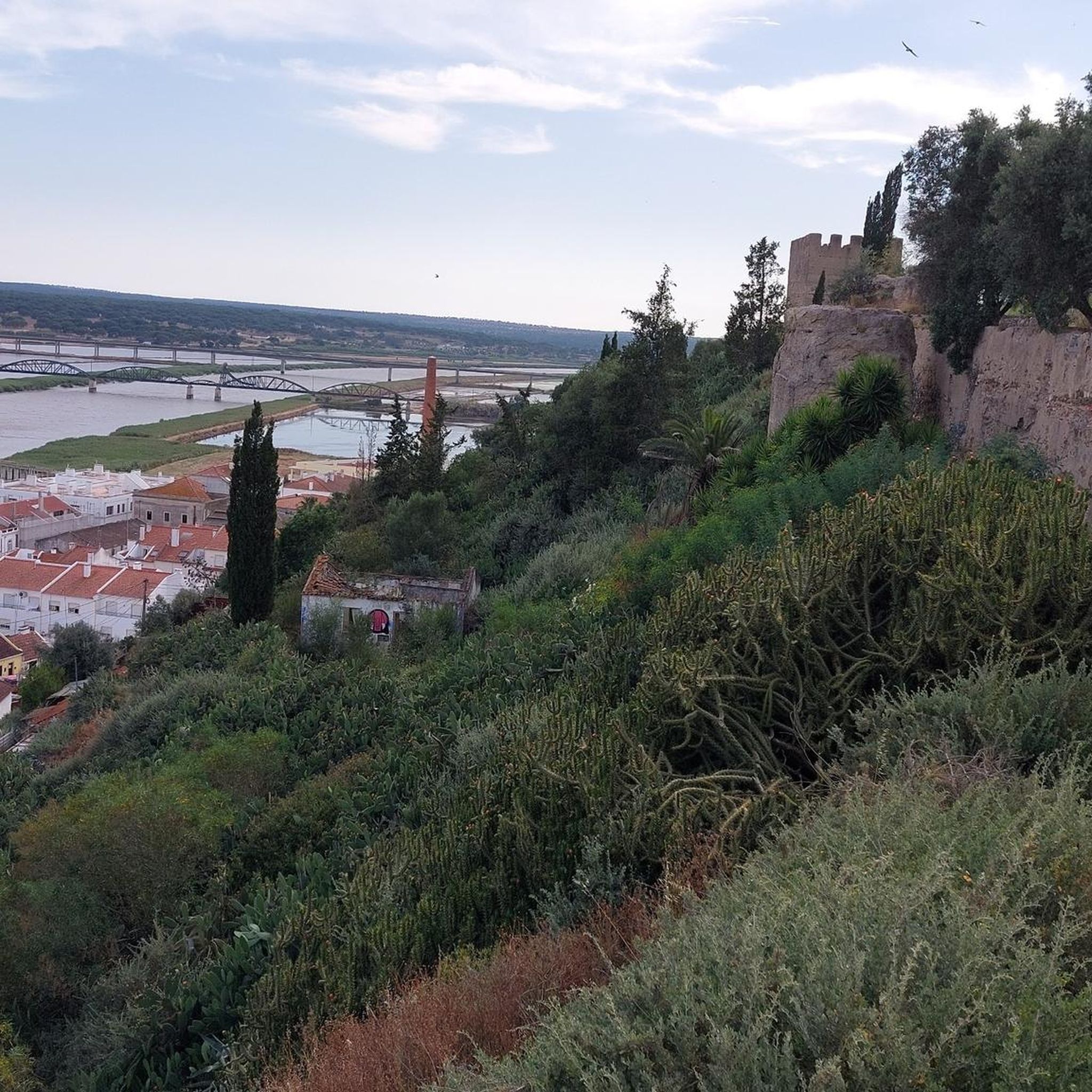
Montemor-o-Novo Castle is the original site of the medieval town of Montemor-o-Novo. This castle was conquered from the Moors by order of D. Afonso Henriques, and its current walls were built during the reign of D. Dinis. It was gradually abandoned by the population from the 15th century onwards, and today it preserves important testimonies of the medieval and modern history of Montemor-o-Novo, such as sections of the wall, the Paço dos Alcaides, the Church of Santiago (currently the Castle Interpretation Centre), the Church of Santa Maria do Bispo, the Clock Tower, the Porta da Vila, the Porta do Anjo, the Torre da Má Hora and the Convento da Saudação. (Source: https://www.feriasemportugam.com)
17
0
Frequently Asked Questions
What historical sites can I explore around São Cristóvão?
São Cristóvão is rich in history, offering several significant sites. You can visit the Montemor-o-Novo Castle, which preserves medieval and modern history. Other notable historical landmarks include the Clock Tower, a former main defense tower, and the Angel Tower, which protected the western entrance to the town.
Are there any religious buildings worth visiting in the area?
Yes, the region features several historical religious buildings. The Parish Church of Saint John the Baptist, originating from a 14th-century chapel, offers views of the Alentejo landscape. Another significant site is the Church of Our Lady of the Visitation, a 16th-century chapel known for its Manueline-Mudejar style and panoramic views over Montemor-o-Novo.
What are the most popular attractions according to komoot users?
The Montemor-o-Novo Castle is highly popular, appreciated for its well-preserved walls and historical significance. Visitors also enjoy the Parish Church of Saint John the Baptist for its historical remains and scenic views, and the Angel Tower for its medieval charm.
What kind of views can I expect from the attractions?
Many attractions offer excellent viewpoints. From the Parish Church of Saint John the Baptist, you can enjoy great views of the Alentejo landscape. The Church of Our Lady of the Visitation also provides fantastic panoramic views over Montemor-o-Novo castle and village.
What outdoor activities can I do near these attractions?
You can find various outdoor activities around São Cristóvão. For running enthusiasts, there are several routes, including an easy 5 km loop from Montemor-o-Novo. Cyclists can explore routes like the challenging 90 km 'View of Montemor-o-Novo – Dirt road in Monfurado' loop. Mountain biking options are also available, such as a moderate 57 km multi-terrain route. You can find more details on these activities in the Running Trails around São Cristóvão, Cycling around São Cristóvão, and MTB Trails around São Cristóvão guides.
Are there hiking opportunities near the attractions?
While specific hiking trails are not detailed for the immediate attractions, the area around São Cristóvão offers various routes suitable for walking and exploring. For more structured outdoor activities, consider the running and cycling routes mentioned, which often traverse scenic landscapes. You can explore options in the Running Trails around São Cristóvão guide.
What do visitors say about the Montemor-o-Novo Castle?
Visitors describe Montemor-o-Novo Castle as an impressive facility with a completely preserved wall, parts of which can be walked on. It's considered a symbol of Montemor-o-Novo and offers important testimonies of medieval and modern history.
Can I walk on the castle walls?
Yes, at Montemor-o-Novo Castle, the castle wall is completely preserved, and short parts can be walked on, offering a unique perspective of the historical site.
What is the significance of the Clock Tower?
The Clock Tower is currently the symbol of Montemor-o-Novo. Built during the reign of King Dinis, it served as the castle’s main defense tower. It also houses the main access door to the castle, known as the town or Santarém gate.
What architectural styles can be seen in the religious buildings?
The religious buildings showcase various historical architectural styles. The Church of Our Lady of the Visitation is a beautiful example of the Manueline-Mudejar style from the 16th century. While few Manueline elements remain, the Parish Church of Saint John the Baptist is also noted for its historical architectural significance.
Are there any specific historical periods highlighted by the attractions?
The attractions around São Cristóvão primarily highlight the medieval and modern history of the region. Sites like Montemor-o-Novo Castle and the Clock Tower date back to the 13th-15th centuries, showcasing the evolution of the area from its conquest from the Moors through subsequent renovations and developments.
Most popular routes around São Cristóvão
Most popular attractions around São Cristóvão

Get inspired with the komoot mobile app


Explore more
Still not found the Highlight you’re looking for? See guides of the top attractions in other regions:
