Attractions and Places To See around Évora Monte (Santa Maria) - Top 20
Best attractions and places to see around Évora Monte (Santa Maria) include historical landmarks and natural features within the central Alentejo region of Portugal. Perched on a hill within the Serra de Ossa, the area offers a blend of historical significance and scenic viewpoints. The medieval village is enclosed within ancient walls, providing a glimpse into its past. Visitors can explore various cultural sites and enjoy panoramic views over the Alentejo countryside.
Best attractions and places to see around Évora…
Last updated: July 15, 2026
Evoramonte Castle
Highlight • Castle
Translated by Google •
Tip by

Gadanha Fountain, Estremoz
Highlight • Monument
Translated by Google •
Tip by

Sign up now to discover places like this
Get recommendations on the best single tracks, peaks, & plenty of other exciting outdoor places.
Sign up for free
Serra d'Ossa Boardwalks
Highlight (Segment) • Trail
Translated by Google •
Tip by
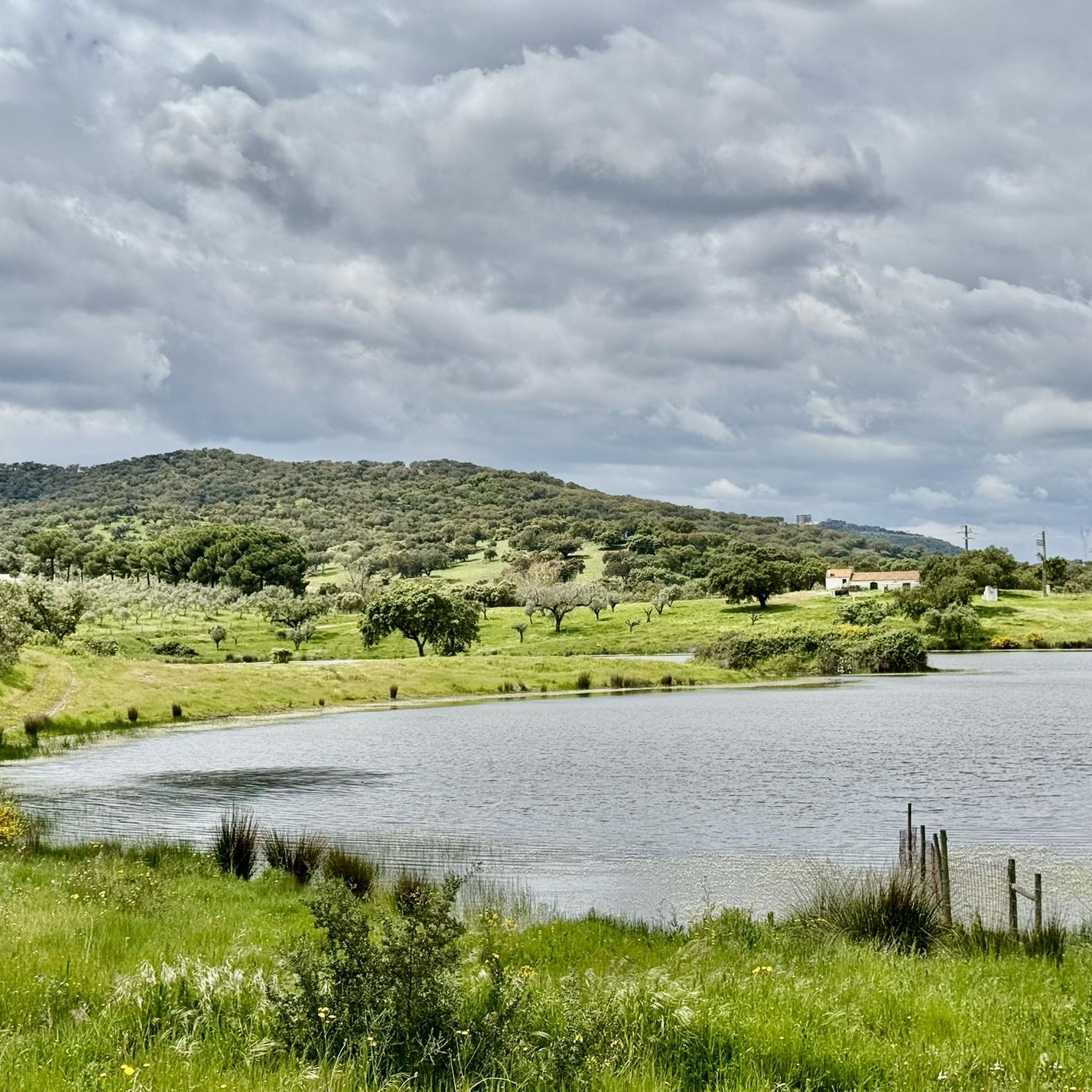
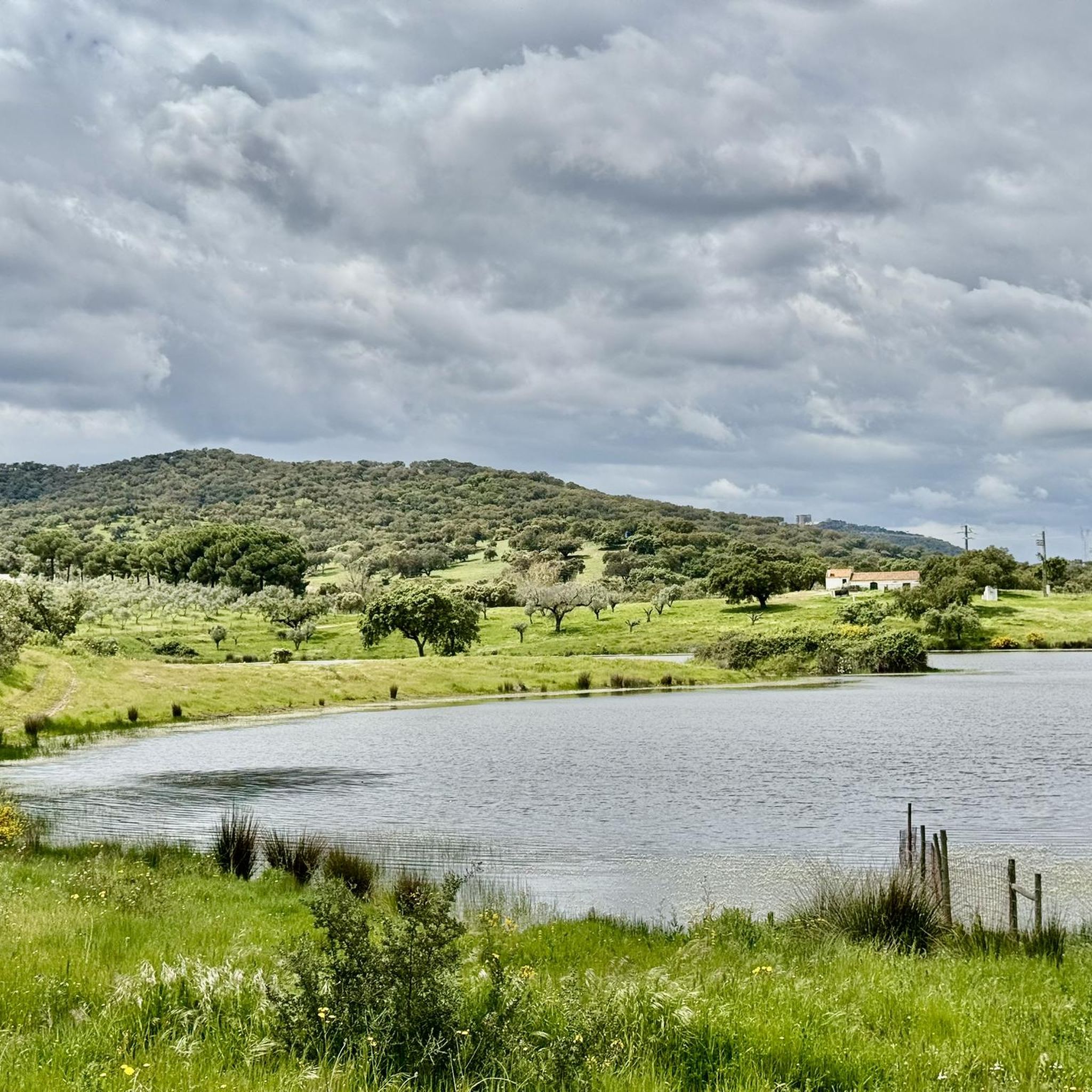
Montado Cork Oak Forest
Highlight • Forest
Translated by Google •
Tip by
Estremoz Castle
Highlight • Castle
Translated by Google •
Tip by

Sign up for free to discover even more attractions around Évora Monte (Santa Maria).
Sign up for free
Already have an account?
Start today with a free account
Your next adventure awaits.
Login or Signup

Tips from the Community

The view of the castle from the west is particularly impressive. There you can clearly see the fortress character with its protruding walls.
5
0
Fonte da Gadanha Square is dominated by Lake Gadanha. Next to it is the 13th-century Convento São Francisco, dating from the reign of King Afonso III, which served as a barracks after secularization. From here, you have a magnificent view up to the castle and the castle. The square is surrounded by other interesting monuments and fountains.
4
1
The famous statue of "Gadanha," located in the lake, originates from the Congregados Monastery and was only moved to the center of the lake in the mid-19th century. It originally represented the god Saturn, a symbol of abundance. The inscription on the base reads: "Time passes quickly."
3
0

The Serra d’Ossa Walkways run along the verdant valley of the Ribeira do Monte Virgem, along steep schist cliffs, between the village of Aldeia da Serra and the imposing Church of Nossa Senhora do Monte da Virgem, preceded by a long (and steep) staircase with approximately 300 steps. Although the Serra d’Ossa Walkways only opened in April 2021, they are already one of the must-see places in the Alentejo for all nature lovers. After all, walking along them allows you to discover a very different side of this region in the south of Portugal, more associated with vast plains than with steep cliffs. The Serra d’Ossa Walking Trail is only 1.5 km long (3 km round trip), which makes it a great walk to do with children. Not only because it is relatively short, but above all because it does not have significant differences in height, with the exception of the section of the staircase that precedes the Church of Nossa Senhora do Monte da Virgem. ( www.vagamundos.pt )
5
0
If you've ever been curious about the origin of the cork in your wine bottle, or questioned the composition of the notice board hanging in your workspace, then this guide is specifically designed to answer your queries. The cork oak, or Quercus suber, is a fascinating tree species that primarily grows in the Mediterranean region. Its unique bark is the source of the world's cork supply, a material that is used in a multitude of applications, from wine stoppers to insulation. In this all-encompassing guide, we will thoroughly investigate the mysteries of the cork oak, examining its native surroundings, its significance in the financial structures of Portugal and Spain, and the multitude of its applications. We will also take a close look at the cork production process, including the art of cork harvesting and the fascinating phenomenon of cork regeneration. Portugal and Spain stand as the global frontrunners in cork production, and much like the white oak of North America, the cork oak occupies a distinct position within the cultural and economic fabric of these nations. In Portugal, the montado landscapes are deeply intertwined with rural life, providing a source of income for many communities through cork production and other activities such as farming and beekeeping. In Portugal, the Montado landscapes are similarly important, with the cork oak providing a range of resources including cork, acorns for livestock, and wood for charcoal production. The cork industry in these countries is a significant employer, providing jobs in areas such as harvesting, processing, and manufacturing. Agroforestry, the practice of combining agriculture with forestry, is a key aspect of sustainable cork production. In the montado and dehesa landscapes of Portugal and Spain, cork oaks are grown alongside crops and livestock, creating a diverse and productive landscape. This form of land use not only provides a range of resources, including cork, food, and timber, but also supports a rich biodiversity and helps to conserve soil and water resources. This illustrates a prime instance of how humanity can coexist harmoniously with nature, utilizing resources sustainably.
5
1
The Estremoz Castle was built in a dominant position on a hill to the north of the Serra de Ossa, in the city of Estremoz, in the district of Évora, in Alentejo, Portugal. It is a pentagonal castle with a walled enclosure, reinforced by buttresses that rise around the Torre de Menagem, a spectacular tower built in white marble, 27 metres high. It is believed that the construction of this monumental tower lasted through three reigns: D. Afonso IV, D. Pedro and D. Fernando, and, for this reason, it is known as the Torre das Três Coroas. Beyond the medieval wall, the town of Estremoz has a vast expanse of fortifications from the epic Restoration War, where the towers with battlements and two arched gates stand out, next to which there is a rectangular tower in the Roman-Gothic style, with several windows.
5
1
Estremoz Castle was raised in a dominant position over a hill, up North to the Sierra de Ossa, in the city of Estremoz, inside the district of Évora, in Alentejo, Portugal. It is a castle with a pentagonal floor, with a walled enclosure reinforced with buttress which raises around the Torre de Menagem Keep, an spectacular tower made in white marble and 27 metres height. It is believed that the works for this monumental tower occurred during the reigns D. Alfonso IV, D. Pedro and D. Fernando. That is why it is known as Torres das Três Coroas (The Tower of the Three Crowns). Besides the Medieval fence, the city of Estremoz counts with a vast fortified area from the epic Guerra da Restaruação (Restoration War), where you can distinguish the battlemented towers and two arch doors, and a rectangular tower with Roman-Gothic style with several windows.
5
1
Estremoz is the “white city” of the Alentejo. It can be recognized from afar by its white houses, spread out along a hill, surrounded by old walls and protected, in times gone by, by the imposing Torre de Menagem. The people of Estremoz are friendly and hospitable, like all the people of the Alentejo. The epithet of “white city” is due, in addition to the color of the houses, to the deposits of white marble, the famous “Estremoz Marble”, which made the city internationally famous. The extraction of this raw material in the Alentejo makes Portugal the second largest exporter in the world, with Estremoz contributing around 90% of the total marble. Consider visiting one of these deposits on a trip to the country.
4
1
Frequently Asked Questions
What historical landmarks can I explore in Évora Monte?
Évora Monte is rich in history. The most prominent landmark is the Evoramonte Castle, known for its unique 16th-century reconstruction and its role in the signing of the Convention of Évora Monte. You can also explore the ancient walled village, entering through gates like Porta do Freixo and Porta do Sol, and visit historical religious sites such as the Igreja Matriz de Nossa Senhora da Conceição and Igreja da Misericórdia. Don't miss the Casa da Convenção, where the historic treaty was signed.
Are there any natural features or scenic viewpoints in Évora Monte?
Yes, Évora Monte offers stunning natural beauty. Its hilltop location provides extensive 360-degree panoramic views over the Alentejo countryside, including rolling hills, olive groves, and cork forests. The village itself is partly situated on the Serra de Ossa mountain range. For a unique experience, explore the Serra d'Ossa Boardwalks, which run along the Ribeira do Monte Virgem amidst schist cliffs, offering a different perspective of the region.
What outdoor activities can I do near Évora Monte?
The area around Évora Monte is excellent for outdoor activities. You can find various routes for hiking, cycling, and mountain biking. For hiking, consider trails like the 'Eremitas da Serra D'Ossa (PR 4) — circular route' or the 'Lake – Montado Cork Oak Forest loop'. Cyclists can enjoy routes such as the 'Evoramonte Castle – Evoramonte Castle loop from Camping Alentejo'. You can find more details and routes in the dedicated guides for Hiking around Évora Monte, Cycling around Évora Monte, and MTB Trails around Évora Monte.
Are there family-friendly attractions or activities in the area?
Absolutely. The Serra d'Ossa Boardwalks are a great option for families, being a relatively short 1.5 km trail (3 km round trip) with minimal elevation changes, suitable for children. Exploring the charming cobbled streets of the walled village and discovering the hand-painted street stones can also be an engaging activity for all ages. Additionally, the Montado Cork Oak Forest offers a peaceful environment for family walks.
How long should I plan to explore Évora Monte's attractions?
To fully appreciate the historical village and its main attractions, such as the Evoramonte Castle, the churches, and the charming streets, a half-day to a full day is generally sufficient. This allows time to soak in the panoramic views, explore the castle's interior, and wander through the ancient walls. If you plan to include longer outdoor activities like hiking on the Serra d'Ossa Boardwalks or exploring the Montado Cork Oak Forest, you might extend your visit to a full day or more.
What is the best time of year to visit Évora Monte?
The central Alentejo region, including Évora Monte, is best visited during the spring (March to May) and autumn (September to November) months. During these periods, the weather is typically mild and pleasant, ideal for exploring the historical sites and enjoying outdoor activities like hiking and cycling. Summers can be very hot, while winters are generally mild but can be rainy.
What is the Gadanha Fountain and where is it located?
The Gadanha Fountain is a notable man-made monument located in Estremoz, a short distance from Évora Monte. It is known for its statue of "Gadanha," which originally represented the god Saturn, a symbol of abundance. The fountain is situated in Fonte da Gadanha Square, surrounded by other historical monuments, and near the 13th-century Convento São Francisco.
Are there any unique local crafts or products available in Évora Monte?
Yes, Évora Monte offers local crafts. The Celeiro Comum (Common Barn), originally built in 1642 to store grain, now houses a craft shop. Here, you can find regional products and handicrafts, including hand-painted stone houses and other local artisan creations, making for unique souvenirs.
What kind of terrain can I expect on hiking trails around Évora Monte?
The terrain around Évora Monte varies. Given its location on the Serra de Ossa, some trails will involve ascents and descents, offering strategic viewpoints. The Serra d'Ossa Boardwalks provide a relatively flat and accessible path along the Ribeira do Monte Virgem, featuring schist cliffs. Other routes, such as the 'Eremitas da Serra D'Ossa (PR 4) — circular route', can be more challenging with varied elevations, while walks through the Montado Cork Oak Forest are generally gentler.
What are some lesser-known historical sites or 'hidden gems' in Évora Monte?
Beyond the prominent castle, exploring the intricate details of the walled village itself can reveal hidden gems. Look for the over 60 unique hand-painted street stones embedded in the cobbles throughout the village. The ancient walls, many parts of which are still original, offer a sense of stepping back in time. The Casa da Convenção, though historically significant, is a modest white house that might be overlooked but holds immense importance in Portuguese history.
Is Évora Monte accessible by public transport?
While Évora Monte is a small, historic village, public transport options might be limited. It is generally recommended to have a car for flexibility when exploring the central Alentejo region and its attractions. For specific bus schedules or train connections to nearby larger towns like Estremoz or Évora, it's advisable to check local transport provider websites, as direct routes to Évora Monte may be infrequent.
What should I bring for walks or hikes in the Évora Monte area?
For walks and hikes in the Évora Monte area, it's recommended to bring comfortable walking shoes, especially if you plan to explore the cobbled streets or trails. Depending on the season, carry water, sun protection (hat, sunscreen) during warmer months, and layers of clothing for cooler periods. A camera is also a must to capture the panoramic views and historical architecture.
Most popular routes around Évora Monte (Santa Maria)
Most popular attractions around Évora Monte (Santa Maria)

Get inspired with the komoot mobile app


Explore more
Still not found the Highlight you’re looking for? See guides of the top attractions in other regions:
