Attractions and Places To See around Anobra - Top 20
Best attractions and places to see around Anobra, a civil parish in the municipality of Condeixa-a-Nova, Portugal, offers a blend of natural beauty and proximity to historical sites. A significant portion of the Reserva Natural do Paul de Arzila, a biodiverse marshland, lies within Anobra's territory. While Anobra itself is a small locality, its location provides easy access to the rich cultural and historical landmarks of nearby Coimbra. Visitors can explore ancient universities, cathedrals, and Roman ruins, alongside natural parks…
Last updated: May 4, 2026
Paço das Escolas (Palace of the Schools), University of Coimbra
Highlight • Historical Site
Translated by Google •
Tip by

Church of Santa Cruz (Igreja de Santa Cruz), Coimbra
Highlight • Religious Site
Translated by Google •
Tip by

Sign up now to discover places like this
Get recommendations on the best single tracks, peaks, & plenty of other exciting outdoor places.
Sign up for free
Coimbra Old Cathedral
Highlight • Religious Site
Translated by Google •
Tip by
Portagem Square
Highlight • Monument
Translated by Google •
Tip by
Church of Saint John of Almedina
Highlight • Religious Site
Translated by Google •
Tip by
Sign up for free to discover even more attractions around Anobra.
Sign up for free
Already have an account?
Start today with a free account
Your next adventure awaits.
Login or Signup



Tips from the Community

The Igreja de São João de Almedina is a national monument, classified as a UNESCO World Heritage Site since 2019. It is fully integrated into the complex of the former Episcopal Palace, where today the prestigious National Museum Machado de Castro operates, in the Alta de Coimbra.👍🥾
0
0

Who is Andreas? What does Andreas want?
4
2

This is the old cathedral of Coimbra. The cathedral is a massive, compact fortress building with a crenellated parapet and Romanesque portal and window arches on the west façade. It was built in the 12th century on the foundations of a 6th/7th-century church. Inside, the baptismal font (supported by lions and monsters, 16th century), the Gothic high altar (wonderfully crafted), Renaissance tombs, and a quiet cloister (south side of the cathedral, 13th century) are worth seeing.
6
1

An absolute must: book tickets in advance. You can visit several buildings, and all of them are worthwhile. You'll need a time slot, especially for the Baroque library.
8
0
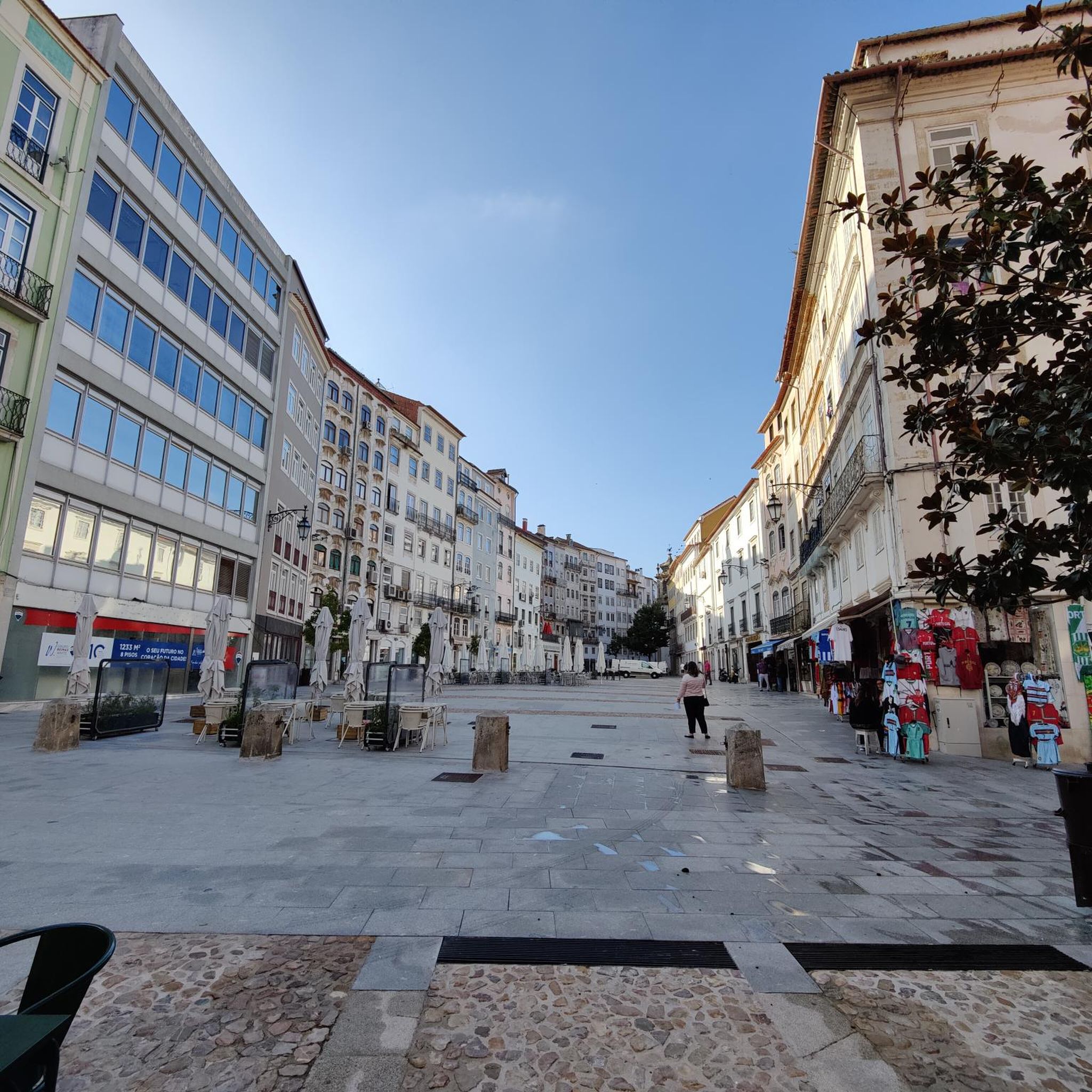
This square owes its name to the fact that taxes were formerly levied on goods arriving in the city from the south. This square houses one of Coimbra's architectural symbols: the Hotel Astória, built in 1926, and the Bank of Portugal Building, both by Adães Bermudes. It also houses the statue of Joaquim António de Aguiar by sculptor Costa Mota (uncle). Connected to Largo da Portagem is the main street in downtown Coimbra, Rua Ferreira Borges, a street currently closed to traffic and home to several traditional shops.
10
1

The Monastery of the Holy Cross (Monasterio della Santa Croce) is a historic and religious Catholic site located in Florence, Italy. Founded in 1294, it is one of the most important Franciscan monasteries in the city. Features: Architecture and Art 1. Italian Gothic style. 2. Simple but imposing façade. 3. Interior: chapels decorated with frescoes by Giotto and other artists. 4. Novitiate Cloister. 5. Monastery Museum. Historical Importance 1. Burial place of personalities such as Michelangelo, Galileo and Dante Alighieri. 2. Center for theological and philosophical studies. 3. Important role in the Catholic Reformation. Practical Information 1. Address: Piazza Santa Croce, 16, 50122 Firenze FI. 2. Opening hours: 9:30am-5:30pm (Monday to Sunday). 3. Entrance fee: around 8 euros.
4
0

Very nice place surrounded by great buildings 🤩
12
1
Very beautiful monastery church. Be sure to see it from the inside!
13
2
Frequently Asked Questions
What natural attractions can I explore near Anobra?
Anobra is home to a significant portion of the Reserva Natural do Paul de Arzila, a biodiverse marshland spanning 585 hectares, with 253 hectares located within Anobra's territory. This reserve is a haven for nature enthusiasts, boasting approximately 400 plant species and 180 animal species, including 126 bird species. Further afield, you can visit the Bussaco National Woods, a magical forest with exotic plant species.
Are there historical sites to visit near Anobra?
Yes, the nearby city of Coimbra offers a wealth of historical sites. You can explore the Paço das Escolas (Palace of the Schools) at the University of Coimbra, a UNESCO World Heritage site featuring the iconic Clock Tower. Other notable historical landmarks include the Church of Santa Cruz, the Coimbra Old Cathedral, and the Church of Saint John of Almedina. Just outside Coimbra, the well-preserved Conimbriga Roman Ruins offer a glimpse into ancient Roman life.
What are some family-friendly activities around Anobra?
For families, the nearby city of Coimbra offers several engaging options. Paço das Escolas (Palace of the Schools) at the University of Coimbra and the Church of Santa Cruz are listed as family-friendly attractions. Additionally, Portugal dos Pequenitos is a theme park with miniature replicas of Portuguese monuments, providing an educational and fun experience for children.
What outdoor activities and routes are available near Anobra?
The region around Anobra and Coimbra offers various outdoor activities. You can find numerous hiking trails, such as the easy 'Coimbra Old Cathedral – Saint Sebastian Aqueduct loop' or the moderate 'Old Path by the River – Mouros River Waterfall loop'. For cyclists, there are road cycling routes like the 'Palheiros River Beach – View of Coimbra loop' and touring bicycle routes including the 'Pedro and Inês Footbridge – Mata Nacional do Choupal loop'. You can find more details on these and other routes in the hiking guide, road cycling guide, and cycling guide for Anobra.
What is the best time of year to visit Anobra and its surroundings?
The best time to visit Anobra and the Coimbra region is generally during the spring (April to June) and early autumn (September to October). During these months, the weather is typically pleasant, with comfortable temperatures for exploring historical sites and enjoying outdoor activities. Summers can be hot, while winters are milder but may bring more rain.
Are there any wheelchair-accessible attractions near Anobra?
Yes, Portagem Square in Coimbra is noted as wheelchair accessible. While the historic nature of many sites can present challenges, some areas within the University of Coimbra and modern parks like Mondego Green Park may also offer accessible paths. It's advisable to check specific accessibility details for individual attractions before your visit.
Where can I find beautiful views or viewpoints in the area?
The Paço das Escolas (Palace of the Schools) at the University of Coimbra offers magnificent views over the city. Its location at the highest point of Coimbra makes it an excellent spot to take in the panorama. Additionally, the Montemor-o-Velho Castle, dominating the Mondego River valley, also provides impressive vistas.
What do visitors enjoy most about the attractions around Anobra?
Visitors frequently appreciate the rich historical and architectural heritage, particularly the University of Coimbra's grandeur and the intricate details of the cathedrals like the Old Cathedral. The blend of ancient history with the vibrant atmosphere of a university city is often highlighted. The natural beauty of the Reserva Natural do Paul de Arzila also draws praise from nature lovers.
Are there any parks or gardens to visit in the Coimbra area?
Yes, Coimbra offers several beautiful green spaces. You can visit the Mondego Green Park, a pleasant urban park along the Mondego River. The Jardins da Quinta das Lágrimas are historic gardens known for their romantic legend and scenic landscapes. Additionally, the Jardim Botânico, part of the University of Coimbra, is one of the oldest botanical gardens in the world, providing a peaceful oasis with diverse plant collections.
What are some notable museums in Coimbra?
The Machado de Castro National Museum in Coimbra is a prominent cultural institution. It houses an impressive collection of Roman artifacts and medieval art, including the fascinating Roman Cryptoporticus, an underground chamber with attractive stonework. The museum is partly housed in the former Episcopal Palace, which also includes the Church of Saint John of Almedina.
How long should I plan to visit the main attractions around Anobra?
To fully appreciate the main attractions in Coimbra and its surroundings, including the University, cathedrals, and Roman ruins, it's recommended to allocate at least 2-3 days. This allows for in-depth exploration of the historical sites, leisurely walks through parks, and perhaps a day trip to the Conimbriga Roman Ruins or the Bussaco National Woods. If you plan to include hiking or cycling, you might extend your stay further.
Is public transport available to reach attractions from Anobra?
While Anobra itself is a small locality, public transport options are available to connect to the larger city of Coimbra, which serves as a hub for many attractions. Once in Coimbra, a network of buses can take you to various points of interest. For specific routes and schedules, it's best to consult local transport information upon arrival.

Get inspired with the komoot mobile app


Explore more
Still not found the Highlight you’re looking for? See guides of the top attractions in other regions:
